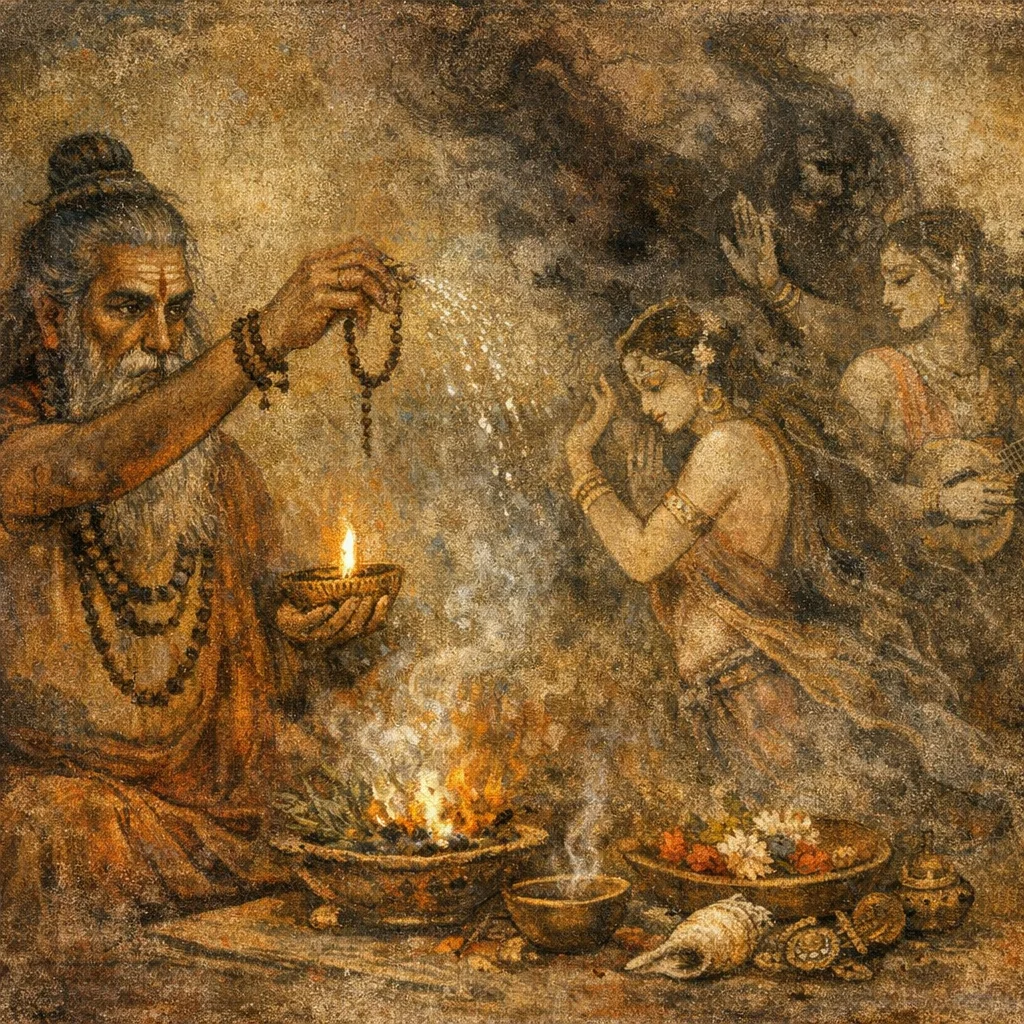
Sukta 2
Rishi: Atharvanic tradition (specific ṛṣi not determinable from the isolated verse alone)
Devata: Apsarases and Gandharva; secondarily Samudra (as their seat/containment)
Chandas: Likely Triṣṭubh/Jagatī-type cadence (requires full hymn metrical audit; not safely fixed from one pāda in isolation)
Mantras
Mantra 1
दिव्यो गन्धर्वो भुवनस्य यस्पतिरेक एव नमस्योऽविक्ष्वीड्यः । तं त्वा यौमि ब्रह्मणा दिव्य देव नमस्ते अस्तु दिवि ते सधस्थम्
The heavenly Gandharva, who is lord of the world—one only, yea, worthy of reverence, not to be assailed with reproach—him, thee, do I bind unto me by sacred spell, O heavenly God. Homage be to thee: in heaven be thy settled seat.
Mantra 2
दिवि स्पृष्टो यजतः सूर्यत्वगवयाता हरसो दैव्यस्य । मृडाद् गन्धर्वो भुवनस्य यस्पतिरेक एव नमस्यः सुशेवाः
Touched in heaven, venerable, sun-skinned, impelled onward—of the divine glow: from graciousness the Gandharva, who is lord of the world, he alone indeed is to be adored, most kindly.
Mantra 3
अनवद्याभिः समु जग्म आभिरप्सरास्वपि गन्धर्व आसीत्। समुद्र आसां सदनं म आहुर्यतः सद्य आ च परा च यन्ति
With the blameless ones he went in company; among the Apsarases, yea, the Gandharva was. The Sea is, men tell me, their dwelling-seat—whence straightway they go both hither and away.
Mantra 4
अभ्रिये दिद्युन्नक्षत्रिये या विश्वावसुं गन्धर्वं सचध्वे । ताभ्यो वो देवीर्नम इत् कृणोमि
To Abhriyā, to the flashing One, to Nakṣatriyā—to you Goddesses who consort with Viśvāvasu the Gandharva—to those, to you, O Goddesses, I verily make obeisance.
Mantra 5
याः क्लन्दास्तमिषीचयोऽक्षकामा मनोमुहः । ताभ्यो गन्धर्वपत्नीभ्योऽप्सराभ्योऽकरं नमः
Those who are wailers, who fare in darkness, dice-desiring, mind-bewildering—unto them, unto the Gandharvas’ wives, unto the Apsarases, have I performed obeisance.
Frequently Asked Questions
Because ‘Samudra’ functions as a containment-locus: by declaring their proper dwelling-seat, the mantra relocates their activity away from the human sphere and makes their movement ritually controllable.
It is both in Atharvanic style: it begins with reverence (namas) and praise to pacify, then uses precise identification and re-siting language to regulate and limit liminal beings’ intrusion.
At liminal times (twilight/night), during stormy/astral disturbances, or when there are signs of uncanny agitation—bad dreams, sudden fear, household unrest—attributed to Gandharva–Apsaras influence.