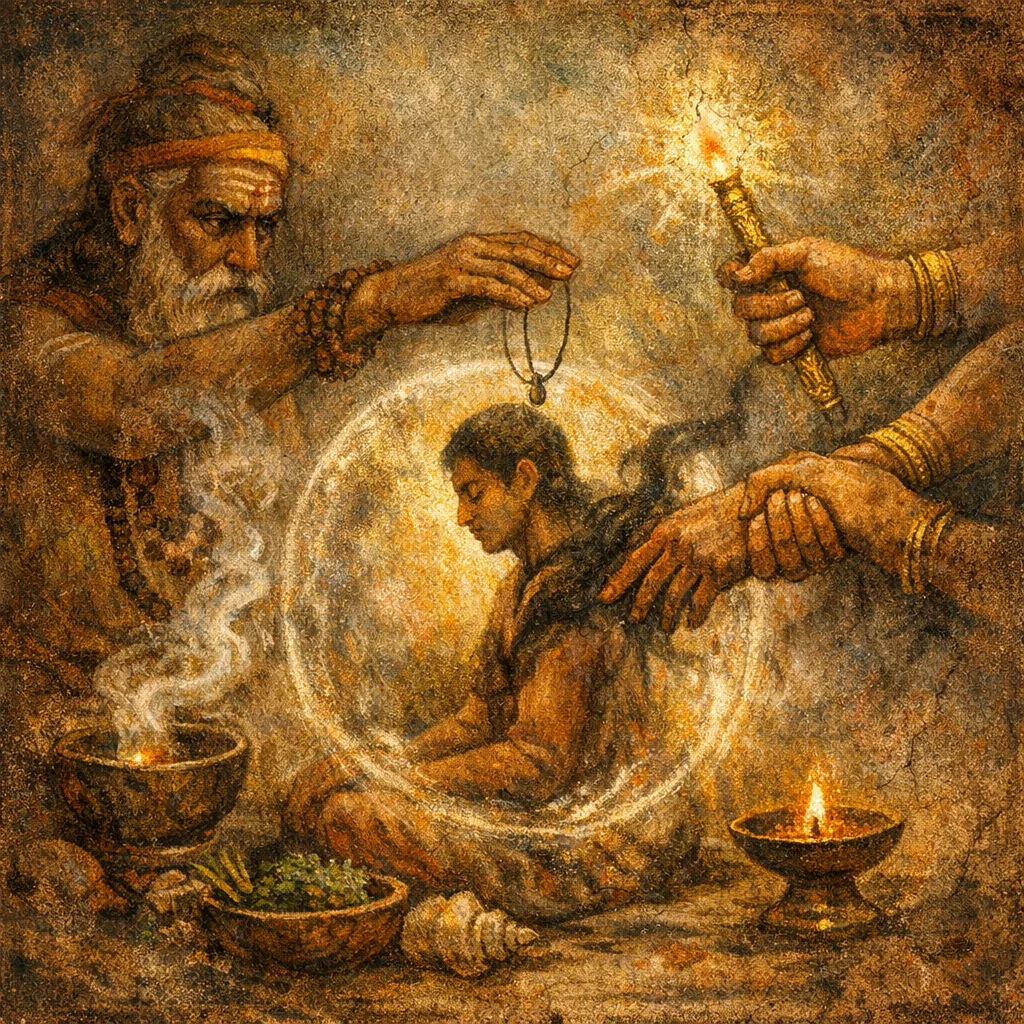
Sukta 51
Rishi: To be confirmed by AVŚ 19.51 anukramaṇī (late book; often anonymous/collective attribution)
Devata: Ātman / vital faculties (prāṇa, apāna, vyāna) as operative powers
Chandas: Prose-like/irregular (late Atharvanic style); not securely metrical
Mantras
Mantra 1
आत्मा। युतोऽहमयुतो म आत्मायुतं मे चक्षुरयुतं मे श्रोत्रमयुतो मे प्राणोऽयुतो मे ऽपानोऽयुतो मे व्यानोऽयुतोऽहं सर्वः
The Self is in yoke; I am unyoked from harm. My Self is set in order; my eye is unyoked, my ear unyoked; unyoked are my breath, my out-breath, my pervading breath: I am whole.
Mantra 2
देवस्य त्वा सवितुः प्रसवेऽश्विनोर्बाहुभ्यां पूष्णो हस्ताभ्यां प्रसूत आ रभे
Under the god Savitar’s impulsion I lay hold of thee—impelled—by the Aśvins’ two arms, by Pūṣan’s two hands.
Frequently Asked Questions
To restore wholeness by bringing the self (ātman), senses, and vital breaths (prāṇa, apāna, vyāna) back into proper alignment and freeing them from constriction or harm.
It is a ritual authorization formula: it frames the healer’s act of taking hold—touching, guiding, applying treatment—as divinely impelled and protected, increasing safety and efficacy.
No materials are specified in the text. It can be used as a spoken/recited integration charm, optionally accompanying whatever treatment is being applied.