Adhyaya 275
Chapter 275 — द्वादशसङ्ग्रामाः (The Twelve Battles)
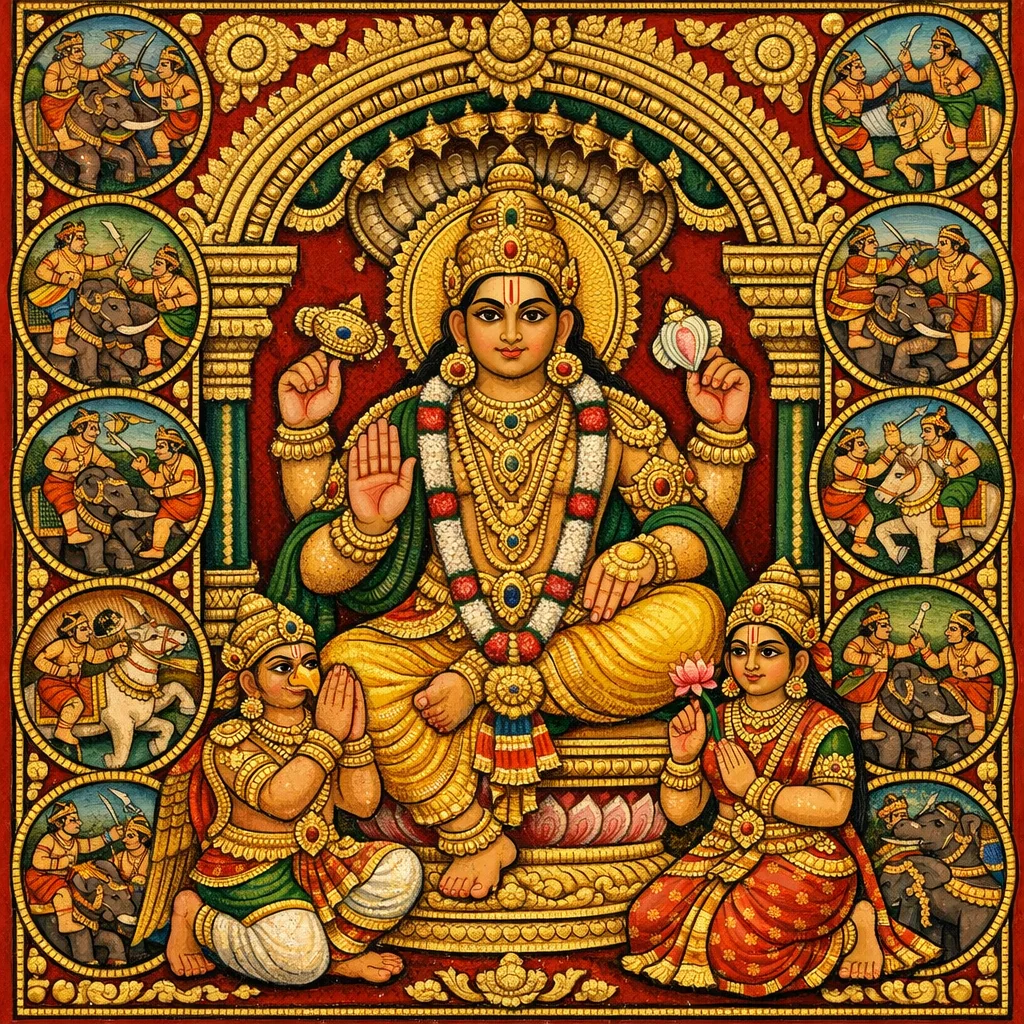
Agni continues the vaṁśa-based account by rooting Kṛṣṇa’s birth in a cosmic genealogy: Kaśyapa manifests as Vasudeva and Aditi as Devakī, so that Hari appears through tapas to protect dharma and remove adharma. The chapter lists Kṛṣṇa’s queens and descendants, stressing Yādava protection and succession (Pradyumna → Aniruddha → Vajra and others), linking divine incarnation with dynastic continuity and social order. From this genealogical frame it turns doctrinal and epic: Hari is born as a human to establish karma-vyavasthā—the ordered performance of duties and rites—and to relieve human afflictions. It then enumerates the “twelve battles/manifestations” in the devas–asuras conflict, with brief proofs: Narasiṃha, Vāmana, Varāha, the amṛta-manthana, Tārakāmaya, the burning of Tripura, Andhaka’s slaying, Vṛtra’s death, Paraśurāma’s campaigns, the halāhala crisis, and the defeat of Kolāhala, concluding that all such agents—kings, sages, and gods—are Hari’s avatāras, named or unnamed.
Shlokas
Verse 1
इत्य् आग्नेये महापुराणे यदुवंशवर्णनं नाम चतुःसप्तत्यधिकद्विशततमो ऽध्यायः अथ पञ्चसप्तत्यधिकद्विशततमो ऽध्यायः द्वादशसङ्ग्रामाः अग्निर् उवाच कश्यपो वसुदेवो ऽभूद्देवकी चादितिर्वरा देवक्यां वसुदेवात्तु कृष्णो ऽभूत्तपसान्वितः
Thus, in the Agni Mahāpurāṇa, the two-hundred-and-seventy-fourth chapter, called “The Description of the Yadu Dynasty,” concludes. Now begins the two-hundred-and-seventy-fifth chapter, “The Twelve Battles.” Agni said: Kaśyapa became incarnate as Vasudeva, and noble Devakī was Aditi. From Vasudeva, in Devakī, Kṛṣṇa was born—endowed with tapas, the power of ascetic discipline.
Verse 2
धर्मसंरक्षणार्थाय ह्य् अधर्महरणाय च सुरादेः पालनार्थञ्च दैत्यादेर्मथनाय च
Indeed, (He acts) for the safeguarding of dharma and for the removal of adharma; for the protection of the gods and the like, and for the crushing of the daityas and the like.
Verse 3
रुक्मणी सत्यभामा च सत्या नग्नजिती प्रिया सत्यभामा हरेः सेव्या गान्धारी लक्ष्मणा तथा
Rukmiṇī, Satyabhāmā, Satyā, and Nagnajitī—the beloved queen; Satyabhāmā, worthy to be served in devotion as Hari’s consort; and likewise Gāndhārī and Lakṣmaṇā.
Verse 4
मित्रविन्दा च कालिन्दी देवी जाम्बवती तथा सुशीला च तथा माद्री कौशल्या विजया जया
And (there were) Mitravindā, and Kālindī, and Devī; likewise Jāmbavatī; and also Suśīlā; and also Mādrī; (and) Kauśalyā, Vijayā, and Jayā.
Verse 5
चित्रविन्देति ख , छ च एवमादीनि देवीनां सहस्राणि तु षोडश प्रद्युम्नाद्याश् च रुक्मिण्यां भीमाद्याः सत्यभामया
“Citravindā” and (others designated by the syllables) kha, cha, and ca—thus and so forth—are among the queens; their thousands are spoken of, but (notably) there are sixteen. And Pradyumna and the others were born from Rukmiṇī, while Bhīma and the others were born from Satyabhāmā.
Verse 6
जाम्बवत्याञ्च शाम्बाद्याः कृष्णस्यासंस् तथापरे शतं शतसहस्राणां पुत्राणां तस्य धीमतः
From Jāmbavatī, Śāmba and others were the sons of Kṛṣṇa; and likewise, of that wise one, the number of sons was a hundred and a hundred-thousands.
Verse 7
अशीतिश् च सहस्राणि यादवाः कृष्णरक्षिताः प्रद्युम्नस्य तु वैदर्भ्यामनिरुद्धो रणप्रियः
Eighty thousand Yādavas were protected by Kṛṣṇa. And from Pradyumna, by the princess of Vidarbha (Vaidebhī), was born Aniruddha, who delighted in battle.
Verse 8
अनिरुद्धस्य वज्राद्या यादवाः सुमहाबलाः तिस्रः कोट्यो यादवानां षष्टिर्लक्षाणि दानवाः
From Aniruddha sprang the exceedingly mighty Yādavas—beginning with Vajra—numbering three koṭis; and the Dānavas numbered sixty lakhs.
Verse 9
मनुष्ये बाधका ये तु तन्नाशाय बभूव सः कर्तुं कर्मव्यवस्थानं मनुष्यो जायते हरिः
Whatever afflictions beset humankind—He came into being for their destruction. To establish the proper ordering of duties and rites (karma-vyavasthā), Hari is born as a human.
Verse 10
देवासुराणां सङ्ग्रामा दायार्थं द्वादशाभवन् प्रथमो नारसिंहस्तु द्वितीयो वामनो रणः
In the war between the gods and the asuras, to secure their rightful share, there were twelve manifestations. The first was Narasiṁha; the second was Vāmana, manifest upon the battlefield.
Verse 11
सङ्ग्रामस्त्वथ वाराहश् चतुर्थो ऽमृतमन्थनः तारकामयसङ्ग्रामः षष्ठो ह्य् आजीवको रणः
Then comes the battle called Vārāha, counted as the fourth; and then the churning for nectar (amṛta-manthana). The Tārakāmaya battle is counted as the sixth; and indeed there is also the battle named Ājīvaka.
Verse 12
त्रैपुरश्चान्धकबधो नवमो वृत्रघातकः जितो हालाहलश्चाथ घोरः कोलाहलो रणः
He is the Destroyer of Tripura, the Slayer of Andhaka, the Ninth in the sacred sequence of names, and the Killer of Vṛtra. He is the Conqueror of Hālāhala, and also the Terrible One—known as Tumult and Battle.
Verse 13
हिरण्यकशिपोश्चोरो विदार्य च नखैः पुरा नारसिंहो देवपालः प्रह्नादं कृतवान् नृपम्
Formerly, Narasiṃha—the protector of the gods—tore apart Hiraṇyakaśipu, the wicked oppressor, with his claws and made Prahlāda king.
Verse 14
देवासुरे वामनश् च छलित्वा बलिमूर्जितम् महेन्द्राय ददौ राज्यं काश्यपो ऽदितिसम्भवः
And in the conflict between the gods and the demons, Vāmana, having outwitted the mighty Bali, restored the kingship to Mahendra (Indra)—he who was born of Aditi and descended from Kaśyapa.
Verse 15
वराहस्तु हिरण्याक्षं हत्वा देवानपालयत् उज्जहार भुवं देवदेवैर् अभिष्टुतः
But Varāha, having slain Hiraṇyākṣa, protected the gods, and—praised by the gods and divine beings—lifted up the Earth.
Verse 16
मन्थानं मन्दरं कृत्वा नेत्रं कृत्वा तु वासुकिम् सुरासुरैश् च मथितं देवेभ्यश्चामृतं ददौ
Making Mandara the churning-rod and Vāsuki the churning-cord, the gods and the asuras churned the ocean; and from it the Devas were granted amṛta, the nectar of immortality.
Verse 17
तारकामयसङ्ग्रामे तदा देवाश् च पालिताः निवार्येन्द्रं गुरून् देवान् दानवान्सोमवंशकृतम्
In the Tārakāmaya war, the gods were then preserved; restraining Indra and the venerable divine preceptors, he caused the Dānavas to establish and secure the Soma (Lunar) dynasty.
Verse 18
विश्वामित्रवशिष्ठात्रिकवयश् च रणे सुरान् अपालयन्ते निर्वार्य रागद्वेषादिदानवान्
And Viśvāmitra, Vasiṣṭha, and the three poet‑seers protected the gods in battle, repelling the Dānavas driven by passion, hatred, and the like.
Verse 19
पृथ्वीरथे ब्रह्मयन्तुरीशस्य शरणो हरिः ददाह त्रिपुरं देवपालको दैत्यमर्दनः
Hari (Viṣṇu)—the refuge of Īśa (Śiva)—became the Lord’s charioteer, with the Earth as the chariot; and, as Protector of the gods and Slayer of demons, he burned Tripura (the three cities).
Verse 20
गौरीं जिहीर्षुणा रुद्रमन्धकेनार्दितं हरिः अनुरक्तश् च रेवत्यां चक्रेचान्धासुरार्दनम्
When Rudra was assailed by Andhaka, who sought to carry off Gaurī, Hari—devoted to Revatī—also brought about the destruction of the demon Andha (Andhaka).
Verse 21
अपां फेनमयो भूत्वा देवासुररणे हरन् वृत्रं देवहरं विष्णुर्देवधर्मानपालयत्
Becoming, as it were, formed of the waters’ foam, Viṣṇu, in the battle between the devas and the asuras, slew Vṛtra—the plunderer of the gods—and thereby safeguarded the devas’ dharmic order.
Verse 22
शाल्वादीन् दानवान् जित्वा हरिः परशुरामकः अपालयत् सुरादींश् च दुष्टक्षत्रं निहत्य च
Having conquered the Dānavas beginning with Śālva, Hari, in the incarnation of Paraśurāma, protected the gods and the rest, and also slew the wicked host of Kṣatriyas.
Verse 23
हालाहलं विषं दैत्यं निराकृत्य महेश्वरात् भयं निर्णाशयामास देवानां मधुसूदनः
Having warded off the demonic Hālāhala poison, Madhusūdana (Viṣṇu) utterly destroyed the fear of the gods that had arisen in connection with Maheśvara (Śiva).
Verse 24
देवासुरे रणे यश् च दैत्यः कोलाहलो जितः पालिताश् च सुराः सर्वे विष्णुना धर्मपालनात्
And in the battle between the gods and the demons, the Daitya named Kolāhala was overcome; and all the gods were protected by Viṣṇu, for He upholds and safeguards dharma.
Verse 25
राजानो राजपुत्राश् च मुनयो देवता हरिः यदुक्तं यच्च नैवोक्तमवतारा हरेरिमे
Kings, princes, sages, and even the gods—indeed Hari Himself: these are the incarnations of Hari, whether expressly stated or not set forth in detail.
Frequently Asked Questions
It uses vaṁśa (genealogy) to anchor avatāra theology in social history: dynastic continuity and protection of the Yādavas are presented as instruments for dharma-rakṣaṇa and the establishment of karma-vyavasthā.
It denotes the correct ordering and stabilization of prescribed duties and rites—Hari’s human birth is framed as a restorative intervention to re-establish dharmic conduct amid human suffering and disorder.
The chapter points to Narasiṁha (Hiraṇyakaśipu), Vāmana (Bali), Varāha (Hiraṇyākṣa), amṛta-manthana, Tārakāmaya, Tripura’s burning, Andhaka’s destruction, Vṛtra’s slaying, Paraśurāma’s conquest of hostile forces, the halāhala crisis, and the defeat of Kolāhala—framed as dharma-preserving acts.