Adhyaya 240
Mantra-śakti, Dūta-Carā (Envoys & Spies), Vyasana (Calamities), and the Sapta-Upāya of Nīti
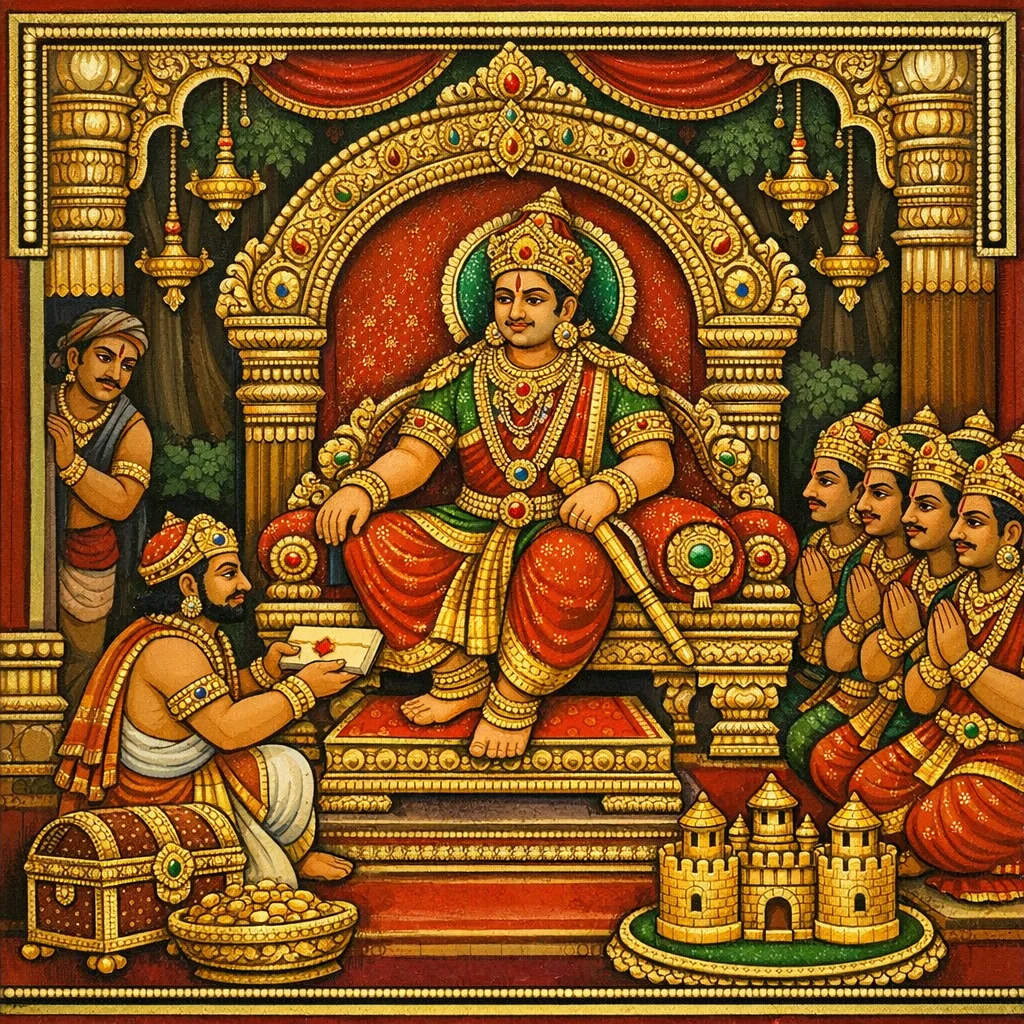
This chapter opens with Rāma’s teaching that mantra-śakti (the power of strategic counsel) surpasses mere personal prowess, treating governance as an applied science of discernment. It defines knowledge as cognition, confirmation, doubt-removal, and remaining decisiveness, and formalizes “mantra” as five-limbed counsel—alliances, means, assessment of place and time, and countermeasures in adversity—whose success is marked by mental clarity, faith, operational skill, and supportive prosperity. It warns that counsel is ruined by intoxication, negligence, lust, and careless speech, then describes the ideal envoy, the three grades of envoys, and field protocol for entering hostile spaces and reading an enemy’s intent. The teaching expands into intelligence doctrine: open agents and covert spies using occupational disguises. Calamities (vyasana) are then classified as divine and human, with śānti rites and policy remedies prescribed, and the state’s core concerns are listed: revenue and expenditure, daṇḍanīti, repelling enemies, disaster response, and protection of king and realm. The chapter diagnoses failures of ministers, treasury, forts, and royal character (addictions and vices of rule), turns to camp security, and concludes with the seven upāyas—sāma, dāna, bheda, daṇḍa, upekṣā, indrajāla, and māyā—giving subtypes and ethical limits, including restraint regarding brāhmaṇas and the tactical use of illusion to demoralize foes.
Shlokas
Verse 1
चत्वार्तिंशदधिकद्विशततमो ऽध्यायः उभयोरित्यादिः, स्वयं व्रजेदित्यन्तः पाठः ज पुस्तके नास्ति बलोत्करमिति ग , घ , ज , ञ च अथ चत्वारिंशदधिकद्विशततमो ऽध्यायः समादिः राम उवाच प्रभवोत्साहशक्तिभ्यां मन्त्रशक्तिः प्रशस्यते प्रभावोत्साहवान् काव्यो जितो देवपुरोधसा
Chapter 240 (240.1), textual note: The two-hundred-and-fortieth chapter begins with “ubhayor…” and ends with “svayaṃ vrajet”; this reading is absent in the J manuscript. The reading “balotkaram” occurs in G, Gh, J, Ñ. Then the chapter opens: Rāma said: Of the two powers—efficacy (prabhāva) and personal energy (utsāha)—mantric power (mantra-śakti) is praised. Even a poet endowed with efficacy and energy was once overcome by the chaplain of the gods.
Verse 2
मन्त्रयेतेह कार्याणि नानाप्तैर् नाविपश्चिता अशक्यारम्भवृत्तीनां कुतः क्लेशादृते फलं
In this world, those who are neither trustworthy nor discerning still deliberate about undertakings; but for those who habitually begin what is impossible, how could there be any result—except toil and distress?
Verse 3
अविज्ञातस्य विज्ञानं विज्ञातस्य च निश् चयः अर्थद्वैधस्य सन्देहच्छेदनं शेषदर्शनं
Knowledge is: (1) the cognition of what was previously unknown, (2) the ascertainment of what is already known, (3) the cutting off of doubt when a meaning appears in two ways, and (4) the discernment of what remains—the residual, decisive understanding.
Verse 4
सहायाः साधनोपाया विभागो देशकालयोः विपत्तेश् च प्रतीकारः पञ्चाङ्गो मन्त्र इष्यते
A “mantra” (strategic counsel) is held to be five-limbed: (1) allies, (2) the means and practical methods, (3) the assessment of place and time, and (4) countermeasures in adversity.
Verse 5
मनःप्रसादः श्रद्धा च तथा करणपाटवं सहायोत्थानसम्पच्च कर्मणां सिद्धिलक्षणं
Serenity of mind, steadfast faith, skillfulness in the instruments/means of execution, and the prosperity that arises through supportive allies—these are the marks of success in undertakings.
Verse 6
मदः प्रमादः कामश् च सुप्तप्रलपितानि च भिन्दन्ति मन्त्रं प्रच्छन्नाः कामिन्यो रमतान्तथा
Intoxication, heedlessness, and lust—and also words uttered in sleep—break and betray secret counsel; likewise do concealed, insidious amorous women for those who indulge in pleasure.
Verse 7
प्रगल्भः स्मृतिमान्वाग्मीशस्त्रे शास्त्रे च निष्ठितः अभ्यस्तकर्मा नृपतेर्दूतो भवितुर्मर्हति
One who is bold, strong in memory, eloquent, firmly grounded in the science of weapons and in the learned śāstras, and well-practised in his duties—such a person is fit to become a king’s envoy.
Verse 8
निसृष्टार्थो मितार्थश् च तथा शासनहारकः सामर्थ्यात् पादतो हीनो दूतस्तु त्रिविधः स्मृतः
The envoy is traditionally remembered as threefold: (1) one entrusted with a full commission, (2) one charged with a limited commission, and (3) one who merely carries the ruler’s written order; in capability, each is inferior to the preceding by a quarter.
Verse 9
नाविज्ञातं पुरं शत्रोः प्रविशेच्च न शंसदं नय इष्यते इति ख , घ च शासनशासक इति ख , छ च कालमीक्षेत कार्यार्थमनुज्ञातश् च निष्पतेत्
One should not enter an enemy’s city without first ascertaining it, nor should one enter an (enemy) assembly. Such conduct is approved as sound policy (naya). One should act as a bearer of orders and as an administrator, as required. Having observed the proper time for accomplishing the objective, and having obtained permission, one should then depart.
Verse 10
छिद्रञ्च शत्रोर्जानीयात् कोषमित्रबलानि च रागापरागौ जानीयाद् दृष्टिगात्रविचेष्टितैः
One should ascertain the enemy’s vulnerabilities, as well as his treasury, allies, and military strength; and one should discern his liking and aversion from his gaze, bodily features, and gestures.
Verse 11
कुर्याच्चतुर्विधं स्तोर्त्रं पक्षयोरुभयोरपि तपस्विव्यञ्जनोपेतैः सुचरैः सह संवसेत्
One should compose a stotra (hymn of praise) of four kinds, applicable to both sides (or both sections); and one should live in the company of the virtuous—those marked by tapas (ascetic discipline) and proper conduct.
Verse 12
चरः प्रकाशो दूतः स्यादप्रकाशश् चरो द्विधा बणिक् कृषीबलो लिङ्गी भिक्षुकाद्यात्मकाश् चराः
A spy who operates openly should be regarded as an envoy (messenger); the covert spy is of two kinds. Spies may assume the guises of a merchant, an agricultural laborer, an ascetic bearing a religious mark, a mendicant, and other such roles.
Verse 13
यायादरिं व्यसनिनं निष्फले दूतचेष्टिते प्रकृतव्यसनं यत्स्यात्तत् समीक्ष्य समुत्पतेत्
If the enemy is in distress and the envoy’s effort proves fruitless, then—after assessing what fresh calamity (or danger) is likely to arise from the situation—he should promptly withdraw (and depart).
Verse 14
अनयाद्व्यस्यति श्रेयस्तस्मात्तद्व्यसनं स्मृतं हुताशनो जलं व्याधिर्दुर्भिक्षं मरकं तथा
That by which one’s welfare (śreyas) is thrown into disorder is therefore called a ‘calamity’ (vyasana). These are: conflagration (fire), inundation (water), disease, famine, and epidemic mortality (plague).
Verse 15
इति पञ्चविधं दैवं व्यसनं मानुषं परं दैवं पुरुषकारेण शान्त्या च प्रशमन्नयेत्
Thus, the fivefold calamity arising from daiva (fate/divine causes), and the calamity arising from human agency—indeed even the superior (i.e., stronger) daiva—should be pacified by personal effort and by rites of propitiation (śānti).
Verse 16
उत्थापितेन नीत्या च मानुषं व्यसनं हरेत् मन्त्रो मन्त्रफलावाप्तिः कार्यानुष्ठानमायतिः
By well-applied policy and prudent initiative, one should remove human calamity and distress. A mantra is that which brings attainment of the mantra’s result; and the proper execution of a task is what secures its successful completion.
Verse 17
आयव्ययौ दण्डनीतिरमित्रप्रतिषेधनं व्यसनस्य प्रतीकारो राज्यराजाभिरक्षणं
Revenue and expenditure, the science of daṇḍanīti (punishment and governance), the repulsion of enemies, remedies against calamities, and the protection of the kingdom and the king—these are the essential concerns of statecraft.
Verse 18
इत्यमात्यस्य कर्मेदं हन्ति सव्यसनान्वितः हिरण्यधान्यवस्त्राणि वाहनं प्रजया भवेत्
Thus, this is the conduct prescribed for a minister (amātya): one entangled in vices destroys his office and purpose. As a consequence, he comes to lose gold, grain, garments, vehicles, and even his progeny.
Verse 19
तथान्ये द्रव्यनिचया दन्ति सव्यसना प्रजा प्रजानामापदिस्थानां रक्षणं कोषदण्डयोः
Likewise, other stores of wealth (resources) are to be maintained; and the subjects—even when prone to vices—are to be restrained and kept in order. The safeguarding of the people in times of calamity depends upon the treasury and the king’s punitive authority.
Verse 20
दृष्टिवक्त्रविचेष्टितैर् इति ग , घ , छ , झ , ञ च स्वचरैर् इति ज विफले इति घ , झ , ञ च पौराद्याश्चोपकुर्वन्ति संश्रयादिह दुर्दिनं तूष्णीं युद्धं जनत्राणं मित्रामित्रपरिग्रहः
By the expression “dṛṣṭi-vaktra-viceṣṭitaiḥ” the letters ga, gha, cha, jha, and ña are intended; by “svacaraiḥ” the letter ja is intended; by “viphale” the letters gha, jha, and ña are intended. Further, townsmen and the like render assistance here out of dependence (seeking refuge): in times of calamity, silence, war, protection of the people, and the choosing of friends and foes.
Verse 21
सामन्तादि कृते दोषे नश्येत्तद्व्यसनाच्च तत् भृत्यानां भरणं दानं प्रजामित्रपरिग्रहः
When a fault in governance arises due to feudatories (sāmanta) and the like, it should be neutralized—together with the calamity that follows from that misfortune. (The king should ensure) the maintenance of servants, the giving of gifts, and the securing of the people and allies.
Verse 22
धर्मकामादिभेदश् च दुर्गसंस्कारभूषणं कोषात्तद्व्यसनाद्धन्ति कोषमूलो हि भूपतिः
The differentiation of aims such as dharma and kāma, and the proper preparation and adornment of fortifications—these are upheld by the treasury; when the treasury falls into misfortune, they are ruined. For the king’s power is rooted in the treasury.
Verse 23
मित्रामित्रावनीहेमसाधनं रिपुमर्दनं दूरकार्याशुकारित्वं दण्डात्तद्व्यसनाद्धरेत्
Through daṇḍa (punitive authority), the king should secure: proper regulation of friends and foes, the acquisition of land and gold, the crushing of enemies, and swift execution even of distant undertakings—thus he removes calamities born of disorder.
Verse 24
सस्तम्भयति मित्राणि अमित्रं नाशयत्यपि धनाद्यैर् उपकारित्वं मित्रात्तद्व्यसनाद्धरेत्
By wealth and similar means one should keep one’s allies steadfast and also destroy the enemy; one should secure the ally’s helpfulness through gifts and the like, and rescue the ally from his calamity.
Verse 25
राजा सव्यसनी हन्याद्राजकार्याणि यानि च वाग्दण्डयोश् च पारुष्यमर्थदूषणमेव च
A king should punish one given to vices for neglecting or corrupting royal duties, for harshness in speech and in physical punishment, and likewise for the corruption of wealth (financial malpractice).
Verse 26
पानं स्त्री मृगया द्यूतं व्यसनानि महीपतेः आलस्यं स्तब्धता दर्पः प्रमादो द्वैधकारिता
Drinking, women (womanizing), hunting, and gambling are the addictions of a king; likewise, laziness, rigidity (stubbornness), arrogance, negligence, and duplicity.
Verse 27
इति पूर्वोपदिष्टञ्च सचिवव्यसनं स्मृतं अनावृष्टिश् च पीडादौ राष्ट्रव्यसनमुच्यते
Thus, what was taught earlier is remembered as the “vyasana” (calamity) pertaining to ministers; and drought (anāvṛṣṭi), together with afflictions such as oppression and the like, is declared to be a calamity of the kingdom (the state).
Verse 28
विशीर्णयन्त्रप्राकारपरिखात्वमशस्त्रता क्षीणया सेनया नद्धं दुर्गव्यसनमुच्यते
When a fort’s engines, ramparts, and moats have fallen into disrepair, when there is lack of weaponry, and when it is held only by a depleted garrison—this condition is called “durgavyasana,” a calamity of the fort.
Verse 29
व्ययीकृतः परिक्षिप्तो ऽप्रजितो ऽसञ्चितस् तथा दषितो दरसंस्थश् च कोषव्यसनमुच्यते
A treasury is said to be in “koṣavyasana” (calamity of the treasury) when it is: (i) spent away, (ii) squandered and emptied, (iii) not augmented (yielding no revenue), (iv) not accumulated, (v) corrupted or tainted, and (vi) lodged with “dara,” that is, placed in the hands of women or household dependents.
Verse 30
उपरुद्धं परिक्षिप्तममानितविमानितं संस्तम्भयतीत्यादिः, मित्रात्तद्व्यसनाद्धरेदित्यन्तः पाठः छपुअतके नास्ति अभूतं व्याधितं श्रान्तं दूरायातन्नवागतं
One who is obstructed, hemmed in, disrespected, or humiliated should be steadied and supported (and so forth). The concluding reading, “one should rescue (him) from that calamity through a friend,” is not found in the Chapu edition. (One should also help) a person without means, who is sick, exhausted, come from far away, or newly arrived.
Verse 31
परिक्षीणं प्रतिहतं प्रहताग्रतरन्तथा आशानिर्वेदभूयिष्ठमनृतप्राप्तमेव च
He becomes utterly depleted, thwarted, and struck down; his foremost strength is broken. He is then overwhelmed by despair regarding his hopes, and what is obtained proves false (or disappointing) indeed.
Verse 32
कलत्रगर्भन्निक्षिप्तमन्तःशल्पं तथैव च विच्छिन्नवीवधासारं शून्यमूलं तथैव च
Likewise, a foreign body (such as an arrowhead or splinter) lodged within a vital cavity, a wound whose essential supporting tissues have been severed, and a wound whose root (base or support) has been destroyed—these are held to be devoid of curability.
Verse 33
अस्वाम्यसंहतं वापि भिन्नकूटं तथैव च दुष्पार्ष्णिग्राहमर्थञ्च बलव्यसनमुच्यते
Property assembled without a rightful owner, goods taken from a broken or tampered hoard, and wealth obtained by coercive seizure—these are described as “misfortune arising from force” (balavyasana).
Verse 34
दैवोपपीडितं मित्रं ग्रस्तं शत्रुबलेन च कामक्रोधादिसंयुक्तमुत्साहादरिभिर्भवेत्
A friend oppressed by fate, or overpowered by the enemy’s forces, and possessed of desire, anger, and the like—such a one, through misplaced zeal, becomes an enemy.
Verse 35
अर्थस्य दूषणं क्रोधात् पारुष्यं वाक्यदण्डयोः कामजं मृगया द्यूतं व्यसनं पानकं स्त्रियः
From anger arises the spoiling of one’s wealth; and harshness arises in speech and in punishment. Born of desire are hunting and gambling; addictions are drinking and women (womanizing).
Verse 36
वाक्पारुष्यं परं लोके उद्वेजनमनर्थकं असिद्धसाधनं दण्डस्तं युक्त्यानयेन्नृपः
Harshness of speech is a grave fault in the world—causing needless agitation and yielding no beneficial end. Therefore, the king should, with due reasoning, impose a fitting punishment for it.
Verse 37
उद्वेजयति भूतानि दण्डपारुष्यवान् नृपः भूतान्युद्वेज्यमानानि द्विषतां यान्ति संश्रयं
A king who is harsh in punishment and coercion terrifies the people; and the people, thus frightened, go to seek shelter with his enemies.
Verse 38
विवृद्धाः शत्रवश् चैव विनाशाय भवन्ति ते दूष्यस्य दूषणार्थञ्च परित्यागो महीयसः
When enemies grow strong, they indeed become the cause of one’s destruction; and to censure what is blameworthy, a great person’s renunciation of it is itself a weighty principle.
Verse 39
अर्थस्य नीतितत्त्वज्ञैर् अर्थदूषणमुच्यते पानात् कार्यादिनो ज्ञानं मृगयातो ऽरितः क्षयः
Those who know the true principles of polity describe the ‘corruptions of wealth’ thus: from drinking arises loss of discernment in duties and affairs; from hunting comes harm; and from enemies comes ruin.
Verse 40
जितश्रमार्थं मृगयां विचरेद्रक्षिते वने धर्मार्थप्राणमाशादि द्यूते स्यात् कलहादिकं
To overcome fatigue, one may engage in hunting within a protected royal forest. But in gambling arise hope and the like, and it destroys dharma, wealth, and even life—giving rise to quarrels and other evils.
Verse 41
कालातिपातो धर्मार्थपीरा स्त्रीव्यसनाद्भवेत् पानदोषात् प्राणनाशः कार्याकार्याविनिश् चयः
From addiction to women arises the squandering of time and the loss of dharma and artha; from the fault of drinking comes destruction of life and the inability to discern what should and should not be done.
Verse 42
स्कन्धावारनिवेशज्ञो निमित्तज्ञो रिपुं जयेत् स्कन्धावारस्य मध्ये तु सकोषं नृपतेर्गृहं
One skilled in laying out a military encampment and versed in omens will conquer the enemy. In the very center of the camp should stand the king’s residence together with the treasury.
Verse 43
मौलीभूतं श्रेणिसुहृद्द्विषदाटविकं बलं राजहर्म्यं समावृत्य क्रमेण विनिवेशयेत्
Having formed them into a crown-like encircling array, one should station—step by step—the forces of guildsmen, friendly allies, hostile contingents taken or pressed into service, and forest-tribal troops, so as to enclose the royal palace on every side.
Verse 44
सैन्यैकदेशः सन्नद्धः सेनापतिपुरःसरः परिभ्रमेच्चत्वरांश् च मण्डलेन वहिर् निशि
At night, a fully armed detachment of the army, with the commander at its head, should patrol outside, moving in a circular formation and covering the crossroads and squares as well.
Verse 45
वार्ताः स्वका विजानीयाद्दरसीमान्तचारिणः निर्गच्छेत् प्रविशेच्चैव सर्व एवोपलक्षितः
He should ascertain the reports from his own agents who move along the border and frontier routes; and everyone—whether going out or entering—should be carefully observed and identified.
Verse 46
सामदानं च भेदश् च दण्डोपेक्षेन्द्रजालकं मायोपायाः सप्त परे निक्षिपेत्साधनाय तान्
Conciliation (sāma), gifts or inducements (dāna), dissension (bheda), punishment or force (daṇḍa), strategic neglect (upekṣā), conjuring illusion (indra-jāla), and deceptive expedients (māyā)—these are the seven means; the wise should deploy them as fitting to accomplish the objective.
Verse 47
चतुर्विधं स्मृतं साम उपकारानुकीर्तनात् मिथःसम्बन्ह्दकथनं मृदुपूर्वं च भाषणं
Conciliation (sāma) is taught as fourfold: (1) recalling and praising favors received or bestowed, (2) speaking of helpful deeds, (3) invoking mutual relations and bonds, and (4) addressing the other with gentle, courteous speech.
Verse 48
आयाते दर्शनं वाचा तवाहमिति चार्पणं यः सम्प्राप्तधनोत्सर्ग उत्तमाधममध्यमः
When someone comes (as a supplicant or guest), one who grants a respectful audience (darśana) and, with words, dedicates the gift saying, “This is yours; I am yours,” and then relinquishes wealth that has come into his hands, is regarded—according to the manner and spirit of the offering—as of superior, middling, or inferior grade.
Verse 49
प्रतिदानं तदा तस्य गृहीतस्यानुमोदनं द्रव्यदानमपूर्वं च स्वयङ्ग्राहप्रवर्तनं
Then one should: (i) make a return-gift to that person, (ii) express approval and glad assent for what has been accepted, (iii) give material wealth not given before, and (iv) encourage voluntary acceptance—receiving without coercion or solicitation.
Verse 50
देयश् च प्रतिमोक्षश् च दानं पञ्चविधं स्मृतं स्नेहरागापनयनसंहर्षोत्पादनं तथा
Gift-giving (dāna) is remembered as fivefold: (1) deya, a straightforward gift; (2) pratimokṣa, a gift for release or redemption; (3) dāna, the act of giving itself; (4) the removal of affectionate attachment (sneha-rāga-apanayana); and (5) the arousing of joy and enthusiasm (saṃharṣa-utpādana) as well.
Verse 51
मिथो भेदश् च भेदज्ञैर् भेदश् च त्रिविधः स्मृतः बधो ऽर्थहरणं चैव परिक्लेशस्त्रिधा दमः
Those skilled in the science of sowing dissension declare that “bheda” (creating division) is mutual—setting one against another—and is remembered as threefold. Likewise, coercive restraint (dama) is threefold: killing, confiscation of property, and harassment or affliction.
Verse 52
प्रकाशश्चाप्रकाशश् च लोकद्विष्टान् प्रकाशतः उद्विजेत हतैर् लोकस्तेषु पिण्डः प्रशस्यते
Whether acting openly or discreetly, one should keep away from those whom the people detest; for when such persons are destroyed, the public is appeased, and the offering of food-balls (piṇḍa) made for them is spoken of as proper.
Verse 53
परिवेशयेदिति ख तथैव सुप्रवर्तनमिति ज , ट च विशेषेणोपनिषिद्योगैर् हन्याच्छस्त्रादिना द्विषः जातिमात्रं द्विजं नैव हन्यात् सामोत्तरं वशे
“He should cause (them) to be surrounded/encircled”—thus reads the Kha recension; likewise, “he should set (the force) into good advance/engagement”—so in the Ja and Ṭa readings. By employing, in particular, secret and strategic methods, one should strike down hostile enemies with weapons and the like. But one should never kill a brāhmaṇa merely on the basis of birth; he should be brought under control by conciliation (sāma) and by granting an appropriate counter-offer or settlement.
Verse 54
प्रलिम्पन्निव चेतांसि दृष्ट्वासाधु पिबन्निव ग्रसन्निवामृतं साम प्रयुञ्जीत प्रियं वचः
Seeing minds as though they were smeared over (by passion or delusion), and seeing the wicked as though drinking what is harmful, one should employ conciliation through pleasing, gracious speech—like swallowing nectar.
Verse 55
मिथ्याभिशस्तः श्रीकाम आहूयाप्रतिमानितः राजद्वेषी चातिकर आत्मसम्भावितस् तथा
One who has been falsely accused; one who is greedy for wealth; one who, though summoned, has been dishonoured; one who hates the king; and likewise one who is excessively aggressive and self-conceited—such persons are to be regarded with suspicion as potential adversaries.
Verse 56
विच्छिन्नधर्मकामार्थः क्रुद्धो मानी विमानितः अकारणात् परित्यक्तः कृतवैरो ऽपि सान्त्वितः
One whose pursuits of dharma, desire, and wealth (dharma–kāma–artha) have been disrupted; who is angry; who is proud; who has been insulted; who has been abandoned without cause; and even one who has formed enmity—such a person too may be pacified by conciliation.
Verse 57
हृतद्रव्यकलत्रश् च पूजार्हो ऽप्रतिपूजितः एतांस्तु भेदयेच्छत्रौ स्थितान्नित्यान् सुशङ्कितान्
One whose wealth and wife have been taken away, and one who is worthy of honor but has not been duly honored—if such persons are found dwelling within the enemy’s camp, ever suspicious—should be employed to stir dissension there.
Verse 58
आगतान् पूजयेत् कामैर् निजांश् च प्रशमन्नयेत् सामदृष्टानुसन्धानमत्युग्रभयदर्शनं
He should honor those who have arrived by granting them desirable attentions, and he should also pacify his own people. Let sāma (conciliation) be pursued as the guiding course; yet, when required, let an exceedingly formidable fear—an appearance of harsh power—be displayed to deter threats.
Verse 59
प्रधानदानमानं च भेदोपायाः प्रकीर्तिताः मित्रं हतं काष्ठमिव घुणजग्धं विशीर्यते
Conciliation (sāma), gifts (dāna), honor (māna), and division (bheda) are declared as the means (of policy). A friendship, once struck down, falls apart—like wood eaten away by termites.
Verse 60
त्रिशक्तिर्देशकालज्ञो दण्डेनास्तं नयेदरीन् मैत्रीप्रधानं कल्याणबुद्धिं सान्त्वेन साधयेत्
Endowed with the threefold power of the state and knowing place and time, he should bring enemies to ruin by punishment; but one chiefly guided by friendliness and benevolent intent should be won over through sāma (conciliation).
Verse 61
लुब्धं क्षीणञ्च दानेन मित्रानन्योन्यशङ्कया दण्डस्य दर्शनाद्दुष्टान् पुत्रभ्रातादि सामतः
Win over the greedy and the weakened through dāna (gifts); keep allies in check through mutual suspicion; restrain the wicked by displaying the power of punishment; and pacify one’s own circle—sons, brothers, and the like—through sāma (conciliation).
Verse 62
दानभेदैश् चमूमुख्यान् योधान् जनपददिकान् सामान्ताटविकान् भेददण्डाभ्यामपराद्धकान्
By gifts and by sowing dissension, one should manage the chiefs of the army, the warriors, and those connected with the countryside and its groups; and one should deal with frontier vassals and forest-tribes through division and punishment, while offenders are to be handled by separation and chastisement.
Verse 63
देवताप्रतिमानन्तु पूजयान्तर्गतैर् नरैः पुमान् स्त्रीवस्त्रसंवीतो निशि चाद्भुतदर्शनः
But when men worship the deity’s icon from within the inner precinct, a man—clad in women’s garments—appears at night, presenting a wondrous vision.
Verse 64
दानभेदैश् चैव मुख्यान् पौरानिति ज वेतालोल्कापिशाचानां शिवानां च स्वरूपकी कामतो रूपधारित्वं शस्त्राग्न्यश्माम्बुवर्षणं
And they are classified by varieties of gifts (offerings), as well as by the principal classes called ‘pauras’; thus are described the characteristic forms of vetālas, olkās, piśācas, and also of the śivas (a class of beings). They can assume forms at will and shower weapons, fire, stones, and water.
Verse 65
तमो ऽनिलो ऽनलो मेघ इति माया ह्य् अमानुषी जघान कीचकं भीम आस्थितः स्त्रीरूपतां
“Darkness, wind, fire, cloud”—such was the non-human (supernatural) māyā. Assuming a woman’s form, Bhīma struck down Kīcaka.
Verse 66
अन्याये व्यसने युद्धे प्रवृत्तस्यानिवारणं उपेक्षेयं स्मृता भ्रातोपेक्षितश् च हिडिम्बया
In a time of injustice, calamity, or battle, failing to restrain one who has rushed into action is declared culpable “neglect”; and as an illustration, even a brother was neglected by Hiḍimbā.
Verse 67
मेघान्धकारवृष्ट्यग्निपर्वताद्भुतदर्शनं दरस्थानं च सैन्यानां दर्शनं ध्वजशालिनां
The appearance of wondrous (and ominous) sights—such as cloud-born darkness, rain, fire, and mountains—and also the strange positioning of troops, as well as the sighting of banner-bearing forces in unusual ways, are to be regarded as portents.
Verse 68
छिन्नपाटितभिन्नानां संसृतानां च दर्शनं इतीन्द्रजालं द्विषताम्भोत्यर्थमुपकल्पयेत्
One should contrive an indrajāla (illusion-display) that makes enemies see as if real those who are cut down, hacked apart, or shattered—and even those who have already departed from life as though they were moving about—so as to bewilder and overthrow the hostile side.
Frequently Asked Questions
Here ‘mantra’ is strategic counsel, defined as five-limbed planning: securing allies, selecting practical means, judging place and time, and preparing countermeasures for adversity—grounded in discernment and secrecy.
It presents three envoy grades—fully commissioned, limited commission, and mere order-carrier—implying different authority and discretion levels, which shapes negotiation risk, intelligence gathering, and accountability.
Calamities include fire, flood, disease, famine, and epidemic mortality (daiva), alongside human-caused crises; the text prescribes both śānti (propitiatory stabilization) and decisive policy action to restore order.
They are sāma (conciliation), dāna (gifts/inducements), bheda (division), daṇḍa (punishment/force), upekṣā (strategic neglect), indrajāla (illusion-display), and māyā (deceptive expedients), to be applied according to context.