Adhyaya 238
Chapter 238 — राजधर्माः (Rājadharmāḥ) | Duties of Kings
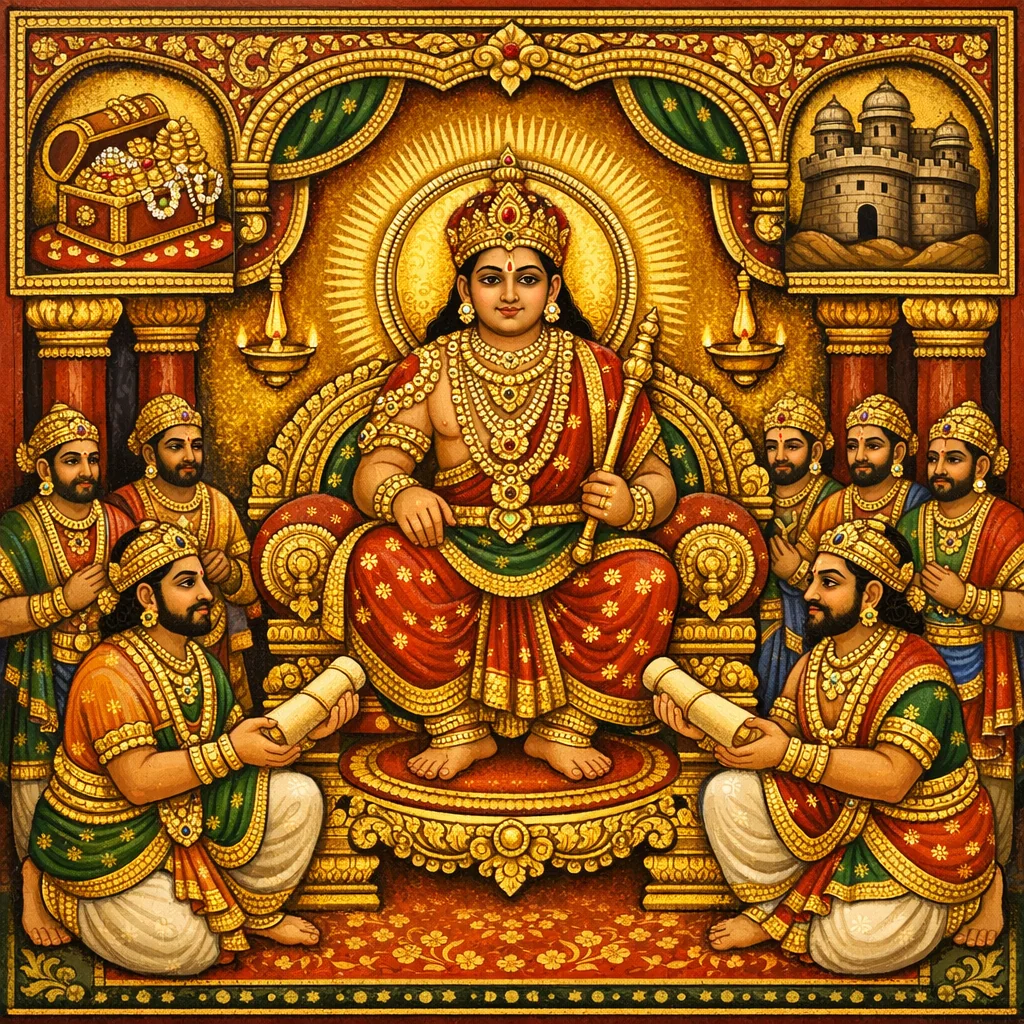
Voiced by Rāma, this chapter offers a compact rājadharma guide within the Agni Purana’s Nīti-śāstra. It opens with the saptāṅga theory of the state—svāmin (sovereign), amātya (ministers), rāṣṭra (territory/people), durga (fort), kośa (treasury), bala (army), and suhṛt (ally)—as mutually supporting limbs. It then lists royal and ministerial virtues: truthfulness, service to elders, gratitude, intelligence, purity, loyalty, foresight, and freedom from vices such as greed, hypocrisy, and fickleness, stressing mantra-gupti (secrecy of counsel) and skill in sandhi-vigraha (alliance and hostility). Next it describes state capacity: marks of a prosperous land, standards for founding cities, types and provisioning of forts, righteous methods of building the treasury, and disciplined organization of armed forces and punishment. It also explains choosing allies and making friends (threefold method: approach, sweet-clear speech, and honored gifts), the conduct of dependents and retainers, appointment of superintendents, revenue measures, public fears, and the king’s vigilant protection of self and realm.
Shlokas
Verse 1
इत्य् आग्नेये महापुराणे रामोक्तनीतिर्नाम सप्तत्रिंशदधिकद्विशततमो ऽध्यायः अथाष्टत्रिंशदधिकशततमो ऽध्यायः राजधर्माः राम उवाच स्वाम्यमात्यञ्च राष्ट्रञ्च दुर्गं कोषो बलं सुहृत् परस्परोपकारीदं सप्ताङ्गं राज्यमुच्यते
Thus, in the Agni Mahāpurāṇa ends the chapter called “Rāma’s Teaching on Polity,” the 237th chapter. Now begins Chapter 238, “Duties of Kings.” Rāma said: “The sovereign (king), the ministers, the territory and people, the fort, the treasury, the army, and the ally (friendly power)—this mutually supportive set of seven limbs is called a kingdom (state).”
Verse 2
स्वसमृद्धिष्वित्यादिः, मीनव्रतचरिष्णुतेत्यन्तः ज पुस्तके नास्ति राज्याङ्गानां वरं राष्ट्रं साधनं पालयेत् सदा कुलं शीलं वयः सत्त्वं दाक्षिण्यं क्षिप्रकारिता
“Beginning with ‘in one’s own prosperity …’ and ending with ‘… one who observes the fish-vow (mīna-vrata)’—this portion is not found in the ‘ja’ manuscript. The realm (rāṣṭra) is the foremost among the limbs of a kingdom; one should always protect the means (resources and instruments) that sustain it—considering lineage, conduct, age, steadfast character, generosity, and swift execution as qualifying factors.”
Verse 3
अविसंवादिता सत्यं वृद्धसेवा कृतज्ञता दैवसम्पन्नता बुद्धिरक्षुद्रपरिवारता
Truthfulness as harmony between word and deed, adherence to truth, service to elders, gratitude, being endowed with divine fortune, intelligence, and the possession of a noble (non-base) circle of associates—these are the virtues.
Verse 4
शक्यसामन्तता चैव तथा च दृढभक्तिता दीर्घदर्शित्वमुत्साहः शुचिता स्थूललक्षिता
And (he should possess) the ability to keep neighbouring feudatories manageable, as well as steadfast loyalty; farsightedness and initiative; purity of conduct; and clear, evident marks of good character.
Verse 5
विनीतत्वं धार्मिकता साधोश् च नृपतेर्गुणाः प्रख्यातवंशमक्रूरं लोकसङ्ग्राहिणं शुचिं
Modesty (humility), righteousness in accordance with dharma, and saintly conduct are the virtues of a king—(he should be) of a renowned lineage, non-cruel, a unifier who holds the people together, and pure.
Verse 6
कुर्वीतात्सहिताङ्क्षी परिचारं महीपतिः वाग्मी प्रगल्भः स्मृतिमानुदग्रो बलवान् वशी
The lord of the earth (the king) should employ as an attendant one who is watchful and cooperative, eloquent, confident, mindful of duties, energetic, strong, and self-controlled.
Verse 7
नेता दण्डस्य निपुणः कृतशिल्पपरिग्रहः पराभियोगप्रसहः सर्वदुष्टप्रतिक्रिया
The wielder of daṇḍa (the administrator of justice) should be skilled in daṇḍa (penal discipline), trained through acquired practical arts and disciplines, able to withstand hostile accusations and prosecutions, and competent in countermeasures against every kind of wickedness.
Verse 8
प्रवृत्तान्ववेक्षी च सन्धिविग्रहतत्त्ववित् गूढमन्त्रप्रचारज्ञो देशकालविभागवित्
He should keep watch over ongoing affairs, understand the true principles of alliance and hostility, know the deployment and circulation of confidential counsel, and be skilled in discerning proper divisions of place and time.
Verse 9
आदाता सम्यगर्थानां विनियोक्ता च पात्रवित् क्रोधलोभभयद्रोहदम्भचापलवर्जितः
He should acquire wealth rightly, allocate it properly, and know the worthy recipient—being free from anger, greed, fear, betrayal, hypocrisy, and fickleness.
Verse 10
परोपतापपैशून्यमात्सर्येर्षानृतातिगः वृद्धोपदेशसम्पन्नः शक्तो मधुरदर्शनः
He is free from causing distress to others and from slander; he has gone beyond envy, jealousy, and falsehood; he is endowed with the counsel of elders; he is capable, and his appearance and manner are pleasing and gentle.
Verse 11
गुणानुरागस्थितिमानात्मसम्पद्गुणाः स्मृताः कुलीनाः शुचयः शूराः श्रुतवन्तो ऽनुरागिणः
Those who are steady in their devotion to virtue, endowed with inner wealth and good qualities, are remembered as truly noble—pure in conduct, courageous, learned, and affectionate (well-disposed).
Verse 12
एत् सदेत्यन्तः पाठः ग पुस्तके नास्ति तद्वच्च दृढभक्तितेति ग कृतशिल्पः स्ववग्रह इति घ , ञ च सर्वदुष्टप्रतिग्रह इति ख , घ , छ च परच्छिद्रान्ववेक्षी चेति घ , ञ च गुणवन्तो ऽनुगामिन इति ग दण्डनीतेः प्रयोक्तारः सचिवाः स्युर्महीपतेः सुविग्रहो जानपदः कुलशीककलान्वितः
Ministers (sacivas) are the executors of the king’s policy of governance and punishment (daṇḍanīti). They should be sound in body and bearing, experienced in the affairs of the realm, endowed with good family background and conduct, and accomplished in the arts and practical skills.
Verse 13
वाग्मी प्रगल्भश् चक्षुष्मानुत्साही प्रतिपत्तिमान् स्तम्भचापलहीनश् च मैत्रः क्लेशसहः शुचिः
He should be eloquent and confident, clear-sighted, energetic, and possessed of sound judgment; free from arrogance and fickleness; friendly, able to endure hardship, and pure in conduct.
Verse 14
सत्यसत्त्वधृतिस्थैर्यप्रभावारोग्यसंयुतः कृतशिल्पश् च दक्षश् च प्रज्ञावान् धारणान्वितः
Endowed with truthfulness, integrity, fortitude, steadiness, personal influence, and good health; trained in the arts and crafts, competent and efficient, intelligent, and possessed of strong retention and composure—such is the ideal person.
Verse 15
दृढभक्तिरकर्ता च वैराणां सचिवो भवेत् स्मृतिस्तत्परतार्थेषु चित्तज्ञो ज्ञाननिश् चयः
He should possess steadfast loyalty and not act on his own impulse; he should serve as a counsellor even in dealings with enemies. He should have reliable memory regarding matters aligned with the intended aim, be a knower of minds, and have firm certainty of knowledge.
Verse 16
दृढता मन्त्रगुप्तिश् च मन्त्रिसम्पत् प्रकीर्तिता त्रय्यां च दण्डनीत्यां च कुशलः स्यात् पुरोहितः
Steadfastness and the safeguarding of counsel are declared to be the excellence of a minister; and the royal priest (purohita) should be proficient both in the Vedic triad (trayyā) and in the science of governance and punishment (daṇḍanīti).
Verse 17
अथर्वदेवविहितं कुर्याच्छान्तिकपौष्टिकं साधुतैषाममात्यानां तद्विद्यैः सह बुद्धिमान्
A wise king should perform the pacificatory and prosperity-conferring rites prescribed in the Atharvaveda, together with those skilled in that lore, for the welfare and good conduct of his ministers.
Verse 18
चक्षुष्मत्तां च शिल्पञ्च परीक्षेत गुणद्वयं स्वजनेभ्यो विजानीयात् कुलं स्थानमवग्रहं
One should examine two qualities—keen discernment and practical skill—and, through a person’s own kinsmen, ascertain their lineage, social standing, and reliability as shown by their record.
Verse 19
परिकर्मसु दक्षञ्च विज्ञानं धारयिष्णुतां गुणत्रयं परीक्षेत प्रागलभ्यं प्रीतितां तथा
Before appointing a person, one should examine this triad of qualities: competence in practical tasks, true knowledge, and steadfast perseverance; and also test their prior conduct and their goodwill—willing, pleased loyalty.
Verse 20
कथायोगेषु बुद्ध्येत वाग्मित्वं सत्यवादितां उतसाहं च प्रभावं च तथा क्लेशसहिष्णुतां
In the disciplined craft of composing and delivering narratives, one should cultivate eloquence, truthfulness in speech, enthusiasm, persuasive power, and endurance of hardships.
Verse 21
धृतिं चैवानुरागं च स्थैर्यञ्चापदि लक्षयेत् भक्तिं मैत्रीं च शौचं च जानीयाद्व्यवहारतः
One should recognize fortitude and affection, and also steadfastness in times of adversity; and from a person’s practical dealings one should know their devotion, friendliness, and purity of conduct.
Verse 22
कृतशीलश्चेति ज चिन्तको ज्ञाननिश् चय इति ग परीक्षेत गुणत्रयमिति ज प्रतिभां तथेति ज स्वजनेभ्य इत्य् आदिः, क्लेशसहिष्णुतामित्यन्तः पाठः छ पुस्तके नास्ति संवासिभ्यो बलं सत्त्वमारोग्यं शीलमेव च अस्तब्धतामचापल्यं वैराणां चाप्यकीर्तनं
From those with whom one dwells (close associates), one should gain strength, courage, good health, and good conduct; likewise, humility without arrogance and steadiness free from fickleness—and even among enemies, the condition of not being spoken of (not becoming notorious).
Verse 23
प्रत्यक्षतो विजानीयाद् भद्रतां क्षुद्रतामपि फलानुमेयाः सर्वत्र परोक्षगुणवृत्तयः
One should ascertain directly, from what is manifest, both excellence and inferiority; for everywhere the latent operations of qualities are to be inferred from their results.
Verse 24
शस्याकरवती पुण्या खनिद्रव्यसमन्विता गोहिता भूरिसलिला पुण्यैर् जनपदैर् युता
A blessed land is one rich in crops and mines, beneficial to cattle, abundant in waters, and connected with (or surrounded by) virtuous and meritorious settlements.
Verse 25
रम्या सकुञ्जरबला वारिस्थलपथान्विता अदेवमातृका चेति शस्यते भूरिभूतये
A site is praised for abundant prosperity when it is delightful, has strength like that of elephants, is provided with water, firm ground, and roads, and is not afflicted by harmful mother-goddess spirits.
Verse 26
शूद्रकारुवणिक्प्रायो महारम्भः कृषी बलः सानुरागो रिपुद्वेषी पीडासहकरः पृथुः
He associates mostly with Śūdras, artisans, and merchants; he undertakes large enterprises, is devoted to agriculture and strength, is affectionate, hostile toward enemies, endures hardships, and is broad-bodied (stout/large-framed).
Verse 27
नानादेश्यैः समाकीर्णो धार्मिकः पशुमान् बली ईदृक्जनपदः शस्तो ऽमूर्खव्यसनिनायकः
A realm filled with people from many regions, righteous in accord with dharma, rich in livestock, and strong—such a country is commendable, especially when it is led by one who is neither foolish nor enslaved by vices.
Verse 28
पृथुसीमं महाखातमुच्चप्राकारतोरणं पुरं समावसेच्छैलसरिन्मरुवनाश्रयं
One should establish a city with a broad boundary, a great moat, lofty ramparts and gateways—situated so as to rely upon mountains, rivers, deserts, and forests for support.
Verse 29
जलवद्धान्यधनवद्दुर्गं कालसहं महत् औदकं पार्वतं वार्क्षमैरिणं धन्विनं च षट्
A fort should be furnished with water, grain, and wealth; it should be great and able to endure the passage of time. The six types of forts are: the water-fort, the mountain-fort, the forest/tree-fort, the desert-fort, the dry-land (plain)-fort, and the sandy, arid-tract fort.
Verse 30
ईप्सितद्रव्यसम्पूर्णः पितृपैतामहोचितः धर्मार्जितो व्ययसहः कोषो धर्मादिवृद्धये
A treasury should be filled with the sought and necessary resources, conforming to the standards handed down from father and grandfather; acquired through righteous means in accord with dharma, and able to bear expenditure—so that dharma and the other aims of life may increase.
Verse 31
पितृपैतामहो वश्यः संहतो दत्तवेतनः विख्यातपौरुषो जन्यः कुशुलः शकुनैर् वृतः
He is of paternal and ancestral lineage, amenable to control, disciplined and well-organized, a paid retainer; renowned for valor, born of a common martial stock, competent, and attended by augurs who read omens (śakuna).
Verse 32
नानाप्रहणोपेतो नानायुद्धविशारदः सत्त्वमारोग्यं कुलमेव चेति ज मख्यव्यसननायक इति ग उच्चप्रकारगोपुरमिति घ , ञ च नानायोधसमाकीर्णौ नीराजितहयद्विपः
Equipped with many kinds of weapons and skilled in many modes of warfare—these are the marks. Courage, freedom from disease, and noble lineage: these are the marks called “ja”. A leader who overcomes calamities and addictions (vices): this is “ga”. A fortress with lofty ramparts and a gate-tower (gopura): this is “gha”. And “ña” is an army-position crowded with various warriors, with horses and elephants adorned and made resplendent.
Verse 33
प्रवासायासदुःखेषु युद्धेषु च कृतश्रमः अद्वैधक्षत्रियप्रायो दण्डो दण्डवतां मतः
In hardships arising from travel, exertion, and suffering—and also in wars—punishment (daṇḍa), in the view of those versed in the science of chastisement, is that which makes one undergo toil. It is to be imposed chiefly upon a kṣatriya, and without duplicity—straightforward and impartial.
Verse 34
योगविज्ञानसत्त्वारूढ्यं महापक्षं प्रियम्वदं आयातिक्षममद्वैधं मित्रं कुर्वीत सत्कुलं
One should make as a friend a person of good family—one established in yoga and true knowledge, strongly supported (by allies), sweet-spoken, able to endure misfortune, free from the intoxication of pride, and not double-minded.
Verse 35
दूरादेवाभिगमनं स्पष्टार्थहृदयानुगा वाक् सत्कृत्य प्रदानञ्च त्रिविधो मित्रसङ्ग्रहः
Approaching a prospective ally even from afar, speaking words that are clear in meaning and agreeable to the heart, and giving gifts with due honor—this is the threefold method of securing friends.
Verse 36
धर्मकामार्थसंयोगो मित्रात्तु त्रिविधं फलं औरसं तत्र सन्नद्धं तथा वंशक्रमागतं
From a friend arises a threefold benefit: the conjunction of dharma (duty/rightness), kāma (legitimate enjoyment), and artha (material advantage). In that friendship, the bond is firmly established as something akin to a true-born, natural tie, and likewise as something received through lineage and succession.
Verse 37
रक्षितं व्यसनेभ्यश् च मित्रं ज्ञेयं चतुर्विधं मित्रे गुणाः सत्यताद्याः समानसुखदुखता
A friend is to be understood as fourfold; a true friend is one who protects you from calamities. The virtues of a friend begin with truthfulness and include sharing the same happiness and sorrow—standing with you alike in joy and in grief.
Verse 38
वक्ष्ये ऽनुजीविनां वृत्ते सेवी सेवेत भूपतिं दक्षता भद्रता दार्ढ्यं क्षान्तिः क्लेशसहिष्णुता
I shall explain the proper conduct of those who live by service: a retainer should serve the king, endowed with competence, good character, firmness, patience, and endurance of hardships.
Verse 39
सन्तोषः शीलमुत्साहो मण्डयत्यनुजीविनं यथाकालमुपासीत राजानं सेवको नयात्
Contentment, good conduct, and energetic effort adorn one who lives in dependence (a servant). A servant should attend upon the king at the proper times and should act with sound policy (proper guidance).
Verse 40
परस्थानगमं क्रौर्यमौद्धत्यं मत्सरन्त्यजेत् विगृह्य कथनं भृत्यो न कुर्याज् ज्यायसा सह
Let him avoid going to others’ places (without cause), cruelty, arrogance, and envy. A servant should not, after quarreling, speak contentious words with a superior.
Verse 41
गुह्यं मर्म च मन्त्रञ्च न च भर्तुः प्रकाशयेत् रक्ताद् वृत्तिं समीहेत विरक्तं सन्त्यजेन्नृपं
One should not disclose to the husband what is secret, what is a vital vulnerability, or what is a mantra. One should seek one’s maintenance from one who is attached and benevolent, and one should abandon a king who has become indifferent and disaffected.
Verse 42
अकार्ये प्रतिषेधश् च कार्ये चापि प्रवर्तनं सङ्क्षेपादिति सद्वृत्तं बन्धुमित्रानुजीविनां
To restrain oneself (and others) from what ought not to be done, and to encourage what ought to be done—this, in brief, is the rule of good conduct (sad-vṛtta) for those who live in reliance upon kinsmen and friends.
Verse 43
मित्रं कुर्वीत सत्क्रियमिति ज तत्र सम्बद्धमिति ग आजीव्यः सर्वसत्त्वानां राजा पर्जन्यवद्भवेत् आयद्वारेषु चाप्त्यर्थं धनं चाददतीति च
“One should make a friend through honorable conduct” (so says one reading); “it is connected with that context” (so says another). The king should be the very livelihood of all beings, becoming like Parjanya (the rain-god) in sustenance; and, for the sake of due acquisition, he also takes wealth at the channels of revenue.
Verse 44
कुर्यादुद्योगसम्पन्नानध्यक्षान् सर्वकर्मसु कृषिर्वणिक्पथो दुर्गं सेतुः कुञ्जरबन्धनं
He should appoint energetic and efficient superintendents (adhyakṣa) for every state undertaking—agriculture, trade-routes, forts, bridges/causeways, and the tethering and management of elephants.
Verse 45
खन्याकरबलादानं शून्यानां च निवेशनं अष्टवर्गमिमं राजा साधुवृत्तो ऽनुपालयेत्
A righteous king should duly administer this eightfold set of measures: levies from mines, taxes, the taking of military service, and the settlement (rehabilitation) of vacant or deserted lands.
Verse 46
आमुक्तिकेभ्यश् चौरेभ्यः पौरेभ्यो राजवल्लभात् पृथिवीपतिलोभाच्च प्रजानां पञ्चधा भयं
For the people, fear is fivefold: from those released (criminals), from thieves, from townsmen, from the king’s favourites, and from the greed of the ruler.
Verse 47
अवेक्ष्यैतद्भयं काले आददीत करं नृपः अभ्यन्तरं शरीरं स्वं वाह्यं राष्ट्रञ्च रक्षयेत्
Having assessed this danger at the proper time, the king should levy a tax; and he should protect his own body inwardly, and outwardly protect the kingdom as well.
Verse 48
दण्डांस्त दण्डयेद्राजा स्वं रक्षेच्च विषादितः स्त्रियः पुत्रांश् च शत्रुभ्यो विश्वसेन्न कदाचन
The king should punish with due punishments and, being vigilant, should protect himself; he should also protect women and sons from enemies, and never place trust in foes at any time.
Frequently Asked Questions
Svāmin (king), amātya (ministers), rāṣṭra (territory/people), durga (fort), kośa (treasury), bala (army), and suhṛt (ally)—presented as mutually supportive components of state power.
Truthfulness and consistency, intelligence and clear-sightedness, practical skill, endurance of hardship, steadfast loyalty, secrecy of counsel (mantra-gupti), freedom from vices (anger, greed, fear, hypocrisy), and competence in alliance/hostility policy (sandhi-vigraha).
It recommends establishing a well-bounded city with moat, ramparts, and gateways, supported by natural features (mountains, rivers, deserts, forests), and describes multiple fort-types while insisting on provisioning with water, grain, and wealth for long endurance.
The king should sustain beings like rain (Parjanya) while also collecting wealth through revenue channels at the proper time, balancing taxation with protection against public fears and internal/external security.