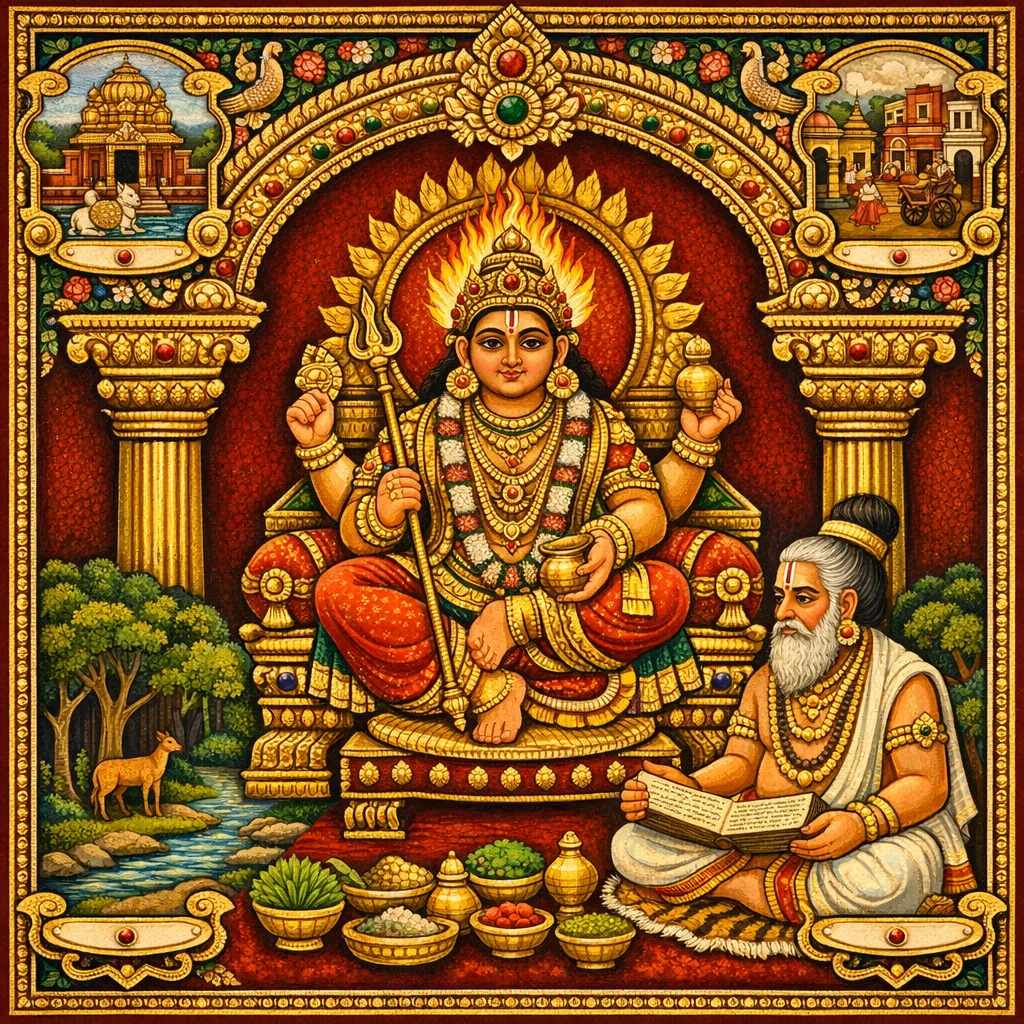
Adhyaya 362
Bhūmi–Vana–Auṣadhi–Ādi Vargāḥ (भूमिवनौषध्यादिवर्गाः) — Lexical Groups on Earth, Settlements, Architecture, Forests, Materia Medica, and Fauna
Lord Agni continues kośa-style instruction to Sage Vasiṣṭha by listing synonym-groups (vargāḥ) that steady technical and poetic vocabulary. It begins with terms for earth and clay, then moves to cosmological and spatial language (world, path/route). Next comes civic and Vāstu nomenclature—cities, markets, streets, gateways, ramparts, walls, halls, dwellings, palaces, doors, ladders, and cleaning terms—showing how lexicography supports built-environment description (Vāstu Śāstra) and administration (nigama, sthānīya). The discourse then turns to nature (mountain, forest, cultivated groves) and flows into an extended Āyurvedic nighaṇṭu: trees, creepers, herbs, and drug-synonyms, often distinguishing varieties by color or form. The closing adds zoological and ornithological synonymy (tiger, boar, wolf, spider, birds, bee) and ends with collective nouns for heaps, groups, and clusters, useful for scripture, polity, and scientific description. The chapter exemplifies Agneya Vidyā’s samanvaya: linguistic precision as a dharmic tool aligning medicine, architecture, and worldly order with spiritual discipline.
Shlokas
Verse 1
इत्य् आग्नेये महापुराणे नानार्थवर्गा नमैकषष्ट्यधिकत्रिशततमो ऽध्यायः अथ द्विषष्ट्यधिकत्रिशततमो ऽध्यायः भूमिवनौषध्यादिवर्गाः अग्निर् उवाच वक्ष्ये भूपुराद्रिवनौषधिसिंहादिनर्गकान् भूरनन्ता कक्षमा धात्री क्ष्माप्याकुः स्याद्धरित्र्यपि
Thus, in the Agni Mahāpurāṇa, the chapter on “polysemous word-groups” (nānārtha-vargāḥ)—the three-hundred-and-sixty-first chapter—is concluded. Now begins the three-hundred-and-sixty-second chapter, the section of word-groups concerning earth, forests, medicinal plants, and the like. Agni said: “I shall state the synonym-groups for terms such as earth, city, mountain, forest, medicinal herbs, lion, and other classes of words. ‘Bhū’ (earth) is also called Anantā, Kakṣamā, Dhātrī, Kṣmā, Āku, and likewise Haritrī.”
Verse 2
मृन्मृत्तिका प्रशस्ता तु मृत्सा मृत्स्ना च मृत्तिका जगत्त्रपिष्टपं लोकं भुवनं जगती समा
Clay is also called mṛn; mṛttikā is also termed praśastā, mṛtsā, and mṛtsnā. “World” is expressed by the synonyms trapīṣṭapa, loka, bhuvana, jagatī, and samā.
Verse 3
अयनं वर्त्म मार्गाध्वपन्थानः पदवी सृतिः सरणिः पद्धत्तिः पद्या वर्तन्येकपदीति च
‘Ayana’, ‘vartman’, ‘mārga’, ‘adhvan’, ‘panthāna’, ‘padavī’, ‘sṛti’, ‘saraṇi’, ‘paddhati’, ‘padyā’, ‘vartani’, and ‘eka-padī’ are all terms meaning “path/way.”
Verse 4
पूः स्त्री पुरीनगर्यौ वा पात्तनं पुटभेदनम् स्थानीयं निगमो ऽन्यत्तु यन्मूलनगरात्पुरम्
The term «pūḥ» is feminine, and is also called «purī» or «nagarī». A settlement is termed «pāṭṭana», and another designation is «puṭabhedana». A local administrative seat is called «sthānīya», and another type is «nigama»; but a town that arises from, or is dependent upon, a root/primary city (mūlanagara) is called «puram».
Verse 5
तच्छाखानगरं वेशो वेश्याजनसमाश्रयः आपणस्तु निषद्यायां विपणिः पण्यवीथिका
A subsidiary town is called «śākhānagara» (“branch-town”). A «veśa» is a quarter inhabited by courtesans. An «āpaṇa» is a shop—a place for sitting and trading—while a «vipaṇi» is a market, and «paṇyavīthikā» is a street of merchandise (a bazaar-lane).
Verse 6
रथ्या प्रतोली विशिखा स्याच्चयो वप्रमस्त्रियां प्राकारो वरणः शालः प्राचीरं प्रान्ततो वृतिः
«Rathyā» means a carriage-road; «pratolī» a gatehouse or arched gateway; «viśikhā» a lane or side-street. A «caya» is a piled-up embankment; «vapra» is a rampart of raised earth. In feminine usage, «prākāra» (enclosing wall) is also called «varaṇa» and «śāla»; and «prācīra» denotes the boundary-fence or outer enclosure at the edge of a settlement.
Verse 7
भित्तिः स्त्री कुह्यमेडूकं यदन्तर्नस्तकीकसं वासः कूटो द्वयोः शाला सभा सञ्जवनन्त्विदम्
«Bhitti» means a wall. «Strī» denotes a woman. «Kuhya» also means a frog. That which is placed within is called «nastakīkasa». A dwelling is «vāsa». A summit or peak is «kūṭa». A hall is «śālā» (also «sabhā»). And this is termed «sañjavana», i.e., a life-restoring or animating expression.
Verse 8
चतुःशालं मुनीनान्तु पर्णशालोटजो ऽस्त्रियां चैत्यमायतनन्तुल्ये वाजिशाला तु मन्दुरा
For sages (munis), a dwelling with four halls is called «catuḥśālā»; a leaf-hut is termed «parṇaśālā» (also «oṭaja»). In feminine usage, a sanctuary comparable to a «caitya» is called an «āyatana»; and a «vājiśālā» is a «mandurā», a stable for horses.
Verse 9
हर्म्यादि धनिनां वासःप्रासादो देवभूभुजां स्त्री द्वार्द्वारं प्रतीहारः स्याद्वितर्दिस्तु वेदिका
A harmya and the like are the dwellings of the wealthy; a prāsāda is the palace—temple-like mansion—of kings and of the gods. Strī means the door-frame; dvāradvāra the doorway; pratīhāra the door-keeper; and vitardi the raised platform or altar (vedikā).
Verse 10
कपोतपालिकायन्तु विटङ्कं पुं नपुंसकं कवाटमवरन्तुल्ये निःश्रेणिस्त्वधिरोहिणी
Kapotapālikā denotes a viṭaṅka; and the word viṭaṅka is used both in the masculine and the neuter. Kavāṭa means a door-leaf or shutter and is synonymous with avarantu. Niḥśreṇī is also called adhirohiṇī, namely a ladder or means of ascent.
Verse 11
सम्मार्जनी शोधनी स्यात् सङ्करो ऽवकरस् तथा अद्रिगोत्रिगिरिग्रावा गहनं काननं वनं
‘Sammārjanī’ is also called ‘śodhanī’, a broom or implement of cleansing. ‘Saṅkara’ is likewise ‘avakara’, meaning refuse and rubbish. ‘Adri, gotri, giri, grāvā’ denote a mountain or rock; and ‘gahana, kānana, vana’ denote a forest, a dense woodland.
Verse 12
आरामः स्यादुपवनं कृत्रिमं वनमेव यत् स्यादेतदेव प्रमदवनमन्तःपुरोचितं
An ārāma, a pleasure-garden or park, is an upavana—namely, a grove artificially made, cultivated and arranged. This very grove is called a pramadavana, suitable for the inner palace quarters (the women’s apartments).
Verse 13
वीथ्यालिरावलिः पङ्क्तिश्रेणीलेखास्तु राजयः वानस्पत्यः फलैः पुष्पात्तैरपुष्पाद्वनस्पतिः
Vīthī, āli, and āvalī are names for a row or series; and paṅkti, śreṇī, and lekhā are likewise names for lines (rājayaḥ). That which bears fruit is termed vānaspatya; that which bears fruit from flowers is called vṛkṣa; and that which bears fruit without flowering is termed vanaspati.
Verse 14
ओषध्यः फलपाकान्ताः पलाशी द्रुद्रुमागमाः स्थाणु वा ना ध्रुवः शङ्कुः प्रफुल्लोत्फुल्लसंस्फुटाः
Medicinal plants that reach completion with the ripening of their fruit, broad‑leaved growths, and trees newly sprung up—these are to be observed; likewise a stump or an immovable post, a fixed peg as a marker, and plants in full bloom, bursting forth and fully opened.
Verse 15
पलाशं छदनं पर्णमिध्ममेधः समित् स्त्रियां बोधिद्रुमश् चलदलो दधित्थग्राहिमन्मथाः
Palāśa is also known by the names Chādana, Parṇa, Idhma, Medha, Samit, Striyām, Bodhidruma, Caladala, Dadhittha, Grāhi, and Manmatha.
Verse 16
तस्मिन् दधिफलः पुष्पफलदन्तशठावपि उडुम्बरे हेमदुग्धः कोविदारे द्विपत्रकः
For that tree, the synonyms are “Dadhiphala,” and also “Puṣpaphala,” “Danta,” and “Śaṭhā.” For the Udumbara (cluster fig) the synonym is “Hemadugdha,” and for the Kovidāra tree the synonym is “Dvipatraka.”
Verse 17
सप्तपर्णो विशालत्वक् कृतमालं सुवर्णकः आरेवतव्याधिघातसम्पाकचतुरङ्गुलाः
Saptaparṇa, Viśālatvak, Kṛtamāla, Suvarṇaka, Ārevata, Vyādhighāta, Sampāka, and Caturaṅgula—these are names of medicinal substances.
Verse 18
स्याज्जम्बीरे दन्तशठो वरुणे तिक्तशावकः पुत्रागे पुरुषस्तुङ्गः केशरो देववल्लभः
For jambīra (citron/lemon), the synonym is dantaśaṭha; for varuṇa, (the synonym is) tiktaśāvaka; for putrāga, (the synonyms are) puruṣatuṅga, keśara, and devavallabha.
Verse 19
पारिभद्रे निम्बतरुर्मन्दारः पारिजातकः वञ्जुलश्चित्रकृच्चाथ द्वौ पीतनकपीतनौ
In the group beginning with pārijāta/paribhadraka are: the neem tree, mandāra, pārijātaka, vañjula, citrakṛt; and also the two varieties called pītanaka and pītana.
Verse 20
आम्रातके मधूके तु गुडपुष्पमधुद्रुमौ पीलौ गुडफलः स्रंसी नादेयी चाम्बुवेतसः
For the āmrātaka and the madhūka tree, the names are guḍapuṣpa and madhudruma. For the pīlu tree, the synonyms are guḍaphala, sraṃsī, nādeyī, and ambuvetasa.
Verse 21
शोभाञ्जने शिग्रुतीक्ष्णगन्धकाक्षीरमोचकाः रक्तो ऽसौ मधुशिग्रुः स्यादरिष्टः फेणिलः समौ
‘Śobhāñjana’ is also called Śigru, Tīkṣṇagandha, Kākṣīramocaka, and Rakta (Śigru). It is also known as Madhuśigru; and Ariṣṭa and Pheṇila are synonymous with it.
Verse 22
गालवःशावरो लोध्रस्तिरीटस्तिल्वमार्जनौ शेलुः श्लेष्मातकः शीत उद्दालो बहुवारकः
Gālava, Śāvara, Lodhra, Tirīṭa, Tilva, and Mārjana; also Śelu, Śleṣmātaka, Śīta, Uddāla, and Bahuvāraka—these are names denoting medicinal trees/plants (as listed in the materia medica).
Verse 23
वैकङ्कतः श्रुवावृक्षो ग्रन्थिलो व्याघ्रपादपि तिन्दुकः स्फूर्जकः कालो नादेयी भूमिजम्बुकः
Vaikaṅkata, Śruvā-vṛkṣa, Granthila, Vyāghrapāda, Tinduka, Sphūrjaka, Kāla, Nādeyī, and Bhūmi-jambuka—these are recognized names/designations of medicinal trees/plants (as listed in this chapter).
Verse 24
काकतिन्दौ पीलुकः स्यात् पाटलिर्मोक्षमुष्ककौ क्रमुकः पट्टिकाख्यः स्यात्कुम्भी कैटर्यकट्फले
In the Agni Purāṇa it is stated that Pīluka is also called Kākatindu. Pāṭalī is likewise known as Mokṣamuṣka. Kramuka is also called Paṭṭikā. And Kaiṭarya and Kaṭphala are also known as Kumbhī.
Verse 25
वीरवृक्षो ऽरुष्करो ऽग्निमुखी भल्लातकीं त्रिषु सवर्जकासनजीवाश् च पीतसाले ऽथ मालके
In the Agni Purāṇa, Vīravṛkṣa, Aruṣkara, and Agnimukhī are names for Bhallātakī. Likewise, for Triṣu there are the names Savarjaka, Āsana, and Jīva; and for Pītasāla there is also the name Mālaka.
Verse 26
सर्जाश्वकर्णौ वीरेन्द्रौ इन्द्रद्रुः ककुभो ऽर्जुनः इङ्गुदी तापसतरुर्मोचा शाल्मलिरेव च
The Agni Purāṇa enumerates these trees: Sarja and Aśvakarṇa; Vīrendra; Indradru; Kakubha; Arjuna; Iṅgudī; Tāpasataru, the ascetics’ tree; Mocā; and Śālmali as well.
Verse 27
चिरविल्वो नक्तमालः करजश् च करञ्जके प्रकीर्यः पूतिकरजो मर्कट्यङ्गारवल्लरी
For Karañjaka (Karañja), the names Ciravilva, Naktamāla, and Karaja are used; and also Prakīrya, Pūtikaraja, Markaṭī, and Aṅgāravallarī—these are the synonyms in circulation.
Verse 28
रोही रोहितकः प्लीहशत्रुर्दाडिमपुष्पकः गायत्री बालतनयः खदिरो दन्तधावनः
The recognized names for this medicinal substance are: Rohī; Rohitaka; Plīhaśatru, “the enemy of splenic disorders”; Dāḍimapuṣpaka, “pomegranate-flower”; Gāyatrī; Bālatanaya, “offspring of Bala”; Khadira; and Dantadhāvana, “that which is used for cleaning the teeth”.
Verse 29
अरिमेदो विट्खदिरे कदरः खदिरे सिते पञ्चाङ्गुलो वर्धमानश् चञ्चुर्गन्धर्वहस्तकः
Arimeda is also called Viṭ-khadira. Kadara is another name for the white khadira. Pañcāṅgula, Vardhamāna, Cañcu, and Gandharva-hastaka are its additional names.
Verse 30
पिण्डीतको मरुवकः पीतदारु च दारु च देवदारुः पूतिकाष्ठं श्यामा तु महिलाह्वया
Piṇḍītaka is also called Maruvaka. Pītadāru is also called Dāru, and also Devadāru. Pūtikāṣṭha is known as Śyāmā; and Śyāmā is also called Mahilāhvayā.
Verse 31
लता गोवन्दनी गुन्दा प्रियङ्गुः फलिनी फली मण्डूकपर्णपत्रोर्णनटकट्वङ्गटुण्टुकाः
Latā, Govandanī, Gundā, Priyaṅgu, Phalinī, Phalī, Maṇḍūkaparṇī, Patrornanā, Naṭa, Kaṭvaṅga, and Ṭuṇṭukā—these are listed as plant-names/synonyms in the materia medica context.
Verse 32
श्योनाकशुकनासर्क्षदीर्घवृन्तकुटन्नटाः पीतद्रुः सरलश्चाथ निचुलो ऽम्बुज इज्जलः
Śyonāka; Śukanāsa; Arkṣa; Dīrghavṛnta; Kuṭannaṭa; Pītadru; Sarala; and also Nicula, Ambuja, and Ijjala—these are recognized names of medicinal trees/plants.
Verse 33
काकोडुम्बरिका फल्गुररिष्टः पिचुमर्दकः सर्वतोभद्रको निम्बे शिरीषस्तु कपीतनः
Kākoḍumbarikā and Phalgu; Ariṣṭa; Picumardaka; Sarvatobhadra in the case of Nimba (neem); and Śirīṣa is also known as Kapītana.
Verse 34
वकुलो वञ्जुलः प्रोक्तः पिच्छिलागुरुशिंशपाः जया जयन्ती तर्कारी कणिका गणिकारिका
Vakula is also said to be called Vaṅjula; it is further known by the names Picchilā, Aguru, Śiṃśapā, Jayā, Jayantī, Tarkārī, Kaṇikā, and Gaṇikārikā.
Verse 35
आपर्णमग्नमन्थः स्याद्वत्सको गिरिमल्लिका कालस्कन्धस्तमालः स्यात् तण्डुलीयो ऽल्पमारिषः
Āparṇā is to be understood as Agnimantha; Vatsaka is also called Girimallikā. Kāla-skandha is the same as Tamāla; and Taṇḍulīya is also known as Alpamāriṣa.
Verse 36
सिन्धुवारस्तु निर्गुण्डी सैवास्फोता वनोद्भवा गणिका यूथिकाम्बष्ठा सप्तला नवमालिका
Sindhuvāra is also called Nirguṇḍī; it is likewise known as Āsphoṭā, Vanodbhavā, Gaṇikā, Yūthikā, Ambaṣṭhā, Saptalā, and Navamālikā.
Verse 37
अतिमुक्तः पुण्ड्रकः स्यात्कुमारी तरणिः सहा तत्र शोणे कुरुवकस्तत्र पीते कुरुण्टकः
Atimukta is also called Puṇḍraka; it is likewise known as Kumārī, Taraṇi, and Sahā. In the red variety it is termed Kuruvaka, and in the yellow variety it is termed Kuruṇṭaka.
Verse 38
नीला झिण्टी द्वयोर्वाणा भिण्टी सैरीयकस् तथा तस्मिन्रक्ते कुरुवकः पीते सहचरी द्वयोः
For the two varieties, the blue one is called Jhiṇṭī and also Vāṇā; it is further termed Bhiṇṭī and Sairīyaka. Within that group, the red variety is called Kuruvaka; the yellow variety, for the two, is called Sahacarī.
Verse 39
धुस्तूरः कितवो धूर्तो रुचको मातुलङ्गके समीरणो मरुवकः प्रस्थपुष्पः फणिज्झकः
Dhustūra is also known by the names Kitava, Dhūrta, Rucaka, Mātulaṅgaka, Samīraṇa, Maruvaka, Prasthapuṣpa, and Phaṇijjhaka.
Verse 40
कुठेरकस्तु पर्णासे ऽथास्फोतो वसुकार्कके शिवमल्ली पाशुपतो वृन्दा वृक्षादनी तथा
Kuṭheraka is also called Parṇāsa; Asphoṭa is also called Vasukārka; Śivamallī is also called Pāśupata; and Vṛndā likewise is called Vṛkṣādanī.
Verse 41
जीवन्तिका वृक्षरुहा गुडूची तन्त्रिकामृता सोमवल्ली मधुर्णी मूर्वा तु मोरटी तथा
Jīvantikā, Vṛkṣaruhā, Guḍūcī, Tantrikā (also called Amṛtā), Somavallī, Madhurṇī, and likewise Mūrvā and Moraṭī—these are names of medicinal plants and creepers.
Verse 42
मधुलिका मधुश्रेणी गोकर्णी पीलुपर्ण्यपि पाठाम्बष्ठा विद्धकर्णी प्राचीना वनतिक्तिका
Madhulikā, Madhuśreṇī, Gokarṇī, and also Pīluparṇī; Pāṭhā, Ambaṣṭhā, Viddhakarṇī, Prācīnā, and Vanatiktikā—these are names of medicinal plants.
Verse 43
कटुः कटुम्भरा चाथ चक्राङ्गी शकुलादनी आत्मगुप्ता प्रावृषायी कपिकच्छुश् च मर्कटी
“Kaṭu”, “Kaṭumbharā”; also “Cakrāṅgī”, “Śakulādanī”, “Ātmaguptā”, “Prāvṛṣāyī”, “Kapikacchu”, and “Markaṭī”—these are recognized names/synonyms for the same medicinal plant or drug.
Verse 44
अपामार्गः शैखरिकः प्रत्यक्पर्णी मयूरकः फञ्जिका ब्राह्मणी भार्गी द्रवन्ति शम्बरी वृषा
Apāmārga—also known by the names Śaikharika, Pratyakparṇī, Mayūraka, Phañjikā, Brāhmaṇī, Bhārgī, Dravantī, Śambarī, and Vṛṣā—is thus listed with its synonymous names.
Verse 45
मण्डूकपर्णी भण्डीरी समङ्गा कालमेषिका रोदनी कच्छुरानन्ता समुद्रान्ता दुरालभा
Mandūkaparṇī, Bhaṇḍīrī, Samaṅgā, Kālameṣikā, Rodanī, Kacchurā, Anantā, Samudrāntā, and Durālabhā—these are names of medicinal herbs.
Verse 46
पृश्निपर्णी पृथक्पर्णी कलशिर्धावनिर्गुहा निदिग्धिका स्पृशी व्याघ्री क्षुद्रा दुस्पर्शया सह
Pṛśniparṇī, Pṛthakparṇī, Kalaśīr, Dhāvanirguhā, Nidigdhikā, Spṛśī, Vyāghrī, Kṣudrā—together with Dusparśā: these are the named medicinal herbs.
Verse 47
अवल्गुजः सोमराजी सुवल्लिः सोमवल्लिका कालमेषी कृष्णफला वकुची पूतिफल्य् अपि
Avalguja is also known by the names Somarājī, Suvallī, Somavallikā, Kālameṣī, Kṛṣṇaphalā, Vakucī, and also Pūtiphalī.
Verse 48
कणोषणोपकुल्या स्याच्छ्रेयसी गजपिप्पली चव्यन्तु चविका काकचिञ्ची गुञ्जे तु कृष्णला
Kaṇoṣaṇā is also called Upakulyā. Śreyasī is another name for Gajapippalī. Cavī is called Cavikā. Kākaciñcī is termed Guñjā; and Guñjā is also known as Kṛṣṇalā.
Verse 49
विश्वा विषा प्रतिविषा वनशृङ्गाटगोक्षुरौ नारायणी शतमूली कालेयकहरिद्रवः
Viśvā; Viṣā; Prativiṣā; the wild śṛṅgāṭa (water-chestnut) and gokṣura; Nārāyaṇī; Śatamūlī; Kāleyaka; and Haridrava—these are named medicinal substances, noted here in the context of poison-management and antidotal therapy.
Verse 50
दार्वी पचम्पचा दारु शुक्ला हैमवती वचा वचोग्रगन्धा षड्ग्रन्था गोलोमी शतपर्विका
Dārvī; Pacampacā; Dāru; Śuklā; Haimavatī; Vacā; Vacogragandhā; Ṣaḍgranthā; Golomī; and Śataparvikā—these are names/varieties of medicinal drugs as listed in the materia medica.
Verse 51
आस्फोता गिरिकर्णी स्यात् सिंहास्यो वासको वृषः मिशी मधुरिकाच्छत्रा कोकिलाक्षेक्षुरक्षुरा
Āsphotā is also called Girikarṇī. Siṃhāsyā is known as Vāsaka and Vṛṣa. Miśī is also called Madhurikā and Chatrā; likewise, Kokilākṣī, Ikṣurā, and Akṣurā are its names.
Verse 52
विडङ्गो ऽस्त्री कृमिघ्नः स्यात् वज्रद्रुस्नुक्स्नुही सुधा मृद्वीका गोस्तनी द्राक्षा वला वाट्यालकस् तथा
Viḍaṅga is also called Astrī and Krimighna (“worm-destroyer”). Likewise, Vajradruma, Snuk, Snuḥī, and Sudhā; and Mṛdvīkā, Gostanī, Drākṣā, Valā, and Vāṭyālaka—these are recognized synonymous plant-names.
Verse 53
काला मसूरविदला त्रिपुटा त्रिवृता त्रिवृत् मधुकं क्लीतकं यष्टिमधुका मधुयष्टिका
“Kālā”, “masūravidalā”, and “tripuṭā” are names for trivṛt (the purgative bindweed). “Madhuka”, “klītaka”, “yaṣṭimadhukā”, and “madhuyaṣṭikā” are names for licorice (yaṣṭīmadhu).
Verse 54
विदारी क्षीरशुक्लेक्षुगन्धा क्रोष्ट्री च या सिता गोपी श्यामा शारिवा स्यादनन्तोत्पलशारिवा
Vidārī is also known by the names Kṣīraśuklā, Ikṣugandhā, and Kroṣṭrī; likewise, Śārivā is known as Sitā, Gopī, Śyāmā, Anantā, and Utpala.
Verse 55
मोचा रम्भा च कदली भण्टाकी दुष्प्रधर्षिणी स्थिरा ध्रुवा सालपर्णी शृङ्गी तु वृषभो वृषः
Mocā, Rambhā, Kadalī, Bhaṇṭākī, Duṣpradharṣiṇī, Sthirā, Dhruvā, Sālaparṇī, and Śṛṅgī—these are (also) synonymous names; likewise it is called Vṛṣabha and Vṛṣa.
Verse 56
गाङ्गेरुकी नागबला मुषली तालमूलिका ज्योत्स्नी पटोलिका जाली अजशृङ्गी विषाणिका
Gāṅgerukī, Nāgabalā, Muṣalī, Tālamūlikā, Jyotsnī, Paṭolikā, Jālī, Ajaśṛṅgī, and Viṣāṇikā—these are the names of medicinal herbs.
Verse 57
स्याल्लाङ्गलिक्यग्निशिखा ताम्बूली नागवल्ल्यपि हरेणू रेणुका कौन्ती ह्रीवेरो दिव्यनागरं
Also included are lāṅgalikī, agniśikhā, tāmbūlī, and nāgavallī; likewise hareṇū, reṇukā, kauntī, hrīvera, and divya-nāgara—a set of named medicinal and aromatic substances.
Verse 58
कालानुसार्यवृद्धाश्मपुष्पशीतशिवानि तु शैलेयं तालपर्णी तु दैत्या गन्धकुटी मुरा
‘Kālānusārya’, ‘Vṛddhāśma’, ‘Puṣpa’, ‘Śīta’, and ‘Śivā’; as well as ‘Śaileya’, ‘Tālaparṇī’, ‘Daityā’, ‘Gandhakuṭī’, and ‘Murā’—are recognized names used for medicinal substances in the materia medica.
Verse 59
ग्रन्थिपर्णं शुकं वर्हि वला तु त्रिपुटा त्रुटिः शिवा तामलकी चाथ हनुर्हट्टविलासिनी
“Granthiparṇa” is also known as “Śuka” and “Varhi”; “Valā” is (also called) “Tripuṭā” and “Truṭi”; and “Śivā” is also called “Tāmalakī”, as well as “Hanuḥ” and “Haṭṭavilāsinī”.
Verse 60
कुटं नटं दशपुरं वानेयं परिपेलवम् तपस्वनी जटामांसी पृक्का देवी लता लशूः
Kuta, Naṭa, Daśapura, Vāneya, Paripelava, Tapasvinī, Jaṭāmāṃsī, Pṛkkā, Devī, Latā, and Laśū—these are listed as medicinal substances/names.
Verse 61
कर्चुरको द्राविडको गन्धमूली शठी स्मृता स्यद्दृक्षगन्धा छगलान्त्रा वेगी वृद्धदारकः
Śaṭhī (an aromatic medicinal rhizome) is also remembered by the names Karcuraka, Drāviḍaka, Gandhamūlī, Dṛkṣagandhā, Chagalāntrā, Vegī, and Vṛddhadāraka.
Verse 62
तुण्डिकेरी रक्तफला विम्बिका पीलुपर्ण्य् अपि चाङ्गेरी चुक्रिकाम्बष्टा स्वर्णक्षीरी हिमावती
Tuṇḍikerī, Raktaphalā, Vimbikā, and also Pīluparṇī; likewise Āṅgerī, Cukrikā, Ambaṣṭā, Svarṇakṣīrī, and Himāvatī—these are the names (synonyms) of medicinal plants.
Verse 63
सहस्रवेधी चुक्रो ऽम्लवेतसः शतवेध्यपि जीवन्ती जीवनी जीवा भूमिनिम्वः किरातकः
“(It is called) Sahasravedhī”; (also) Cukra; (also) Amlavetasa; and even Śatavedhya. (It is also known as) Jīvantī, Jīvanī, and Jīvā; likewise Bhūminimba; and Kirātaka.
Verse 64
कूर्चशीर्षो मधुकरश् चन्द्रः कपिवृकस् तथा दद्रुघ्नः स्यादेडगजो वर्षाभूः शीथहानिणी
(This medicinal substance/plant) is also known by the names Kūrcaśīrṣa, Madhukara, Candra, Kapivṛka, Dadrughna, Eḍagaja, Varṣābhū, and Śīthahāniṇī.
Verse 65
कुनन्दती निकुम्भस्त्रा यमानी वार्षिका तथा लशुनङ्गृञ्चनारिष्टमहाकन्दरसोनकाः
Kunandatī, Nikumbhastrā, Yamānī (ajwain), and Vārṣikā; as well as Laśuna (garlic), Aṅgṛñcana, Ariṣṭa, Mahākanda, and Rasonaka (garlic) are among the medicinal substances enumerated here.
Verse 66
वाराही वदरा गृष्टिः काकमाची तु वायसी शतपुष्पा सितच्छत्रातिच्छत्रा मधुरा मिसिः
Vārāhī is also called Vadarā and Gṛṣṭi. Kākamācī is (also) known as Vāyasī. Śatapuṣpā is (also) called Sita-chatrā and Ati-chatrā. Madhurā is (also) known as Misī.
Verse 67
अवाक्पुष्पी कारवी च सरणा तु प्रसारणी कटम्भरा भद्रवला कर्वूरश् च शटी ह्य् अथ
Avākpuṣpī; Kāravī; Saraṇā—also called Prasāraṇī; Kaṭambharā; Bhadravalā; Karvūra; and Śaṭī—these are the next names/entries.
Verse 68
पटोलः कुलकस्तिक्तः कारवेल्लः कटिल्लकः कुष्माण्डकस्तु कर्कारुरिर्वारुः कर्कटी स्त्रियौ
Paṭola (pointed gourd) is also called Kulaka and Tikta. Kāravella (bitter gourd) is also called Kaṭillaka. Kuṣmāṇḍaka (winter melon/ash gourd) is termed Karkāru; Irvāru and Karkaṭī are feminine forms (names used for a gourd/creeper).
Verse 69
इक्ष्वाकुः कटुतुम्बी स्याद्विशाला त्विन्द्रवारुणी अर्शेघ्नः शूरणः कन्दो मुस्तकः कुरुविन्दकः
Ikṣvāku is also called Kaṭutumbī; Viśālā is (also known as) Indrā-vāruṇī. Śūraṇa is called Arśa-ghna (“destroyer of hemorrhoids”) and also Kanda (“tuber”). Mustaka is (also named) Kuruvindaka.
Verse 70
वंशे त्वक्सारकर्मारवेणुमस्करतेजनाः छत्रातिच्छत्रपालघ्नौ मालातृणकभूस्तृणे
For vaṁśa (bamboo), the terms tvaksāra, karmāra, veṇu, maskara, and tejanāḥ are used. For chatra (an umbrella), the terms atichatra and chatrapālaghna are used. For tṛṇa (grass), the terms mālā, tṛṇaka, and bhūstṛṇa are used.
Verse 71
तृणराजाह्वयस्तालो घोण्टा क्रमुकपुगकौ शार्दूलद्वीपिनौ व्यघ्रे हर्यक्षः केशरी हरिः
‘Tāla’ is also called Tṛṇarāja; (the same item) is also called Ghoṇṭā; and it is also known as Kramuka and Pugaka. For the tiger there are the names Śārdūla and Dvīpin; and for the tiger (again) there are also Vyāghra, Haryakṣa, Keśarī, and Hari.
Verse 72
कोलः पौत्री वराहः स्यात् कोक ईहामृगो वृकः लूतोर्णनाभौ तु समौ तन्तुवायश् च मर्कटे
‘Kola’ and ‘Pautrī’ are names for a boar. ‘Koka’ and ‘Īhāmṛga’ denote a wolf. ‘Lūta’ and ‘Ūrṇanābha’ are synonymous (both meaning “spider”); and ‘Tantuvāya’ is a name for a monkey.
Verse 73
वृश्चिकः शूककीटः स्यात्सारङ्गस्तोककौ समौ कृकवाकुस्ताम्रचूडः पिकः कोकिल इत्य् अपि
‘Vṛścika’ denotes a scorpion; ‘śūkakīṭa’ is a kind of insect. ‘Sāraṅga’ and ‘tokaka’ are synonymous. ‘Kṛkavāku’ is (also called) ‘tāmracūḍa’; and ‘pika’ is likewise ‘kokila’ (the cuckoo).
Verse 74
कके तु करटारिष्टौ वकः कह्व उदाहृतः कोकश् चक्रश् चक्रवाको कादम्बः कलहंसकः
For the “crow,” the synonyms are karaṭa and ariṣṭa. The heron is also called kahva. The cakravāka bird is termed koka and cakra; and the kādamba (goose/duck) is called kalahaṃsaka.
Verse 75
पतङ्गिका पुत्तिका स्यात्सरघा मधुमक्षिका सकुलदन्ती निर्दंष्ट्रेति ख द्विरेफपुष्पलिड्भृङ्गषट्पदभ्रमराअलयः
‘Pataṅgikā’ and ‘puttikā’ are names for the bee; likewise ‘saraghā’ and ‘madhumakṣikā’. ‘Sakuladantī’ and ‘nirdaṃṣṭrā’ are also stated as its names. Further, ‘dvirepha’, ‘puṣpaliṭ’, ‘bhṛṅga’, ‘ṣaṭpada’, ‘bhramara’, and ‘ālaya’ are synonyms for the bee.
Verse 76
केकी शिख्यस्य वाक्केका शकुन्तिशकुनिद्विजाः स्त्री पक्षतिः पक्षमूलञ्चञ्चुस्तोटिरुभे स्त्रियौ
For the peacock, the word is kekī; its crest is called śikhā; its cry is termed kekā. Śakunti and śakuni are feminine words meaning “bird.” Pakṣati denotes a wing, and pakṣamūla the root or base of the wing. Caṅcu (beak) and stoṭi (beak/snout) are both feminine terms.
Verse 77
गतिरुड्डिनसण्डीनौ कुलायो नीडमस्त्रियां पेशी कोषो द्विहीने ऽण्डं पृथुकः शावकः शिशुः
Gati, uḍḍina, and saṇḍīna are terms for a bird; kulāya and nīḍa are terms for a nest. Peśī and koṣa denote an envelope or sheath. Aṇḍa means an egg (also, the testicle). And pṛthuka, śāvaka, and śiśu are terms for a young one or offspring.
Verse 78
पोतः पाको ऽर्भको डिम्भः सन्दोहव्यूहको गणः स्तोमौघनिकरव्राता निकुरम्बं कदम्बकं सङ्घातसञ्चयौ वृन्दं पुञ्जराशी तु कूटकं
Pota, pāka, arbhaka, and ḍimbha mean “a child/infant.” Sandoha, vyūha, and gaṇa mean “an assembly/collection.” Stoma, ogha, nikara, and vrāta mean “a mass/heap/multitude.” Nikuramba and kadambaka mean “a cluster.” Saṅghāta and sañcaya mean “an accumulation.” Vṛnda means “a group.” Puñja and rāśi mean “a pile/heap,” and kūṭaka also denotes “a heap/piled mass.”
Frequently Asked Questions
Systematic semantic clustering: the chapter organizes paryāya (synonyms) by domain—geography, routes, civic space, Vāstu elements, forests, and extensive Āyurvedic drug-names—functioning like a Purāṇic nighaṇṭu for multi-disciplinary precision.
By treating correct naming and classification as dharmic discipline: precise language safeguards ritual correctness, enables ethical governance and accurate Vāstu practice, and supports compassionate healing through Āyurveda—aligning bhukti-oriented skills with the larger pursuit of mukti.
The settlement-and-structure lexicon: purī/nagarī/pāṭṭana/nigama; streets and gates (rathyā, pratolī, viśikhā); defenses (vapra, prākāra, prācīra); interiors (bhitti, śālā/sabhā, dvāra, kavāṭa, niḥśreṇī).
The long middle sequence of plant and drug synonymy—trees, creepers, herbs, and aromatics (e.g., guḍūcī/amṛtā; yaṣṭimadhu; trivṛt; nirguṇḍī; nāgavallī; jaṭāmāṃsī; and many more).