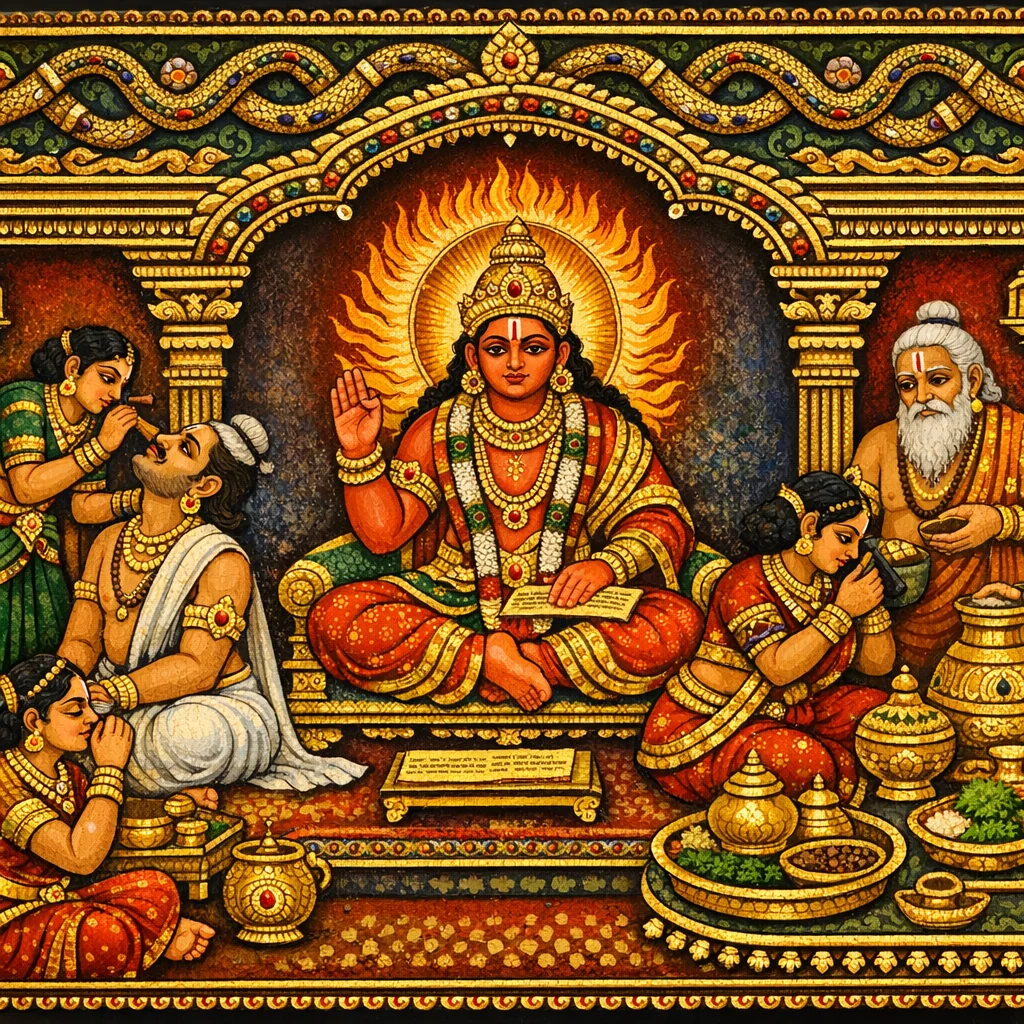
Adhyaya 296
Chapter 296 — Viṣa-cikitsā: Mantras and Antidotes for Poison, Stings, and Snake-bite
In this Ayurveda chapter, Lord Agni teaches Vasiṣṭha a compact toxicology regimen (viṣa-cikitsā) that unites mantra-prayoga with urgent clinical measures and herbal preparations. The opening verses give poison-neutralizing mantras for artificial or administered poisons, varied toxins, and envenomation, pictured as drawing out “cloud-like darkness” (spreading venom) and sealing/retaining it at the mantra’s close. A second formula is presented as sarvārtha-sādhaka, blending bīja-mantras with Vaiṣṇava emblems and an invocation of Kṛṣṇa. A third, the “Pātāla-kṣobha” mantra to Rudra as lord of preta-hosts, is prescribed for swift neutralization in stings and snake-bites, even sudden contact poisoning. The chapter then turns to applied treatment: excision or cautery of the bite-mark, followed by antidotal compounds featuring śirīṣa, arka latex, pungent spices, and multi-route use (drink, paste, collyrium, and nasya).
Shlokas
Verse 1
माकृत्रिमविषमुपविषं नाशय नानाविषं दष्टकविषं नाशय धम दम वम मेघान्धकारधाराकर्षनिर्विषयीभव संहर गच्छ आवेशय विषोत्थापनरूपं मन्त्रान्ताद्विषधारणं ॐ क्षिप ॐ क्षिप स्वाहा ॐ ह्रीं खीं सः ठन्द्रौं ह्रीं ठः जपादिना साधितस्तु सर्पान् बध्नाति नित्यशः
“Destroy the artificial poison and the secondary (administered) poison; destroy the various poisons; destroy the poison from a bite. ‘Dhama, dama, vama’—draw away the streaming mass of cloud-like darkness (i.e., the spreading venom); become poison-neutralizing; annihilate it, depart, enter (and seize it), taking the form that lifts up and expels the poison. By the end of the mantra, perform the retention/containment of the poison: ‘Oṃ kṣipa, oṃ kṣipa, svāhā; oṃ hrīṃ khīṃ saḥ ṭhandrauṃ hrīṃ ṭhaḥ.’ When accomplished through repetition (japa) and the like, this mantra continually binds and subdues serpents.”
Verse 2
एकद्वित्रिचतुर्वीजः कृष्णचक्राङ्गपञ्चकः गोपीजनवल्लभाय स्वाहा सर्वार्थसाधकः
A mantra-formula consisting of the one-, two-, three-, and four-syllable seed-mantras, together with invocation of Kṛṣṇa, the discus (Sudarśana), and the five emblems of Viṣṇu, ending with “svāhā” addressed to “the Beloved of the gopīs (cowherd maidens)”—this is the accomplisher of all aims.
Verse 3
ॐ नमो भगवते रुद्राय प्रेताधिपतये गुत्त्व गर्ज भ्रामय मुञ्च मुह्य कट आविश सुवर्णपतङ्ग रुद्रो ज्ञापयति ठ पातालक्षोभमन्त्रोयं मन्त्रणाद्विषनाशनः दंशकाहिदंशे सद्यो दष्टः काष्ठशिलादिना
“Om. Homage to the Blessed Rudra, Lord of the hosts of preta (spirits). ‘Bind fast! Roar! Whirl about! Release! Confound! Strike! Enter! O golden-winged one!’—thus Rudra commands. This is the ‘Pātāla-kṣobha’ mantra; by its recitation poison is destroyed. In cases of stings and snake-bites—when one is suddenly bitten, even through contact with wood, stone, and the like—this is to be employed for immediate neutralization of the venom.
Verse 4
विषशान्त्यै देहाद्दंशं ज्वालकोकनदादिना शिरीषवीजपुष्पार्कक्षीरवीजकटुत्रयं
For pacifying poison, the bite-mark should be excised from the body with a heated instrument (such as a cautery-knife and the like); then one should apply a remedy made of śirīṣa seed and flower, arka latex, arka seeds, and the pungent triad (kaṭu-traya).
Verse 5
विषं विनाशयेत् पानलेपनेनाञ्जनादिना शिरीषपुश्पस्य रसभावितं मरिचं सितं
Poison may be neutralized by giving the remedy as a drink, applying it externally as a paste, or using it as añjana (collyrium) and similar methods—namely, white pepper prepared by impregnation with the juice of śirīṣa flowers.
Verse 6
पाननस्याञ्जनाद्यैश् च विषं हन्यान्न संशयः कोषातकीवचाहिङ्गुशिरीशार्कपयोयुतं
By administering it as a drink, applying it as añjana (collyrium), and by other such modes, one destroys poison—without doubt—using a preparation combined with koṣātakī, vacā, hiṅgu, śirīṣa, and the milky latex of arka.
Verse 7
गुलु इति ञ ज्वालको कलदालिनेति ख कुटुत्रयं समेषाम्भो हरेन्नस्यादिना विषं रामठेक्ष्वाकुसर्वाङ्गचूर्णं नस्याद्विषापहं
‘Gulu’, ‘Jvālaka’, and ‘Kaladālin’—these three, ground together with equal water, should be administered as nasya (nasal instillation); thereby poison is removed. Likewise, the powder prepared from the entire Ikṣvāku plant, together with the drug called Rāmaṭha, when used as nasya, destroys poison.
Verse 8
इन्द्रबलाग्निकन्द्रोणं तुलसी देविका सहा तद्रसाक्तं त्रिकटुकं चूर्णम्भक्ष्ययिषापहं पञ्चाङ्गं कृष्णपञ्चभ्यां शिरीषस्य विषापहं
Indrabala, Agni-kanda, and Drona, together with Tulasi, Devika, and Saha—mixed with their expressed juice—and with Trikaṭuka prepared as an ingestible powder, serve as an antidote that removes poison. Likewise, the five parts (pañcāṅga) of the Śirīṣa plant, combined with the five ‘Kṛṣṇā’ ingredients, are also poison-destroying.
Frequently Asked Questions
It focuses on viṣa-cikitsā (Ayurvedic toxicology): mantric neutralization, emergency bite management, and antidotal formulations administered via pāna, lepa, añjana, and nasya.
It presents mantra-prayoga alongside procedural and pharmacological remedies, treating both as dharmic techniques revealed by Agni for preserving life and restoring order.