Adhyaya 14
कुरुपाण्डवसङ्ग्रामवर्णनम् (Description of the War between the Kurus and the Pāṇḍavas)
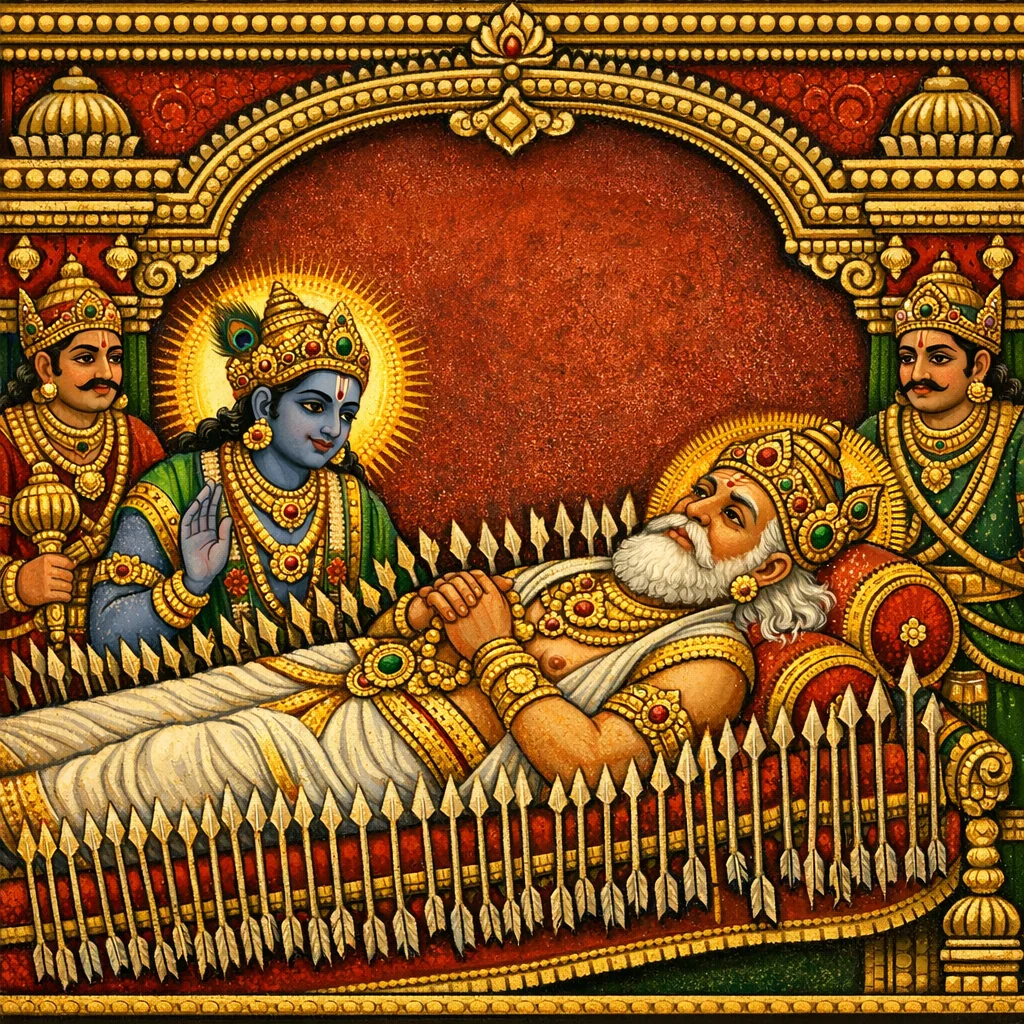
Agni recounts a compressed Mahābhārata war narrative to highlight dharma, impermanence, and kingship. At Kurukṣetra, Arjuna falters on seeing elders like Bhīṣma and Droṇa; Kṛṣṇa teaches the imperishable Ātman and the perishable body, linking spiritual insight to rājadharma—steadiness in success and failure while guarding the kingly law. The chapter then summarizes the shifts in command (Bhīṣma, Droṇa, Karṇa, Śalya) and pivotal deaths: Bhīṣma’s fall on the bed of arrows as he contemplates Viṣṇu awaiting Uttarāyaṇa; Droṇa’s disarming after the report “Aśvatthāmā is slain”; Karṇa’s defeat by Arjuna; Śalya’s death at Yudhiṣṭhira’s hand; and Duryodhana’s final mace-fight with Bhīma. Aśvatthāmā’s night slaughter follows, killing the Pāñcālas and Draupadī’s sons; Arjuna restrains him and takes his crest-jewel, while Hari revives Uttarā’s embryo, securing Parīkṣit’s lineage. The survivors are listed, funerary rites performed, and Bhīṣma teaches peace-giving dharmas (rājadharma, mokṣadharma, dāna). Yudhiṣṭhira completes the Aśvamedha, installs Parīkṣit, and ascends to heaven.
Shlokas
Verse 1
इत्य् आदिमहापुराणे आग्नेये आदिपर्वादिवर्णनं नाम त्रयोदशो ऽध्यायः अथ चतुर्दशो ऽध्यायः कुरुपाण्डवसङ्ग्रामवर्णनम् अग्निर् उवाच यौधिष्ठिरी दौर्योधनी कुरुक्षेत्रं ययौ चमूः भीष्मद्रोणादिकान् दृष्ट्वा नायुध्यत गुरूनिति
Thus, in the Agni Purāṇa—this primeval Mahāpurāṇa—the thirteenth chapter, entitled “Description of the Ādi-parvan and related matters,” is concluded. Now begins the fourteenth chapter, “Description of the War between the Kurus and the Pāṇḍavas.” Agni said: The army of Yudhiṣṭhira and the army of Duryodhana went to Kurukṣetra; but on seeing Bhīṣma, Droṇa, and the others, he did not fight, for they were his teachers and elders.
Verse 2
पार्थं ह्य् उवाच भगवान्नशोच्या भीष्ममुख्यकाः शरीराणि विनाशीनि न शरीरी विनश्यति
The Blessed Lord said to Pārtha: “Those such as Bhīṣma and the rest are not to be mourned. Bodies are perishable; the embodied Self does not perish.”
Verse 3
विदुरान्वित इति ख, चिह्नितपुस्तकपाठः अयमात्मा परं ब्रह्म अहं ब्रह्मस्मि विद्धि तम् सिद्ध्यसिद्ध्योः समो योगी राजधर्मं प्रपालय
“This Self is the supreme Brahman; know it as ‘I am Brahman.’ The yogin, equal-minded in success and failure, should duly protect and administer the king’s law (rājadharma).”
Verse 4
कृष्णोक्तोथार्जुनो ऽयुध्यद्रथस्थो वाद्यशब्दवान् भीष्मः सेनापतिरभूदादौ दौर्योधने बले
Then Arjuna, instructed by Kṛṣṇa, fought while stationed on his chariot amid the blare of instruments; and at the outset, in Duryodhana’s army, Bhīṣma became the commander-in-chief.
Verse 5
पाण्डवानां शिखण्डी च तयोर्युद्धं बभूव ह धार्तराष्ट्राः पाण्डवांश् च जघ्नुर्युद्धे सभीष्मकाः
And Śikhaṇḍī, on the side of the Pāṇḍavas, indeed engaged in battle (with him). In that fight, the sons of Dhṛtarāṣṭra, together with Bhīṣma’s forces, struck down the Pāṇḍavas as well.
Verse 6
धार्तराष्ट्रान् शिखण्ड्याद्याः पाण्डवा जघ्नुराहवे देवासुरसं युद्धं कुरुपाण्दवसेनयोः
In the battle, the Pāṇḍavas—beginning with Śikhaṇḍin—slew the Dhārtarāṣṭras; and the war between the Kuru and Pāṇḍava armies was like the conflict of the Devas and the Asuras.
Verse 7
बभूव स्वस्थदेवानां पश्यतां प्रीतिवर्धनं भीष्मोस्त्रैः पाण्डवं सैन्यं दशाहोभिर्न्यपातयत्
While the gods looked on in safety, it became a cause for the increase of their delight: by Bhīṣma’s missiles the Pāṇḍava army was struck down within ten days.
Verse 8
दशमे ह्य् अर्जुनो वाणैर् भीष्मं वीरं ववर्ष ह शिखण्डी द्रुपदोक्तो ऽस्त्रैर् ववर्ष जलदो यथा
Indeed, on the tenth day Arjuna showered the heroic Bhīṣma with arrows; and Śikhaṇḍī—acting under Drupada’s instruction—showered him with weapons, like a rain-cloud pouring rain.
Verse 9
हस्त्यश्वरथपादातमन्योन्यास्त्रनिपातितम् भीष्मः स्वच्छन्दमृत्युश् च युद्धमार्गं प्रदर्श्य च
Elephants, horses, chariots, and foot-soldiers were struck down by one another’s missiles. And Bhīṣma—having the boon of choosing his own time of death—also demonstrated the proper course and conduct of warfare.
Verse 10
वसूक्तो वसुलोकाय शरशय्यागतः स्थितः उत्तरायणमीक्षंश् च ध्यायन् विष्णुं स्तवन् स्थितः
Praised with hymns, he remained upon the bed of arrows, destined for the world of the Vasus; and, gazing toward the Uttarāyaṇa (the sun’s northward course), he stayed firm—meditating on Viṣṇu and offering Him praise.
Verse 11
दुर्योधने तु शोकार्ते द्रोणः सेनापतिस्त्वभुत् पाण्दवे हर्षिते सैन्ये ढृष्टद्युम्नश् चमूपतिः
But when Duryodhana was stricken with grief, Droṇa became commander-in-chief; and when the Pāṇḍava host was rejoicing, Dhṛṣṭadyumna became commander of the army.
Verse 12
तयोर्युद्धं बभूवोग्रं यमराष्ट्रविवर्धनम् विराटद्रुपदाद्याश् च निमग्ना द्रोणसागरे
Between those two a fierce battle arose, swelling the kingdom of Yama (that is, increasing the dead). Virāṭa, Drupada, and others sank—perishing—in the ocean that was Droṇa.
Verse 13
दौर्योधनी महासेना हस्त्यश्वरथपत्तिनी धृष्टद्युम्नाधिपतिता द्रोणः काल इवाबभौ
Duryodhana’s vast army—of elephants, horses, chariots, and infantry—though led by Dhṛṣṭadyumna, appeared before Droṇa like Time (Death) itself.
Verse 14
हतोश्वत्थामा चेत्युक्ते द्रोणः शस्त्राणि चात्यजत् धृष्टद्युम्नशराक्रान्तः पतितः स महीतले
When it was said, “Aśvatthāmā has been slain,” Droṇa cast aside his weapons; overpowered by Dhṛṣṭadyumna’s arrows, he fell upon the ground.
Verse 15
अन्योन्यास्त्रनिपीडितमिति ख, घ, चिह्नितपुस्तकद्वयपाठः पञ्चमेहनि दुर्धर्षः सर्वक्षत्रं प्रमथ्य च दुर्योधने तु शोकार्ते कर्णः सेनापतिस्त्वभूत्
The reading “anyonyāstra-nipīḍitam” is found in the kha and gha manuscripts, as indicated by two marked copies. On the fifth day, the unassailable warrior, having crushed the entire host of kṣatriyas; and when Duryodhana was stricken with grief, Karṇa indeed became commander of the army.
Verse 16
अर्जुनः पाण्डवानाञ्च तयोर्युद्धं बभूव ह शस्त्राशस्त्रि महारौद्रं देवासुररणोपमम्
Then there arose a battle between Arjuna and the Pāṇḍavas, fought with weapons and also without weapons, exceedingly fierce, like the war between the gods and the asuras.
Verse 17
कर्णार्जुनाख्ये सङ्ग्रामे कर्णोरीनबधीच्छरैः द्वितीयाहनि कर्णस्तु अर्जुनेन निपातितः
In the battle known as the Karṇa–Arjuna combat, Karṇa struck down Orīna with arrows; but on the second day, Karṇa himself was felled by Arjuna.
Verse 18
शल्यो दिनार्धं युयुधे ह्य् अबधीत्तं युधिष्ठिरः युयुधे भीमसेनेन हतसैन्यः सुयोधनः
Śalya fought for half a day; then Yudhiṣṭhira indeed slew him. Suyodhana (Duryodhana), his army destroyed, fought with Bhīmasena.
Verse 19
बहून् हत्वा नरादींश् च भीमसेनमथाब्रवीत् गदया प्रहरन्तं तु भीमस्तन्तु व्यपातयत्
After slaying many men and others, he then addressed Bhīmasena. But when that one struck with a mace, Bhīma cut him down (felled him).
Verse 20
गदयान्यानुजांस्तस्य तस्मिन्नष्टादेशेहनि रात्रौ सुषुप्तञ्च बलं पाण्डवानां न्यपातयत्
With his mace he struck down the younger brothers of that king, and on that eighteenth day, at night, while the Pāṇḍavas’ army lay asleep, he felled their forces.
Verse 21
अक्षौहिणीप्रमाणन्तु अश्वत्थामा महाबलः द्रौपदेयान् सपाञ्चालान् धृष्टद्युम्नञ्च सो ऽबधीत्
But Aśvatthāmā, possessed of great might, slew the sons of Draupadī together with the Pāñcālas, and also Dhṛṣṭadyumna, bringing about slaughter on the scale of an akṣauhiṇī.
Verse 22
पुत्रहीनां द्रौपदीं तां रुदन्तीमर्जुनस्ततः शिरोमणिं तु जग्राह ऐषिकास्त्रेण तस्य च
Then Arjuna, seeing Draupadī bereft of her sons and weeping, seized that man’s crest-jewel by means of the Aiṣika weapon.
Verse 23
अश्वत्थामास्त्रनिर्दग्धं जीवयामास वै हरिः उत्तरायास्ततो गर्भं स परीक्षिदभून्नृपः
Hari (Viṣṇu/Kṛṣṇa) indeed revived the embryo in Uttarā’s womb that had been scorched by Aśvatthāmā’s weapon; and that child became King Parīkṣit.
Verse 24
कृतवर्मा कृपो द्रौणिस्त्रयो मुक्तास्ततो रणात् पाण्डवाः सात्यकिः कृष्णः सप्त मुक्ता न चापरे
Kṛtavarmā, Kṛpa, and Drauni (Aśvatthāmā)—these three then escaped from the battlefield. The Pāṇḍavas, Sātyaki, and Kṛṣṇa—these seven were saved; none others were spared.
Verse 25
स्त्रियश्चार्ताः समाश्वास्य भीमाद्यैः स युधिष्ठिरः संस्कृत्य प्रहतान् वीरान् दत्तोदकधनादिकः
That Yudhiṣṭhira—together with Bhīma and the others—consoled the grief-stricken women; and, having duly performed the funerary rites for the slain heroes, he offered the customary water-libations and gifts of wealth and other donations.
Verse 26
भीष्माच्छान्तनवाच्छ्रुत्वा धर्मान् सर्वांश् च शान्तिदाम् राजधर्मान्मोक्षधर्मान्दानधर्मान् नृपो ऽभवत्
Having heard from Bhīṣma, the son of Śāntanu, all the dharmas that bestow peace—royal duty, the discipline leading to liberation, and the law of charitable giving—the king became well instructed and firmly established in dharma.
Verse 27
अश्वमेधे ददौ दानं ब्राह्मणेभ्योरिमर्दनः श्रुत्वार्जुनान्मौषलेयं यादवानाञ्च सङ्क्षयम् राज्ये परीक्षितं स्थाप्य सानुजः स्वर्गमाप्तवान्
After performing the Aśvamedha, the foe-crusher bestowed gifts upon the brāhmaṇas. Having heard from Arjuna of the devastation at Mausala and the annihilation of the Yādavas, he installed Parīkṣit on the throne and, together with his younger brothers, attained heaven.
Frequently Asked Questions
Kṛṣṇa teaches Arjuna that bodies perish while the embodied Self does not; the yogin should remain equal-minded in success and failure and uphold rājadharma—linking metaphysics to ethical governance.
He hears from Bhīṣma the peace-bestowing teachings: rājadharma (duties of kingship), mokṣadharma (discipline toward liberation), and dānadharma (law of charitable giving).
Hari (Kṛṣṇa/Viṣṇu) revives Uttarā’s scorched embryo, ensuring Parīkṣit’s birth and the continuation of righteous kingship after the catastrophic war.