Adhyaya 13
Chapter 13 — कुरुपाण्डवोत्पत्त्यादिकथनं (Narration of the Origin of the Kurus and the Pāṇḍavas, and Related Matters)
Agni proclaims a Bhārata-centered narration suffused with Kṛṣṇa-māhātmya, presenting the Mahābhārata as Viṣṇu’s design to lighten Earth’s burden through human instruments, the Pāṇḍavas. The chapter compresses the royal genealogy from Viṣṇu → Brahmā → Atri → Soma → Budha → Purūravas down to Yayāti, Puru, Bharata, and Kuru, establishing Kuru legitimacy. It then summarizes the Śāntanu line: Bhīṣma’s guardianship, Citrāṅgada’s death, the Kāśī princesses, Vicitravīrya’s demise, and Vyāsa’s niyoga producing Dhṛtarāṣṭra and Pāṇḍu; Dhṛtarāṣṭra fathers the Kauravas led by Duryodhana. Pāṇḍu’s curse leads to the Pāṇḍavas’ divine births; Karṇa’s birth and alliance with Duryodhana intensify fate-driven enmity. Key Mahābhārata milestones follow: the lac-house plot, Ekacakrā and Vaka’s slaying, Draupadī’s svayaṃvara, gaining Gāṇḍīva and Agni’s chariot, the Khāṇḍava episode, the Rājasūya, dice-game exile, the Virāṭa incognito year (with variant readings), revelation, Abhimanyu’s marriage, war mobilization, Kṛṣṇa’s embassy, Duryodhana’s refusal, and Kṛṣṇa’s viśvarūpa—setting the ethical and cosmic inevitability of war.
Shlokas
Verse 1
इत्य् आदिमहापुराणे आग्नेये हरिवंशवर्णनं नाम द्वादशो ऽध्यायः कर्षक इति ख, चिह्नितपुस्तकपाठः अथ त्रयोदशो ऽध्यायः कुरुपाण्डवोत्पत्त्यादिकथनं अग्निर् उवाच भारतं सम्प्रवक्ष्यामि कृष्णमाहात्म्यलक्षणम् भूभारमहरद्विष्णुर् निमित्तीकृत्य पाण्डवान्
Thus, in the Ādi-Mahāpurāṇa, in the Agneya (Agni) section, the twelfth chapter entitled “Description of the Harivaṃśa” is concluded. (In one recension it reads “karṣaka”; this is a marked manuscript reading.) Now begins the thirteenth chapter: “The narration of the origin of the Kurus and the Pāṇḍavas, and related matters.” Agni said: “I shall now expound the Bhārata (the Mahābhārata narrative), characterized by the greatness of Kṛṣṇa. Viṣṇu removed the burden of the earth, making the Pāṇḍavas the instrumental cause.”
Verse 2
विष्णुनाभ्यब्जजो ब्रह्मा ब्रह्मपुत्रो ऽत्रिरत्रितः सोमः सोमाद्बुधस्तस्मादैल आसीत् पुरूरवाः
From the lotus that arose from Viṣṇu’s navel was born Brahmā. Brahmā’s son here was Atri; from Atri came Soma. From Soma was born Budha; from him came Aila—namely Purūravas.
Verse 3
तस्मादायुस्ततो राजा नहुषो ऽतो ययातिकः ततः पुरुस्तस्य वंशे भरतो ऽथ नृपः कुरुः
From him was born Āyu; then came the king Nahuṣa; from him came Yayāti; from him came Puru; and in his lineage appeared Bharata, and then the king Kuru.
Verse 4
तद्वंशे शान्तनुस्तस्माद्भीष्मो गङ्गासुतो ऽनुजौ चित्राङ्गदो विचित्रश् च सत्यवयाञ्च शान्तनोः
In that lineage was Śāntanu; from him were born Bhīṣma, the son of Gaṅgā, and the younger brothers Citrāṅgada and Vicitravīrya—all born of Śāntanu and Satyavatī.
Verse 5
स्वर्गं गते शान्तनौ च भीष्मो भार्याविवर्जितः अपालयत् भ्रातृराज्यं बालश्चित्राङ्गदो हतः
When Śāntanu had gone to heaven, Bhīṣma—devoid of a wife—protected his brother’s kingdom; and the young Citrāṅgada was slain.
Verse 6
चित्राङ्गदेन द्वे कन्ये काशिराजस्य चाम्बिका अम्बालिका च भीष्मेण आनीते विजितारिणा
By Citrāṅgada, the two daughters of the king of Kāśī—Ambikā and Ambālikā—were brought (as brides), carried off by Bhīṣma, the conqueror of enemies.
Verse 7
भार्ये विचित्रवीर्यस्य यक्ष्मणा स दिवङ्गतः सत्यवत्या ह्य् अनुमतादम्बिकायां नृपोभवत्
O queen, Vicitravīrya passed away due to consumption (yakṣmā). With Satyavatī’s consent, a king was then begotten upon Ambikā.
Verse 8
धृतराष्ट्रो ऽम्बालिकायां पाण्डुश् च व्यासतः सुतः गान्धार्यां धृतराष्ट्राच्च दुर्योधनमुखं शतम्
From Ambālikā, Vyāsa begot Dhṛtarāṣṭra and also Pāṇḍu as sons; and from Gāndhārī, Dhṛtarāṣṭra begot a hundred sons, headed by Duryodhana.
Verse 9
शतशृङ्गाश्रमपदे भार्यायोगाद् यतो मृतिः ऋषिशापात्ततो धर्मात् कुन्त्यां पाण्डोर्युधिष्ठिरः
At the hermitage-site of Śataśṛṅga, because union with his wife became the cause of his death—due to a sage’s curse—thereafter, through Dharma (the god of righteousness), Yudhiṣṭhira was born to Kuntī for Pāṇḍu.
Verse 10
वाताद्भीमो ऽर्जुनः शक्रान्माद्र्यामश्विकुमारतः नकुलः सहदेवश् च पाण्डुर्माद्रीयुतो मृतः
Bhīma was born of Vāyu; Arjuna of Śakra (Indra). From Mādrī, by the twin Aśvins, were born Nakula and Sahadeva; and Pāṇḍu, together with Mādrī, died.
Verse 11
कर्णः कुन्त्यां हि कन्यायां जातो दुर्योधाश्रितः कुरुपाण्डवयोर्वैरन्दैवयोगाद्बभूव ह
Karna was born to Kuntī while she was still an unmarried maiden; he then aligned himself with Duryodhana, and by the conjunction of fate the enmity between the Kurus and the Pāṇḍavas arose.
Verse 12
दुर्योधनो जतुगृहे पाण्डवानदहत् कुधीः दग्धागाराद्विनिष्क्रान्ता मातृपृष्टास्तु पाण्डवाः
The wicked-minded Duryodhana burned the Pāṇḍavas in the house of lac; but the Pāṇḍavas—rescued by their mother’s counsel—escaped from that burnt dwelling.
Verse 13
ततस्तु एकचक्रायां ब्राह्मणस्य निवेशने मुनिवेषाः स्थिताः सर्वे निहत्य वकराक्षसम्
Then, in Ekacakrā, at the dwelling of a brāhmaṇa, all of them—wearing the guise of sages—remained there, having slain the rākṣasa Vaka.
Verse 14
ययौः पाञ्चालविषयं द्रौपद्यास्ते स्वयम्वरे सम्प्राप्ता बाहुवेधेन द्रौपदी पञ्चपाण्डवैः
They went to the land of the Pāñcālas. At Draupadī’s svayaṃvara, Draupadī was won by the five Pāṇḍavas through the feat of archery (striking the mark with the bow).
Verse 15
अर्धराज्यं ततः प्राप्ता ज्ञाता दुर्योधनादिभिः गाण्डीवञ्च धनुर्दिव्यं पावकाद्रथमुत्तमम्
Thereafter they obtained half the kingdom; this became known to Duryodhana and the others. And Arjuna received the divine bow Gāṇḍīva and an excellent chariot from Pāvaka (Agni).
Verse 16
सारथिञ्चार्जुनः सङ्ख्ये कृष्णमक्षय्यशायकान् ब्रह्मास्त्रादींस् तथा द्रोणात्सर्वे शस्त्रविशारदाः
In battle, Arjuna made Kṛṣṇa his charioteer; he obtained the inexhaustible quivers and the Brahmāstra and other divine missiles, and from Droṇa he learned all weapon-skills, becoming fully expert in arms.
Verse 17
कृष्णेन सो ऽर्जुनो वह्निं खाण्डवे समतर्पयत् इन्द्रवृष्टिं वारयंश् च शरवर्षेण पाण्डवः
With Kṛṣṇa’s support, that Pāṇḍava—Arjuna—fully satisfied Agni (Vahni) in the Khāṇḍava forest; and he checked Indra’s rainfall by a downpour of arrows.
Verse 18
जिता दिशः पाण्डवैश् च राज्यञ्चक्रे युधिष्ठिरः बहुस्वर्णं राजसूयं न सेहे तं सुयोधनः
When the quarters (all directions) had been conquered by the Pāṇḍavas, Yudhiṣṭhira established his sovereignty; but Suyodhana (Duryodhana) could not endure that Rājasūya sacrifice, rich in abundant gold.
Verse 19
भ्रात्रा दुःशासनेनोक्तः कर्णेन प्राप्तभूतिना द्यूतकार्ये शकुनिना द्यूतेन स युधिष्ठिरम्
Urged by his brother Duḥśāsana, and supported by Karṇa—who had gained influence and prosperity—he appointed Śakuni as the agent of the gambling affair and challenged Yudhiṣṭhira through a game of dice.
Verse 20
अजयत्तस्य राज्यञ्च सभास्थो माययाहसत् जितो युधिष्ठिरो भ्रातृयुक्तश्चारण्यकं ययौ
Seated in the assembly-hall, he won the kingdom also by deceit and laughed in scorn. Yudhiṣṭhira, defeated, went to forest-exile together with his brothers.
Verse 21
वने द्वादशवर्षाणि प्रतिज्ञातानि सो ऽनयत् अष्टाशीतिसहस्राणि भोजयन् पूर्ववत् द्विजान्
In the forest he completed the twelve years he had vowed, and—just as before—he fed eighty-eight thousand twice-born Brahmanas.
Verse 22
सधौम्यो द्रौपदीषष्ठस्ततः प्रायाद्विराटकम् कङ्को द्विजो ह्य् अविज्ञातो राजा भीमोथ सूपकृत्
Then, with Dhaumya and with Draupadī as the sixth member, they set out for Virāṭa’s kingdom. Yudhiṣṭhira, as a Brāhmaṇa named Kaṅka, remained unrecognized; and Bhīma became a cook.
Verse 23
न इति ग, चिह्नितपुस्तकपाठः द्रौपदीं पञ्च पाण्डवा इति ख, ग, ङ, चिह्नितपुस्तकत्रयपाठः वसुपूर्णमिति ख, चिह्नितपुस्तकपाठः रत्नपूर्णमिति घ, चिह्नितपुस्तकपाठः कङ्को द्विजो ह्य् अभूच्छ्रेष्ठ इति ख,चिह्नितपुस्तकपाठः बृहन्नलार्जुनो भार्या सैरिन्ध्री यमजौ तथा अन्यनाम्ना भीमसेनः कीचकञ्चाबधीन्निशि
“Not so”—this is the reading of the marked manuscript of recension ga. “Draupadī and the five Pāṇḍavas”—this is the reading of the marked manuscripts of recensions kha, ga, and ṅa. “Vasupūrṇa”—this is the reading of the marked manuscript of recension kha; “Ratnapūrṇa”—the reading of the marked manuscript of recension gha. “Kaṅka indeed became the best among the twice-born”—this is the reading of the marked manuscript of recension kha. (In the narrative:) Arjuna was Bṛhannalā; his wife was Sairindhrī; likewise the twins; and Bhīmasena, under another name, slew Kīcaka at night.
Verse 24
द्रौपदीं हर्तुकामं तं अर्जुनश्चाजयत् कुरून् कुर्वतो गोग्रहादींश् च तैर् ज्ञाताः पाण्डवा अथ
When he attempted to abduct Draupadī, Arjuna defeated that man, and also the Kurus who were carrying out cattle-raids and the like; then the Pāṇḍavas were recognized by them.
Verse 25
सुभद्रा कृष्णभगिनी अर्जुनात्समजीजनत् अभिमन्युन्ददौ तस्मै विराटश्चोत्तरां सुताम्
Subhadrā, Kṛṣṇa’s sister, bore Abhimanyu by Arjuna; and Virāṭa gave his daughter Uttarā to Abhimanyu in marriage.
Verse 26
सप्ताक्षौहिणीश आसीद्धर्मराजो रणाय सः कृष्णो दूतोब्रवीद् गत्वा दुर्योधनममर्षणम्
Dharma-rāja (Yudhiṣṭhira) commanded seven akṣauhiṇīs for battle. Kṛṣṇa, as an envoy, went and addressed the irascible Duryodhana.
Verse 27
एकादशाक्षौहिणीशं नृपं दुर्योधनं तदा युधिष्ठिरायार्धराज्यं देहि ग्रामांश् च पञ्च वा
Then they addressed King Duryodhana, lord of eleven akṣauhiṇīs: “Give Yudhiṣṭhira half the kingdom—or at least five villages.”
Verse 28
युध्यस्व वा वचः श्रुत्वा कृष्णमाह सुयोधनः भूसूच्यग्रं न दास्यामि योत्स्ये सङ्ग्रहणोद्यतः
Hearing those words, Suyodhana (Duryodhana) said to Kṛṣṇa: “Then fight! I will not give even the tip of a needle’s point of land. I am resolved on war, intent on mustering my forces.”
Verse 29
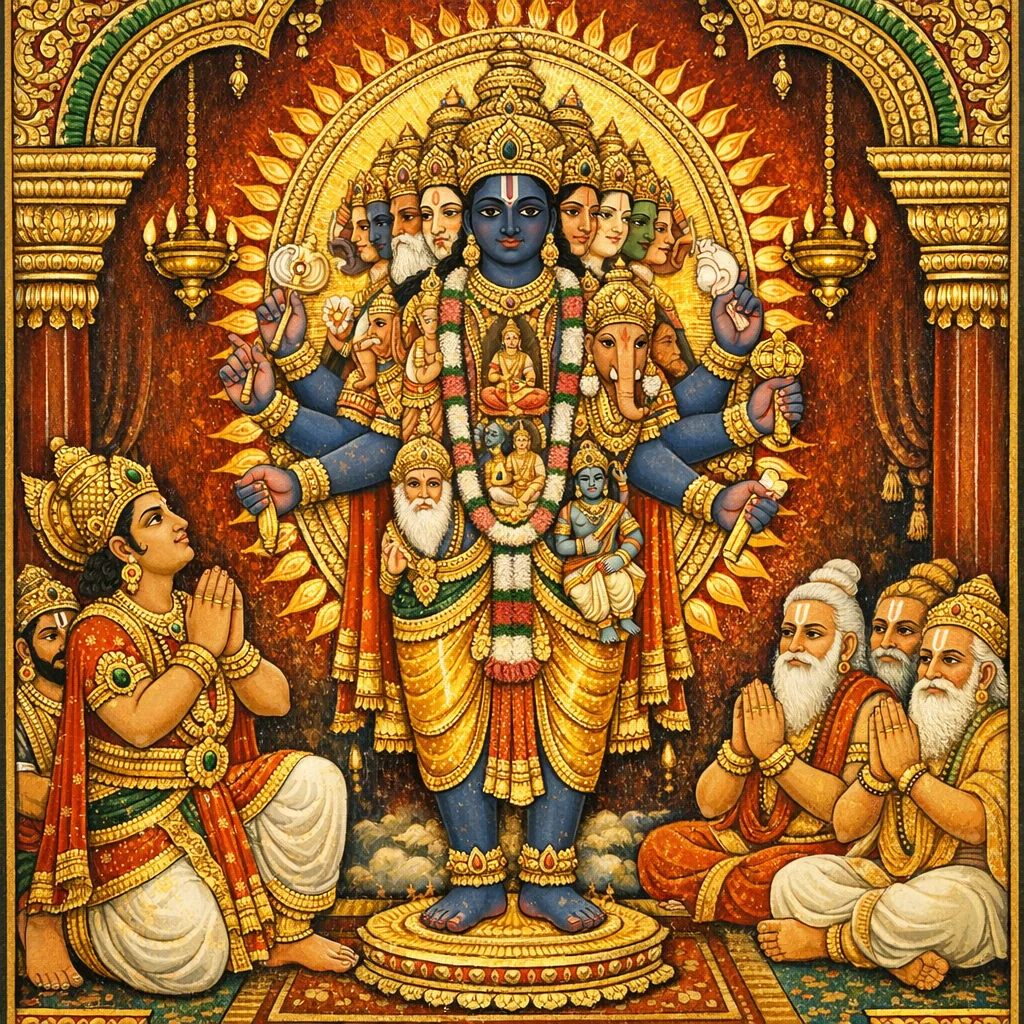
विश्वरूपन्दर्शयित्वा अधृष्यं विदुरार्चितः प्रागाद्युधिष्ठिरं प्राह योधयैनं सुयोधनम्
Having revealed the irresistible universal form (Viśvarūpa) and being honoured by Vidura, he went to Yudhiṣṭhira and said: “Make Suyodhana fight.”
Frequently Asked Questions
It is framed as Kṛṣṇa-māhātmya and Viṣṇu’s bhūbhāra-haraṇa, with the Pāṇḍavas positioned as the instrumental cause (nimitta) for restoring cosmic and political balance.
Genealogy and succession crises, Pāṇḍu’s curse and divine births, Karṇa’s alignment with Duryodhana, the lac-house plot, Draupadī’s marriage, Rājasūya jealousy, dice-game exile, Virāṭa revelation, war mobilization, Kṛṣṇa’s failed diplomacy, and the viśvarūpa episode.