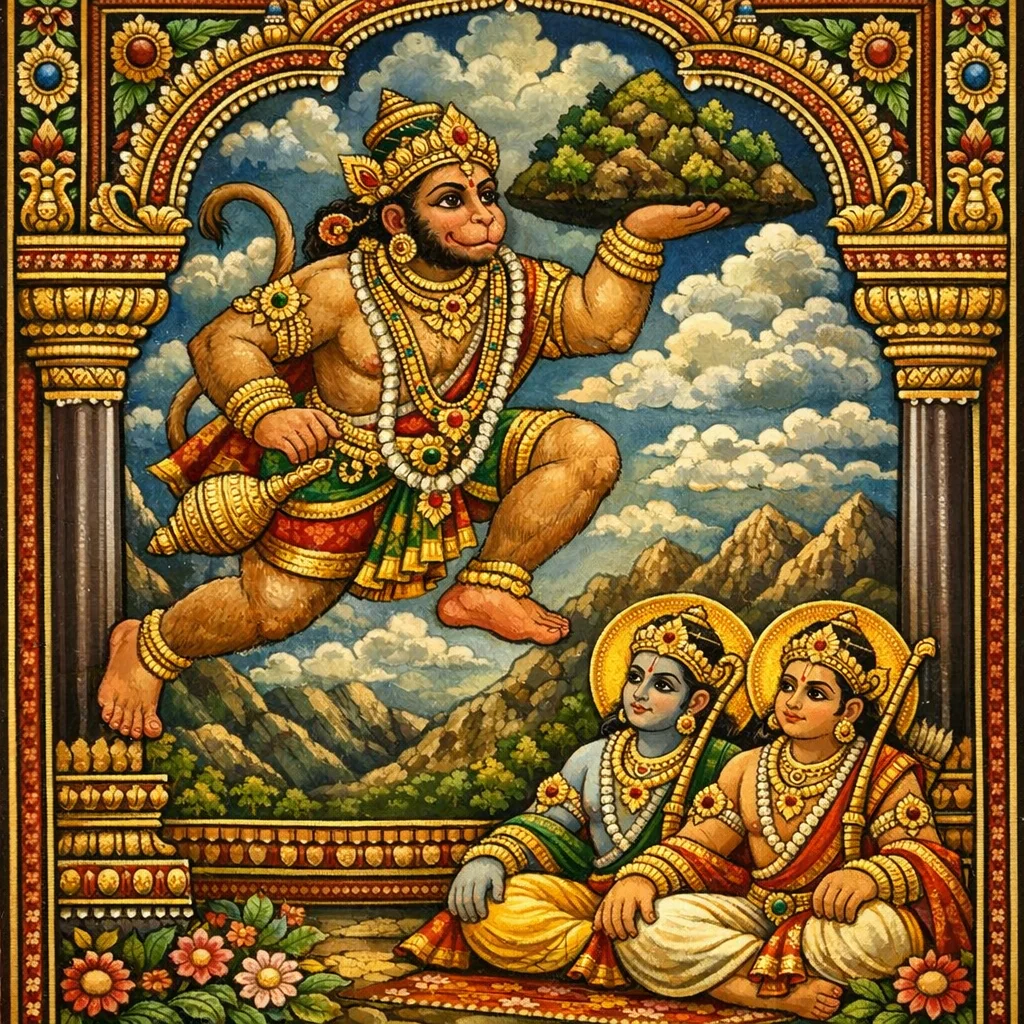
Adhyaya 10
Chapter 10 — श्रीरामावतारवर्णनम् (Description of the Incarnation-Deeds of Śrī Rāma)
This chapter continues the Agni Purāṇa’s Rāmāyaṇa-embedded Avatāra-līlā by condensing the decisive arc of the Laṅkā war into a dharmic and strategic sequence. Nārada narrates how Rāma’s envoy Aṅgada issues an ultimatum to Rāvaṇa, establishing the ethical precondition of war: restitution of Sītā or righteous destruction. The battle unfolds with catalogued vānaras and rākṣasa champions, highlighting organized martial leadership (dhanurveda context) and the chaos of mass combat. Key turns include the slaying of commanders, Indrajit’s māyā and binding weapons, the Garuḍa-linked release, and the healing episode centered on Hanumān’s mountain—marking divine aid integrated with battlefield medicine. The narrative culminates in Rāma’s final victory through the Paitāmaha weapon, followed by state-restoration: Vibhīṣaṇa’s funerary rites, Sītā’s fire-purification, Indra’s amṛta revival of the vānaras, coronation logistics, and Rāma-rājya ideals—prosperity, timely deathlessness, and disciplined punishment of the wicked—presented as rājadharma in avatāric form.
Shlokas
Verse 1
इत्य् आदिमहापुराणे आग्नेये रामायणे सुन्दरकाण्डवर्णनं नाम नवमो ऽध्यायः अथ दशमो ऽध्यायः श्रीरामावतारवर्णनं नाराद उवाच रामोक्तश्चाङ्गदो गत्वा रावणं प्राह जानकी दीयतां राघवायाशु अन्यथा त्वं मरिष्यसि
Thus, in the Agni Purāṇa, within the Rāmāyaṇa section, the ninth chapter called “Description of the Sundara-kāṇḍa” concludes. Now begins the tenth chapter, “Description of the Incarnation of Śrī Rāma.” Nārada said: Commanded by Rāma, Aṅgada went to Rāvaṇa and declared, “Return Jānakī to Rāghava at once; otherwise you will die.”
Verse 2
रावणो हन्तुमुद्युक्तः सङ्ग्रामोद्धतराक्षसः रामायाह दशग्रीवो युद्धमेकं तु मन्यते
Rāvaṇa, inflamed for battle and intent on killing, that rākṣasa stirred up by war, said to Rāma: “Daśagrīva, the Ten-necked, deems this encounter a single decisive battle.”
Verse 3
रामो युद्धाय तच् छ्रुत्वा लङ्कां सकपिराययौ वानरो हनूमान् मैन्दो द्विविदो जाम्बवान्नलः
Hearing that, Rāma set out for war and marched toward Laṅkā with the vānara hosts—Hanūmān, Mainda, Dvivida, Jāmbavān, and Nala.
Verse 4
नीलस्तारोङ्गदो धूम्रः सुषेणः केशरी गयः पनसो विनतो रम्भः शरभः क्रथनो बली
Nīla, Tāra, Aṅgada, Dhūmra, Suṣeṇa, Keśarī, Gaya, Panasa, Vinata, Rambha, Śarabha, Krathana, and Balī—these are the (sacred/protective) names.
Verse 5
गवाक्षो दधिवक्त्रश् च गवयो गन्धमादनः एते चान्ये च सुग्रीव एतैर् युक्तो ह्य् असङ्ख्यकैः
Gavākṣa, Dadhivaktra, Gavaya, and Gandhamādana—these and others besides, O Sugrīva, are indeed joined with countless vānara warriors.
Verse 6
रक्षसां वानराणाञ्च युद्धं सङ्कुलमाबभौ राक्षसा वानरान् जघ्नुः शरशक्तिगदादिभिः
The battle between the rākṣasas and the vānara hosts grew densely entangled and chaotic. The rākṣasas struck down the vānara with arrows, śakti-spears, maces, and other weapons.
Verse 7
वानरा राक्षसाञ् जघ्नुर् नखदन्तशिलादिभिः हस्त्यश्वरथपादातं राक्षसानां बलं हतं
The Vānaras slew the Rākṣasas with nails, teeth, stones, and the like; and the Rākṣasa host—together with its elephants, horses, chariots, and foot-soldiers—was destroyed.
Verse 8
हनूमान् गिरिशृङ्गेण धूम्राक्षमबधीद्रिपुम् अकम्पनं प्रहस्तञ्च युध्यन्तं नील आबधीत्
Hanūmān slew the enemy Dhūmrākṣa with a mountain-peak; and Nīla struck down Akampana and also Prahasta as they fought.
Verse 9
इन्द्रजिच्च्छरबन्धाच्च विमुक्तौ रामलक्ष्मणौ तार्क्षसन्दर्शनाद्वाणैर् जघ्नतू राक्षसं बलम्
Freed from Indrajit’s arrow-binding, Rāma and Lakṣmaṇa, by arrows empowered through the manifestation of Tārkṣya (Garuḍa), struck down the army of the Rākṣasas.
Verse 10
रामः शरैर् जर्जरितं रावणञ्चाकरोद्रणे रावनः कुम्भकर्णञ्च बोधयामास दुःखितः
In the battle, Rāma battered Rāvaṇa with arrows; and Rāvaṇa, distressed, awakened Kumbhakarṇa as well.
Verse 11
कुम्भकर्णः प्रबुद्धो ऽथ पीत्वा घटसहस्रकम् मद्यस्य महिषादीनां भक्षयित्वाह रावणम्
Then Kumbhakarṇa, having awakened, drank a thousand jars of liquor; and after devouring buffaloes and other beasts, he addressed Rāvaṇa.
Verse 12
सीताया हरणं पापं कृतन्त्वं हि गुरुर्यतः अतो गच्छामि युद्धाय रामं हन्मि सवानरम्
The abduction of Sītā is a sin; for the Lord of Death (Kṛtānta) is indeed a stern teacher. Therefore I go to battle—I shall slay Rāma together with the monkeys.
Verse 13
इत्युक्त्वा वानरान् सर्वान् कुम्भकर्णो ममर्द ह गृहीतस्तेन सुग्रीवः कर्णनासं चकर्त सः
Having said this, Kumbhakarṇa then crushed all the monkeys. Seized by him, Sugrīva cut off his ears and nose.
Verse 14
कर्णनासाविहीनो ऽसौ भक्षयामास वानरान् रामो ऽथ कुम्भकर्णस्य बाहू चिच्छेद शायकैः
Deprived of his ears and nose, he (Kumbhakarṇa) began devouring the monkeys. Then Rāma severed Kumbhakarṇa’s arms with arrows.
Verse 15
ततः पादौ ततश्छित्वा शिरो भूमौ व्यपातयत् अथ कुम्भो निकुम्भश् च मकराक्षश् च राक्षसः
Then, after cutting off his feet, he caused his head to fall upon the ground. Thereupon (appeared/advanced) the rākṣasas Kumbha and Nikumbha, and also Makarākṣa.
Verse 16
महोदरो महापार्श्वो मत्त उन्मत्तराक्षसः प्रघसो भासकर्णश् च विरूपाक्षश् च संयुगे
In the battle were (the warriors) Mahodara, Mahāpārśva, Matta, Unmattarākṣasa, Praghasa, Bhāsakarṇa, and Virūpākṣa.
Verse 17
देवान्तको नरान्तश् च त्रिशिराश्चातिकायकः रामेण लक्ष्मणेनैते वानरैः सविभीषणैः
Devāntaka and Narāntaka, Triśiras and also Atikāya—these mighty warriors were slain by Rāma and Lakṣmaṇa, together with the Vānara hosts, accompanied by Vibhīṣaṇa.
Verse 18
युध्यमानास्तया ह्य् अन्ये राक्षसा भुवि पातिताः इन्द्रजिन्मायया युध्यन् रामादीन् सम्बबन्ध ह
Indeed, while fighting with her, other rākṣasas were struck down upon the ground; and Indrajit, waging battle through his power of illusion (māyā), bound Rāma and the others.
Verse 19
वरदत्तैर् नागबाणैः ओषध्या तौ विशल्यकौ विशल्ययाब्रणौ कृत्वा मारुत्यानीतपर्वते
By means of a healing herb, he removed the boon-bestowed serpent-arrows (nāgabāṇa), making the two warriors free of embedded missiles; and with the herb called Viśalyā he rendered their wounds healed, as though woundless—upon the mountain brought by Māruti (Hanumān).
Verse 20
हनूमान् धारयामास तत्रागं यत्र संस्थितः निकुम्भिलायां होमादि कुर्वन्तं तं हि लक्ष्मणः
There Hanumān restrained him at the very place where he was stationed; indeed, Lakṣmaṇa restrained that one while he was performing the fire-offering (homa) and related rites in Nikumbhilā.
Verse 21
शरैर् इन्द्रजितं वीरं युद्धे तं तु व्यशातयत् रावणः शोकसन्तप्तः सीतां हन्तुं समुद्यतः
In battle, he struck down the hero Indrajit with arrows. Rāvaṇa, scorched by grief, then rose up intending to kill Sītā.
Verse 22
अविन्ध्यवारितो राजा रथस्थः सबलो ययौ इन्द्रोक्तो मातली रामं रथस्थं प्रचकार तम्
The king, unhindered and unrestrained, advanced—standing upon his chariot and attended by his forces. Then Mātali, at Indra’s command, set Rāma upon the chariot, installing him as its rider.
Verse 23
रामरावणयोर्युद्धं रामरावणयोरिव रावणो वानरान् हन्ति मारुत्याद्याश् च रावणम्
The battle between Rāma and Rāvaṇa was like their famed duel in its fierce intensity. Rāvaṇa slew the vānara hosts, and Maruti (Hanumān) and the others, in turn, struck at Rāvaṇa.
Verse 24
रामः शस्त्रैस्तमस्त्रैश् च ववर्ध जलदो यथा तस्य ध्वजं स चिच्छेद रथमश्वांश् च सारथिम्
Rāma surged forth with weapons and astras, like a swelling rain-cloud; and he cut down the enemy’s banner, the chariot, the horses, and the charioteer.
Verse 25
धनुर्बाहूञ्छिरांस्येव उत्तिष्ठन्ति शिरांसि हि पैतामहेन हृदयं भित्वा रामेण रावणः
Indeed, the severed heads rose again as though they were bow-bearing arms; but when Rāma, with the Paitāmaha weapon, pierced his heart, Rāvaṇa finally fell.
Verse 26
भूतले पातितः सर्वै राक्षसै रुरुदुः स्त्रियः आश्वास्य तञ्च संस्कृत्य रामाज्ञप्तो विभीषणः
When he had been cast down upon the ground, the women wept, with all the rākṣasas gathered around. Then Vibhīṣaṇa, acting on Rāma’s command, consoled them and performed for him the proper funerary rites.
Verse 27
हनूमतानयद्रामः सीतां शुद्धां गृहीतवान् रामो वह्नौ प्रविष्टान्तां शुद्धामिन्द्रादिभिः स्तुतः
Rama had Sita brought by Hanuman and accepted her as purified. Rama—praised by Indra and the other gods—received Sita, who had entered the fire and emerged pure.
Verse 28
ब्रह्मणा दशरथेन त्वं विष्णू राक्षसमर्दनः इन्द्रोर्चितो ऽमृतवृष्ट्या जीवयामास वानरान्
You—Vishnu, the crusher of the Rakshasas—were praised by Brahma and by Dasharatha; and Indra, having honored you, revived the vanaras by a shower of amrita, the nectar of immortality.
Verse 29
नागपशैर् इति ख, चिह्नितपुस्तकपाठः सुहृन्निवारित इति ख, चिह्नितपुस्तकपाठः रामेण पूजिता जग्मुर् युद्धं दृष्ट्वा दिवञ्च ते रामो विभीषणायादाल् लङ्कामभ्यर्च्य वानरान्
Honored by Rama, they departed; having witnessed the battle, they too went to heaven. Then Rama, having duly consecrated Lanka, handed over the vanaras to Vibhishana.
Verse 30
ससीतः पुष्पके स्थित्वा गतमार्गेण वै गतः दर्शयन् वनदुर्गाणि सीतायै हृष्टमानसः
With Sita, seated in the Pushpaka aerial chariot, he proceeded along the route already traversed, joyfully showing Sita the forest-fortresses along the way.
Verse 31
भरद्वाजं नमस्कृत्य नन्दिग्रामं समागतः भरतेन नतश्चागाद् अयोध्यान्तत्र संस्थितः
Having paid homage to Bharadvaja, he arrived at Nandigrama; and having been bowed to by Bharata, he then proceeded to Ayodhya and took up his residence there.
Verse 32
वसिष्ठादीन्नमस्कृत्य कौशल्याञ्चैव केकयीम् सुमित्रां प्राप्तराज्यो ऽथ द्विजादीन् सो ऽभ्यपूजयत्
Having bowed to Vasiṣṭha and the other elders, and likewise to Kauśalyā, Kaikeyī, and Sumitrā, then—having attained the kingdom—he duly honoured the brāhmaṇas and the rest.
Verse 33
वासुदेवं स्वमात्मानम् अश्वमेधैर् अथायजत् सर्वदानानि स ददौ पालयामास सः प्रजाः
Then he worshipped Vāsudeva—his own very Self—through Aśvamedha sacrifices; he bestowed every form of gift, and he protected his subjects.
Verse 34
पुत्रवद्धर्मकामादीन् दुष्टनिग्रहणे रतः सर्वधर्मपरो लोकः सर्वशस्या च मेदिनी नाकालमरणञ्चासीद् रामे राज्यं प्रशासति
When Rāma was administering the kingdom, he fostered dharma and kāma (and the other aims of life) as one would care for a son, and he was devoted to the restraint and punishment of the wicked. The people were devoted to all duties, the earth yielded every kind of crop, and there was no untimely death.
Frequently Asked Questions
The narrative foregrounds a moral ultimatum—return Sītā to Rāghava or face destruction—framing the conflict as dharma-yuddha aimed at restoring violated order rather than conquest.
Indrajit’s binding weapons are countered through Tārkṣya (Garuḍa)-linked release; battlefield recovery occurs via herbs and the mountain brought by Hanumān; and the final victory is achieved through the Paitāmaha weapon—divine astras applied within tactical sequence.
It depicts orderly rites for the fallen (through Vibhīṣaṇa), legitimate transfer of sovereignty in Laṅkā, return and coronation, honoring elders and brāhmaṇas, and the ideals of Rāma-rājya: prosperity, universal dharma, restraint of the wicked, and absence of untimely death.