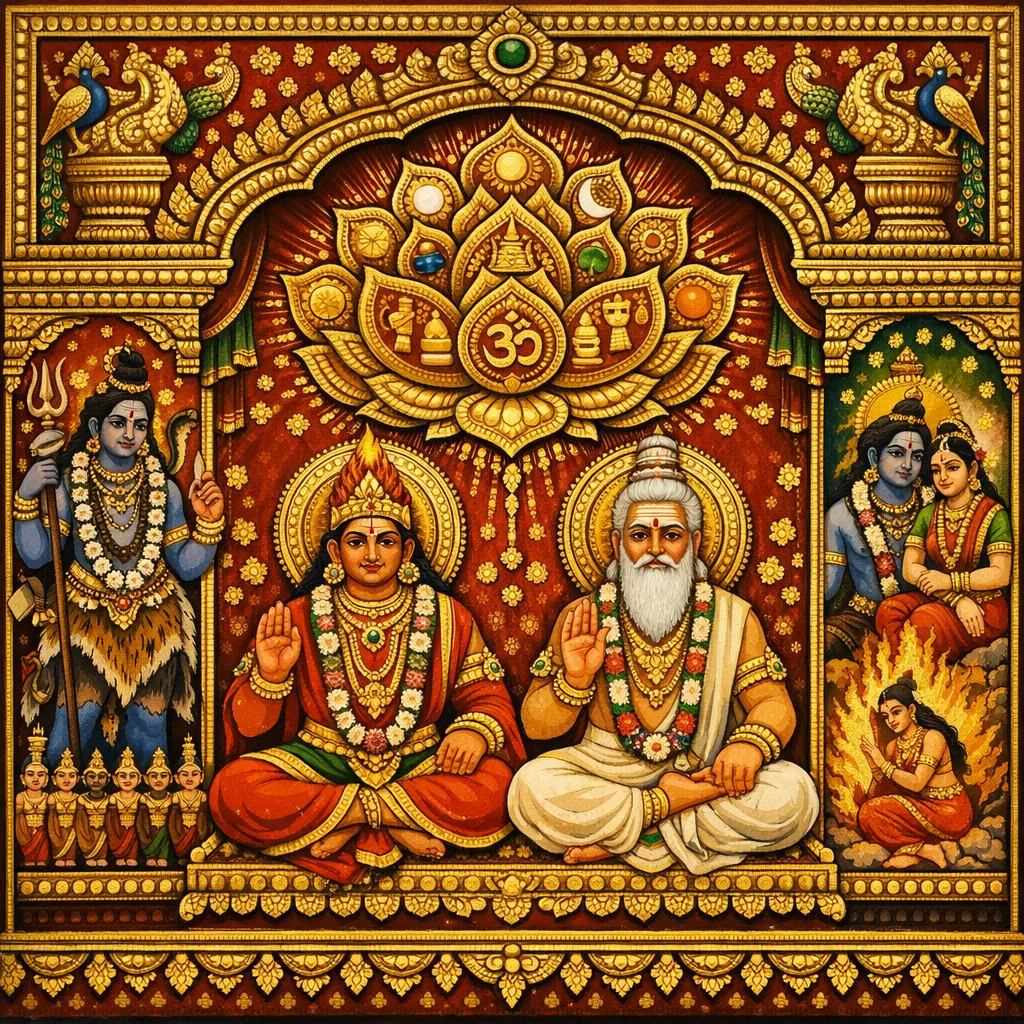
Adhyaya 20
Sargaviṣayaka-varṇana — The Topics of Primary Creation (Sarga)
Lord Agni begins a structured cosmological teaching by classifying creation (sarga) in graded order—from subtle principles to embodied life, and finally to grace-oriented results. He first sets out the prākṛta (primordial/material) sequence: Mahat (cosmic intellect) arises as Brahmā’s first creative emanation; from the tanmātras the gross elements (bhūtas) emerge; and then comes the vaikārika/aindriyaka phase concerning the senses and their functions. He further lists developmental strata—immobile beings, animal births (tiryaksrotas/stairyag-yoni), devas (ūrdhvasrotas), and humans (vāk-srotas)—culminating in an “anugraha-sarga” that reveals a moral-spiritual dimension (sāttvika/tāmasa) within manifested life. The chapter then turns from categories to genealogy: sages and divine beings arise through Dakṣa’s daughters and ṛṣi lineages; Rudra’s birth and epithets are given; and Sati’s rebirth as Pārvatī is noted. It closes by re-centering ritual practice—worship taught by Nārada and other sages (snāna-pūrvaka, Svāyambhuva tradition)—as the effective means to gain both bhukti and mukti through Viṣṇu and other deities.
Shlokas
Verse 1
इत्य् आदिमाहापुराणे आग्नेये प्रतिसर्गवर्णनं नाम ऊनविंशतितमो ऽध्यायः अथ विंशतितमो ऽध्यायः सर्गविषयकवर्णनं अग्निर् उवाच प्रथमो महतः सर्गो विज्ञेयो ब्रह्मणस्तु सः तन्मात्राणां द्वितीयस्तु भूतसर्गो हि स स्मृतः
Thus, in the Agni Purāṇa of the Ādi-Mahāpurāṇa, the nineteenth chapter concludes, called “The Description of Pratisarga (secondary creation).” Now begins the twentieth chapter: “The Description of the Topics of Sarga (primary creation).” Agni said: The first creation is to be understood as that of Mahat (the Cosmic Intellect); indeed, that is Brahmā’s creative emanation. The second, arising from the tanmātras (subtle elements), is remembered as the creation of the bhūtas (gross elements).
Verse 2
वैकारिकस्तृतीयस्तु सर्ग ऐन्द्रियकः स्मृतः इत्येष प्राकृतः सर्गः सम्भूतो बुद्धिपूर्वकः
The third creation is called Vaikārika, also remembered as the aindriyaka, the ‘sensory’ creation. Thus this is the Prākṛta (material) creation, brought forth with Buddhi (cosmic intellect) as its antecedent.
Verse 3
मुख्यः सर्गश् चतुर्थस्तु मुख्या वै स्थावराः स्मृताः तिर्यक्स्रोतास्तु यः प्रोक्तः स्तैर्यग्योन्यस्ततः स्मृतः
The fourth creation is called the mukhya, the ‘primary’ creation; in it, the immobile beings (sthāvaras, such as plants) are regarded as primary. That creation described as tiryaksrotas, ‘with the current flowing sideways,’ is therefore remembered as the class of stairyag-yoni—the animal wombs and species.
Verse 4
तथोर्ध्वस्रोतसां षष्ठो देवसर्गस्तु स स्मृतः ततोर्वाक्स्रोतसां सर्गः सप्तमः स तु मानुषः
Thus, the sixth creation is remembered as the divine creation of the upward-flowing beings. Thereafter, the seventh creation is that of the speech-endowed beings—namely, the human creation.
Verse 5
अष्टमोनुग्रहः सर्गैः सात्विकस्तामसश् च यः पञ्चैते वैकृताः सर्गाः प्राकृताश् च त्रयः स्मृताः
The eighth is the ‘anugraha’ (grace-bestowing) creation, which is of two kinds—sāttvika and tāmasa. These five are remembered as the vaikṛta (modified/evolute) creations, and three as the prākṛta (primordial) creations.
Verse 6
प्राकृतो वैकृतश् चैव कौमारो नवमस् तथा ब्रह्मतो नव सर्गास्तु जगतो मूलहेतवः
The primordial (prākṛta) creation and the modified (vaikṛta) creation, and likewise the Kaumāra creation as the ninth—these are the nine creations proceeding from Brahmā, the fundamental causal bases of the world.
Verse 7
ख्यात्याद्या दक्षकन्यास्तु भृग्वाद्या उपयेमिरे नित्यो नैमित्तकः सर्गस्त्रिधा प्रकथितो जनैः
Khyāti and the other daughters of Dakṣa were married by Bhṛgu and the other sages. Creation (sarga) is spoken of by people as threefold—namely, the constant (nitya), the occasional (naimittika), and the third, the elemental or prākṛta creation.
Verse 8
प्राकृता दैनन्दिनी स्यादन्तरप्रलयादनु जायते यत्रानुदिनं मित्यसर्गो हि सम्मतः
The creation is said to be both prākṛta (stemming from primordial Nature) and dainandinī (daily and continuous). After an intermediate dissolution (antara-pralaya), that order of creation arises again; and what occurs day by day is accepted as nitya-sarga, the perpetual creation.
Verse 9
देवौ धाताविधातारौ भृगोः ख्यातिरसूयत श्रियञ्च पत्नी विष्णोर्या स्तुता शक्रेण वृद्धये
From Bhṛgu, Khyāti gave birth to the two gods Dhātṛ and Vidhātṛ; and she also bore Śrī—the consort of Viṣṇu—praised by Śakra (Indra) for the increase of prosperity.
Verse 10
धातुर्विधार्तुर्द्वौ पुत्रौ क्रमात् प्राणो मृकण्डुकः मार्कण्डेयो मृकण्डोश् च जज्ञे वेदशिरास्ततः
Dhātu and Vidhārtṛ had two sons in due order—Prāṇa and Mṛkaṇḍuka. From Mṛkaṇḍu was born Mārkaṇḍeya; and thereafter Vedaśiras was born.
Verse 11
पौर्णमासश् च सम्भूत्यां मरीचेरभवत् सुतः स्मृत्यामङ्गिरसः पुत्राः सिनीवाली कुहूस् तथा
And Paurṇamāsa was born as a son of Marīci from Sambhūti. From Smṛti, Aṅgiras had the sons (born as) Sinīvālī and Kuhū as well.
Verse 12
राकाश्चानुमतिश्चात्रेरनसूयाप्यजीजनत् सोमं दुर्वाससं पुत्रं दत्तात्रेयञ्च योगिनम्
Rākā and Anumatī, and also Anasūyā—the wife of Atri—gave birth to Soma, to the son Durvāsas, and to the yogin Dattātreya.
Verse 13
प्रीत्यां पुलस्त्यभार्यायां दत्तोलिस्तत्सुतोभवत् क्षमायां पुलहाज्जाताः सहिष्णुः कर्मपादिकाः
From Prīti, the wife of Pulastya, was born Dattoli as his son. From Kṣamā, through Pulaha, were born Sahiṣṇu and Karma-pādikā (Karmapādikā).
Verse 14
सन्नत्याञ्च क्रतोरासन् बालिखिल्या महौजसः अङ्गुष्ठपर्वमात्रास्ते ये हि षष्टिसहस्विणः
From Sannatī, the wife of Kratu, were born the Bālikhilyas—sages of great spiritual splendor—each no larger than the joint of a thumb, and they indeed numbered sixty thousand.
Verse 15
उर्जायाञ्च वशिष्ठाच्च राजा गात्रोर्ध्वबाहुकः सवनश्चालघुः शुक्रः सुतपाः सप्त चर्षयः
From Ūrjā and from Vasiṣṭha arose the royal sage Gātrordhvabāhuka; and also Savana, Ālaghu, Śukra, and Sutapā—thus seven seer-sages are enumerated.
Verse 16
पावकः पवमानोभूच्छुचिः स्वाहाग्निजोभवत् आर्यामिति ख, चिह्नितपुस्तकपाठः रजोगोत्रोर्ध्वाहुक इति ख, चिह्नितपुस्तकपाठः राजा शात्रोर्ध्वबालक इति ग, चिह्नितपुस्तकपाठः, रजोगोत्रोर्ध्ववाहक इति ङ, चिह्नितपुस्तकपाठः सबलश्चानघः शुक्र इति घ, चिह्नितपुस्तकपाठः अग्निस्वात्ता वर्हिषदो ऽनग्नयः साग्नयो ह्य् अजात्
Pāvaka became known as Pavamāna; and Śuci became Svāhāgni-ja. (Some marked manuscripts add further epithets such as Āryā, Rajogotra-Ūrdhvāhuka/Ūrdhvavāhaka, Rājā-Śātra-Ūrdhvabālaka, Sabala, Anagha, and Śukra.) The Agniṣvātta and Barhiṣad classes are also described as “without fire”; yet they are indeed born together with fire, that is, associated with fire in the rite.
Verse 17
पितृभ्यश् च स्वधायाञ्च मेना वैधारिणी सुते हिंसाभार्या त्वधर्मस्य तयोर्जज्ञे तथानृतम्
From the Pitṛs and Svadhā was born Menā, the daughter of Vaidhāriṇī. And Hiṁsā (Violence) was the wife of Adharma; from those two, indeed, Anṛta (Falsehood) was born.
Verse 18
कन्या च निकृतिस्ताभ्यां भयन्नरकेमेव च माया च वेदना चैव मिथुनन्त्विदमेतयोः
Kanyā and Nikṛti are (names of) two hells; from these arises Bhayan-naraka as well. Māyā and Vedanā too are (hells); and this pair is reckoned as a coupled set.
Verse 19
तयोर्जज्ञेथ वै मायां मृत्युं भूतापहारिणम् वेदना च सुतं चापि दुःखं जज्ञेथ रौरवात्
From those two were indeed born Māyā and Mṛtyu, Death the taker-away of beings; and from Raurava were born Vedanā (pain) and also Duḥkha (sorrow) as its offspring.
Verse 20
मृत्योर्व्याधिजराशोकतृष्णाक्रोधाश् च जज्ञिरे ब्रह्मणश् च रुदन् जातो रोदनाद्रुद्रनामकः
From Mṛtyu (Death) were born disease, old age, grief, tṛṣṇā (craving), and anger; and from Brahmā one was born crying—because of that crying (rodana), he came to be named Rudra.
Verse 21
भवं शर्वमथेशानं तथा पशुपतिं द्विज भीममुग्रं महादेवमुवाच स पितामहः
Then Pitāmaha (Brahmā) addressed him as Bhava, Śarva, Īśāna, and also Paśupati; O twice-born, he called him Bhīma, Ugra, and Mahādeva as well.
Verse 22
दक्षकोपाच्च तद्भार्या देहन्तत्याज सा सती हिमवद्दुहिता भूत्वा पत्नी शम्भोरभूत् पुनः
And due to Dakṣa’s wrath, his daughter—Satī, the wife of Śiva—abandoned her body; becoming the daughter of Himavat, she again became the wife of Śambhu (Śiva).
Verse 23
ऋषिभ्यो नारदाद्युक्ताः पूजाः स्नानादिपूर्विकाः स्वायम्भुवाद्यास्ताः कृत्वा विष्ण्वादेर्भुक्तिमुक्तिदाः
The modes of worship taught by the sages—such as Nārada—beginning with bathing and other preliminaries, and proceeding from the Svāyambhuva tradition and the like: having performed these, one attains the fruits of both bhukti (worldly enjoyment) and mukti (liberation) through Viṣṇu and the other deities.
Frequently Asked Questions
A formal taxonomy of creation is given—prākṛta (Mahat, tanmātra-to-bhūta, and vaikārika/aindriyaka) and vaikṛta layers (including plant, animal, deva, human, and anugraha categories), concluding with the ninth Kaumāra creation as part of Brahmā’s ninefold sarga.
By linking cosmological order to ritual order: understanding sarga clarifies one’s place in dharma, while the closing instruction on snāna-pūrvaka pūjā (as taught by Nārada and others) frames worship as the practical bridge that yields bhukti (well-being) and mukti (liberation).
Nine sargas proceeding from Brahmā are indicated, with prākṛta and vaikṛta groupings plus the Kaumāra; the count functions as a mnemonic map from subtle principles to embodied beings and finally to grace-oriented fruition.