Dashati 1
Agni as the ritual nexus and Indra’s arrival/empowerment through Soma and praise
Agni
Invocatory and energizing—questioning/solemn at the start then increasingly triumphant and expansive
Ṛṣi attribution is not supplied here; identification normally follows the underlying Ṛgvedic sources for each mantra which are not fully provided in the input.
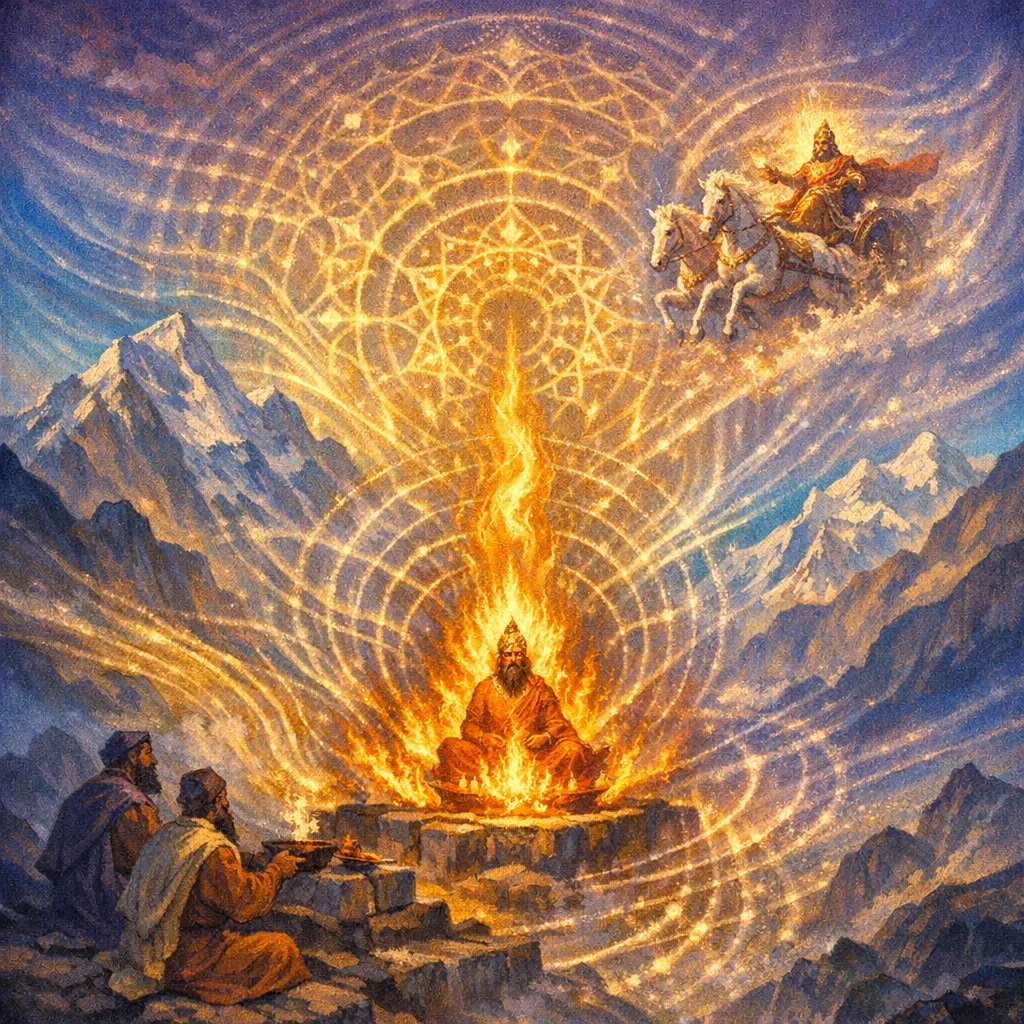
Agni wird als Knotenpunkt des Ritus angerufen – als Mund und Sitz des Opfers, der auf der Pflege des Opferherrn „ruht“; der Beginn ist feierlich-fragend, fast rätselhaft, und spielt auf die Verwandtschaft Agnis mit dem Erhalter des Feuers an. Darauf folgt der deutliche Ruf „komm her“: Rosse eilen zum Barhis, und die Götter treten an den bereiteten Opferplatz heran. Indra, mit Viṣṇu, soll Soma trinken und als Antwort auf das Stotra seine vṛṣṇya-śavas, die männliche Kraft, sichtbar machen und steigern – „wie von alters her“. So lehrt die Gruppe: Die Devas werden durch recht gepflegtes Feuer, geordneten Opferraum und Soma-Lobpreis gegenwärtig; göttliche Macht entfaltet sich als Antwort auf das Yajña, nicht unabhängig davon.
Mantras
Mantra 1
अभि प्र गोपतिं गिरेन्द्रमर्च यथा विदे मूनुं सत्यस्य सत्पतिम्
Lobsinge und preise den Herrn der Herden, den Herrn des heiligen Gesangs (girindra), damit wir den Weisen erlangen — den wahren Herrn des wahren Ritus.
Mantra 2
त्वं जामिर्जनानामग्ने मित्रो असि प्रियः सखा सखिभ्य ईड्यः
Du, o Agni, bist der Verwandte der Menschen; du bist Freund, lieb und Gefährte; deinen Gefährten bist du preiswürdig.
Mantra 3
इन्द्राय गाव आशिरं दुदुह्रे वज्रिणे मधु यत्सीमुपह्वरे विदत्
Für Indra haben die Kühe die erquicklichende Mischung, den süßen Trank, für den Donnerkeilträger gemolken — als er ihn auf den Ruf des Opfers fand.
Frequently Asked Questions
It frames a ritual teaching: Agni ‘belongs’ to the one who tends him with fuel and offerings, so the sacrificer becomes Agni’s closest human relation in the rite.
They are a standard image for Indra’s swift approach; the verse functions as an invitation for Indra to come to the prepared barhis and accept the offering.
Indra–Viṣṇu appear as cooperative powers in Vedic praise; here their joint mention reinforces Indra’s greatness and the traditional support they give to the sacrifice.