Dashati 20
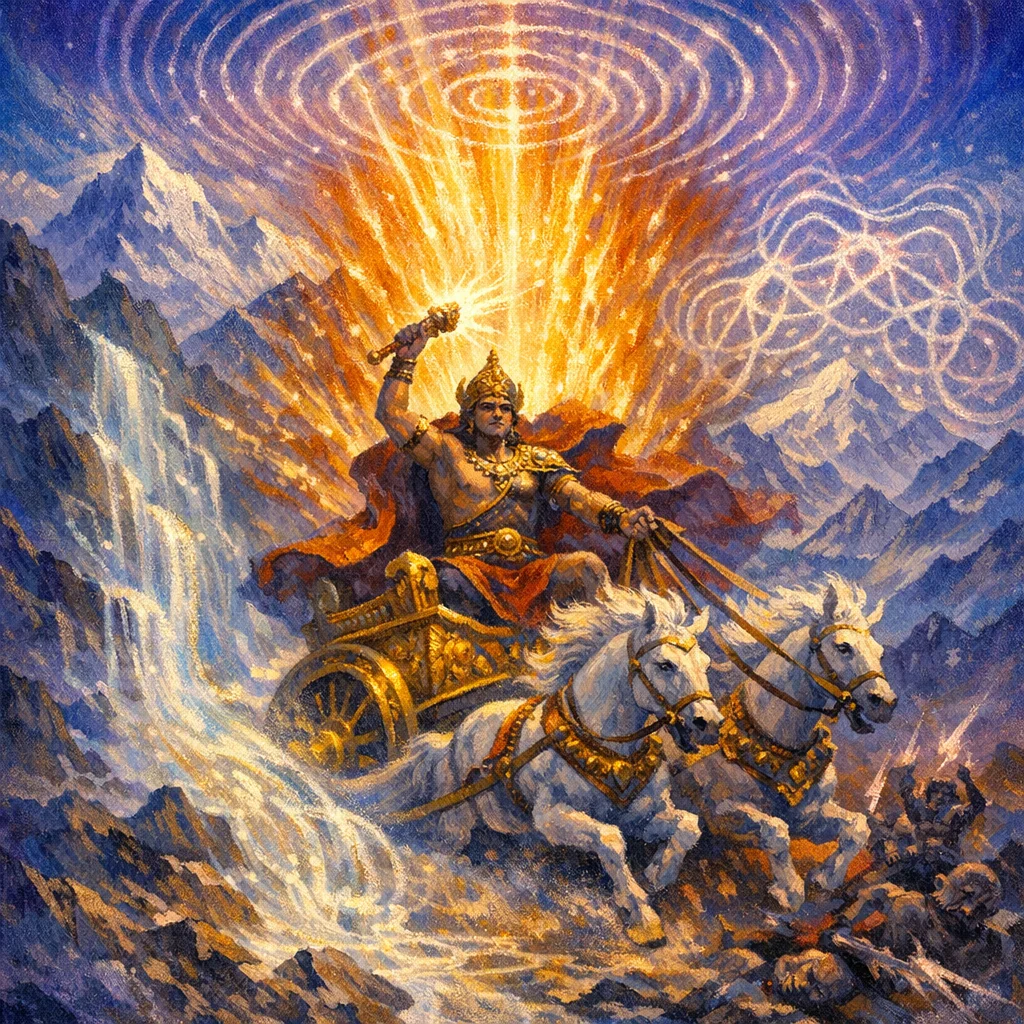
Indra empowered by Soma-exhilaration (mada/matsara) to grant victory and wealth
Indra
Exultant martial and triumphant—built on the imagery of surging Soma-power and battle-victory
Ṛṣi attribution and chandas are not supplied here; they require Rigvedic concordance for the underlying RV originals used by this Sāmavedic selection.
Indra, durch Soma-Rausch/Begeisterung (mada/matsara) gestärkt, wird mittels Soma zum Opfer gerufen, damit er Sieg und Reichtum verleihe. Soma ist dabei nicht bloße Trunkenheit, sondern geweihte rituelle Wirkkraft, die in den Bereich des Opferherrn eintritt: Sie macht Indra gegenwärtig und wirksam, zerschlägt feindliche Mächte, lässt Schlachten gewinnen, gewährt Schutz, treibt den Wagen voran und setzt den Triumph über die a-vrata und das Dasyu-Gegentum durch, bis hin zum „Gewinn von Tausenden“ (sahasrasāti).
Mantras
Mantra 1
मत्स्यपायि ते महः पात्रस्येव हरिवो मत्सरो मदः वृषा ते वृष्ण इन्दुर्वाजी सहस्रसातमः
O Harivat! Deine große berauschende Erhebung ist, gleichsam aus dem Gefäß (pātra), ein stürmischer Rausch; der Soma-Tropfen (indu), stiergleich für den Stier (Indra), ist der Kraftspender, der siegreichste im Gewinnen von Tausenden.
Mantra 2
आ नस्ते गन्तु मत्सरो वृषा मदो वरेण्यः सहावां इन्द्र सानसिः पृतनषाडमर्त्यः
Möge dein berauschender Antrieb zu uns kommen — der stierhafte, erwählte Rausch; o Indra, voll Macht, Spender der Gewinne, Bezwinger der Schlachten, Unsterblicher.
Mantra 3
त्वं हि शूरः सनिता चोदयो मनुषो रथम् सहावान्दस्युमव्रतमोषः पात्रं न शोचिषा
Denn du bist der Held, der Sieger; du treibst den Wagen des Menschen an; mächtig, Plünderer des Dasyu, Berauber der Gelübdelosen; du leuchtest im Glanz wie ein schimmerndes Gefäß.
Frequently Asked Questions
It celebrates Soma’s ritual exhilaration (mada/matsara) as the power that makes Indra victorious—bringing battle-success, protection, and abundant gains to the sacrificer.
The ‘pātra’ points to the Soma-cup used in the rite; the imagery stresses that Indra’s strength and the sacrificer’s benefits arise from a concrete sacrificial act, not from emotion alone.
They represent opponents of Vedic order—those without observance (a-vrata) and hostile forces (Dasyu). The hymn frames Indra’s victory as both martial and moral-ritual protection for the yajamāna.