Dashati 12
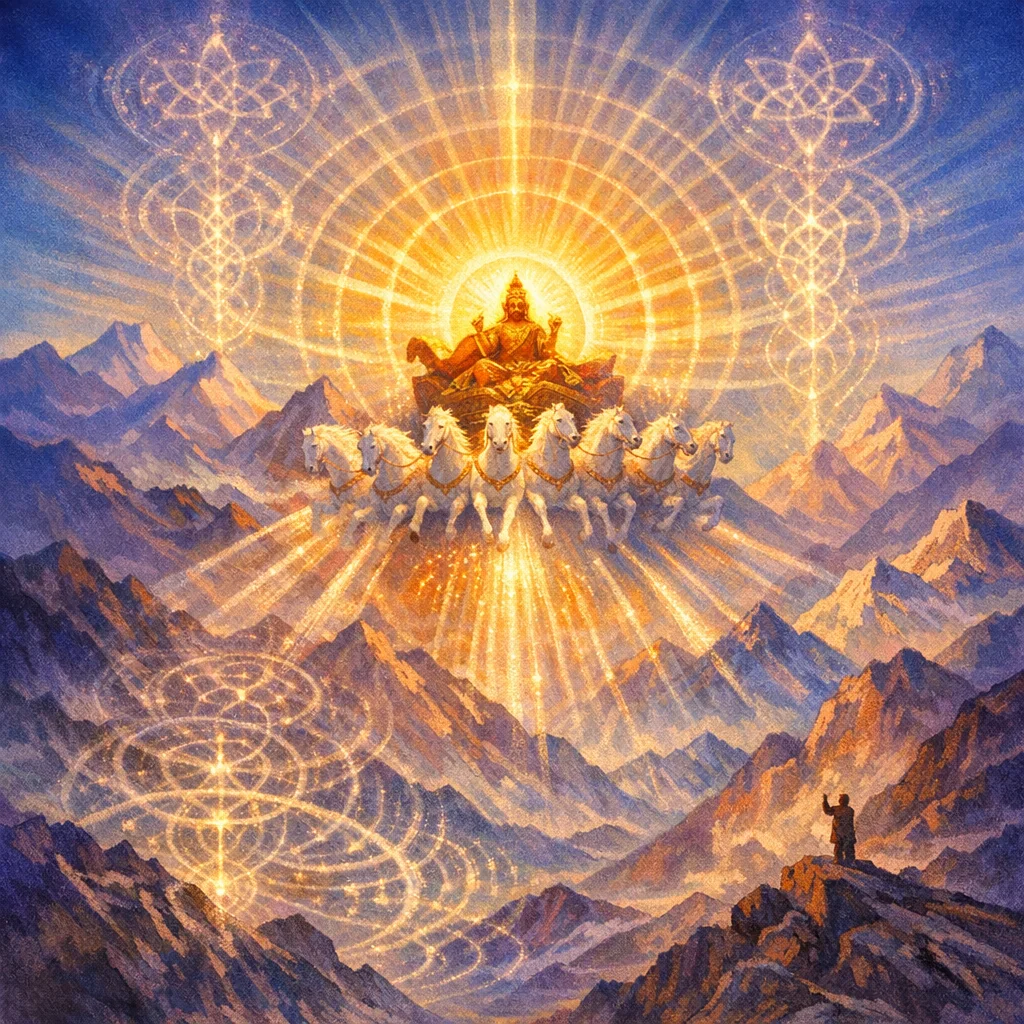
Sūrya as Bradhna/Aruṇa—solar yoking, radiant order, and epiphany
Sūrya/Āditya (Bradhna/Aruṇa)
Radiant forward-moving and proclamatory (epiphany/illumination tone)
Attribution is uncertain in the provided material; the diction aligns with common RV solar-hymn and praise-petition styles with an Indra-stuti insertion suggesting compilation by thematic (Sūrya/ketu) and ritual utility rather than a single fixed family.
Sūrya als Bradhna/Aruṇa: solares „Anjochen“, strahlende kosmische Ordnung und Epiphanie. Die Bilder von Geschirr und stetigem Sonnenlauf führen durch die rocanāḥ, die leuchtenden himmlischen Regionen/Stationen, zu ketu (Zeichen/Feldzeichen) und peśas (sichtbare Gestalt): Das Manifestierte macht das Verborgene erkennbar. Darauf folgt die Bitte um Schutz und Zuflucht (śaraṇā) sowie die Anrufung Indras als schirmenden, wohlstandschenkenden Hort; sein Anteil (bhāga) und rādhas werden als Gegengabe für das Lob für den Opfernden erbeten, damit er im heilsamen Licht und in der Ordnung gefestigt werde.
Mantras
Mantra 1
त्वमिन्द्र यशा अस्यृजीषी शवसस्पतिः त्वं वृत्राणि हंस्यप्रतीन्येक इत्पुर्वनुत्तश्चर्षणीधृतिः
Du, Indra, bist ruhmvoll; du bist der Herr der Kraft, der den Vajra (Blitzkeil) führt. Du allein, unwiderstehlich, erschlägst die Vṛtras; von alters her zum Beistand angetrieben, bist du der Träger der Menschengeschlechter.
Mantra 2
तमु त्वा नूनमसुर प्रचेतसं राधो भागमिवेमहे महीव कृत्तिः शरणा त इन्द्र प्र ते सुम्ना नो अश्नवन्
Dich, ja dich jetzt, o mächtiger, weiser Indra, erbitten wir um Reichtum wie um den zugeteilten Anteil. Du bist wie eine große Bedeckung, eine Zuflucht; mögen deine Gnaden uns erreichen, mögen deine guten Gaben zu uns kommen.
Mantra 3
केतुं कृण्वन्नकेतवे पेशो मर्या अपेशसे समुषद्भिरजायथाः
Du, der dem Zeichenlosen ein Zeichen schafft und dem Ungezierten Schönheit, o jugendlicher Held, bist mit den Versammelten (Priestern) offenbar geworden.
Frequently Asked Questions
Bradhna/Aruṇa is a solar epithet: the tawny-bright Sūrya whose movement and radiance illuminate the heavenly regions (rocanāḥ) and stabilize the worlds.
Ketu means a visible sign or ensign—radiance that makes the deity recognizable. The verse contrasts “without a sign/without adornment” to show the deity’s power to manifest clarity from obscurity.
In Sāman collections, verses can be grouped by ritual usefulness as well as theme. Indra’s verse supplies the petitionary element—refuge, favour, and wealth—complementing the solar verses that establish luminous order.