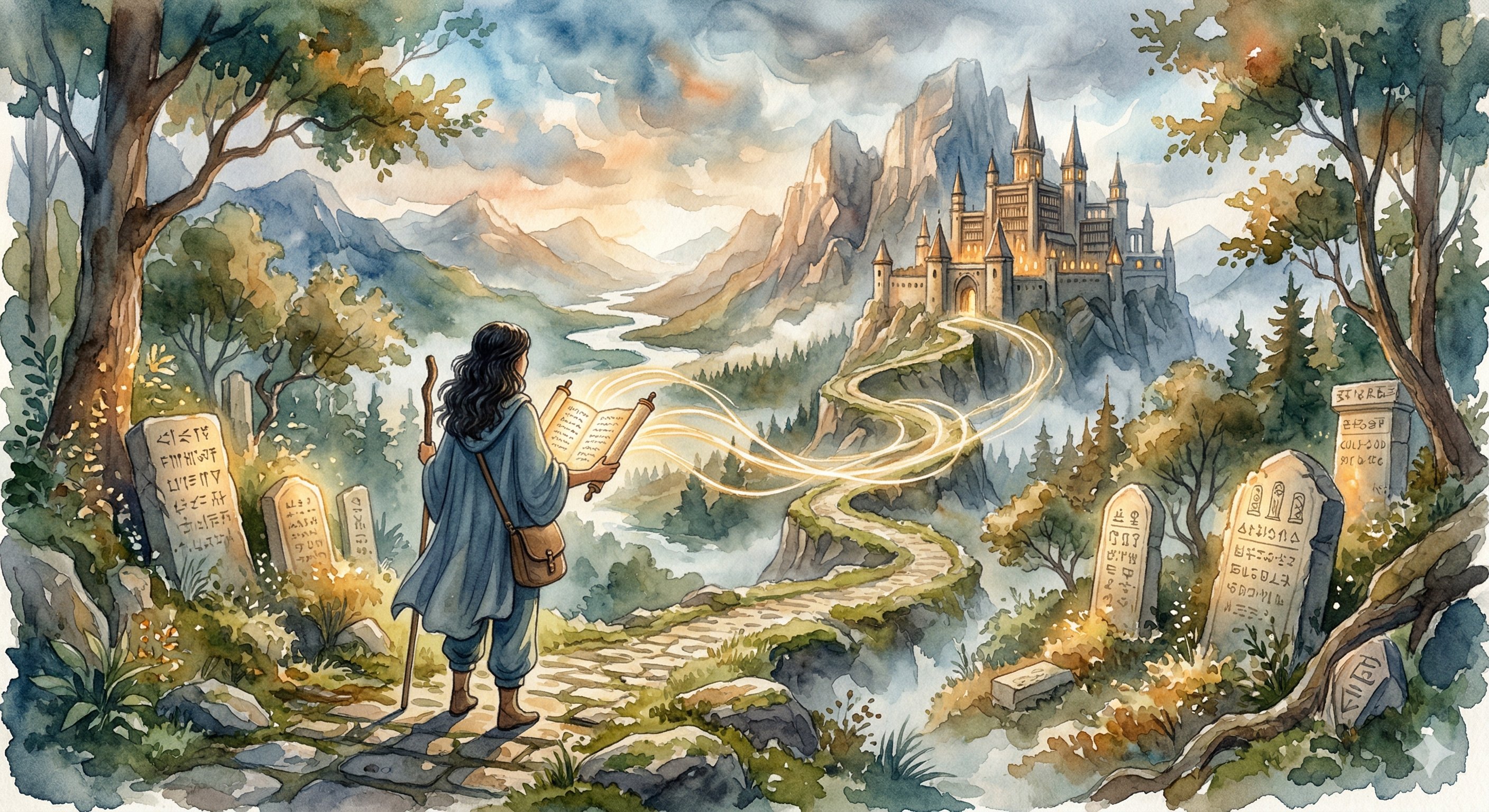
We've all been there. It's late at night, your mind is racing with anxiety about a career choice, or the heavy ache of a recent heartbreak won't leave you alone. You're feeling utterly lost.
Usually, we cope by doomscrolling social media or binge-watching a show to numb the feeling. But what if, instead of numbing it, you could ask a 5,000-year-old tradition, "What do I do with this pain?"
The truth is, while our technologies have changed, our human emotions have not. The ancient scholars, poets, and sages who composed the epics and Vedas mapped the entire spectrum of human psychology long before modern therapy existed. When you are feeling lost, ancient texts have a story perfectly suited to guide you out.
This is the philosophy behind "Mood-Based Wisdom" and how modern seekers are finding solace precisely when they need it.
1. When You Are Feeling: Anxious & Overthinking
Anxiety often stems from obsessing over outcomes. Will I get the job? Will this project fail? What if my plan doesn't work out?
When you feel paralyzed by overthinking, the ancient texts point you directly to the finest piece of anti-anxiety literature ever written: The Bhagavad Gita.
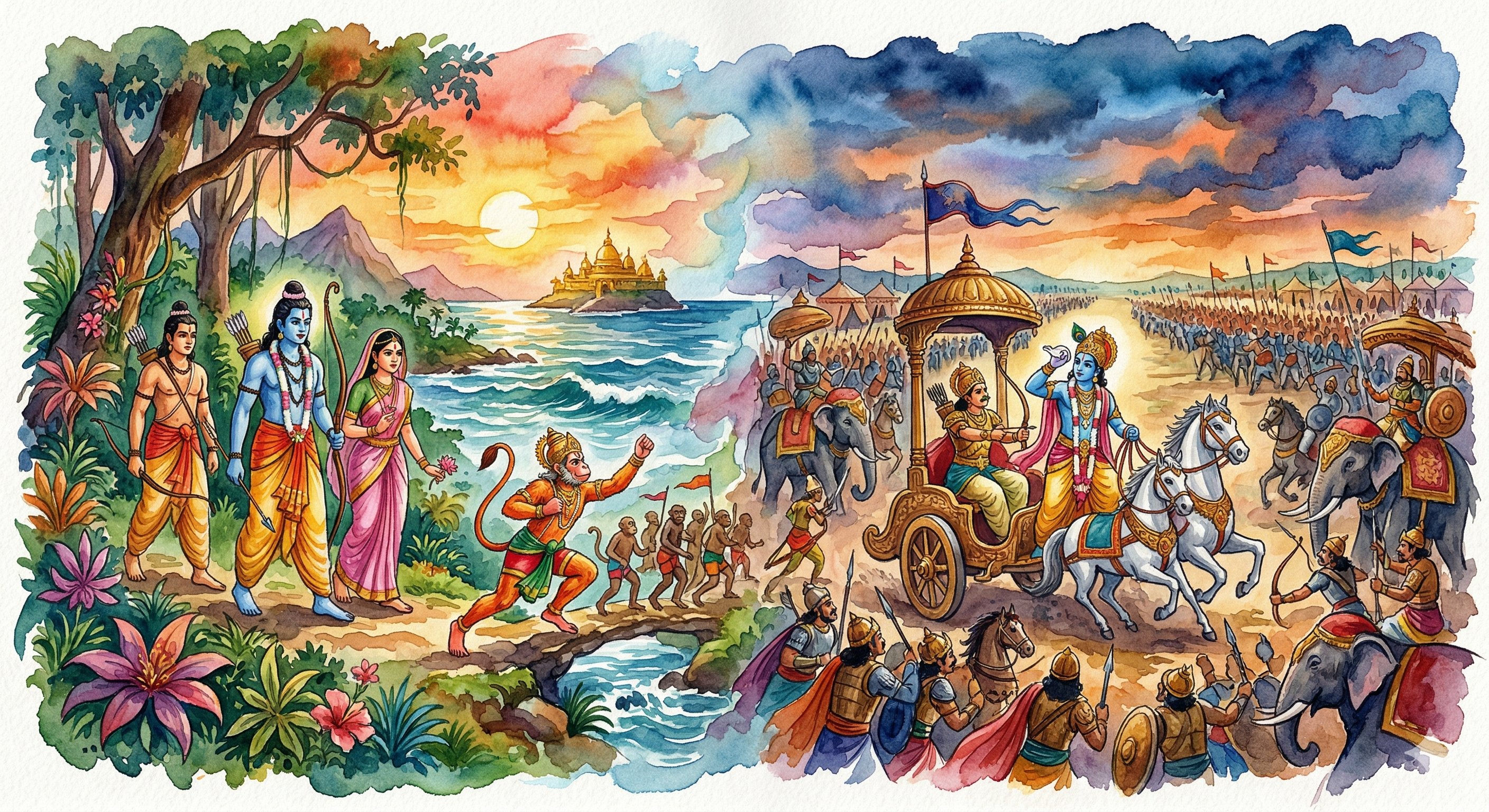
In Chapter 2, Lord Krishna tells Arjuna, who is suffering a severe panic attack on the battlefield:
"You have a right to perform your prescribed duty, but you are not entitled to the fruits of action."
The ancient remedy: It is called Nishkama Karma (action without attachment). The texts remind you that your anxiety is a delusion of control. Your only duty is the work itself. Do the work passionately, and release the burden of having to control the result.
2. When You Are Feeling: Heartbroken & Betrayed
Heartbreak makes us feel isolated, as if we are the first person to ever experience such grief.
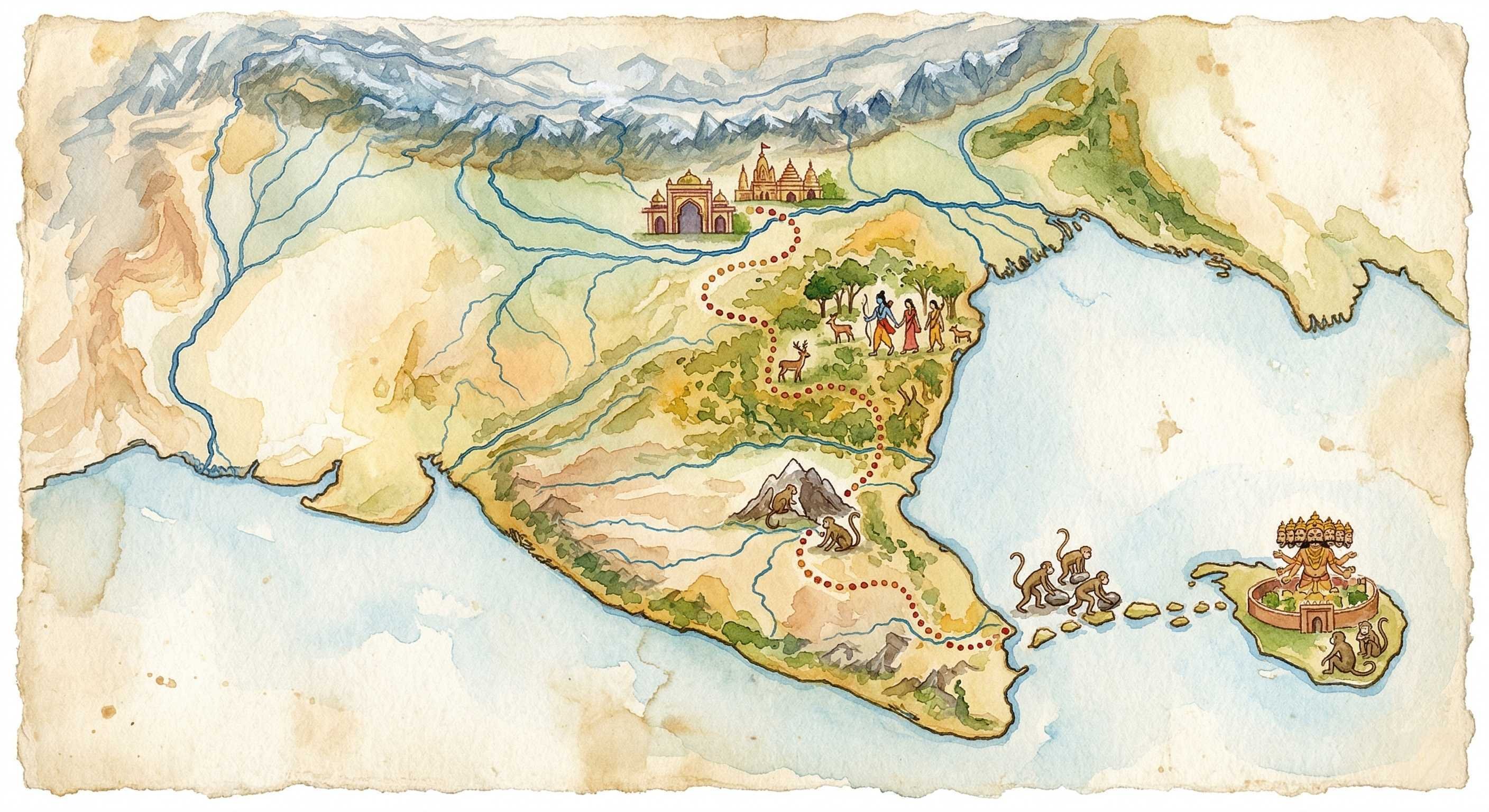
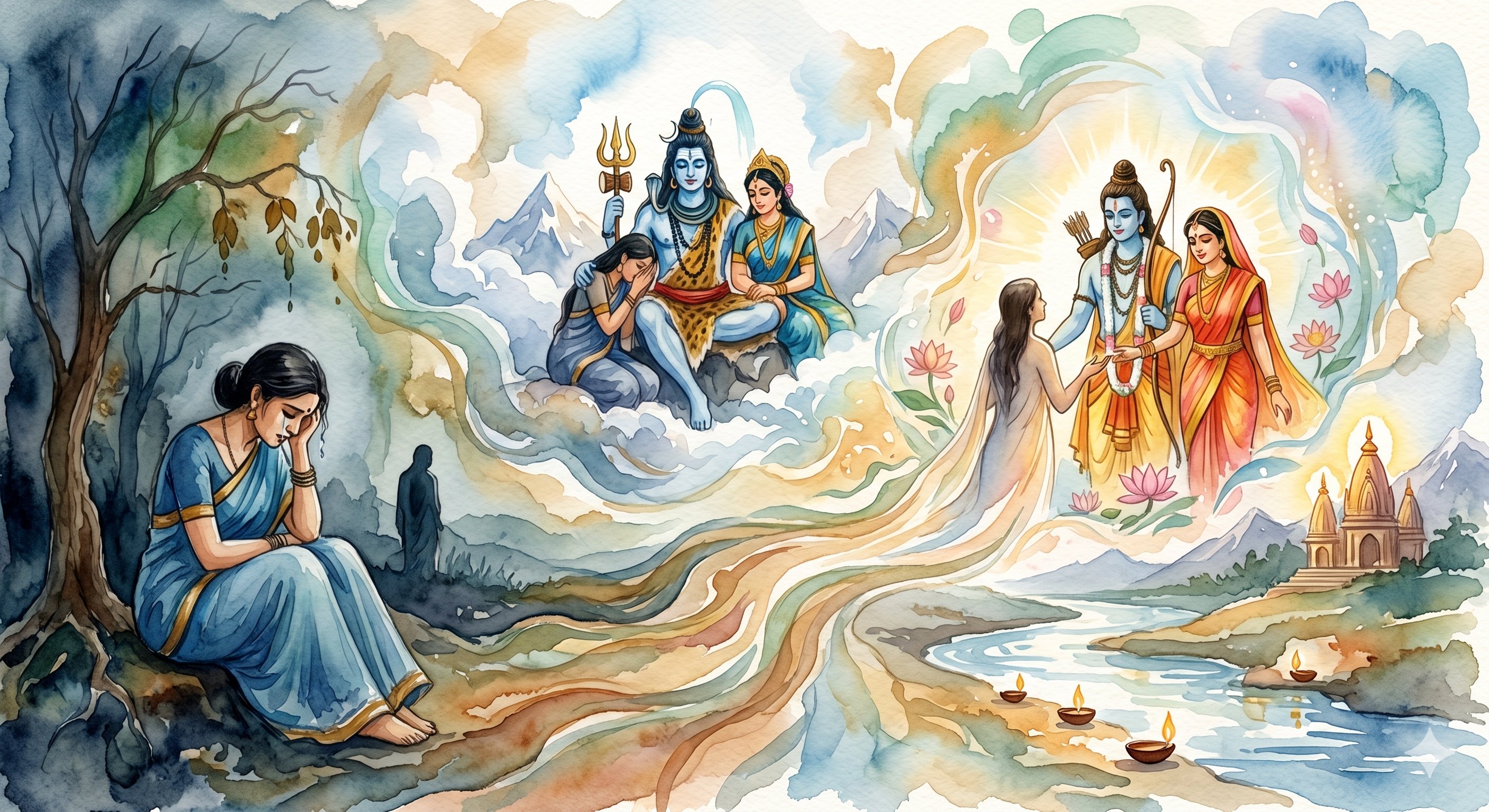
If you are dealing with romantic grief or severe betrayal, the traditions point to the story of Nala and Damayanti (found within the Mahabharata) or the separation of Rama and Sita in the Ramayana.
When Lord Rama loses Sita in the forest, he doesn't suppress his emotions. The Ramayana portrays his grief with raw, devastating honesty. The Supreme Avatar wanders the forest crying out to trees, rivers, and animals, asking them if they have seen his wife.
The ancient remedy: The texts teach us that grief is a holy process, not a weakness. Even the divine weeps. It shows that feeling the pain deeply is the first necessary step before you can rise to fight your metaphorical battle.
3. When You Are Feeling: Disheartened by Injustice
Have you ever felt like you did everything right, played by the rules, and yet bad things happened to you while dishonest people succeeded?
This exact feeling is the core dilemma of Yudhishthira in the Mahabharata. He is the son of Dharma (righteousness). He never lies, he plays fair, and yet he loses his kingdom, is humiliated, and is forced to live in the forest for 13 years while the corrupt Kauravas enjoy power.
During his exile, Yudhishthira asks a sage: Why should I be good when goodness only brings me suffering?
The ancient remedy: The sage’s answer forms a profound philosophical lesson: Dharma is not a transaction. You do not do good to be rewarded in the material world. You do good because a life lived out of alignment with your soul is a life of inner rot. You must protect dharma, not because it protects your wealth, but because it protects your character.
4. When You Are Feeling: Unmotivated & Powerless
There are days when you doubt your capabilities. You feel small, underqualified, and incapable of facing the mountain in front of you.
When you feel this way, you are experiencing the "Curse of Hanuman." In the Ramayana, Hanuman sits on the shore of the ocean, needing to jump to Lanka to save Sita. But he sits in silence, having forgotten his immense power due to a childhood curse. He truly believes he is just an ordinary being.
It takes Jambavan, the wise old bear, to sit with Hanuman and remind him of his origins, his divine strength, and his past feats. Only then does Hanuman regain his memories and leap across the sea.
The ancient remedy: You are not lacking power; you have merely forgotten it. You need a reminder of what you have survived and what you are capable of. The texts act as your Jambavan, waking you up to your own potential.
How Mood-Based Wisdom Works in Daily Life
The challenge with ancient scriptures has always been accessibility. A 100,000-verse epic is intimidating when you just need five minutes of comfort on your lunch break.
This is exactly why the Vedapath app was built. We realized that people don't read scriptures linearly; they reach for them when they are in emotional need.
Vedapath introduced the "I Am Feeling..." feature. Instead of forcing you to guess which chapter of which book to read, you simply open the app and tap how you feel: Anxious, Angry, Lost, Grateful, or Grief-Stricken.
The app instantly serves up beautifully translated shlokas, stories, and philosophical context specifically curated to address that exact emotion. It bridges the gap between a 5,000-year-old library and your immediate modern crisis.
Frequently Asked Questions
Q: Can ancient myths really help with modern psychological issues like anxiety? A: Yes. While the ancient sages didn't use modern psychological terminology, the texts are essentially deep explorations of human psychology, cognitive reframing, and resilience.
Q: Where can I find quotes or stories for my specific mood? A: Apps like Vedapath curate these texts for you with the "I Am Feeling" feature, matching specific verses from the Gita, Ramayana, or Puranas to your emotional state.
Key Takeaways
- The problems you face today - anxiety, heartbreak, injustice, lack of motivation—were thoroughly mapped by ancient Indian texts thousands of years ago.
- The Bhagavad Gita is the ultimate remedy for anxiety and overthinking (Nishkama Karma).
- The Ramayana validates grief as a necessary human process.
- The Mahabharata reminds us that doing the right thing is its own reward, even when the world is unfair.
- Hanuman's story is a reminder that you possess immense power; you have just forgotten it.
🧘 Find Your Anchor on Vedapath
You don't need to be a scholar to leverage ancient wisdom.
The next time you are feeling overwhelmed, open the Vedapath app. Use the "I Am Feeling" feature to let the timeless wisdom of the Vedas, Upanishads, and Epics speak directly to your current struggle. With translations in 16 languages and an AI assistant to answer your questions, finding peace has never been more accessible.
Download Vedapath for free and discover the story that was written just for you.
Comments
Sign in to join the discussion