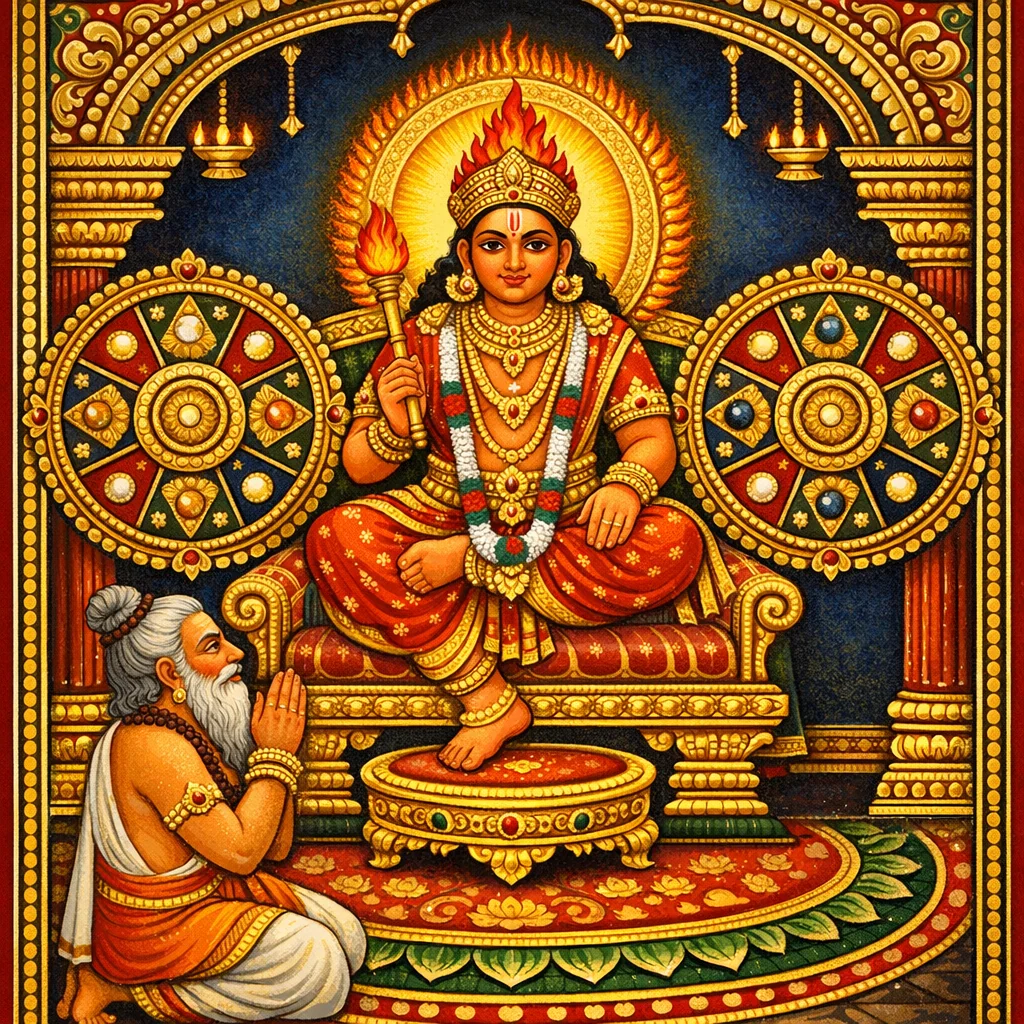
Adhyaya 132
Adhyaya 132 — Sevā-cakra and Tārā-cakra (Indicators of Gain/Loss, Compatibility, and Risk)
يُعرِّف الإله أغني «سِڤا-تشاكرا» بوصفها عجلةً تشخيصيةً قائمةً على علم الجيوتيشا لقراءة lābha–alābha (الربح والخسارة)، مع عنايةٍ خاصة بديناميات القرابة والاعتماد (الأب، الأم، الإخوة، والزوجان). يشرح الفصل بناء العجلة: شبكة من 35 خانة تتكوّن بتقسيمات عمودية وأفقية، ويُقرِّر طريقة وضع الحروف باستعمال الحركات (الصوائت) والحروف الساكنة من فئة sparśa، ثم تُفسَّر النتائج وفق تصنيفٍ صوتيّ يعتمد على الاسم. وتُجمع الثمار في حالات إنجازٍ مباركة (siddha، sādhya، susiddha) وحالاتٍ خطرة (ari، mṛtyu)، مع تحذيرٍ صريح من الإقدام عند ظهور دلالات العدو أو الموت. كما يورد تصنيفًا موازيًا يربط المجموعات الصوتية بأنواع الكائنات (devas، daityas، nāgas، gandharvas، ṛṣis، rākṣasas، piśācas، البشر)، مُقيمًا سلّمًا للمقارنة في «القوة» ومؤكِّدًا قيد الدharma: لا ينبغي للقوي أن يظلم الضعيف. ثم يضيف طريقة «تارا-تشاكرا»: يُحدَّد النكشترة (nakṣatra) من المقطع الأول للاسم، وتُحسب النتيجة بعدّ mātrā ثم القسمة على عشرين، فتظهر فئات مثل janma وsampat وvipat وkṣema وغيرها. وأخيرًا يذكر أزواج الصداقة والعداوة بين الأبراج (rāśi-maitrī)، ويحذّر من الخدمة تحت برجٍ يُسمّى «صديقًا»، جامعًا بين سياسة العلاقات وتقنية التنبؤ.
Shlokas
No shlokas available for this adhyaya yet.
Frequently Asked Questions
The chapter emphasizes cakra-construction and computation rules: a 35-cell grid using vowels and sparśa letters for the Sevā-cakra, and a Tārā-cakra method based on mātrā counting within the name followed by division by 20 to obtain the remainder as the phala-category.
It frames predictive technique as dharma-guided decision support: avoid destructive indicators (ari/mṛtyu), cultivate beneficial alliances, and apply strength ethically (do not oppress the weak), thereby aligning worldly action (bhukti) with moral discipline that supports higher spiritual aims (mokṣa).
Sampat-tārā is praised as highly auspicious; Kṣema-tārā is favorable for all works; Vipat-tārā is described as fruitless/inauspicious; Janma-tārā is explicitly called inauspicious; and Artha-nāśinī is said to cause loss of wealth.
It uses varṇa-vibhāga as an interpretive hierarchy for outcomes and relative ‘strength’ in interactions, turning phonetics into a symbolic cosmology that informs compatibility, risk assessment, and ethical restraint.