Adhyaya 123
युद्धजयार्णवीयनानायोगाः (Various Yogas from the Yuddha-jayārṇava)
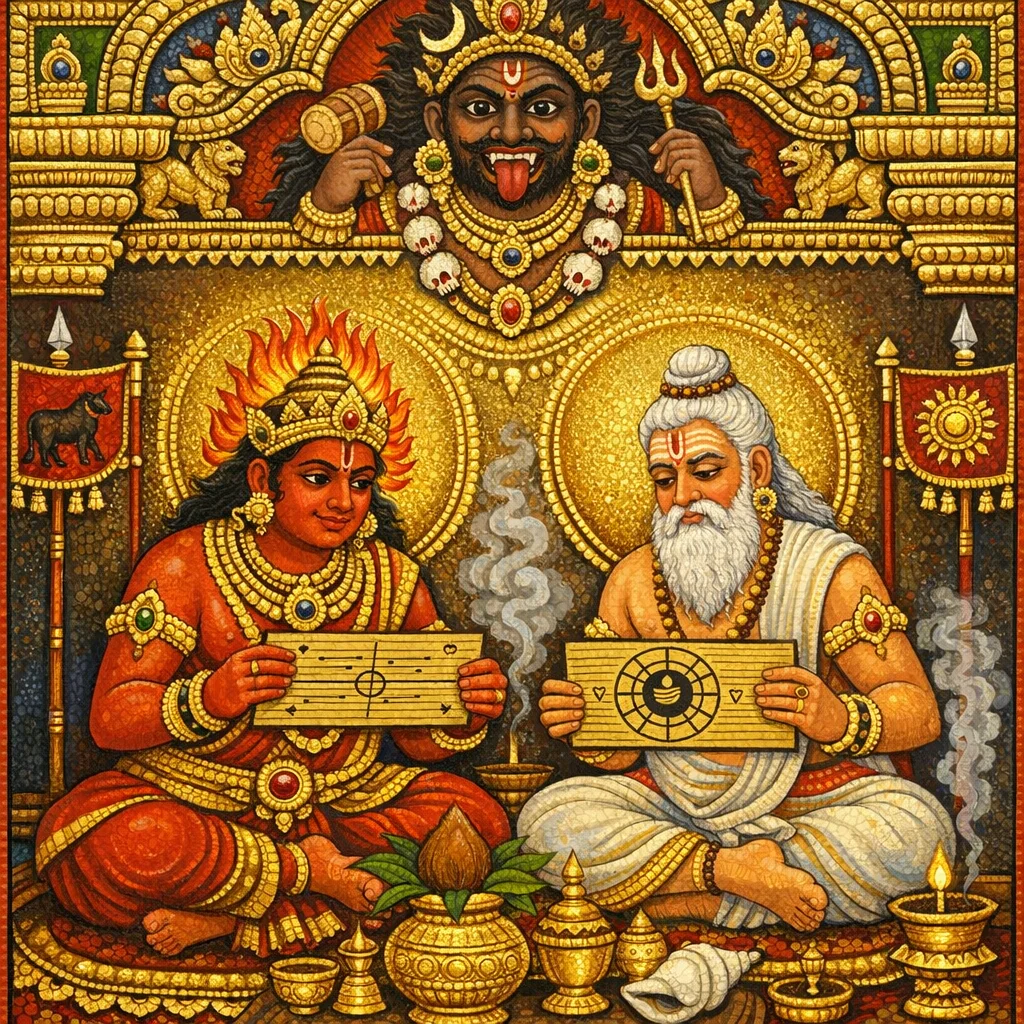
بعد إغلاق القسم السابق المتعلق بـ kāla-gaṇana (حساب الزمن)، يشرع الإله أغني في خلاصة موجّهة لنيل الظفر في الحرب مأخوذة من Yuddhajayārṇava. يرسم هذا الفصل تصنيفات عملية للأصوات (الفونيمات) ولـ tithi (الأيام القمرية) ابتداءً من Nandā، ثم يوزّع نطاقات الحروف على حكّام الكواكب، فيُدرج العِرافة ضمن شبكة مُشفَّرة لغوية-فلكية. ويعرض كذلك موضوعات التشخيص والقياس مثل nāḍī-spandana وucchvāsa وpala، رابطًا نبض الجسد ووحدات الزمن بقراءة البشائر. ثم يطوّر تنجيم الحرب القائم على الدوائر (cakra): Svarodaya-cakra وŚani-cakra وKūrma-cakra وRāhu-cakra، مع بيان التقسيمات والمواضع بحسب الجهات والأجزاء المُهلكة، إلى جانب تسميات nakṣatra/muhūrta التي تحكم ما يلائم فعله في كل وقت. وأخيرًا ينتقل إلى ممارسات الحماية والنصر: تطبيقات Bhairava-mantra (śikhā-bandha، tilaka، añjana، dhūpa-lepana) ومجموعة أعشاب تُلبس وصيغ vaśīkaraṇa (علامات جبينية، مراهم، زيوت). وهكذا يجسّد الفصل Agneya vidyā بوصفها تركيبًا بين Jyotiṣa وتقنية الطقس والدواء التطبيقي في خدمة نصرٍ مهتدٍ بالدارما.
Shlokas
No shlokas available for this adhyaya yet.
Frequently Asked Questions
A war-oriented Jyotiṣa toolkit: tithi and letter-to-graha mappings, multiple prognostic cakras (Svarodaya, Śani, Kūrma, Rāhu), and muhūrta-based prescriptions for what actions to perform or avoid.
They act as diagrammatic decision systems: divisions, directional placements, and specific ‘death-giving’ portions (notably linked with Śani) guide timing and risk assessment for actions related to conflict and protection.
The chapter treats victory as a synthesis of right timing (Jyotiṣa), protective rite (mantra and ritual acts like tilaka/añjana), and supportive materia medica—typical of the Agni Purana’s encyclopedic Agneya-vidyā approach.
Action-appropriateness: Raudra is prescribed for fierce acts, while Śveta is aligned with purification activities like bathing—demonstrating karmic regulation through time-quality.
Yes. Shloka 25 explicitly notes differences between manuscripts (e.g., a line absent in the Gha manuscript and alternate readings in the Kha manuscript), which is valuable for critical study.