Sarga 88
इन्द्रजित्–लक्ष्मण संवादः तथा युद्धप्रवृत्तिः (Indrajit and Lakshmana: War-Boasts, Rebuke, and the Clash)
युद्धकाण्ड
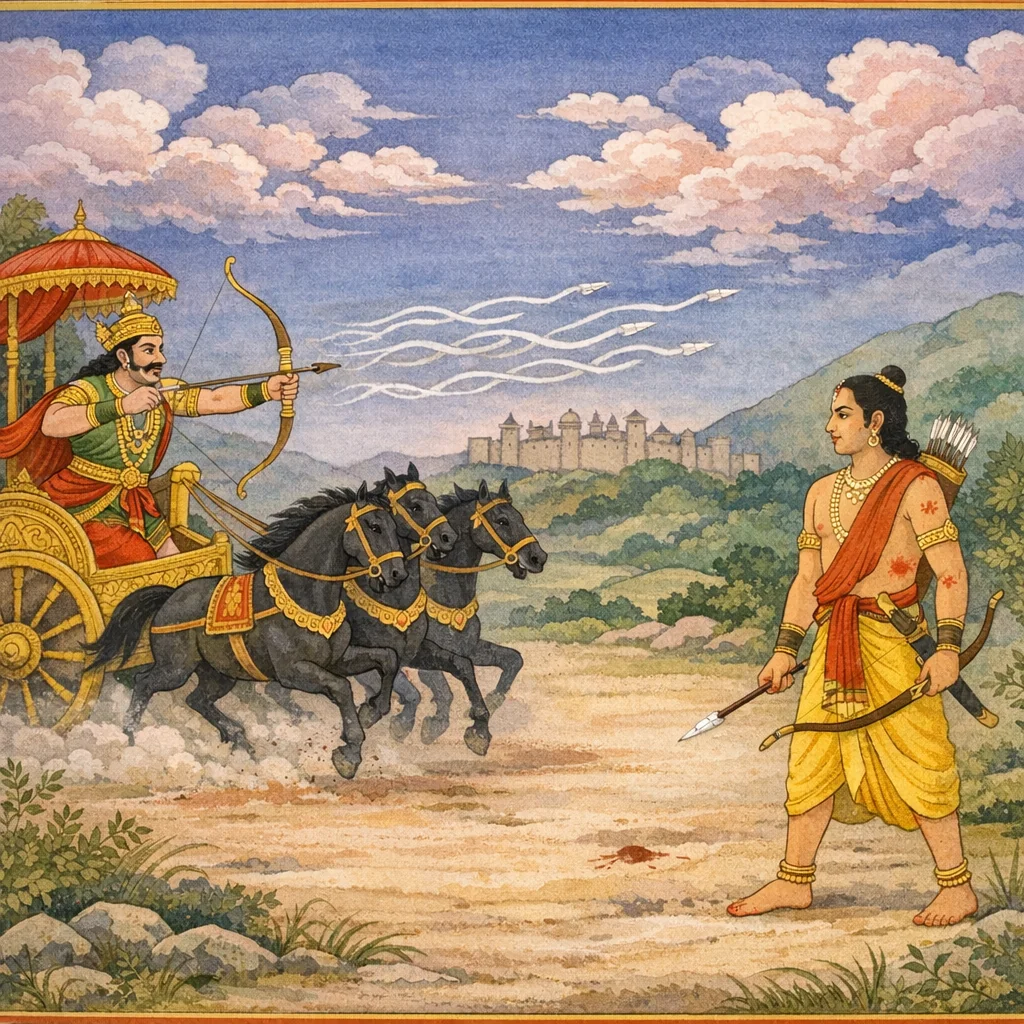
Sarga 88 stages a rhetorical duel that immediately hardens into archery combat. Hearing Vibhīṣaṇa’s counsel, Indrajit (Rāvaṇi) becomes rage-deluded, mounts a richly adorned chariot drawn by dark horses, and assumes a death-like battlefield presence. He taunts Lakṣmaṇa with prior night-war claims, threatens to send him to Yama’s abode, and foretells scavengers descending upon his corpse—deploying intimidation as a weapon. Lakṣmaṇa, fearless and angered, replies with reasoned kṣātra-ethics: victory is proven by action, not vāg-bala (mere speech), and invisibility in battle is branded as a thief’s path, not a warrior’s. He challenges Indrajit to display the power he boasts of within arrow-range. Indrajit releases serpent-like, hissing shafts that pierce Lakṣmaṇa, who nevertheless shines “like smokeless fire.” Indrajit proclaims lethal intent again; Lakṣmaṇa answers with restrained resolve—promising to strike without boast. The exchange culminates in immediate volleys: Lakṣmaṇa plants five arrows in Indrajit’s chest; Indrajit retaliates with three well-aimed shafts. The chapter closes by depicting a terrifying, evenly matched contest between two nearly unconquerable champions, likened to celestial bodies and mythic rivals, emphasizing parity of tejas and the ethical contrast between boastful threat and disciplined action.
Shlokas
Verse 1
विभीषणवच्श्रुत्वारावणिःक्रोधमूर्छितः ।अब्रवीत्परुषंवाक्यंवेगेनाभ्युत्पपात च ।।।।
Hearing Vibhīṣaṇa’s words, Rāvaṇi (Indrajit), overcome by fury, spoke harshly and rushed forward with speed.
Verse 2
उद्यतायुधनिस्त्रिंशोरथेसुसमलङ्कृते ।कालाश्वयुक्तेमहतिस्थितःकालान्तकोपमः ।।।।महाप्रमाणमुद्यम्यविपुलंवेगवद्धृढम् ।धनुर्बीमंपरामृश्यशरांश्चामित्रनाशनान् ।।।।
Standing in a great chariot, beautifully adorned and yoked to black horses—weapon and sword raised—Indrajit looked like Death at the end of time. Lifting his vast, long, firm, and swift terrific bow, he also grasped enemy-destroying arrows.
Verse 3
उद्यतायुधनिस्त्रिंशोरथेसुसमलङ्कृते ।कालाश्वयुक्तेमहतिस्थितःकालान्तकोपमः ।।6.88.2।।महाप्रमाणमुद्यम्यविपुलंवेगवद्धृढम् ।धनुर्बीमंपरामृश्यशरांश्चामित्रनाशनान् ।।6.88.3।।
He lifted a vast, long bow—firm and swift in force—grasping that fearsome weapon and the enemy-destroying arrows as well.
Verse 4
तंददर्शमहेष्वासोरथस्थस्समलङ्कृतः ।अलङ्कृतममित्रघ्नोराघवस्यानुजंबली ।।।।
Then the mighty enemy-slayer Indrajit—an excellent archer, seated in a richly adorned chariot—caught sight of Rāghava’s younger brother, Lakṣmaṇa, himself splendidly arrayed for battle.
Verse 5
हनुमत्पृष्ठरूढमुदस्थरविप्रभम् ।उवाचैनंसमारब्ध: सौमित्रिंसविभीषणम् ।।।।तांश्चवानरशार्दूलान् पश्यध्वंमेपराक्रमम् ।
Seeing Lakṣmaṇa mounted upon Hanumān—radiant like the rising sun—Indrajit, preparing to engage, addressed him (with Vibhīṣaṇa nearby) and also the foremost of the Vānara warriors: “Behold my prowess!”
Verse 6
अद्यमत्कार्मुकोत्सृष्टंशरवर्षंदुरासदम् ।।।।मुक्तंवर्षमिवाकाशेवारयिष्यथसंयुगे ।
“Today, in battle, you will not be able to check the hard-to-withstand shower of arrows released from my bow—like rain let loose from the sky.”
Verse 7
अद्यवोमामकाबाणामहाकार्मुनिस्सृताः ।।।।विधमिष्यन्तिगात्राणितूलराशिमिवानलः ।
“Today my arrows, shot from my great bow, will tear through your limbs—like fire consuming a heap of cotton.”
Verse 8
तीक्षणसायकनिर्भन्नान्शूलशक्त्यृष्टितोमरैः ।।।।अद्यवोगमयिष्यामिसर्वानेनयमक्षयम् ।
“Today I will send you all to Yama’s realm—pierced by sharp arrows and struck with tridents, pikes, spears, and javelins.”
Verse 9
क्षिपतश्शरवर्षाणिक्षिप्रहस्तस्यसम्युगे ।।।।जीमूतस्येननदतःकःस्थास्यतिममाग्रतः ।
“When, with swift hands in battle, I hurl down showers of arrows—roaring like a thundercloud—who will be able to stand before me?”
Verse 10
रात्रियुद्धेमयापूर्वंवज्राशनिसमैःशरैः ।।।।शायितौस्थोमयाभूमौविसंज्ञौसपुरस्सरौ ।
“Earlier, in the night-battle, with arrows like thunderbolts, I struck you down—both you and your companion—so that you lay senseless upon the ground.”
Verse 11
स्मृतिर्नतेऽस्तिवामन्येव्यक्तंवायमसादनम् ।।।।आशीविषमिवक्रुद्धंयन्मांयोद्धुव्यवत्थित: ।
“I think either your memory has failed you, or you have plainly set yourself on the road to Yama’s dwelling—since you stand ready to fight me, enraged like a venomous serpent.”
Verse 12
तच्छ्रुत्वाराक्षसेन्द्रस्यगर्जितंलक्ष्मणस्तदा ।।।।अभीतवदनःक्रुद्धोरावणिंवाक्यमब्रवीत् ।
Hearing that roar of the lord of rākṣasas, Lakṣmaṇa—his face unafraid—answered Rāvaṇi in anger.
Verse 13
उक्तश्चदुर्गमःपारःकार्याणांराक्षसत्वया ।।।।कार्याणांकर्मणांपारंयोगच्छति स बुद्धिमान् ।
“O Rākṣasa, you have spoken of reaching the ‘far shore’ of your aims—hard to attain. But the truly wise is the one who reaches the end of his undertakings through action, not mere proclamation.”
Verse 14
सत्वमर्थस्यहीनार्थोदुरवासस्यकेनचित् ।।।।वाचाव्याहृत्यजानीषेकृतार्थोऽस्मीतिदुर्मते ।
“You, empty of real capability, speak as though you can accomplish what is difficult for others; by mere words you imagine, ‘I have achieved my end,’ O misguided one.”
Verse 15
अन्तर्धानगतेनाजौयस्त्वयाचरितस्तदा ।।।।तस्कराचरितोमार्गःनैषवीरनिषेवितः ।
“That course you once took in battle—moving while concealed from sight—is the path of a thief; it is not the way followed by true warriors.”
Verse 16
यथाबाणपथंप्राप्यस्थितोऽहंतवराक्षस ।।।।दर्शयस्वाद्यतत्तेजोवाचात्वंकिंविकत्थसे ।
“O Rākṣasa, I have come within your arrow-range and stand before you. Show that power today—why do you merely boast with words?”
Verse 17
एवमुक्तोधनुर्भीमंपरामृश्यमहाबलः ।।।।ससर्जनिशितान्बाणानिंद्रजित्समितिञ्जयः ।
When Lakṣmaṇa had spoken thus, Indrajit—mighty and victorious in battle—seized his dreadful bow and let fly sharp arrows.
Verse 18
तेनिसृष्टामहावेगाःशराःसर्पविषोपमाः ।।।।सम्प्राप्यलक्ष्मणंपेतुःश्वसन्तइवपन्नगाः ।
Those arrows, released by him—rushing with great force and deadly as serpent-venom—reached Lakṣmaṇa, falling upon him like hissing snakes.
Verse 19
रैरतिमहावेगैर्वेगवान्रावणात्मजः ।।।।सौमित्रिमिन्द्रजिद्युद्धेविव्याधशुभलक्षणम् ।
In the battle, Indrajit—Rāvaṇa’s son, swift in action—pierced Saumitri (Lakṣmaṇa), marked with auspicious signs, with arrows driven at tremendous speed.
Verse 20
सशरैरतिविद्धाङ्गोरुधिरेणसमुक्षितः ।।।।शुशुभेलक्ष्मणःश्रीमान्विधूमइवपावकः ।
Pierced all over by arrows and drenched in blood, the glorious Lakṣmaṇa shone like a smokeless fire.
Verse 21
इन्द्रजित्त्वात्मनःकर्मप्रसमीक्ष्याधिगम्य च ।।।।विनद्यसुमहानादमिदंवचनमब्रवीत् ।
Indrajit, surveying his own deed and drawing closer, roared with a very loud cry and spoke these words.
Verse 22
पत्रिणःशितधारास्तेकरामत्कार्मुकच्युताः ।।।।आदास्यन्तेऽद्यसौमित्रेजीवितंजीवितान्तकाः ।
"Saumitri, these feathered, razor-edged arrows—shot from my bow—are life-ending; today they will take away your life."
Verse 23
अद्यगोमायुसङ्घाश्चश्येनसङ्घाश्चलक्ष्मण ।।।।गृध्राश्चनिपतन्तुत्वांगतासुंनिहतंमया ।
"Lakṣmaṇa, today may packs of jackals, flocks of hawks, and vultures descend upon you—slain by me, your life gone."
Verse 24
क्षत्रबन्धुंसदानार्यंरामःपरमदुर्मतिः ।।।।भक्तम्भ्रातरमद्यैवत्वांद्रक्ष्यतिहतंमया ।
"Rāma—utterly misguided and ever ignoble—will today see you, his devoted brother, slain by me."
Verse 25
विशस्तकवचंभूमौव्यपविद्धशराससनम् ।।।।हृतोत्तमाङ्गंसौमित्रत्वामद्यनिहतंमया ।
"Saumitri, today Rāma will see you slain by me—fallen on the ground with your armor shattered, your bow cast away, your head struck off."
Verse 26
इतिब्रुवाणंसङ्कृद्ध: परुषंरावणात्मजम् ।।।।हेतुमद्वाक्यमत्यर्थंलक्ष्मणःप्रत्युवाच ह ।
As Rāvaṇa’s son spoke in harsh words, Lakṣmaṇa—angered—answered him with a pointed reply, grounded in reason and meaning.
Verse 27
वाग्बलंत्यजदुर्बुद्धेक्रूरकर्मासिराक्षस ।।।।अथकस्माद्वदस्येतत्सम्पादयसुकर्मणा ।
“Abandon this mere strength of speech, you evil-minded Rākṣasa—your deeds are cruel. Why speak like this now? Prove yourself through good action.”
Verse 28
कृत्वाकत्थसेकर्मकिमर्थमिहराक्षस ।।।।कुरुतत्कर्मयेनाहंश्रद्धध्यांतवकत्थनम् ।
“Why do you boast here without first accomplishing the deed, O Rākṣasa? Do that act by which I may place trust in your claims.”
Verse 29
अनुक्त्वापरुषंवाक्यंकिञ्चिदप्यनवक्षिपन् ।।।।अविकत्थन्वधिष्यामित्वांपश्यपुरुषाधम ।
“Without uttering harsh words, without interrupting with any retort, and without boasting—I will strike you down. Watch, you lowest of men.”
Verse 30
इत्युक्त्वापञ्चनाराचानाकर्णापूरितान् शितान् ।।।।निजघानमहावेगाल्लक्ष्मणोराक्षसोरसि ।
Having spoken thus, Lakṣmaṇa drew five sharp nārāca-arrows to the ear and, with great speed, struck them into the Rākṣasa’s chest.
Verse 31
सुपत्रवाजिताबाणाज्वलिताइवपन्नगाः ।।।।नैरृतोरस्यभासन्तसवितूरश्मयोयथा ।
Those arrows, fletched with fine feathers, gleamed on the Rākṣasa’s chest—like blazing serpents, like the rays of the sun.
Verse 32
सःशरैराहतस्तेनसरोषोरावणात्मजः ।।।।सुप्रयुक्तैस्त्रिभिर्भाणैःप्रतिविव्याधलक्ष्मणम् ।
Struck by those arrows, Rāvaṇa’s son flared up in fury and, in return, pierced Lakṣmaṇa with three well-aimed shafts.
Verse 33
सःबभूवमहाभीमोनरराक्षससिंहयोः ।।।।विमर्दस्तुमुलोयुद्धेपरस्परजयैषिणोः ।
Then the battle between the lion among men and the lion among Rākṣasas grew tumultuous and terrifying, as each sought victory over the other.
Verse 34
उभौहिबलसम्पन्नावुभौविक्रमशालिनौ ।।।।उभौपरमदुर्ज्ञेयावतुल्यबलतेजसौ ।
Both were endowed with strength; both were rich in valor; both were exceedingly hard to overcome—each unmatched in power and fiery energy.
Verse 35
युयुधातेतदावीरौग्रहाविवनभोगतौ ।।।।बलवृत्राविवाभीतौयुधितौदुष्प्रधर्षणौ ।
Then the two heroes fought on—shining like two heavenly bodies in the sky—clashing in battle like Indra and Vṛtra, fearless and hard for any foe to overpower.
Verse 36
युयुधातेमहात्मानौतदाकेसरिणाविव ।।।।बहूनवसृजन्तौहिमार्गणौघानवस्थितौ ।नरराक्षससिम्होतौप्रहृष्टावभ्ययुध्यताम् ।।।।
Then those two great warriors fought like a pair of lions, standing firm while releasing torrents of arrows. Like lion-champions among men and Rākṣasas, they battled one another with fierce delight.
Frequently Asked Questions
The chapter contrasts warrior conduct with deceptive tactics: Lakṣmaṇa condemns Indrajit’s earlier invisibility as a “thief’s path,” and reframes kṣātra honor as demonstrated performance in open combat rather than intimidation or verbal boasting.
Upadeśa centers on karmapramāṇa—deeds validate claims. Lakṣmaṇa rejects vāg-bala as empty and asserts that true capability is established through disciplined action, restraint, and accountable conduct even amid rage-driven provocation.
The immediate setting is the Laṅkā war-theatre (battlefield context), while cultural markers include kṣātra norms (open contest, disdain for stealth in this framing) and eschatological imagery such as “Yama’s abode,” plus battlefield-omen fauna (jackals, hawks, vultures).