Sarga 11
रावणस्य सभाप्रवेशः (Ravana Enters the Royal Assembly and Summons Counsel)
युद्धकाण्ड
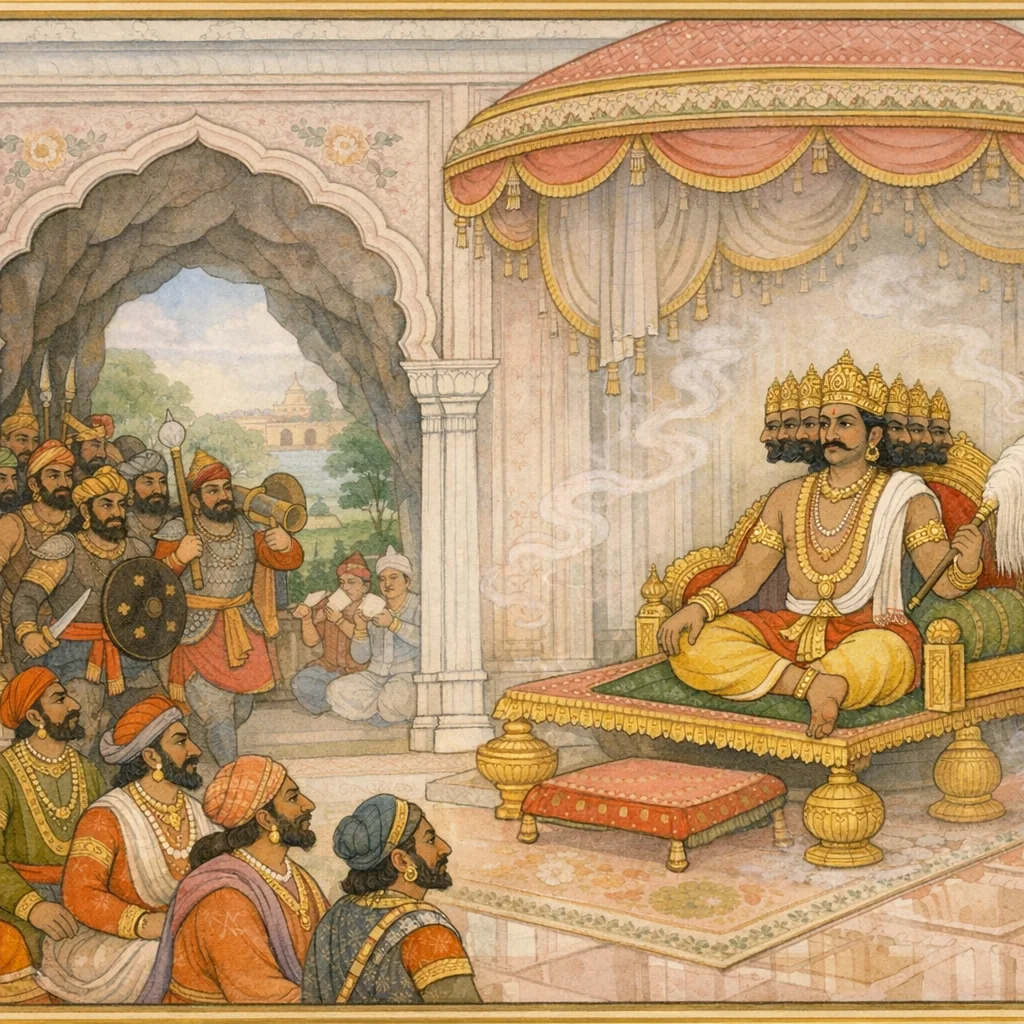
Sarga 11 frames a courtly-military transition: Rāvaṇa, weakened by passion for Maithilī and the social consequences of sinful action, recognizes the urgency of elapsed time and deems consultation on war imminent (6.11.1–2). He ascends a magnificently ornamented chariot and proceeds toward the sabhā amid tumultuous instruments and conch sounds, escorted by armed rākṣasas in varied attire and weaponry (6.11.3–9). The chapter then shifts to ceremonial spectacle—royal road, canopy, cāmara fans, salutations, and praise—culminating in Rāvaṇa entering Viśvakarmā’s ever-shining assembly hall with gold-silver pillars, crystal-like interior, golden silk coverings, and heavy guard (6.11.10–16). Seated upon a gem-inlaid throne, he commands swift messengers to muster rākṣasas across Laṅkā for a major task against the enemies (6.11.17–20). The mustering fills the capital; leaders arrive by chariot, horse, elephant, and on foot, park vehicles, and enter like lions into a mountain cave, observing protocol in seating and silence (6.11.21–25, 6.11.31). Ministers, warriors, and finally Vibhīṣaṇa arrive; fragrances of sandal and incense pervade the hall, and Rāvaṇa shines among armed heroes like Indra among the Vasus—an image that contrasts political radiance with moral fragility (6.11.26–32).
Shlokas
Verse 1
सबभूवकृशोराजामैथिलीकाममोहितः ।असन्मानाच्चसुहृदांपापंपापेनकर्मणा ।।।।
The king grew thin—deluded by desire for Maithilī; through his sinful deeds he became a sinner, and even his well-wishers held him in disregard.
Verse 2
अतीतसमयेकालेतस्मिन्वैयुधिरावणः ।अमात्यैश्चसुहृद्भिश्चप्राप्तकालममन्यत ।।।।
As time had passed on and the crisis of war pressed near, Rāvaṇa judged it the proper moment to confer with his ministers and close allies.
Verse 3
सहेमजालविततंमणिविद्रुमभूषितम् ।उपगम्यविनीताश्वमारुरोहमहारथम् ।।।।
Rāvaṇa approached and mounted that splendid great chariot—spread over with a golden latticework, adorned with gems and corals, and drawn by well-trained horses.
Verse 4
तमास्थायरथश्रेष्ठंमहामेघसमस्वनम् ।प्रययौरक्षसांश्रेष्ठोदशग्रीवस्सभांप्रति ।।।।
Mounting that finest of chariots, whose roar resembled a great thundercloud, Daśagrīva—foremost among the Rākṣasas—set out toward the royal assembly.
Verse 5
असिचर्मधरायोधास्सर्वायुधधरास्ततः ।राक्षसाराक्षसेन्द्रस्यपुरस्तात्सम्प्रतस्थिरे ।।।।
Then the Rākṣasa warriors—bearing swords and shields, equipped with every kind of weapon—took their positions before the lord of the Rākṣasas.
Verse 6
नानाविकृतवेषाश्चनानाभूषणभूषिताः ।पार्श्वतस्पृष्ठतश्चैनंपरिवार्यययुस्तत:।। ।।
Thereafter, others—wearing many strange disguises and adorned with varied ornaments—moved on, surrounding him at his sides and from behind.
Verse 7
रथैश्चातिरथाश्शीघ्रंमत्तैश्चवरवारणैः ।अनूत्पेतुर्दशग्रीवमाक्रीडद्भिश्चवाजिभिः ।।।।
Swiftly, great chariot-fighters in chariots, riders on excellent rutting elephants, and others with spirited, prancing horses followed Daśagrīva.
Verse 8
गदापरिघहस्ताश्चशक्तितोमरपाणयः ।परश्वथधराश्चान्येतथाऽन्येशूलपाणयः ।।।।
Some carried maces and iron bars; some bore spears and tomara-javelins; others held battle-axes, and still others carried tridents in their hands.
Verse 9
ततस्तूर्यसहस्राणांसञ्जज्ञेनिस्स्वनोमहान् ।तुमुलश्शङ्खशब्दश्चसभांगच्छतिरावणे ।।।।
Then, as Rāvaṇa proceeded to the assembly, a great blare arose from thousands of instruments, and the conches resounded in a tumult.
Verse 10
सनेमिघोषेणमहान्सहसाऽभिनिनादयन् ।राजमार्गंश्रियाजुष्टंप्रतिपेदेमहारथः ।।।।
That great chariot-warrior, making the road resound with the loud rumble of wheels, suddenly entered the splendid royal avenue.
Verse 11
विमलंचातपत्राणांप्रगृहीतमशोभत ।पाण्डुरंराक्षसेन्द्रस्यपूर्णस्ताराधिपोयथा ।।।।
The rākṣasa-lord’s spotless white canopy, held aloft, shone—like the full moon, lord of the stars.
Verse 12
हेममञ्जरिगर्भेचशुद्धस्फटिकविग्रहे ।चामरव्यजनेतस्यरेजतुस्सव्यदक्षिणे ।।।।
On his left and right, a pair of yak-tail fans gleamed—crystal-pure in their handles, with golden floral clusters set within.
Verse 13
तेकृताञ्जलयस्सर्वेरथस्थंपृथिवीस्थिताः ।राक्षसाराक्षसश्रेष्ठंशिरोभिस्तंववन्दिरे ।।।।
All those rākṣasas, standing on the ground while he remained in his chariot, bowed their heads and saluted the foremost among rākṣasas with folded palms.
Verse 14
राक्षसैस्त्सूयमानस्सञ्जयाशीर्भिररिन्दमः ।आससादमहातेजास्सभांविरचितांतदा ।।।।
Praised by the rākṣasas with blessings of victory, the foe-crushing, radiant Rāvaṇa then reached the splendidly built royal assembly hall.
Verse 15
सुवर्णरजतास्तीर्णांविशुद्धस्फटिकान्तराम् ।विराजमानोवपुषारुक्मपट्टोत्तरच्छदाम् ।।।।तांपिशाचशतै: षङ्भिरभिगुप्तांसदाप्रभाम् ।प्रविवेशमहातेजास्सुकृतांविश्वकर्मणा ।।।।
Radiant in form, the mighty one entered that assembly hall—well fashioned by Viśvakarman—set with gold and silver, crystal-clear within, spread with gleaming golden silks, ever-luminous, and guarded by six hundred piśācas.
Verse 16
सुवर्णरजतास्तीर्णांविशुद्धस्फटिकान्तराम् ।विराजमानोवपुषारुक्मपट्टोत्तरच्छदाम् ।।6.11.15।।तांपिशाचशतै: षङ्भिरभिगुप्तांसदाप्रभाम् ।प्रविवेशमहातेजास्सुकृतांविश्वकर्मणा ।।6.11.16।।
Radiant in form, the mighty one entered that assembly hall—well fashioned by Viśvakarman—set with gold and silver, crystal-clear within, spread with gleaming golden silks, ever-luminous, and guarded by six hundred piśācas.
Verse 17
तस्यांसवैडूर्यमयंप्रियकाजिनसम्वृतम् ।महत्सोपाश्रयंभेजेरावणःपरमासनम् ।।।।
There Rāvaṇa took his seat upon a vast and excellent throne, set with vaidūrya gems, covered with a prized hide, and furnished with a cushion.
Verse 18
तत: शशासेश्वरवद्दूतान्लघुपराक्रमान् ।समानयतमेक्षिप्रमिहैतान्राक्षसानिति ।।कृत्यमस्तिमहज्जानेकर्तव्यमितिशत्रुभिः ।।।।
Then, like a sovereign, he commanded swift-footed messengers: “Bring those rākṣasas here to me at once. Know that a great task must be carried out against the enemy.”
Verse 19
राक्षसास्तद्वचश्श्रुत्वालङ्कायांपरिचक्रमुः ।।।।अनुगेहमवस्थायविहारशयनेषुच ।उद्यानेषुचरक्षांसिचोदयन्तोह्यभीतवत् ।।।।
Hearing his command, the rākṣasas moved throughout Laṅkā—going house by house, into pleasure-grounds, sleeping chambers, and gardens—fearlessly rousing and directing their fellows.
Verse 20
राक्षसास्तद्वचश्श्रुत्वालङ्कायांपरिचक्रमुः ।।6.11.19।।अनुगेहमवस्थायविहारशयनेषुच ।उद्यानेषुचरक्षांसिचोदयन्तोह्यभीतवत् ।।6.11.20।।
Hearing his command, the rākṣasas moved throughout Laṅkā—going house by house, into pleasure-grounds, sleeping chambers, and gardens—fearlessly rousing and directing their fellows.
Verse 21
तेरथान् रुचिरानेकेदृप्तानेकेपृथग्घयान् ।नागानेकेऽधिरुरुहुर्जग्मुश्चैकेपदातयः ।।।।
Of those rākṣasas, some went upon exquisite chariots; some rode proud steeds; some mounted elephants; and some proceeded on foot.
Verse 22
सापुरीपरमाकीर्णारथकुञ्जरवाजिभिः ।सम्पतद्भिर्विरुरुचेगरुत्मद्भिरिवाम्बरम् ।।।।
That city, densely filled with chariots, elephants, and horses rushing along, shone like the sky crowded with winged birds.
Verse 23
तेवाहनाव्यवस्थाप्ययानानिविविधानिच ।सभांपद्भिःप्रविविशुस्सिंहागिरिगुहामिव ।।।।
Having set their various vehicles in order at the entrance, they entered the royal hall on foot—like lions entering a mountain cave.
Verse 24
राज्ञःपादौगृहीत्वातुराज्ञातेप्रतिपूजिताः ।पीठेष्वन्येबृसीष्वन्येभूमौकेचिदुपाविशन् ।।।।
Clasping the king’s feet and being duly received by him, they took their seats—some upon stools, some upon mats, and some upon the ground.
Verse 25
तेसमेत्यसभायांवैराक्षसाराजशासनात् ।यथार्हमुपतस्थुस्तेरावणंराक्षसाधिपम् ।।।।
Thus, by the king’s command, the rākṣasas assembled in the hall and took their places according to rank, attending upon Rāvaṇa, lord of the rākṣasas.
Verse 27
मन्त्रिणश्चयथामुख्यानिश्चयार्थेषुपण्डिताः ।अमात्याश्चगुणोपेतास्सर्वज्ञाबुद्धिदर्शनाः ।।6.11.26।।समीयुस्तत्रशतशशूराश्चबहवस्तदा ।सभायांहेमवर्णायांसर्वार्थस्यसुखायवै ।।6.11.27।।
Thus, by the king’s command, the rākṣasas assembled in the hall and took their places according to rank, attending upon Rāvaṇa, lord of the rākṣasas.
Verse 28
ततोमहात्माविपुलंसुयुग्यंरथम्वरंहेमविचित्रिताङ्गम् ।शुभंसमास्थायययौयशस्वीविभीषणस्संसदमग्रजस्य ।।।।
Then the illustrious Vibhīṣaṇa, noble of spirit, mounted an auspicious and excellent chariot—broad, well-yoked, and richly wrought with gold—and went to the assembly of his elder brother.
Verse 29
सपूर्वजायावरजश्शशंसनामाथपश्चाश्चरणौववन्दे ।शुकःप्रहस्तश्चतथैवतेभ्योददौयथार्हंपृथगासनानि ।।।।
He, the younger brother, first announced his name and then bowed at the feet of his elder brother. Śuka and Prahasta likewise provided them seats separately, each according to due rank.
Verse 30
सुवर्णनानामणिभूषणानांसुवाससांसंसदिराक्षसानाम् ।तेषांपरार्घ्यागुरुचन्दनानांस्रजाश्चगन्धाःप्रववुस्समन्तात् ।।।।
In that assembly, the rākṣasas—adorned with diverse gold and jeweled ornaments and clad in fine garments—sent forth on all sides the fragrances of costly aloe-wood and sandal, along with the scent of their garlands.
Verse 31
नचुक्रुशुर्नानृतमाहकश्चित्सभापदोनापिजजल्पुरुच्चैः ।संसिद्धार्थास्सर्वएवोग्रवीर्याभर्तुस्सर्वेददृशुश्चाननंते ।।।।
The courtiers raised no clamor; none spoke falsehood; nor did they speak loudly. All were competent and fierce in valor, and they all fixed their gaze upon their lord’s face.
Verse 32
सरावणश्शस्त्रभृतांमनस्विनांमहाबलानांसमितौमनस्वी ।तस्यांसभायांप्रभयाचकाशेमध्येवसूनामिववज्रहस्तेः ।।।।
That heroic Rāvaṇa, amid great and resolute weapon-bearers of immense strength, shone in that assembly—like Vajrahasta (Indra) in the midst of the Vasus in battle.
Frequently Asked Questions
The sarga presents a leadership inflection point: Rāvaṇa, morally compromised by passion and prior sinful conduct, nevertheless initiates formal war-counsel and mobilization—highlighting the tension between outward sovereignty (pageantry, protocol) and inner ethical deterioration.
Power and splendor cannot substitute for dharmic legitimacy: the text juxtaposes Rāvaṇa’s radiant court and disciplined retinue with the statement that sinful action and desire weaken the ruler, implying that governance requires self-mastery and truthful counsel.
Key landmarks include Laṅkā’s royal road and the Viśvakarmā-constructed sabhā. Culturally, the chapter documents court etiquette—salutations, hierarchical seating, silence in assembly, royal insignia (canopy, cāmara), and the logistics of mustering forces across the city.