Sarga 87
गुहसंवादः—रामस्य रात्रिवासवर्णनम् (Dialogue with Guha: Account of Rama’s Night Halt)
अयोध्याकाण्ड
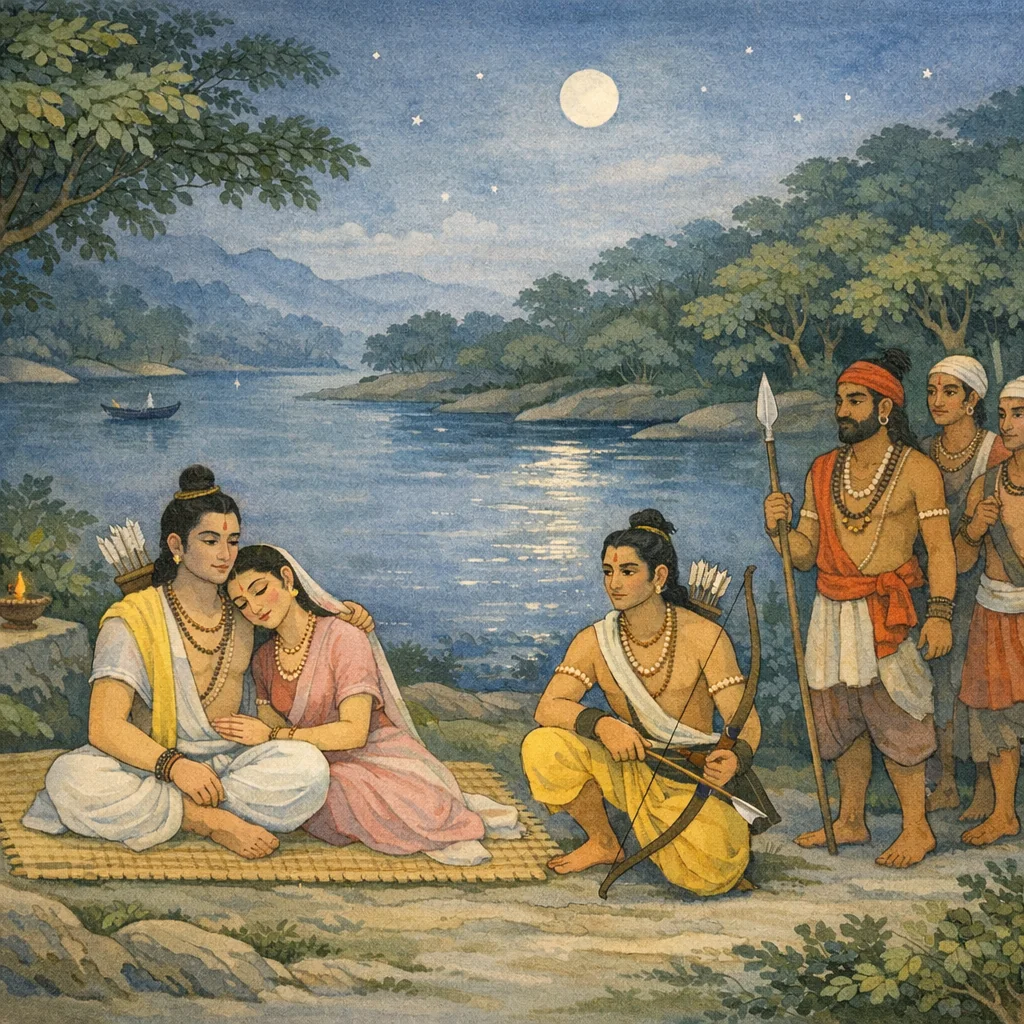
अस्मिन् सर्गे गुहस्य वचनं श्रुत्वा भरतः अत्यन्तदुःखितः सन् ध्यानमगात्; क्षणं प्रत्याश्वस्य पुनः शोकवेगेन पतति, शत्रुघ्नः च तं परिष्वज्य शोकात् विसंज्ञो भवति। ततः भरतस्य मातरः उपवासकृशाः दीनाः समापेत्य पतितं भरतं परिवव्रुः; कौसल्या विशेषतः वात्सल्येन तं उपगूह्य आरोग्यं तथा कुलजीवन-निर्भरत्वं पृच्छति, तथा लक्ष्मण-रामयोः विषये ‘किंचिदपि अप्रियम्’ न श्रुतमिति आश्वासनं याचते। भरतः मुहूर्तं समाश्वस्य कौसल्यां परिसान्त्वयित्वा गुहं पृच्छति—रामः सीता लक्ष्मणश्च क्व रात्रौ अवसन्, किं भुक्त्वा, कस्मिन् शयने अस्वपन् इति। गुहः हृष्टः सन् आतिथ्यवृत्तान्तं निवेदयति: बह्वन्न-फल-भक्ष्याणि उपहृतानि, किन्तु रामः क्षात्रधर्मं स्मरन् प्रतिग्रहं नाङ्गीकृत्य ‘देयं सर्वदा, न प्रतिग्राह्यम्’ इति मैत्री-उपदेशेन अनुनीतवान्। रामः सीतया सह लक्ष्मणानीतं जलं पीत्वा औपवास्यं चकार; लक्ष्मणः शेषजलेन तृप्तः, त्रयोऽपि वाग्यताः सन्ध्योपासनां चक्रुः। ततः लक्ष्मणः बर्हीषि (दर्भ) आनीय शुभं स्वास्तरं निर्माय राम-सीतयोः पादौ प्रक्षाल्य दूरं स्थित्वा रात्रिं पर्यरक्षत्; स्वयं गुहः अपि स्वजनैः सशस्त्रैः लक्ष्मणस्य समीपे स्थित्वा महेन्द्रकल्पं रामं परिपालयामास। सर्गः भ्रातृभक्ति, आतिथ्यधर्म, क्षात्र-नैतिकता, तथा तपोमय-वनजीवनस्य अनुशासनं इति विषयान् समन्वयति।
Shlokas
Verse 1
गुहस्य वचनं श्रुत्वा भरतो भृशमप्रियम्।ध्यानं जगाम तत्रैव यत्र तच्छ्रुतमप्रियम्।।।।
Hearing Guha’s deeply distressing words, Bharata fell into silent reflection right there, at the very spot where he heard that painful news.
Verse 2
सुकुमारो महासत्त्वस्सिंहस्कन्धो महाभुजः।पुण्डरीकविशालाक्ष स्तरुणः प्रियदर्शनः।।।।प्रत्याश्वस्य मुहूर्तं तु कालं परमदुर्मनाः।पपात सहसा तोत्रैर्ह्यतिविद्ध इव द्विपः।।।।
Bharata—delicate yet mighty in spirit, broad-shouldered like a lion, strong-armed, lotus-wide-eyed, youthful and pleasing to behold—revived for a moment; then, his mind overwhelmed with grief, he suddenly fell, like an elephant struck hard by a goad.
Verse 3
सुकुमारो महासत्त्वस्सिंहस्कन्धो महाभुजः।पुण्डरीकविशालाक्ष स्तरुणः प्रियदर्शनः।।2.87.2।।प्रत्याश्वस्य मुहूर्तं तु कालं परमदुर्मनाः।पपात सहसा तोत्रैर्ह्यतिविद्ध इव द्विपः।।2.87.3।।
Bharata—delicate yet mighty in spirit, broad-shouldered like a lion, strong-armed, lotus-wide-eyed, youthful and pleasing to behold—revived for a moment; then, his mind overwhelmed with grief, he suddenly fell, like an elephant struck hard by a goad.
Verse 4
तदवस्थं तु भरतं शत्रुघ्नोऽनन्तरस्थितः।परिष्वज्य रुरोदोच्चैर्विसंज्ञश्शोककर्शितः।।।।
Seeing Bharata in that condition, Śatrughna, standing close by, embraced him and cried aloud; wasted by grief, he lost consciousness.
Verse 5
ततस्सर्वास्समापेतुर्मातरो भरतस्य ताः।उपवासकृशा दीना भर्तृव्यसनकर्शिताः।।।।
Then all of Bharata’s mothers hurried to him—thin from fasting, desolate, and worn down by the calamity that had befallen their husband.
Verse 6
ताश्च तं पतितं भूमौ रुदन्त्यः पर्यवारयन्।कौसल्या त्वनुसृत्यैनं दुर्मनाः परिषस्वजे।।।।
Weeping, they surrounded him as he lay fallen on the ground; and Kausalyā, approaching in deep dejection, clasped Bharata in her arms.
Verse 7
वत्सला स्वं यथा वत्समुपगूह्य तपस्विनी।परिपप्रच्छ भरतं रुदन्ती शोकलालसा।।।।
Kausalyā—bereft and afflicted—clasped Bharata with motherly tenderness as though he were her own child; weeping and hungry for grief’s outlet, she questioned him.
Verse 8
पुत्र व्याधिर्न ते कच्चिच्छरीरं परिबाधते।अद्य राजकुलस्यास्य त्वदधीनं हि जीवितम्।।।।
“My son, I hope no illness troubles your body. For now the very life of this royal house depends upon you.”
Verse 9
त्वां दृष्ट्वा पुत्र जीवामि रामे सभ्रातृकेगते।वृत्ते दशरथे राज्ञि नाथ एकस्त्वमद्य नः।।।।
“My son, I live on only because I see you—when Rāma has gone away with his brother, and King Daśaratha has passed from this world. From now on, you alone are our protector.”
Verse 10
कच्चिन्न लक्ष्मणे पुत्र श्रुतं ते किंचदप्रियम्।पुत्रे वाऽप्येकपुत्राया स्सहभार्ये वनं गते।।।।
My son, I hope you have heard no troubling news—about Lakṣmaṇa, or about my only son (Rāma) who has gone to the forest together with his wife.
Verse 11
स मुहूर्तं समाश्वस्य रुदन्नेव महायशाः।कौसल्यां परिसान्त्वेद्यं गुहं वचनमब्रवीत्।।।।
Bharata, famed for his renown, steadied himself for a moment; still in tears, he reassured Kausalyā and then spoke these words to Guha.
Verse 12
भ्राता मे क्वावसद्रात्रौ क्व सीता क्व च लक्ष्मणः।अस्वपच्छयने कस्मिन् किं भुक्त्वा गुह शंस मे।।।।
O Guha, where did my brother stay that night—where Sītā, and where Lakṣmaṇa? On what bed did he sleep, and what did they eat? Tell me.
Verse 13
सोऽब्रवीद्भरतं हृष्टो निषादाधिपतिर्गुहः।यद्विधं प्रतिपेदे च रामे प्रियहितेऽतिथौ।।।।
Delighted, Guha—the lord of the Niṣādas—told Bharata in what manner he had received and served Rāma, his beloved friend and honored guest.
Verse 14
अन्नमुच्चावचं भक्षाः फलानि विविधानि च।रामायाभ्यवहारार्थं बहुचोपहृतं मया।।।।
I brought for Rāma, for his meal, rice of many kinds, assorted foods, and various fruits—offered in great abundance.
Verse 15
तत्सर्वं प्रत्यनुज्ञासीद्राम स्सत्यपराक्रमः।न तु तत्प्रत्यगृह्णात्स क्षत्रधर्ममनुस्मरन्।।।।
Rāma—whose true strength is steadfast truth—graciously acknowledged all of it; yet, remembering the dharma of a kṣatriya, he did not accept the offering.
Verse 16
न ह्यस्माभिः प्रतिग्राह्यं सखे देयं तु सर्वदा।इति तेन वयं राजन्ननुनीता महात्मना।।।।
‘Friend, we should not receive gifts; rather, we should always give.’—With these words, that great-souled one gently entreated us, O king.
Verse 17
लक्ष्मणेन समानीतं पीत्वा वारि महायशाः।औपवास्यं तदाऽकार्षीद्राघवस्सह सीतया।।।।
Then the illustrious Rāghava, together with Sītā, drank only the water brought by Lakṣmaṇa and undertook a fast.
Verse 18
ततस्तु जलशेषेण लक्ष्मणोऽप्यकरोत्तदा।वाग्यतास्ते त्रय स्सन्ध्यां समुपासत संहिताः।।।।
Thereafter Lakṣmaṇa too made do with the remaining water. Then all three, restrained in speech and recollected in mind, performed the twilight worship.
Verse 19
सौमित्रिस्तु ततः पश्चादकरोत्स्वास्तरं शुभम्।स्वयमानीय बर्हींषि क्षिप्रं राघवकारणात्।।।।
After that, Saumitrī (Lakṣmaṇa) quickly prepared an auspicious bedding for Rāghava, himself bringing the grass for Rāma’s sake.
Verse 20
तस्मिन्समाविशद्राम स्स्वास्तरे सह सीतया।प्रक्षाल्य च तयोः पादावपचक्राम लक्ष्मणः।।।।
Upon that bedding Rāma lay down with Sītā. Lakṣmaṇa washed their feet and then withdrew to a place at some distance.
Verse 21
एतत्तदिङ्गुदीमूलमिदमेव च तत्तृणम्।यस्मिन्रामश्च सीता च रात्रिं तां शयितावुभौ।।।।
This is that very iṅgudī tree’s root, and this the very grass-bed, on which Rāma and Sītā—both of them—slept that night.
Verse 22
नियम्य पृष्ठे तु तलाङ्गुलित्रवान् शरैस्सुपूर्णाविषुधी परन्तपः।महाद्धनु स्सज्यमुपोह्य लक्ष्मणो निशामतिष्ठत्परितोऽस्य केवलम्।।।।
Lakṣmaṇa, scorcher of foes, wearing guards for palm and fingers, with two quivers filled with arrows strapped to his back, held his great bow strung and ready, and stood through the night—alone—keeping watch all around Rāma.
Verse 23
तत स्त्वहंचोत्तमबाणचापधृत् स्थितोऽभवं तत्र स यत्र लक्ष्मणः।अतन्द्रितैर्ज्ञातिभिरात्तकार्मुकैर्महेन्द्रकल्पं परिपालयंस्तदा।।।।
Thereafter, bow and excellent arrows in hand, I remained stationed where Lakṣmaṇa stood, and together with my indefatigable kinsmen—bows readied—I guarded Rāma, who was like Mahendra (Indra), at that time.
Frequently Asked Questions
Rama declines Guha’s abundant offerings despite warm hospitality, explicitly aligning with kshatriya discipline: one should give, not accept. The action frames renunciation not as poverty but as principled restraint during exile.
The Sarga teaches dharma as self-regulation under distress: Bharata steadies grief to seek truthful details; Kausalya’s maternal care becomes ethical stewardship; and Rama’s conduct integrates hospitality with non-possessiveness, supported by Lakshmana’s vigilant service.
The night-rest is mapped to the foot of an ingudi tree and a grass/darbha bed, with evening worship (sandhyā) and the practice of fasting. The sentinel scene highlights weapons (strung bow, quivers, arrows) as cultural markers of protective duty in forest travel.