Sarga 47
अयोध्यायाः पौरविलापः (Lament of the Citizens of Ayodhya on Rama’s Absence)
अयोध्याकाण्ड
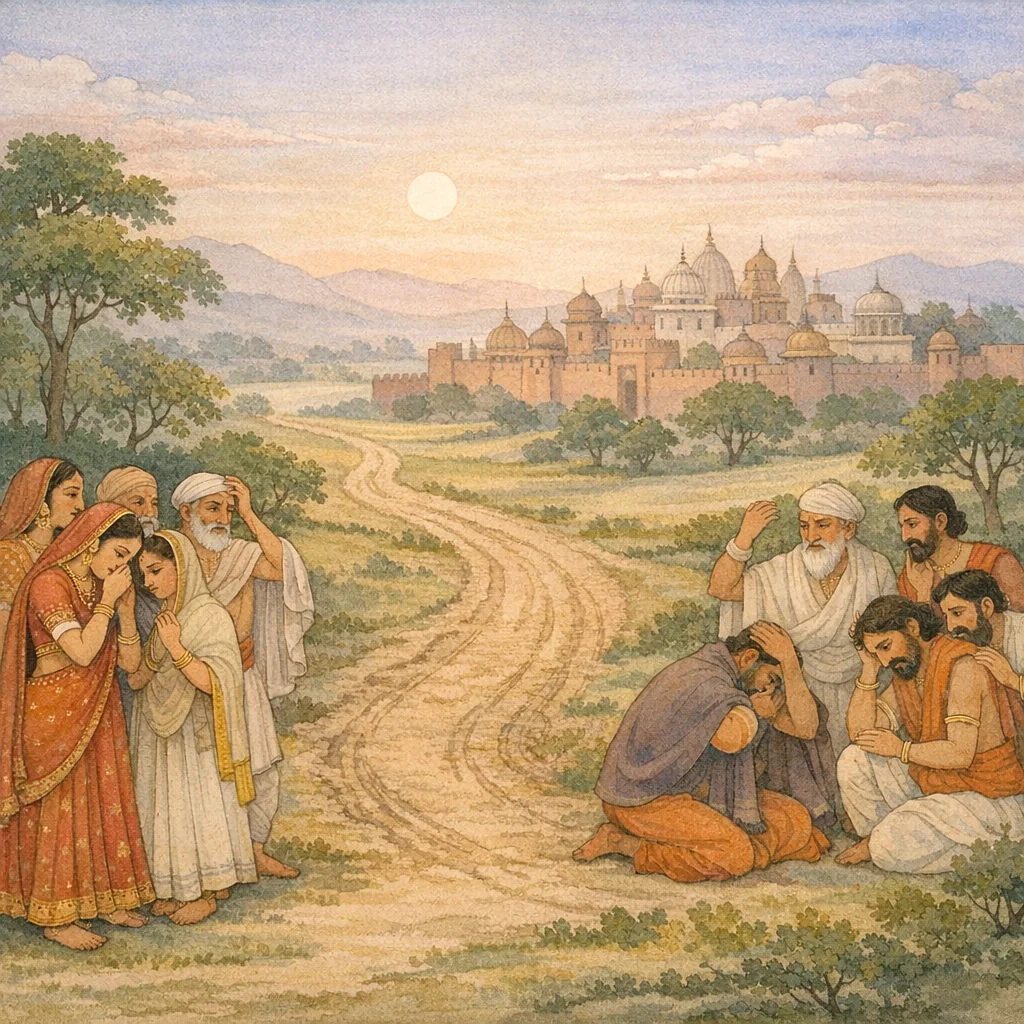
At dawn, the citizens (paurāḥ) realize Rāma is no longer visible and are psychologically stunned—grief is described as a loss of agency and even recognition. They search hither and thither for any trace of him, condemn the sleep that dulled their awareness, and voice a sequence of communal laments: Rāma is portrayed as a paternal protector whose departure renders life purposeless. Their speech escalates to extreme proposals—death or self-immolation—framed as the existential consequence of separation from the city’s moral center. Attempting to follow the chariot’s tracks, they proceed briefly but lose the path; the disappearance of the ratha-mārga becomes a concrete symbol of destiny’s obstruction. Turning back, they return to Ayodhyā fatigued, entering wealthy homes with difficulty, unable to recognize even their own kin due to sorrow. The sarga culminates in layered similes: Ayodhyā without Rāma is likened to a river emptied of serpents by Garuḍa, a moonless sky, and a waterless ocean—poetic devices that map political absence onto cosmic deprivation.
Shlokas
Verse 1
प्रभातायां तु शर्वर्यां पौरास्ते राघवं विना।शोकोपहतनिश्चेष्टा बभूवुर्हतचेतसः।।।।
But when the night turned toward dawn, those citizens—without beholding Rāghava—became senseless and motionless, their minds crushed by grief.
Verse 2
शोकजाश्रुपरिद्यूना वीक्षमाणास्ततस्ततः।आलोकमपि रामस्य न पश्यन्ति स्म दुःखिताः।।।।
Afflicted and soaked in tears born of grief, they looked here and there, yet in their anguish could not find even the slightest trace of Rāma.
Verse 3
ते विषादार्तवदना रहितास्तेन धीमता।कृपणाः करुणा वाचो वदन्ति स्म मनस्विनः।।।।
Those noble-hearted people, their faces stricken with sorrow at separation from the wise Rāma, spoke pitiable words that stirred compassion.
Verse 4
धिगस्तु खलु निद्रां तां ययाऽपहृतचेतसः।नाद्य पश्यामहे रामं पृथूरस्कं महाभुजम्।।।।
Shame on that sleep by which our senses were stolen away—today we cannot see Rāma, broad-chested and mighty-armed.
Verse 5
कथं नाम महाबाहु स्स तथावितथक्रियः।भक्तं जनं परित्यज्य प्रवासं राघवो गतः।।।।
How could Rāghava—mighty-armed, one whose deeds never fail those who serve him—abandon his devoted people and go into exile?
Verse 6
यो नः सदा पालयति पिता पुत्रानिवौरसान्।कथं रघूणां स श्रेष्ठस्त्यक्त्वा नो विपिनं गतः।।।।
He who always protected us like a father protects his own true-born sons—how could that best of the Raghus abandon us and go to the forest?
Verse 7
इहैव निधनं यामो महाप्रस्थानमेव वा।रामेण रहितानां हि किमर्थं जीवितं हि नः।।।।
Let us die here itself—or set out on the final journey; for what use is life to us, bereft of Rāma?
Verse 8
सन्ति शुष्काणि काष्ठानि प्रभूतानि महान्ति च।तैः प्रज्वाल्य चितां सर्वे प्रविशामोऽथ पावकम्।।।।
There are many great, dry logs; with them we shall kindle a funeral pyre, and then all of us will enter the fire.
Verse 9
किं वक्ष्यामो महाबाहुरनसूयः प्रियंवदः।नीत स्स राघवोऽस्माभिरिति वक्तुं कथं क्षमम्।।।।
What can we possibly say—how can we bring ourselves to say, ‘We led Rāghava away,’ that mighty-armed one, free from malice and gentle in speech?
Verse 10
सा नूनं नगरी दीना दृष्ट्वाऽस्मान् राघवं विना।भविष्यति निरानन्दा सस्त्रीबालवयोधिका।।।।
Surely that city will become despondent when it sees us without Rāghava—its women, children, and elders left without joy.
Verse 11
निर्यातास्तेन वीरेण सह नित्यं जितात्मना।विहीनास्तेन च पुनः कथं पश्याम तां पुरीम्।।।।
We departed always in the company of that heroic, self-controlled man; now bereft of him, how can we look upon that city again?
Verse 12
इतीव बहुधा वाचो बाहुमुद्यम्य ते जनाः।विलपन्ति स्म दुःखार्ता विवत्सा इव धेनवः।।।।
Speaking in many such ways and raising their arms, those people—tormented by sorrow—lamented like cows bereft of their calves.
Verse 13
ततो मार्गानुसारेण गत्वा किञ्चित् क्षणं पुनः।मार्गनाशाद्विषादेन महता समभिप्लुताः।।।।
Then, following the track for a brief while, they lost it; and once again they were flooded by profound despair.
Verse 14
रथस्य मार्गनाशेन न्यवर्तन्त मनस्विनः।किमिदं किं करिष्यामो दैवेनोपहता इति।।।।
When the chariot’s track disappeared, those high-minded people turned back, saying, “What is this? Struck down by fate—what are we to do?”
Verse 15
ततो यथागतेनैव मार्गेण क्लान्तचेतसः।अयोध्यामागमन्सर्वे पुरीं व्यथितसज्जनाम्।।।।
Thereafter, all of them—wearied in mind—returned by the very way they had come, reaching Ayodhyā, a city where the good people were in anguish.
Verse 16
आलोक्य नगरीं तां च क्षयव्याकुलमानसाः।आवर्तयन्त तेऽश्रूणि नयनैः शोकपीडितैः।।।।
Seeing that city, their minds unsettled by the loss, they shed tears with eyes tormented by sorrow.
Verse 17
एषा रामेण नगरी रहिता नातिशोभते।आपगा गरुडेनेव ह्रदादुद्धृतपन्नगा।।।।
This city, bereft of Rama, does not shine; like a river from whose depths Garuḍa has lifted away the serpents.
Verse 18
चन्द्रहीनमिवाकाशं तोयहीनमिवार्णवम्।अपश्यन्निहतानन्दं नगरं ते विचेतसः।।।।
Overcome in mind by grief, they beheld the city with its joy destroyed—like the sky without the moon, like an ocean without water.
Verse 19
ते तानि वेश्मानि महाधनानिदुःखेन दुःखोपहता विशन्तः।नैव प्रजज्ञुः स्वजनं जनं वानिरीक्षमाणाः प्रविनष्टहर्षाः।।।।
With great difficulty, stricken by sorrow, they entered those wealthy homes; their happiness ruined, even while looking at their own kin or other people, they could not recognize anyone.
Frequently Asked Questions
The community confronts a civic dharma-crisis: having accompanied or enabled Rāma’s departure, they must face returning without him and account for their role; their proposed actions (even self-destruction) dramatize the perceived collapse of meaningful life when the moral exemplar is absent.
The sarga teaches how leadership functions as moral orientation: when the dhārmic anchor is removed, perception, recognition, and agency degrade—suggesting that social order depends not only on institutions but on embodied virtue that citizens internalize.
Ayodhyā is the primary landmark, mapped through civic spaces (roads, homes) and the chariot-route; culturally, the lament tradition is foregrounded, along with imagery of pyre/fire and the Garuḍa–serpent motif used to express the city’s loss of beauty and protection.