Sarga 35
सुमन्त्रस्य कैकेयी-निन्दा (Sumantra’s Reproof of Kaikeyi in the Royal Assembly)
अयोध्याकाण्ड
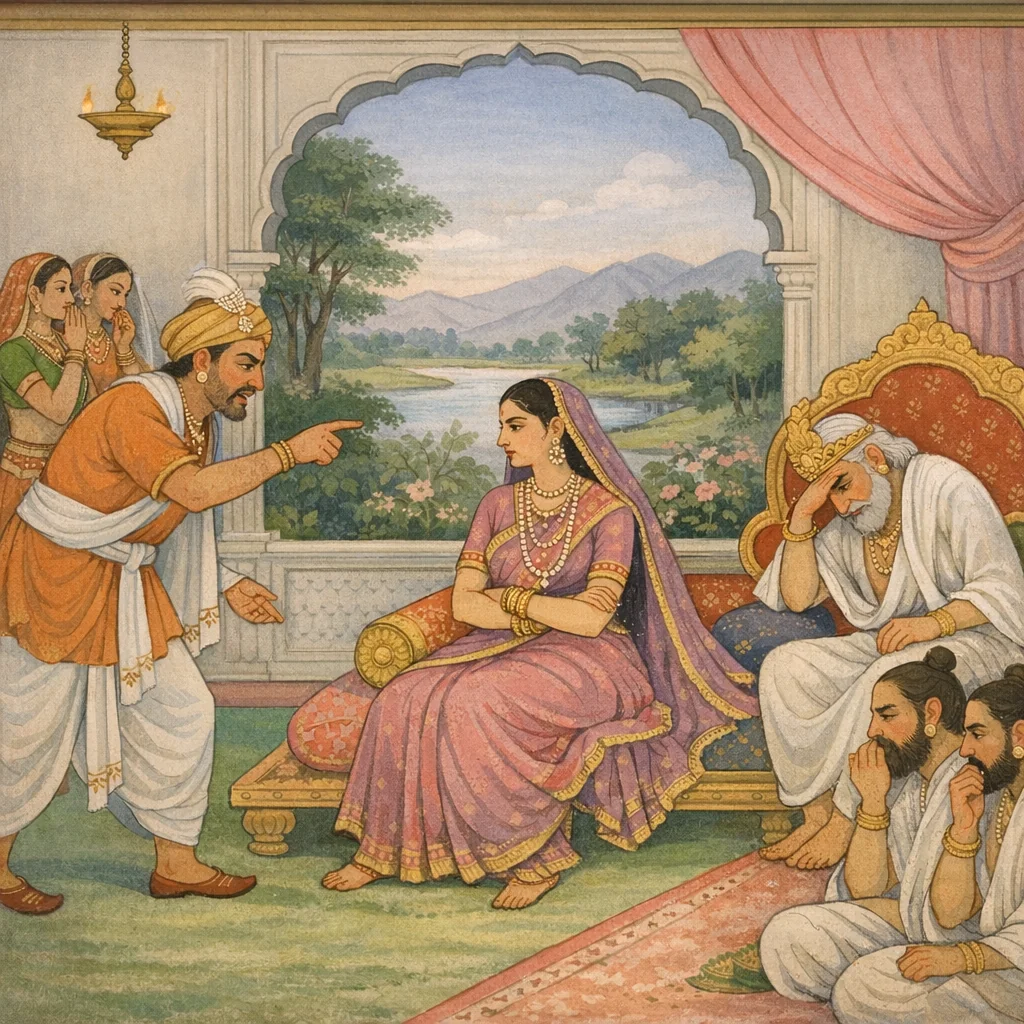
Sarga 35 presents Sumantra’s emotionally charged intervention in the royal court as he reads Daśaratha’s intent and confronts Kaikeyī’s insistence on Rāma’s banishment. The chapter opens with somatic markers of anger and grief—head-shaking, repeated sighs, clenched palms, and teeth-grinding—followed by a sustained rhetorical denunciation likened to “arrows of words” and “thunderbolt-speech.” Sumantra argues that Bharata may rule if Kaikeyī insists, yet the polity and the virtuous (brahmins and sādhus) will abandon her; public blame (parivāda) will spread if Rāma is driven to the forest. He deploys proverb and simile (mango cut down, nimba planted; milk cannot make it sweet; honey does not flow from nimba) to critique inherited disposition and warn against transgressing social bounds (amaryādā). A brief etiological anecdote about Kaikeyī’s father receiving a boon to understand animal sounds is used to frame the mother’s obstinacy and its consequences. Sumantra then pivots to counsel: accept the king’s word, uphold the husband’s wish, and install Rāma—described as the eldest, generous, skilled, dutiful protector—so that Daśaratha may later retire in accord with ancient custom. The sarga closes with Kaikeyī remaining outwardly unmoved, underscoring the limits of persuasion in a dharma-crisis.
Shlokas
Verse 1
ततो निर्धूय सहसा शिरो निश्श्वस्य चासकृत्। पाणौ पाणिं विनिष्पिष्य दन्तान् कटकटाप्य च ।।2.35.1।।लोचने कोपसंरक्ते वर्णं पूर्वोचितं जहत्। कोपाभिभूतस्सहसा सन्तापमशुभं गतः।।2.35.2।।मनः समीक्षमाणश्च सूतो दशरथस्य सः। कम्पयन्निव कैकेय्या हृदयं वाक्छरैश्शितैः ।।2.35.3।।वाक्यवज्रैरनुपमैर्निर्भिन्दन्निव चाशुभैः। कैकेय्या स्सर्वमर्माणि सुमन्त्रः प्रत्यभाषत।।2.35.4।।
Then Sumantra suddenly shook his head again and again, sighing repeatedly; he crushed palm against palm and ground his teeth. His eyes reddened with anger, and, overcome by wrath, he fell at once into an ominous anguish. Reading Daśaratha’s mind, the charioteer spoke back to Kaikeyī—his sharp word-arrows as if shaking her heart, his thunderbolt-like sentences striking at her vital points.
Verse 2
ततो निर्धूय सहसा शिरो निश्श्वस्य चासकृत्। पाणौ पाणिं विनिष्पिष्य दन्तान् कटकटाप्य च ।।2.35.1।।लोचने कोपसंरक्ते वर्णं पूर्वोचितं जहत्। कोपाभिभूतस्सहसा सन्तापमशुभं गतः।।2.35.2।।मनः समीक्षमाणश्च सूतो दशरथस्य सः। कम्पयन्निव कैकेय्या हृदयं वाक्छरैश्शितैः ।।2.35.3।।वाक्यवज्रैरनुपमैर्निर्भिन्दन्निव चाशुभैः। कैकेय्या स्सर्वमर्माणि सुमन्त्रः प्रत्यभाषत।।2.35.4।।
Then Sumantra suddenly shook his head again and again, sighing repeatedly; he crushed palm against palm and ground his teeth. His eyes reddened with anger, and, overcome by wrath, he fell at once into an ominous anguish. Reading Daśaratha’s mind, the charioteer spoke back to Kaikeyī—his sharp word-arrows as if shaking her heart, his thunderbolt-like sentences striking at her vital points.
Verse 3
ततो निर्धूय सहसा शिरो निश्श्वस्य चासकृत्। पाणौ पाणिं विनिष्पिष्य दन्तान् कटकटाप्य च ।।2.35.1।।लोचने कोपसंरक्ते वर्णं पूर्वोचितं जहत्। कोपाभिभूतस्सहसा सन्तापमशुभं गतः।।2.35.2।।मनः समीक्षमाणश्च सूतो दशरथस्य सः। कम्पयन्निव कैकेय्या हृदयं वाक्छरैश्शितैः ।।2.35.3।।वाक्यवज्रैरनुपमैर्निर्भिन्दन्निव चाशुभैः। कैकेय्या स्सर्वमर्माणि सुमन्त्रः प्रत्यभाषत।।2.35.4।।
Then Sumantra suddenly shook his head again and again, sighing repeatedly; he crushed palm against palm and ground his teeth. His eyes reddened with anger, and, overcome by wrath, he fell at once into an ominous anguish. Reading Daśaratha’s mind, the charioteer spoke back to Kaikeyī—his sharp word-arrows as if shaking her heart, his thunderbolt-like sentences striking at her vital points.
Verse 4
ततो निर्धूय सहसा शिरो निश्श्वस्य चासकृत्। पाणौ पाणिं विनिष्पिष्य दन्तान् कटकटाप्य च ।।2.35.1।।लोचने कोपसंरक्ते वर्णं पूर्वोचितं जहत्। कोपाभिभूतस्सहसा सन्तापमशुभं गतः।।2.35.2।।मनः समीक्षमाणश्च सूतो दशरथस्य सः। कम्पयन्निव कैकेय्या हृदयं वाक्छरैश्शितैः ।।2.35.3।।वाक्यवज्रैरनुपमैर्निर्भिन्दन्निव चाशुभैः। कैकेय्या स्सर्वमर्माणि सुमन्त्रः प्रत्यभाषत।।2.35.4।।
Then Sumantra suddenly shook his head again and again, sighing repeatedly; he crushed palm against palm and ground his teeth. His eyes reddened with anger, and, overcome by wrath, he fell at once into an ominous anguish. Reading Daśaratha’s mind, the charioteer spoke back to Kaikeyī—his sharp word-arrows as if shaking her heart, his thunderbolt-like sentences striking at her vital points.
Verse 5
यस्यास्तव पतिस्त्यक्तो राजा दशरथः स्वयम्। भर्ता सर्वस्य जगतः स्थावरस्य चरस्य च।।2.35.5।।न ह्यकार्यतमं किञ्चित्तव देवीह विद्यते।
O Devi—since you have cast off your own husband, King Daśaratha himself, the lord of all this world of moving and unmoving beings—there is truly nothing here that you would shrink from doing.
Verse 6
पतिघ्नीं त्वामहं मन्ये कुलघ्नीमपि चान्ततः।।2.35.6।।यन्महेन्द्रमिवाजय्यं दुष्प्रकम्प्यमिवाचलम्।महोदधिमिवाक्षोभ्यं सन्तापयसि कर्मभिः।।2.35.7।।
I deem you a slayer of your husband—indeed, in the end, a destroyer of your own line—because by your deeds you torment Daśaratha, who is invincible like Indra, unshakable like a mountain, and untroublable like the ocean.
Verse 7
पतिघ्नीं त्वामहं मन्ये कुलघ्नीमपि चान्ततः।।2.35.6।।यन्महेन्द्रमिवाजय्यं दुष्प्रकम्प्यमिवाचलम्।महोदधिमिवाक्षोभ्यं सन्तापयसि कर्मभिः।।2.35.7।।
I deem you a slayer of your husband—indeed, in the end, a destroyer of your own line—because by your deeds you torment Daśaratha, who is invincible like Indra, unshakable like a mountain, and untroublable like the ocean.
Verse 8
मावमंस्था दशरथं भर्तारं वरदं पतिम्। भर्तुरिच्छा हि नारीणां पुत्रकोट्या विशिष्यते।।2.35.8।।
Do not despise Daśaratha—your husband, your sustainer, the giver of boons; for among women, a husband’s wish is said to outweigh even ten million sons.
Verse 9
यथावयो हि राज्यानि प्राप्नुवन्ति नृपक्षये। इक्ष्वाकुकुलनाथेऽस्मिं स्तल्लोपयितुमिच्छसि।।2.35.9।।
After a king’s death, the princes obtain the kingdom according to seniority. Why do you wish to overturn that established custom in the case of Rāma, the lord of the Ikṣvāku line?
Verse 10
राजा भवतु ते पुत्रो भरतश्शास्तु मेदिनीम्।वयं तत्र गमिष्यामो रामो यत्र गमिष्यति।।2.35.10।।
Let your son Bharata become king and rule the earth; we all will go there—wherever Rāma goes.
Verse 11
न हि ते विषये कश्चिद् र्ब्राह्मणो वस्तुमर्हति। तादृशं त्वममर्यादमद्य कर्म चिकीर्षसि।।2.35.11।।
Indeed, no brāhmaṇa would be fit to dwell in your realm, when today you intend to commit such a deed that transgresses all bounds of proper conduct.
Verse 12
नूनं सर्वे गमिष्यामो मार्गं रामनिषेवितम्।त्यक्ताया बान्धवैः सर्वैर्ब्राह्मणैः साधुभिः सदा।।2.35.12।।का प्रीती राज्यलाभेन तव देवि भविष्यति। तादृशं त्वममर्यादं कर्म कर्तुं चिकीर्षसि।।2.35.13।।
Surely we all shall take the very path that Rāma takes. Abandoned forever by all kinsmen, by brāhmaṇas, and by the virtuous—what joy will kingdom-gain bring you, O queen? Why do you wish to do such a deed that violates honour’s limits?
Verse 13
नूनं सर्वे गमिष्यामो मार्गं रामनिषेवितम्।त्यक्ताया बान्धवैः सर्वैर्ब्राह्मणैः साधुभिः सदा।।2.35.12।।का प्रीती राज्यलाभेन तव देवि भविष्यति। तादृशं त्वममर्यादं कर्म कर्तुं चिकीर्षसि।।2.35.13।।
Surely we all shall take the very path that Rāma takes. Abandoned forever by all kinsmen, by brāhmaṇas, and by the virtuous—what joy will kingdom-gain bring you, O queen? Why do you wish to do such a deed that violates honour’s limits?
Verse 14
आश्चर्यमिव पश्यामि यस्यास्ते वृत्तमीदृशम्।आचरन्त्या न विवृता सद्यो भवति मेदिनी।।2.35.14।।
It seems a wonder to me that the earth does not at once split open, as you undertake conduct of such a kind.
Verse 15
महाब्रह्मर्षिसृष्टाः वा ज्वलन्तो भीमदर्शनाः।धिग्वाग्दण्डा न हिंसन्ति रामप्रव्राजने स्थिताम्।।2.35.15।।
It is astonishing that, though you stand firm in the banishment of Rama, you are not struck down by blazing, dreadful ‘word-punishments’—cries of “Shame!”—as if unleashed by great brahmarṣis.
Verse 16
आम्रं छित्वा कुठारेण निम्बं परिचरेत्तु यः। यश्चैनं पयसा सिञ्चेन्नैवास्य मधुरो भवेत्।।2.35.16।।
If someone fells a mango tree with an axe and tends a neem in its place—even if he waters it with milk—it will never become sweet.
Verse 17
अभिजात्यं हि ते मन्ये यथा मातुस्तथैव च।न हि निम्बात्स्रवेत् क्षैद्रं लोके निगदितं वचः।।2.35.17।।
I think your breeding matches your mother’s. For it is a saying in the world: ‘Honey does not flow from a neem tree.’
Verse 18
तव मातुरसद्ग्राहं विद्मः पूर्वं यथाश्रुतम्।पितुस्ते वरदः कश्चिद्ददौ वरमनुत्तमम्।।2.35.18।।सर्वभूतरुतं तस्मात्संजज्ञे वसुधाधिपः। तेन तिर्यग्गतानां च भूतानां विदितं वचः।।2.35.19।।
We have heard from earlier times of your mother’s perverse obstinacy. Once, a certain giver of boons granted your father an unsurpassed boon; by it the lord of the earth came to understand the cries of all beings, and thus the speech of creatures that move crosswise as well.
Verse 19
तव मातुरसद्ग्राहं विद्मः पूर्वं यथाश्रुतम्।पितुस्ते वरदः कश्चिद्ददौ वरमनुत्तमम्।।2.35.18।।सर्वभूतरुतं तस्मात्संजज्ञे वसुधाधिपः। तेन तिर्यग्गतानां च भूतानां विदितं वचः।।2.35.19।।
We have heard from earlier times of your mother’s perverse obstinacy. Once, a certain giver of boons granted your father an unsurpassed boon; by it the lord of the earth came to understand the cries of all beings, and thus the speech of creatures that move crosswise as well.
Verse 20
ततो जृम्भस्य शयने विरुताद्भूरिवर्चसः।पितुस्ते विदितो भाव स्स तत्र बहुधाऽहसत्।।2.35.20।।
Then, near his bed, from the sound made by ‘Jṛmbha’, your father—radiant with great brilliance—understood its intent and laughed there again and again.
Verse 21
तत्र ते जननी क्रुद्धा मृत्युपाशमभीप्सती।हासं ते नृपते सौम्य जिज्ञासामीति चाब्रवीत्।।2.35.21।।
At that, your mother—angered and courting the noose of death—said, “O gentle king, I wish to know the reason for your laughter.”
Verse 22
नृपश्चोवाच तां देवीं देवि शंसामि ते यदि। ततो मे मरणं सद्यो भविष्यति न संशयः।।2.35.22।।
The king said to the queen, “O Devi, if I tell you, I will die immediately—of that there is no doubt.”
Verse 23
माता ते पितरं देवि ततः केकयमब्रवीत्। शंस मे जीव वा मा वा न मामपहसिष्यसि।।2.35.23।।
Then your mother said to your father, the king of Kekaya: “Tell me—live or die; you shall not mock me.”
Verse 24
प्रियया च तथोक्त स्सन् केकयः पृथिवीपतिः।तस्मै तं वरदायार्थं कथयामास तत्त्वतः।।2.35.24।।
Thus addressed by his beloved queen, the lord of the earth—the king of Kekaya—told her truthfully the whole matter concerning the boon-giver.
Verse 25
ततः स्स वरदः साधुराजानं प्रत्यभाषत।म्रियतां ध्वंसतां वेयं मा कृथास्त्वं महीपते।।2.35.25।।
Then that holy boon-giver replied to the king: “Let this woman die, or let her destroy herself—but you, O king, must not reveal it.”
Verse 26
स तच्छ्रुत्वा वचस्तस्य प्रसन्नमनसो नृपः। मातरं ते निरस्याशु विजहार कुबेरवत्।।2.35.26।।
Hearing those words, the king—his mind made glad—quickly dismissed your mother and moved about at ease, like Kubera.
Verse 27
तथा त्वमपि राजानं दुर्जनाचरिते पथि। असद्ग्राहमिमं मोहात्कुरुषे पापदर्शिनि।।2.35.27।।
So you too, O evil-minded woman, in delusion persist in this wrongful insistence, pushing the king onto a path trodden by the wicked.
Verse 28
सत्यश्चाद्य प्रवादोऽयं लौकिकः प्रतिभाति मा। पितृन् समनुजायन्ते नरा मातरमङ्गनाः।।2.35.28।।
Today this common saying seems true to me: sons take after their fathers, and daughters take after their mothers.
Verse 29
नैवं भव गृहाणेदं यदाह वसुधाधिपः।भर्तुरिच्छामुपास्वेह जनस्यास्य गतिर्भव।।2.35.29।।
Do not act in that way. Accept what the lord of the earth declares; abide here by your husband’s will, and become the refuge of these people.
Verse 30
मा त्वं प्रोत्साहिता पापैर्देवराजसमप्रभम्। भर्तारं लोकभर्तारमसद्धर्ममुपादधाः।।2.35.30।।
Do not, urged on by the wicked, impute unrighteousness to your husband—radiant like the king of gods, and a protector of the world.
Verse 31
न हि मिथ्या प्रतिज्ञातं करिष्यति तवानघः। श्रीमान्दशरथो राजा देवि राजीवलोचनः।।2.35.31।।
For the sinless, prosperous king Dasaratha—lotus-eyed, O queen—will not make false what he has promised you.
Verse 32
ज्येष्ठो वदान्यः कर्मण्यः स्वधर्मपरिरक्षिता। रक्षिता जीवलोकस्य बली रामोऽभिषिच्यताम्।।2.35.32।।
Let Rama—the eldest, generous, capable in action, steadfast in protecting his own dharma, a guardian of all living beings, and valiant—be consecrated.
Verse 33
परिवादो हि ते देवि महाल्लोके चरिष्यति। यदि रामो वनं याति विहाय पितरं नृपम्।।2.35.33।।
O Devi, if Rama goes to the forest abandoning his father, the king, then a great public reproach will spread through the world—directed at you.
Verse 34
स राज्यं राघवः पातु भव त्वं विगतज्वरा।न हि ते राघवादन्यः क्षमः पुरवरे वसेत्।।2.35.34।।
Let that Rāghava protect the kingdom; be free from your fevered agitation. For in this excellent city there is none other than Rama fit to dwell as its ruler.
Verse 35
रामे हि यौवराज्यस्थे राजा दशरथो वनम्। प्रवेक्ष्यति महेष्वासः पूर्ववृत्तमनुस्मरन्।।2.35.35।।
When Rama is established as heir-apparent, King Daśaratha—the great archer—will enter the forest, remembering the ancient custom of retiring after installing the successor.
Verse 36
Thus, in the royal assembly, Sumantra sought to shake Kaikeyi—using both conciliatory and sharp words—and then again stood with folded hands.
Verse 37
ततो निर्धूय सहसा शिरो निश्श्वस्य चासकृत्। पाणौ पाणिं विनिष्पिष्य दन्तान् कटकटाप्य च ।।2.35.1।।लोचने कोपसंरक्ते वर्णं पूर्वोचितं जहत्। कोपाभिभूतस्सहसा सन्तापमशुभं गतः।।2.35.2।।मनः समीक्षमाणश्च सूतो दशरथस्य सः। कम्पयन्निव कैकेय्या हृदयं वाक्छरैश्शितैः ।।2.35.3।।वाक्यवज्रैरनुपमैर्निर्भिन्दन्निव चाशुभैः। कैकेय्या स्सर्वमर्माणि सुमन्त्रः प्रत्यभाषत।।2.35.4।।
Yet the queen did not waver, nor did she feel remorse; and at that time no change at all could be seen in her face or complexion.
Frequently Asked Questions
The dilemma is whether Kaikeyī’s demand to exile Rāma and elevate Bharata can be justified against dynastic custom, ministerial counsel, and public dharma; Sumantra frames it as amaryādā that will damage both the king and the moral fabric of the realm.
The sarga teaches that political outcomes cannot be separated from moral legitimacy: vows, succession norms, and public trust constrain power, and persuasive speech (nīti) must aim at restoring dharma even when the listener remains unresponsive.
The chapter foregrounds the royal assembly of Ayodhyā as a cultural institution of deliberation, invokes the forest (vana) as the counter-space of renunciation/exile, and references Kekaya in an ancestry anecdote to contextualize courtly relationships and inherited conduct.