Sarga 11
कैकेयीवरप्रार्थना — Kaikeyi Demands the Two Boons
अयोध्याकाण्ड
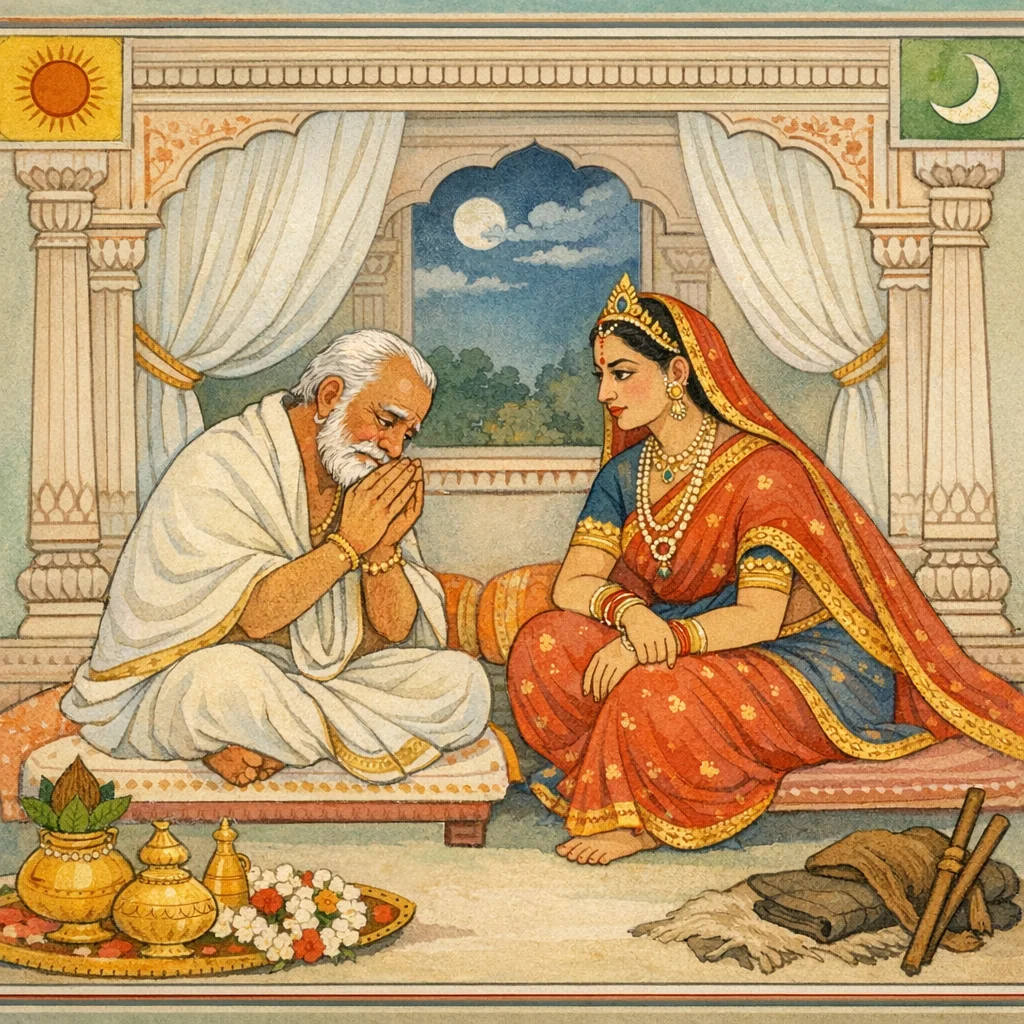
Sarga 11 stages a decisive speech-act sequence in which Kaikeyī, seeing Daśaratha overtaken by desire, compels him into explicit oath-making and then converts that oath into irreversible political outcomes. Daśaratha repeatedly swears—invoking Rāma’s life and worth—assuring Kaikeyī that her wish will be fulfilled. Kaikeyī then escalates the formality of the pledge by calling cosmic and domestic witnesses (Sun, Moon, directions, planets, gandharvas, rākṣasas, household deities, and all beings), transforming a private promise into a quasi-public covenant. She recalls the earlier daivāsura war episode where she protected the king and received two boons “kept as deposits,” and she now claims them as due. The two demands are articulated with procedural precision: (1) Bharata is to be installed with the very materials prepared for Rāma’s consecration; (2) Rāma is to be sent to Daṇḍakāraṇya for fourteen years, living as an ascetic in bark, deer-skin, and matted hair. Kaikeyī frames the demand as a test of Daśaratha’s satya and lineage-protection, while the king—caught by his own words—appears as one who has stepped into a self-made snare.
Shlokas
Verse 1
तं मन्मथशरैर्विद्धमं कामवेगवशानुगम्।उवाच पृथिवीपालं कैकेयी दारुणं वचः।।।।
To the ruler of the earth—struck as if by Love’s arrows and carried along by a surge of passion—Kaikeyī spoke harsh and dreadful words.
Verse 2
नास्मि विप्रकृतादेव केनचिन्नावमानिता।अभिप्रायस्तु मे कश्चित्तमिच्छामि त्वया कृतम्।।।।
O King, I have not been wronged by anyone, nor have I been insulted; yet I have a certain intention—one that I want you to carry out.
Verse 3
प्रतिज्ञां प्रतिजानीष्व यदि त्वं कर्तुमिच्छसि।अथ तद्व्याहरिष्यामि यदभिप्रार्थितं मया।।।।
If you truly wish to carry out my desire, first pledge your promise. Only then will I declare what I am asking for.
Verse 4
तामुवाच महातेजाः कैकेयीमीषदुत्स्मितः।कामी हस्तेन संगृह्य मूर्धजेषु शुचिस्मिताम्।।।।
The mighty king, smiling slightly in his passion, gently took Kaikeyī by her hair and spoke to her, who wore a bright, pure smile.
Verse 5
आवलिप्ते न जानासि त्वत्तः प्रियतरो मम।मनुजो मनुजव्याघ्राद्रामादन्यो न विद्यते।।।।
O proud lady, do you not know? For me, no woman is dearer than you—and among men there is none other than Rāma, the tiger among men.
Verse 6
तेनाजय्येन मुख्येन राघवेण महात्मना।शपे ते जीवनार्हेण ब्रूहि यन्मनसेच्छासि।।।।
I swear to you by that Rāghava—invincible, foremost, and great-souled, worthy of long life. Speak: what is it that you desire in your heart?
Verse 7
यं मुहूर्तमपश्यंस्तु न जीवेयमहं ध्रुवम्।तेन रामेण कैकेयि शपे ते वचनक्रियाम्।।।।
O Kaikeyī, it is certain that I could not live even a moment without seeing him. By that very Rāma, I swear to carry out your word—your wish.
Verse 8
आत्मना वात्मजैश्चान्यैर्वृणेयं मनुजर्षभम्।तेन रामेण कैकेयि शपे ते वचनक्रियाम्।।।।
Even choosing that best of men, Rāma, above myself, above my sons, and above all others—O Kaikeyī, by that very Rāma I swear to fulfil your request.
Verse 9
भद्रे हृदयमप्येतदनुमृशोद्धरस्व मे।एतत्समीक्ष्य कैकेयि ब्रूहि यत्साधु मन्यसे।।।।
O gentle lady, my very heart is distressed—touch it and lift me from this anguish. Having considered it, O Kaikeyī, tell me what you think is right.
Verse 10
बलमात्मनि जानन्ती न मां शङ्कितुमर्हसि।करिष्यामि तव प्रीतिं सुकृतेनापि ते शपे।।।।
Knowing the power you hold over me, you ought not to doubt me. I swear by my own merit: I will do what brings you pleasure.
Verse 11
सा तदर्थमना देवी तमभिप्रायमागतम्।निर्माध्यस्थ्याच्च हर्षाच्च बभाषे दुर्वचं वचः।।।।
That queen—her mind fixed on her own objective—rejoicing and seeing no middle course, uttered words that were hard to speak.
Verse 12
तेन वाक्येन संहृष्टा तमभिप्रायमागतम्।व्याजहार महाघोरमभ्यागतमिवान्तकम्।।।।
Delighted by his words, she voiced the intention that had arisen in her—terribly dreadful, like death arriving all at once.
Verse 13
यथा क्रमे शपसि वरं मम ददासि च।तच्छृण्वन्तु त्रयस्त्रिंशद्देवास्साग्निपुरोगमाः।।।।
Since you are, step by step, swearing and granting me a boon, let the Thirty-Three gods—with Agni at their head—hear it as witness.
Verse 14
चन्द्रादित्यौ नभश्चैव ग्रहा रात्र्यहनी दिशः।जगच्च पृथिवी चेयं सगन्धर्वा सराक्षसा।।।।निशाचराणि भूतानि गृहेषु गृहदेवता।यानि चान्यानि भूतानि जानीयुर्भाषितं तव।।।।
Let the Moon and Sun, the sky, the planets, night and day, and the directions; the world and this earth—together with Gandharvas and Rākṣasas—let night-roaming beings, household deities in homes, and whatever other beings there are, all know your spoken pledge.
Verse 15
चन्द्रादित्यौ नभश्चैव ग्रहा रात्र्यहनी दिशः।जगच्च पृथिवी चेयं सगन्धर्वा सराक्षसा।।2.11.14।।निशाचराणि भूतानि गृहेषु गृहदेवता।यानि चान्यानि भूतानि जानीयुर्भाषितं तव।।2.11.15।।
Let the Moon and Sun, the sky, the planets, night and day, the directions, the world and this earth—together with Gandharvas and Rākṣasas—and also night-roaming beings, household deities, and all other beings know your spoken pledge.
Verse 16
सत्यसन्धो महातेजाः धर्मज्ञः सुसमाहितः।वरं मम ददात्येष तन्मे श्रृण्वन्तु दैवताः।।।।
He is firm in truth, mighty in radiance, a knower of dharma, and self-possessed—this man grants me a boon. Let the gods hear this for my sake.
Verse 17
इति देवी महेष्वासं परिगृह्याभिशस्य च।ततः परमुवाचेदं वरदं काममोहितम्।।।।
So spoke the queen; clasping the great archer, flattering him, she then addressed the boon-giver—now deluded by desire.
Verse 18
स्मर राजन् पुरावृत्तं तस्मिन् दैवासुरे रणे।तत्र चाच्यावयच्छत्रुस्तव जीवितमन्तरा।।।।
O King, remember that event long ago in the war between the gods and the asuras: there the enemy struck down all that was yours—leaving only your life.
Verse 19
तत्र चापि मया देव यत्त्वं समभिरक्षितः।जाग्रत्या यतमानायास्ततो मे प्राददा वरौ।।।।
There, O King, I protected you as well; because I stayed vigilant and strove to save you, you granted me two boons.
Verse 20
तौ तु दत्तौ वरौ देव निक्षेपौ मृगयाम्यहम्।तथैव पृथिवीपाल सकाशे सत्यसङ्गर।।।।
O King—protector of the earth, steadfast in truth—I now seek those two boons you gave, kept as a deposit with you until their time.
Verse 21
तत् प्रतिश्रुत्य धर्मेण न चेद्दास्यसि मे वरम्।अद्यैव हि प्रहास्यामि जीवितं त्वद्विमानिता।।।।
Having promised it in accordance with dharma, if you do not grant me my boon, then—dishonored by you—I will abandon my life this very day.
Verse 22
वाङ्मात्रेण तदा राजा कैकेय्या स्ववशे कृतः।प्रचस्कन्द विनाशाय पाशं मृग इवात्मनः।।।।
Then the king, brought under Kaikeyī’s control by mere words, plunged toward his own ruin—like a deer leaping into a snare.
Verse 23
ततः परमुवाचेदं वरदं काममोहितम्।वरौ यौ मे त्वया देव तदा दत्तौ महीपते।।।।तौ तावदहमद्यैव वक्ष्यामि शृणु मे वचः।
After that she spoke to the boon-giving king, bewitched by desire: “O lord of the earth, O King, the two boons you once granted me—I shall state them now. Listen to my words.”
Verse 24
अभिषेकसमारम्भो राघवस्योपकल्पितः।।।।अनेनैवाभिषेकेण भरतो मेऽभिषिच्यताम्।
The preparations for Rāghava’s consecration have been arranged; with these very coronation materials, let my son Bharata be anointed king.
Verse 25
यो द्वितीयो वरो देव दत्तः प्रीतेन मे त्वया।।।।तदा दैवासुरे युद्धे तस्य कालोऽयमागत।
And the second boon, O King, which you granted me in your pleasure during that war between gods and asuras—its time to be enacted has now arrived.
Verse 26
नव प़ञ्च च वर्षाणि दण्डकारण्यमाश्रितः।।।।चीराजिनजटाधारी रामो भवतु तापसः।
For fourteen years, let Rāma take refuge in the Daṇḍaka forest; clad in bark-garments and deer-skin, wearing matted locks, let him live as an ascetic.
Verse 27
भरतो भजतामद्य यौवराज्यमकण्टकम्।।।।एष मे परमः कामो दत्तमेव वरं वृणे।अद्य चैव हि पश्येयं प्रयान्तं राघवं वनम्।।।।
Let Bharata take up the office of prince-regent today, without any rival to obstruct him. This is my highest desire; I claim a boon already granted. And today itself, let me see Rāghava departing for the forest.
Verse 28
भरतो भजतामद्य यौवराज्यमकण्टकम्।।2.11.27।।एष मे परमः कामो दत्तमेव वरं वृणे।अद्य चैव हि पश्येयं प्रयान्तं राघवं वनम्।।2.11.28।।
Let Bharata assume the prince-regency today, unopposed. This is my supreme desire; I demand the boon already promised. And today itself, let me witness Rāghava leaving for the forest.
Verse 29
स राजराजः भव सत्यसङ्गरःकुलं च शीलं च हि रक्ष जन्म च।परत्रवासे हि वदन्त्यनुत्तमंतपोधनास्सत्यवचो हितं नृणाम्।।।।
Be a king of kings—steadfast in truth. Protect your dynasty, your conduct, and your noble lineage. For the sages, whose wealth is austerity, declare that for one’s welfare there is no excellence beyond truthfulness, for it secures well-being in the world beyond.
Frequently Asked Questions
The central dharma-saṅkaṭa is Daśaratha’s collision between paternal affection and royal truthfulness: after swearing repeatedly to fulfill Kaikeyī’s desire, he becomes ethically bound to enact actions that destabilize succession—crowning Bharata and exiling Rāma—because the vow itself is treated as inviolable.
The sarga teaches that speech, especially oath-speech, is a moral instrument with real-world consequences: satya is upheld as a supreme virtue, yet the text also warns that unguarded promises made under passion can become traps that reorder personal, familial, and political realities.
Daṇḍakāraṇya is foregrounded as the destination of enforced ascetic exile, while the consecration setting in Ayodhyā is implied through the ‘abhiṣeka’ materials; culturally, the chapter highlights oath-witnessing practices by invoking cosmic forces and household deities as guarantors of a king’s promise.