Sarga 100
शततमः सर्गः — Rāma Questions Bharata on Rājadharma (Governance, Counsel, and Public Welfare)
अयोध्याकाण्ड
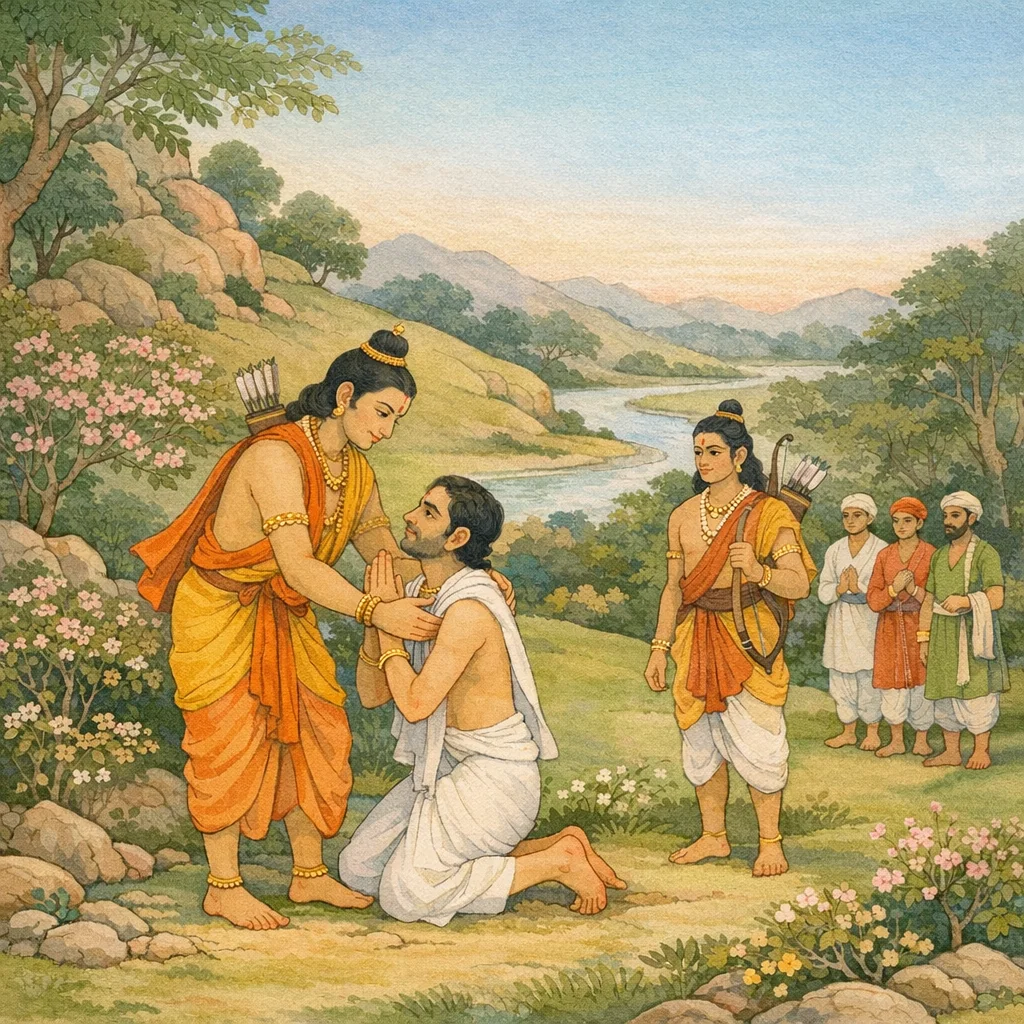
Sarga 100 opens with a stark visual reversal: Rāma beholds Bharata in ascetic guise—matted locks and bark garments—collapsed on the ground with folded hands, compared to the unbearable sun at cosmic dissolution (2.100.1). Rāma embraces and lifts the emaciated Bharata (2.100.2–3), then turns to a sustained interrogative discourse framed by repeated kaccit (“I trust/Is it so?”). The questions move from familial welfare (Daśaratha’s condition; the queens; the honoring of Vasiṣṭha and priests) to a systematic audit of statecraft: selection and secrecy of counsel, appointment of qualified ministers and commanders, intelligence via spies, proportional punishment, fiscal discipline, fortification readiness, timely pay for troops, protection of agriculture and cattle-wealth, public accessibility of the ruler, and impartial justice. Rāma warns against atheistic sophistry and enumerates royal faults to be avoided, emphasizing that confidential, scripture-informed counsel is the root of victory. The sarga thus functions as a compact manual of rājadharma embedded in fraternal compassion, culminating in the principle that righteous governance leads to heavenly ascent (2.100.76).
Shlokas
Verse 1
जटिलं चीरवसनं प्राञ्जलिं पतितं भुवि।ददर्श रामो दुर्दर्शं युगान्ते भास्करंयथा।।।।
Rāma saw Bharata—his hair matted, clad in bark-robes—fallen upon the earth with folded hands, a sight as hard to bear as the sun at the world’s end.
Verse 2
कथंचिदभिविज्ञाय विवर्णवदनं कृशम्।भ्रातरं भरतं रामः परिजग्राह बाहुना।।।।
Recognizing with difficulty his brother Bharata—his face drained of color and his body grown thin—Rāma drew him close with his arm in an embrace.
Verse 3
आघ्राय रामस्तं मूर्ध्नि परिष्वज्य च राघवः।अङ्के भरतमारोप्य पर्यपृच्छत्समाहितः।।।।
Rāma of the Raghu line kissed Bharata on the forehead and embraced him; then, seating him upon his lap, he questioned him with a steady and composed mind.
Verse 4
क्व नु तेऽभूत्पिता तात यदरण्यं त्वमागतः।न हि त्वं जीवतस्तस्य वनमागन्तुमर्हसि।।।।
Dear one, where is your father, that you have come to the forest? While he lives, it does not befit you to come to the wilderness.
Verse 5
चिरस्य बत पश्यामि दूराद्भरतमागतम्।दुष्प्रतीकमरण्येऽस्मिन् किं तात वनमागतः।।।।
After so long, alas, I see Bharata come from far away—worn and haggard—in this forest. Why, dear brother, have you come to the wilderness?
Verse 6
कच्चिद्धारयते तात राजा यत्त्वमिहाऽगतः।कच्चिन्न दीन स्सहसा राजा लोकान्तरं गतः।।।।
Dear child, now that you have come here—does the king still live on? I trust the king did not, in sudden despondency, pass away to the other world.
Verse 7
कच्चित्सौम्य न ते राज्यं भ्रष्टं बालस्य शाश्वतम्।कच्चिच्छुश्रूषसे तात पितरं सत्यविक्रमम्।।।।
O gentle one, since you are still young, I trust you have not ruined the kingdom beyond recovery. Dear child, I also trust you are dutifully attending upon your father, whose true strength lies in his truthfulness.
Verse 8
कच्चिद्धशरथो राजा कुशली सत्यसंङ्गरः।राजसूयाश्वमेधानामाहर्ता धर्मनिश्चयः।।।।
I trust King Daśaratha is well—true to his pledge, a performer of the Rājasūya and Aśvamedha rites, and firm in his resolve for righteousness.
Verse 9
स कच्चिद्ब्राह्मणो विद्वान् धर्मनित्यो महाद्युतिः।इक्ष्वाकूणामुपाध्यायो यथावत्तात पूज्यते।।।।
Dear child, I trust that brahmin—learned, ever devoted to dharma, and radiant—the preceptor of the Ikṣvākus, is being honored properly, as is fitting.
Verse 10
सा तात कच्चित्कौसल्या सुमित्रा च प्रजावती।सुखिनी कच्चिदार्या च देवी नन्दति कैकयी।।।।
“Dear brother, is Kausalyā well—and Sumitrā too, blessed with worthy children? And does the noble queen Kaikeyī remain content?”
Verse 11
कच्चिद्विनयसम्पन्नः कुलपुत्रो बहुश्रुतः।अनसूयुरनुद्रष्टा सत्कृतस्ते पुरोहितः।।।।
“Do you duly honor your family priest—modest in conduct, high-born, learned in sacred lore, free from envy, and capable of guiding you?”
Verse 12
कच्चिदग्निषु ते युक्तो विधिज्ञो मतिमानृजुः।हुतं च होष्यमाणं च काले वेदयते सदा।।।।
“Is the upright and discerning ritual expert assigned to your sacred fires—does he always inform you in due time of what has been offered and what remains to be offered?”
Verse 13
कच्चिद्देवान्पित्रून् मातृ़र्गुरून्पितृसमानपि।वृद्धांश्च तात वैद्यांश्च ब्राह्मणांश्चाभिमन्यसे।।।।
“Dear brother, do you continue to honor the gods, forefathers, mothers, teachers, those equal to a father, the aged, physicians, and Brahmins?”
Verse 14
इष्वस्त्रवरसम्पन्नमर्थशास्त्र विशारदम्।सुधन्वानमुपाध्यायं कच्चित्त्वं तात मन्यसे।।।।
“Dear brother, do you show due regard for your teacher Sudhanvan—skilled in excellent weapons and accomplished in the science of polity?”
Verse 15
कच्चिदात्मसमा श्शूरा श्श्रुतवन्तो जितेन्द्रियाः।कुलीनाश्चेङ्गितज्ञाश्च कृतास्ते तात मन्त्रिणः।।।।
“Dear brother, have you appointed as ministers men equal to you in caliber—brave, learned, self-controlled, well-born, and skilled at reading intentions from subtle signs?”
Verse 16
मन्त्रो विजयमूलं हि राज्ञां भवति राघव।सुसंवृतो मन्त्रधरैरमात्यै श्शास्त्रकोविदैः।।।।
“O Rāghava (Bharata), counsel is indeed the root of a king’s victory—especially when it is well-guarded by ministers who can keep counsel and are learned in the śāstras.”
Verse 17
कच्चिन्निद्रावशं नैषीः कच्चित् कालेऽवबुध्यसे।कच्चिच्चापररात्रेषु चिन्तियस्यर्थनैपुणम्।।।।
“Are you not overcome by sleep—do you wake at the proper time? And in the later part of the night, do you reflect on skilful means of governance?”
Verse 18
कच्चिन्मन्त्रयसे नैकः कच्चिन्न बहुभिस्सह।कच्चित्ते मन्त्रितो मन्त्रो राष्ट्रं न परिधावति।।।।
Do you neither deliberate entirely alone, nor consult with too many at once? And once a policy has been settled by you, does it remain contained—so that it does not spread through the kingdom?
Verse 19
कच्चिदर्थं विनिश्चित्य लघुमूलं महोदयम्।क्षिप्रमारभसे कर्तुं न दीर्घयसि राघव।।।।
O Rāghava (Bharata), when you have determined a course of action—one that requires modest means yet yields great benefit—do you set about executing it swiftly, without delaying it needlessly?
Verse 20
कच्चित्तु सुकृतान्येव कृतरूपाणि वा पुनः।विदुस्ते सर्वकार्याणि न कर्तव्यानि पार्थिवाः।।।।
Do other kings learn of your undertakings only when they have already been successfully carried out—or are on the verge of success—so that what still ought to be done is not disclosed to them beforehand?
Verse 21
कच्चिन्नतर्कैर्युक्त्या वा ये चाप्यपरिकीर्तिताः।त्वया वा तवामात्यैर्बुध्यते तात मन्त्रितम्।।।।
Dear brother, I hope that what has been resolved—by you or by your ministers—is not grasped by others through speculation, inference, or other unrevealed means.
Verse 22
कच्चित्सहस्रान्मूर्खाणामेकमिच्छसि पण्डितम्।पण्डितो ह्यर्थकृच्छ्रेषु कुर्यान्निश्रेयसं महत्।।।।
Do you, setting aside a thousand fools, choose even one wise man? For in times of difficulty, a wise person can secure great benefit and the highest good.
Verse 23
सहस्राण्यपि मूर्खाणां युद्युपास्ते महीपतिः।अथवाप्ययुतान्येव नास्ति तेषु सहायता।।।।
Even if a king seeks support from thousands of fools—or even tens of thousands—there is no real assistance to be found among them.
Verse 24
एकोऽप्यमात्यो मेधावी शूरो दक्षो विचक्षणः।राजानं राजपुत्रं वा प्रापयेन्महतीं श्रियम्।।।।
Even a single minister—intelligent, brave, competent, and clear-sighted—can bring a king, or even a prince, to great prosperity.
Verse 25
कच्चिन्मुख्या महात्स्वेव मध्यमेषु च मध्यमाः।जघन्याश्च जघन्येषु भृत्याः कर्मसु योजिताः।।।।
I hope you have assigned your servants appropriately: the most capable to the most important tasks, the middling to middling duties, and the least capable to inferior work.
Verse 26
अमात्यानुपधातीतान्पितृपैतामहाञ्छुचीन्।श्रेष्ठांछ्रेष्ठेषुकच्चित्वं नियोजयसि कर्मसु।।।।
I hope you appoint to the highest responsibilities those eminent ministers who are incorruptible, of proven family service, and pure in conduct.
Verse 27
कच्चिन्नोग्रेण दण्डेन भृशमुद्वेजितप्रजम्।राष्ट्रं तवानुजानन्ति मन्त्रिणः कैकयीसुत।।।।
O son of Kaikeyī, do your ministers approve your rule—without your kingdom’s people being greatly distressed by harsh punishments?
Verse 28
कच्चित्त्वां नावजानन्ति याजकाः पतितं यथा।उग्रप्रतिग्रहीतारं कामयानमिव स्त्रियः।।।।
Do the ritual priests not look down upon you—as they would upon a fallen man—because of harsh or improper exactions; and do women not disdain you as they would a lust-driven man?
Verse 29
उपायकुशलं वैद्यं भृत्यसंदूषणे रतम्।शूरमैश्वर्यकामं च यो न हन्ति स हन्यते।।।।
A man who is learned yet skilled in scheming, who delights in corrupting servants, and who is brave but hungry for dominion—if a king does not strike such a person down, he himself is destroyed in time.
Verse 30
कच्चिद्धृष्टश्च शूरश्च मतिमान् धृतिमान् शुचिः।कुलीनश्चानुरक्तश्च दक्षस्सेनापतिः कृतः।।।।
Have you appointed as commander of the army someone who is confident and brave, intelligent and steadfast, upright, well-born, loyal, and efficient?
Verse 31
बलवन्तश्च कच्चित्ते मुख्या युध्दविशारदाः।दृष्टापदाना विक्रान्तास्त्वया सत्कृत्यमानिताः।।।।
Do you duly honour the foremost soldiers—powerful, expert in war, proven in deeds, and courageous—so that they feel respected by you?
Verse 32
कच्चिद्बलस्य भक्तं च वेतनं च यथोचितम्।सम्प्राप्तकालं दातव्यं ददासि न विलम्बसे।।।।
Do you provide the army with suitable rations and pay, giving what is due at the proper time without delay?
Verse 33
कालातिक्रमणाच्चैव भक्तवेतनयोर्भृताः।भर्तुः कुप्यन्ति दुष्यन्ति सोऽनर्थ स्सुमहान् स्मृतः।।।।
When rations and wages are delayed beyond the proper time, dependants grow angry with their master and become disaffected; this is remembered as a very great calamity.
Verse 34
कच्चित्सर्वेऽनुरक्तास्त्वां कुलपुत्राः प्रधानतः।कच्चित्प्राणां स्तवार्थेषु सन्त्यजन्ति समाहिताः।।।।
Are all the noble-born men—especially those of eminent standing—devoted to you, and are they, with steady resolve, ready to give up their lives for your cause?
Verse 35
कच्चिज्जानपदो विद्वान्दक्षिणः प्रतिभानवान्।यथोक्तवादी दूतस्ते कृतो भरत पण्डितः।।।।
O Bharata, have you appointed as your envoy a wise and capable expert—one native to the land, well-informed, favourably disposed, quick-witted, and one who reports exactly as instructed?
Verse 36
कच्चिदष्टादशान्येषु स्वपक्षे दश पञ्च च।त्रिभिस्त्रिभिरविज्ञातैर्वेत्सि तीर्थानि चारकैः।।।।
Do you, by means of unrecognizable spies—three assigned to each—keep informed about the key offices: the eighteen on the enemy’s side and the fifteen within your own camp?
Verse 37
कच्चिद्व्यपास्तानहितान्प्रतियातांश्च सर्वदा।दुर्बलाननवज्ञाय वर्तसे रिपुसूदन।।।।
O slayer of foes, do you remain ever watchful—never neglecting enemies who were once repelled and have returned, even if they appear weak?
Verse 38
कच्चिन्न लौकायतिकान्ब्राह्मणांस्तात सेवसे।।अनर्थकुशला ह्येते बालाः पण्डितमानिनः।।।।
Dear one, I hope you do not associate with those brahmins who are worldly-minded skeptics; though childish, they imagine themselves learned, and are skilled only in bringing harm.
Verse 39
धर्मशास्त्रेषु मुख्येषु विद्यमानेषु दुर्बुधाः।बुद्धिमान्वीक्षिकीं प्राप्य निरर्थं प्रवदन्ति ते।।।।
Though the foremost dharma-texts are available, those shallow-minded people, taking up mere dialectical logic, speak only what is futile.
Verse 40
वीरैरध्युषितां पूर्वमस्माकं तात पूर्वकैः।सत्यनामां दृढ द्वारां हस्त्यश्वरथसङ्कुलाम्।।।।ब्राह्मणैः क्षत्रियैर्वैश्यै स्स्वकर्मनिरतैस्सदा।जितेन्द्रियैर्महोत्साहैर्वृतामार्यै स्सहस्रशः।।।।प्रासादैर्विविधाकारैर्वृतां वैद्यजनाकुलाम्।कच्चित्सुमुदितां स्फीतामयोध्यां परिरक्षसि।।।।
Dear one, do you protect Ayodhyā—true to its name—once inhabited and defended by our heroic ancestors, with strong gates and filled with elephants, horses, and chariots; thronged by thousands of venerable, self-controlled, high-spirited brahmins, kṣatriyas, and vaiśyas devoted to their proper duties; adorned with palaces of many kinds and rich in learned people—prosperous and contented?
Verse 41
वीरैरध्युषितां पूर्वमस्माकं तात पूर्वकैः।सत्यनामां दृढ द्वारां हस्त्यश्वरथसङ्कुलाम्।।2.100.40।।ब्राह्मणैः क्षत्रियैर्वैश्यै स्स्वकर्मनिरतैस्सदा।जितेन्द्रियैर्महोत्साहैर्वृतामार्यै स्सहस्रशः।।2.100.41।।प्रासादैर्विविधाकारैर्वृतां वैद्यजनाकुलाम्।कच्चित्सुमुदितां स्फीतामयोध्यां परिरक्षसि।।2.100.42।।
O Rāghava (Bharata), is the countryside prosperous and at ease—rich with many sacred shrines, well-settled and full of people, beautified with temples, water-stations, and tanks; bright with festivals and joyful men and women; with well-ploughed boundaries and good cattle, free from violence; delightful and not dependent on rainfall, free from wild beasts; rid of all fears, adorned with mines; kept free of sinful men and well-protected as in my forefathers’ time?
Verse 42
वीरैरध्युषितां पूर्वमस्माकं तात पूर्वकैः।सत्यनामां दृढ द्वारां हस्त्यश्वरथसङ्कुलाम्।।2.100.40।।ब्राह्मणैः क्षत्रियैर्वैश्यै स्स्वकर्मनिरतैस्सदा।जितेन्द्रियैर्महोत्साहैर्वृतामार्यै स्सहस्रशः।।2.100.41।।प्रासादैर्विविधाकारैर्वृतां वैद्यजनाकुलाम्।कच्चित्सुमुदितां स्फीतामयोध्यां परिरक्षसि।।2.100.42।।
Dear brother, I trust you are safeguarding Ayodhyā—true to its very name—once inhabited and defended by our heroic ancestors, secured with firm gates and crowded with elephants, horses, and chariots; thronged by thousands of venerable, self-controlled, high-spirited men—brāhmaṇas, kṣatriyas, and vaiśyas—steadfast in their own duties; adorned with palaces of many designs, rich in learned physicians and scholars, joyful and flourishing in prosperity.
Verse 43
कच्चिच्चैत्यशतैर्जुष्ट स्सुनिविष्टजनाकुलः।देवस्थानैः प्रपाभिश्च तटाकैश्चोपशोभितः।।।।प्रहृष्टनरनारीकस्समाजोत्सवशोभितः।सुकृष्टसीमा पशुमान्हिंसाभिः परिवर्जितः।।।।अदेवमातृको रम्य श्श्वापदैः परिवर्जितः।परित्यक्तो भयैस्सर्वैः खनिभिश्चोपशोभितः।।।।विवर्जितो नरैः पापैर्मम पूर्वै स्सुरक्षितः।कच्चिज्जनपदस्स्फीतः सुखं वसति राघव।।।।
O Rāghava (Bharata), is the countryside prosperous and at ease—rich with many sacred shrines, well-settled and full of people, beautified with temples, water-stations, and tanks; bright with festivals and joyful men and women; with well-ploughed boundaries and good cattle, free from violence; delightful and not dependent on rainfall, free from wild beasts; rid of all fears, adorned with mines; kept free of sinful men and well-protected as in my forefathers’ time?
Verse 44
कच्चिच्चैत्यशतैर्जुष्ट स्सुनिविष्टजनाकुलः।देवस्थानैः प्रपाभिश्च तटाकैश्चोपशोभितः।।2.100.43।।प्रहृष्टनरनारीकस्समाजोत्सवशोभितः।सुकृष्टसीमा पशुमान्हिंसाभिः परिवर्जितः।।2.100.44।।अदेवमातृको रम्य श्श्वापदैः परिवर्जितः।परित्यक्तो भयैस्सर्वैः खनिभिश्चोपशोभितः।।2.100.45।।विवर्जितो नरैः पापैर्मम पूर्वै स्सुरक्षितः।कच्चिज्जनपदस्स्फीतः सुखं वसति राघव।।2.100.46।।
O greatly wise one, I trust you rightly apply—through clear intellect—mastery over the senses; the sixfold policy measures; discernment of troubles arising from fate and from human agency; the required state-actions and the twentyfold administrative considerations; and the circle of constituents and alliances; as well as the proper organization of expeditions and punishments, and the twin courses of peace and war.
Verse 45
कच्चिच्चैत्यशतैर्जुष्ट स्सुनिविष्टजनाकुलः।देवस्थानैः प्रपाभिश्च तटाकैश्चोपशोभितः।।2.100.43।।प्रहृष्टनरनारीकस्समाजोत्सवशोभितः।सुकृष्टसीमा पशुमान्हिंसाभिः परिवर्जितः।।2.100.44।।अदेवमातृको रम्य श्श्वापदैः परिवर्जितः।परित्यक्तो भयैस्सर्वैः खनिभिश्चोपशोभितः।।2.100.45।।विवर्जितो नरैः पापैर्मम पूर्वै स्सुरक्षितः।कच्चिज्जनपदस्स्फीतः सुखं वसति राघव।।2.100.46।।
Is that delightful land not dependent on the rains, free from wild beasts, with every kind of fear driven away, and further adorned by its mines?
Verse 46
कच्चिच्चैत्यशतैर्जुष्ट स्सुनिविष्टजनाकुलः।देवस्थानैः प्रपाभिश्च तटाकैश्चोपशोभितः।।2.100.43।।प्रहृष्टनरनारीकस्समाजोत्सवशोभितः।सुकृष्टसीमा पशुमान्हिंसाभिः परिवर्जितः।।2.100.44।।अदेवमातृको रम्य श्श्वापदैः परिवर्जितः।परित्यक्तो भयैस्सर्वैः खनिभिश्चोपशोभितः।।2.100.45।।विवर्जितो नरैः पापैर्मम पूर्वै स्सुरक्षितः।कच्चिज्जनपदस्स्फीतः सुखं वसति राघव।।2.100.46।।
Is the countryside free of sinful men, well-guarded as it was by my forefathers, and—O Rāghava—prosperous, with its people living in comfort?
Verse 47
कच्चित्ते दयितास्सर्वे कृषिगोरक्षजीविनः।वार्तायां संश्रितस्तात लोको हि सुखमेधते।।।।
Are all those dear to you who live by farming and cattle-rearing? For, dear one, the people prosper happily when they are supported by productive livelihoods (vārttā).
Verse 48
तेषां गुप्तिपरीहारैः कच्चित्ते भरणं कृतम्।रक्ष्या हि राज्ञा धर्मेण सर्वे विषयवासिनः।।।।
Have you ensured their maintenance through protection and the warding off of hardships? For all who dwell in the realm must indeed be protected by the king in accordance with dharma.
Verse 49
कच्चिस्त्रिय स्सान्त्वयसि कच्चित्ताश्च सुरक्षिताः।कच्चिन्न श्रद्धास्यासां कच्चिद्गुह्यं न भाषसे।।।।
Do you keep the women reassured, and are they well protected? And do you refrain from placing trust in their talk, and from disclosing secrets to them?
Verse 50
कच्चिन्नागवनं गुप्तं कच्चित्ते सन्ति धेनुकाः।कच्चिन्न गणिकाश्वानां कुञ्जराणां च तृप्यसि।।।।
Is the elephant-forest well protected, and do you have plentiful milch-cows? And do you avoid being ‘satisfied’ with merely what you have, in the matter of mares and elephants (i.e., do you keep the royal resources sufficient)?
Verse 51
कच्चिद्दर्शयसे नित्यं मनुष्याणां विभूषितम्।उत्थायोत्थाय पूर्वाह्णे राजपुत्र महापथे।।।।
O prince, do you rise early each day and show yourself—well adorned—to the people on the great road (public thoroughfare)?
Verse 52
कच्चिन्न सर्वे कर्मान्ताः प्रत्यक्षास्तेऽविशङ्कया।सर्वे वा पुनरुत्सृष्टा मध्यमेवात्र कारणम्।।।।
Do not all your workers come right up to you without restraint—yet are they also not kept entirely at a distance? Here, the middle path is the sound principle.
Verse 53
कच्चित्सर्वाणि दुर्गाणि धनधान्यायुधोदकैः।यन्त्रैश्च परिपूर्णानि तथा शिल्पिधनुर्धरैः।।।।
Are all the forts well supplied with wealth, grain, weapons, and water—along with engines (of defense) and also craftsmen and archers?
Verse 54
आयस्ते विपुलः कच्चित्कच्चिदल्पतरो व्ययः।अपात्रेषु न ते कच्चित्कोशो गच्छति राघव।।।।
O Rāghava (Bharata), are your revenues abundant, and is your expenditure restrained? And do you ensure that the royal treasury is not squandered on the undeserving?
Verse 55
देवतार्थे च पित्रर्थेब्राह्मणाभ्यागतेषु च।योधेषु मित्रवर्गेषु कच्चिद्गच्छति ते व्ययः।।।।
Is your expenditure directed toward proper obligations—offerings for the gods and ancestors, support for brahmins and guests, and due provision for warriors and allied friends?
Verse 56
कच्चिदार्यो विशुद्धात्मा क्षारित श्चापरकर्मणा।अपृष्ट श्शास्त्रकुशलैर्न लोभाद्वध्यते शुचिः।।।।
I trust that an upright and pure-hearted man—though slandered by some disgraceful allegation—is not executed out of greed, without first consulting those skilled in the śāstras.
Verse 57
गृहीतश्चैव पृष्टश्च काले दृष्टस्सकारणः।कच्चिन्न मुच्यते चोरो धनलोभान्नरर्षभ।।।।
O best of men, I trust that a thief—caught at the time, arrested, questioned, and proven with evidence—is not released merely out of greed for money.
Verse 58
व्यसने कच्चिदाढ्यस्य दुर्गतस्य च राघव।अर्थं विरागाः पश्यन्ति तवामात्या बहुश्रुताः।।।।
O Rāghava (Bharata), in times of hardship, do your well-informed ministers examine matters without bias—whether the person involved is wealthy or destitute?
Verse 59
यानि मिथ्याभिशस्तानां पतन्त्यश्रूणि राघव।तानि पुत्रान्पशून्घ्नन्ति प्रीत्यर्थमनुशासतः।।।।
O Rāghava (Bharata), the tears that fall from those falsely accused—when a ruler punishes merely for his own pleasure—destroy that ruler’s sons and cattle.
Verse 60
कच्चिद्वृद्धांश्च बालांश्च वैद्यामुख्यांश्च राघव।दानेन मनसा वाचा त्रिभिरेतैर्बुभूषसे।।।।
O Rāghava (Bharata), do you seek the kingdom’s well-being by nurturing the aged, the children, and the foremost among the learned—through gifts, goodwill, and kindly speech?
Verse 61
कच्चिद्गुरूंश्च वृद्धांश्च तापसान् देवतातिथीन्।चैत्यांश्च सर्वान्सिध्दार्थान्ब्राह्मणांश्च नमस्यसि।।।।
Do you pay due reverence to teachers and elders, to ascetics, to gods and guests, to sacred shrines, to accomplished persons, and to brahmins?
Verse 62
कच्चिदर्थेन वा धर्ममर्थं धर्मेण वा पुनः।उभौ वा प्रीतिलोभेन कामेन च न बाधसे।।।।
I trust you do not undermine dharma for the sake of wealth, nor wealth for the sake of dharma—nor both—out of craving for pleasure and desire.
Verse 63
कच्चिदर्थं च धर्मं च कामं च जयतां वर।विभज्य काले कालज्ञ सर्वान्वरद सेवसे।।।।
O best among victors—wise in judging the right time and a giver of boons—do you, by dividing your time properly, attend to all three aims of life: dharma, artha, and kāma?
Verse 64
कच्चित्ते ब्राह्मणा श्शर्म सर्वशास्त्रार्थकोविदाः।आशंसन्ते महाप्राज्ञ पौरजानपदैस्सह।।।।
O greatly wise one, do the brāhmaṇas—skilled in the meanings of all śāstras—together with the townspeople and the countryfolk, wish for your welfare and happiness?
Verse 65
नास्तिक्यमनृतं क्रोधं प्रमादं दीर्घसूत्रताम्।अदर्शनं ज्ञानवतामालस्यं पञ्चवृत्तिताम्।।।।एकचिन्तनमर्थानामनर्थज्ञैश्च मन्त्रणम्।निश्चितानामनारम्भं मन्त्रस्यापरिरक्षणम्।।।।मङ्गलाद्यप्रयोगं च प्रत्युत्थानं च सर्वतः।कच्चित्वं वर्जयस्येतान्राजदोषांश्चतुर्दश।।।।
Do you avoid the fourteen royal faults—atheism, falsehood, anger, negligence, procrastination, shunning the wise, laziness, indulgence in the five senses; handling state affairs by thinking alone; taking counsel with the incompetent; failing to act on decisions; not guarding counsel; neglecting auspicious observances; and rashly attacking all enemies at once?
Verse 66
नास्तिक्यमनृतं क्रोधं प्रमादं दीर्घसूत्रताम्।अदर्शनं ज्ञानवतामालस्यं पञ्चवृत्तिताम्।।2.100.65।।एकचिन्तनमर्थानामनर्थज्ञैश्च मन्त्रणम्।निश्चितानामनारम्भं मन्त्रस्यापरिरक्षणम्।।2.100.66।।मङ्गलाद्यप्रयोगं च प्रत्युत्थानं च सर्वतः।कच्चित्वं वर्जयस्येतान्राजदोषांश्चतुर्दश।।2.100.67।।
Do you avoid the fourteen royal faults—atheism, falsehood, anger, negligence, procrastination, shunning the wise, laziness, indulgence in the five senses; handling state affairs by thinking alone; taking counsel with the incompetent; failing to act on decisions; not guarding counsel; neglecting auspicious observances; and rashly attacking all enemies at once?
Verse 67
नास्तिक्यमनृतं क्रोधं प्रमादं दीर्घसूत्रताम्।अदर्शनं ज्ञानवतामालस्यं पञ्चवृत्तिताम्।।2.100.65।।एकचिन्तनमर्थानामनर्थज्ञैश्च मन्त्रणम्।निश्चितानामनारम्भं मन्त्रस्यापरिरक्षणम्।।2.100.66।।मङ्गलाद्यप्रयोगं च प्रत्युत्थानं च सर्वतः।कच्चित्वं वर्जयस्येतान्राजदोषांश्चतुर्दश।।2.100.67।।
O Rāghava, greatly wise one—do you correctly understand and apply, in their true sense, these frameworks of polity and conduct: the ten-, five-, and four-fold groupings; the sevenfold, eightfold, and threefold sets; the three branches of knowledge; conquest of the senses by intellect; the sixfold policy; misfortunes born of fate and human agency; the duties called kṛtya; the twentyfold classification; the circle of constituents and mandalas; rules of expedition and punishment; and the two courses of peace and war?
Verse 68
दशपञ्चचतुर्वर्गान्सप्तवर्गं च तत्त्वतः।अष्टवर्गं त्रिवर्गं च विद्यास्तिस्रश्च राघव।।।।इन्द्रियाणां जयं बुद्ध्या षाड्गुण्यं दैवमानुषम्।कृत्यं विंशतिवर्गं च तथा प्रकृतिमण्डलम्।।।।यात्रादण्डविधानं च द्वियोनी सन्धिविग्रहौ।कच्चिदेतान्महाप्राज्ञ यथावदनुमन्यसे।।।।
O Rāghava, greatly wise one—do you correctly understand and apply, in their true sense, these frameworks of polity and conduct: the ten-, five-, and four-fold groupings; the sevenfold, eightfold, and threefold sets; the three branches of knowledge; conquest of the senses by intellect; the sixfold policy; misfortunes born of fate and human agency; the duties called kṛtya; the twentyfold classification; the circle of constituents and mandalas; rules of expedition and punishment; and the two courses of peace and war?
Verse 69
दशपञ्चचतुर्वर्गान्सप्तवर्गं च तत्त्वतः।अष्टवर्गं त्रिवर्गं च विद्यास्तिस्रश्च राघव।।2.100.68।।इन्द्रियाणां जयं बुद्ध्या षाड्गुण्यं दैवमानुषम्।कृत्यं विंशतिवर्गं च तथा प्रकृतिमण्डलम्।।2.100.69।।यात्रादण्डविधानं च द्वियोनी सन्धिविग्रहौ।कच्चिदेतान्महाप्राज्ञ यथावदनुमन्यसे।।2.100.70।।
O greatly wise one, I trust you rightly apply—through clear intellect—mastery over the senses; the sixfold policy measures; discernment of troubles arising from fate and from human agency; the required state-actions and the twentyfold administrative considerations; and the circle of constituents and alliances; as well as the proper organization of expeditions and punishments, and the twin courses of peace and war.
Verse 70
दशपञ्चचतुर्वर्गान्सप्तवर्गं च तत्त्वतः।अष्टवर्गं त्रिवर्गं च विद्यास्तिस्रश्च राघव।।2.100.68।।इन्द्रियाणां जयं बुद्ध्या षाड्गुण्यं दैवमानुषम्।कृत्यं विंशतिवर्गं च तथा प्रकृतिमण्डलम्।।2.100.69।।यात्रादण्डविधानं च द्वियोनी सन्धिविग्रहौ।कच्चिदेतान्महाप्राज्ञ यथावदनुमन्यसे।।2.100.70।।
O great king, be pleased and partake of this very food that we now eat; for the deities connected with a man receive the same food as that which he partakes.
Verse 71
मन्त्रिभिस्त्वं यथोद्दिष्टैश्चतुर्भिस्त्रिभिरेव वा।कच्चित्समस्तैर्व्यस्तैश्च मन्त्रं मन्त्रयसे मिथः।।।।
Do you deliberate in secret on matters of counsel with ministers—three or four as prescribed—both collectively and individually, so that policy is well-tested and protected?
Verse 72
कच्चित्ते सफला वेदाः कच्चित्ते सफलाः क्रियाः।कच्चित्ते सफला दाराः कच्चित्ते सफलं श्रुतम्।।।।
I trust your study of the Vedas has borne fruit; I trust your undertakings have proved fruitful; I trust your household life has been fruitful; and I trust what you have heard of the scriptures has turned into meaningful wisdom in practice.
Verse 73
कच्चिदेषैव ते बुद्धिर्यथोक्ता मम राघव।आयुष्या च यशस्या च धर्मकामार्थ संहिता।।।।
O Rāghava (Bharata), I trust your understanding accords with what I said—an understanding that sustains long life and good fame, and that is harmonized with dharma, rightful pleasure, and prosperity.
Verse 74
यां वृत्तिं वर्तते तातो यां च नः प्रपितामहाः।तां वृत्तिं वर्तसे कच्चिद्याच सत्पथगा शुभा।।।।
I trust you follow the very course of conduct that our father follows and that our forefathers followed—an auspicious way that walks the true path.
Verse 75
कच्चित्स्वादु कृतं भोज्यमेको नाश्नासि राघव।कच्चिदाशंसमानेभ्यो मित्रेभ्य स्सम्प्रयच्छसि।।।।
O Rāghava (Bharata), I trust you do not eat delicacies all by yourself; and I trust you share with friends who seek them.
Verse 76
राजा तु धर्मेण हि पालयित्वा महामतिर्दण्डधरः प्रजानाम्।अवाप्य कृत्स्नां वसुधां यथावदितश्च्युत स्स्वर्गमुपैति विद्वान्।।।।
But the king—wise and learned, bearing the rod of justice for the people—having ruled righteously in due order and attained the whole earth (i.e., full sovereignty), when released from this world, indeed reaches heaven.
Frequently Asked Questions
The pivotal action is Bharata’s self-abasing arrival in ascetic form and Rama’s compassionate embrace, followed by Rama’s ethical scrutiny of Bharata’s rule—testing whether governance remains righteous, confidential, and welfare-oriented despite dynastic upheaval.
The upadeśa is that victory and legitimacy rest on dharma-guided administration: guarded counsel, competent appointments, proportional punishment, impartial justice, and protection of livelihoods; a ruler who governs righteously secures both worldly stability and transcendent merit.
Ayodhyā and the wider janapada are mapped through civic-religious and infrastructural markers—caityas, devasthānas, prapās, taṭākas, forts, elephant preserves, and mines—signaling a culturally ordered and materially sustained polity.