Sarga 1
गुणप्रशंसा–युवराजनिर्णयः (Praise of Rama’s Virtues and the Decision on the Heir-Apparent)
अयोध्याकाण्ड
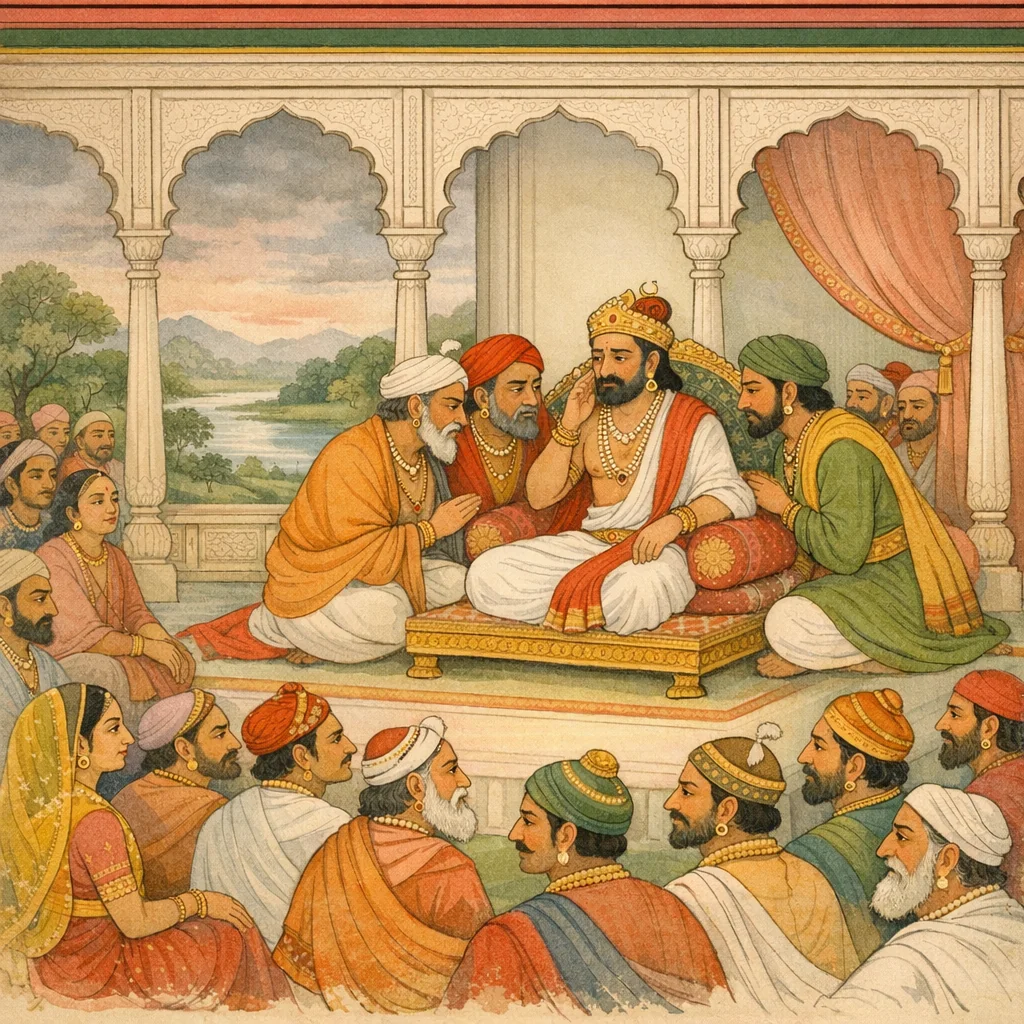
Sarga 1 opens with Bharata departing to his maternal uncle’s house, accompanied by Śatrughna, and both brothers residing there with affectionate hospitality while remembering their aged father. The narrative then pivots to an extended ethical portrait of Rāma: serenity under provocation, gratitude, truthfulness, reverence for elders and brāhmaṇas, compassion, self-restraint, discernment, and mastery of learning, debate, and martial disciplines. Through a tightly structured catalogue of virtues—reinforced by cosmological similes (earth-like forbearance, Bṛhaspati-like intelligence, Indra-like prowess)—the sarga frames Rāma as an ideal public figure beloved by subjects and suited to governance. Observing these qualities and sensing ominous portents alongside his own aging, Daśaratha consults ministers and resolves to appoint Rāma as yuvarāja. The chapter concludes with the king summoning regional rulers and leading citizens into an assembly, visually likened to Indra surrounded by devas, thereby formalizing the political stage for the coronation initiative.
Shlokas
Verse 1
गच्छता मातुलकुलं भरतेन तदाऽनघ।शत्रुघ्नो नित्यशत्रुघ्नो नीतः प्रीतिपुरस्कृतः।।।।
When Bharata set out then for his maternal uncle’s house, O sinless one, he took with him Śatrughna—ever a slayer of foes—going forth in the spirit of affection.
Verse 2
तत्र न्यवसद्भ्रात्रा सह सत्कारसत्कृतः।मातुलेनाश्वपतिना पुत्रस्नेहेन लालितः।।।।
There he stayed with his brother, honored with every courtesy—cherished by his maternal uncle Aśvapati with the affection one shows to a son.
Verse 3
तत्रापि निवसन्तौ तौ तर्प्यमाणौ च कामतः।भ्रातरौ स्मरतां वीरौ वृद्धं दशरथं नृपम्।।।।
Even while living there contented as they wished, the two heroic brothers kept remembering their aged father, King Daśaratha.
Verse 4
राजाऽपि तौ महातेजा स्सस्मार प्रोषितौ सुतौ।उभौ भरतशत्रुघ्नौ महेन्द्रवरुणोपमौ।।।।
The radiant king Daśaratha also remembered his two sons—Bharata and Śatrughna—who were away from home, and who were likened to Mahendra (Indra) and Varuṇa.
Verse 5
सर्व एव तु तस्येष्टा श्चत्वारः पुरुषर्षभाः।स्वशरीराद्विनिर्वृत्ताश्चत्वार इव बाहवः।।।।
To him, all four sons—those best of men—were equally dear, like four arms that had arisen from his own body.
Verse 6
तेषामपि महातेजा रामो रतिकरःपितुः।स्वयम्भूरिव भूतानां बभूव गुणवत्तरः।।।।
Among them, the mighty and radiant Rāma became his father’s delight; like the Self-born (Brahmā) to all beings, he was the most endowed with virtues.
Verse 7
स हि देवैरुदीर्णस्य रावणस्य वधार्थिभिः।अर्थितो मानुषे लोके जज्ञे विष्णुस्सनातनः।।।।
For the eternal Viṣṇu, entreated by the gods who sought the slaying of the arrogant Rāvaṇa, was indeed born in the human world (as Rāma).
Verse 8
कौशल्या शुशुभे तेन पुत्रेणामिततेजसा।यथा वरेण देवानामदितिर्वज्रपाणिना।।।।
Kauśalyā shone with that son of boundless splendour, just as Aditi shone with the foremost of the gods—Indra, wielder of the thunderbolt.
Verse 9
स हि रूपोपपन्नश्च वीर्यवाननसूयकः।भूमौवनुपमस्सूनुर्गुणैर्दशरथोपमः।।।।
For he—handsome, valiant, and free from envy—was, by his virtues, equal to Daśaratha; indeed, on earth Rāma was an incomparable son.
Verse 10
स तु नित्यं प्रशान्तात्मा मृदुपूर्वं च भाषते।उच्यमानोऽपि परुषं नोत्तरं प्रतिपद्यते।।।।
Ever serene in mind, he spoke first with gentleness; even when addressed harshly, he did not reply in kind.
Verse 11
कथञ्चिदुपकारेण कृतेनैकेन तुष्यति।न स्मरत्यपकाराणां शतमप्यात्मवत्तया।।।।
By self-mastery, he was satisfied even with a single good turn done in any manner, yet he did not keep in mind even a hundred wrongs done by others.
Verse 12
शीलवृद्धैर्ज्ञानवृद्धैर्वयोवृद्धैश्च सज्जनैः।कथयन्नास्त वै नित्यमस्त्रयोग्यान्तरेष्वपि।।।।
He would regularly converse with saintly men—elders in virtue, wisdom, and age—even in the intervals between his weapons-training sessions.
Verse 13
बुद्धिमान्मधुराभाषी पूर्वभाषी प्रियंवदः।वीर्यवान्न च वीर्येण महता स्वेन विस्मितः।।।।
Wise and sweet-spoken, he would speak first and speak what was pleasing; though valiant, he was never puffed up by his own great prowess.
Verse 14
नचानृतकथो विद्वान् वृद्धानां प्रतिपूजकः।अनुरक्तः प्रजाभिश्च प्रजाश्चाप्यनुरञ्जते।।।।
He did not speak falsehood; he was learned and one who duly honoured elders. Loved by the people, he in turn delighted and cherished the people as well.
Verse 15
सानुक्रोशो जितक्रोधो ब्राह्मणप्रतिपूजकः।दीनानुकम्पी धर्मज्ञो नित्यं प्रग्रहवांश्चुचिः।।।।
Compassionate and conqueror of anger, he honoured the brāhmaṇas; he was tender toward the afflicted, a knower of dharma, ever self-restrained and pure.
Verse 16
कुलोचितमतिः क्षात्रं धर्मं स्वं बहुमन्यते।मन्यते परया कीर्त्या महत्स्वर्गफलं ततः।।।।
With a mind befitting his noble lineage, he held his own kṣatriya-duty in high esteem, believing that from great glory one gains a great reward—heavenly fruition.
Verse 17
नाऽऽश्रेयसि रतो विद्वान्नविरुद्धकथारुचिः।उत्तरोत्तरयुक्तौ च वक्ता वाचस्पतिर्यथा।।।।
Though learned, he took no delight in unwholesome pursuits, nor did he relish speech hostile to others; yet in sustained debate and reasoning he spoke like Vācaspati (Bṛhaspati).
Verse 18
अरोगस्तरुणो वाग्मी वपुष्मान्देशकालवित्।लोके पुरुषसारज्ञ स्साधुरेको विनिर्मितः।।।।
He was free from illness, youthful, eloquent, and possessed of a fine physique; he understood what was fitting to place and time. In the world he stood as one uniquely fashioned—able to discern the worth of men, and by nature a noble, saintly person.
Verse 19
स तु श्रेष्ठैर्गुणैर्युक्तः प्रजानां पार्थिवात्मजः।बहिश्चर इव प्राणो बभूव गुणतः प्रियः।।।।
Endowed with the finest virtues, the king’s son became beloved of the people; by his goodness he was to them like the very life-breath moving outside the body.
Verse 20
सम्यग्विद्याव्रतस्नातो यथावत्साङ्गवेदवित्।इष्वस्त्रे च पितु श्श्रेष्ठो बभूव भरताग्रजः।।।।
Having duly completed his disciplines of learning and taken the ceremonial ‘graduation’ bath, Bharata’s elder brother became a knower of the Veda with its auxiliaries; and in archery he even surpassed his father.
Verse 21
कल्याणाभिजन स्साधुरदीन स्सत्यवागृजुः।वृद्धैरभिविनीतश्च द्विजैर्धर्मार्थदर्शिभिः।।।।
Born of noble lineage, he was good and never mean-spirited; truthful in speech and straight in conduct. He was well disciplined by aged brāhmaṇas who understood dharma and artha.
Verse 22
धर्मकामार्थतत्त्वज्ञः स्मृतिमान्प्रतिभानवान्।लौकिके समयाचारे कृतकल्पो विशारदः।।।।
He understood the true principles of dharma, artha, and kāma; he had strong memory and keen brilliance. In worldly conventions and proper conduct, and in matters of ritual procedure, he was accomplished and highly adept.
Verse 23
निभृत स्संवृताकारो गुप्तमन्त्र स्सहायवान्।अमोघक्रोधहर्षश्च त्यागसंयमकालवित्।।।।
He was modest and kept his inner feelings veiled; he took counsel in secrecy and had loyal allies. His anger and his joy were never wasted—he knew the right moment for generosity and the right moment for restraint.
Verse 24
दृढभक्ति स्स्थिरप्रज्ञो नासद्ग्राही न दुर्वचाः।निस्तन्द्रिरप्रमत्तश्च स्वदोषपरदोषवित्।।।।
Firm in devotion and steady in understanding, he would accept nothing ignoble and spoke no harsh words. Free from laziness and never careless, he knew his own faults as well as those of others.
Verse 25
शास्त्रज्ञश्च कृतज्ञश्च पुरुषान्तरकोविदः।यः प्रग्रहानुग्रहयोर्यथान्यायं विचक्षणः।।।।
He knew the treatises, and he was grateful; he was skilled in reading the differences among men. In both correction and favor, he was discerning—acting in accordance with justice.
Verse 26
सत्सङ्ग्रहप्रग्रहणे स्थानविन्निग्रहस्य च।आयकर्मण्युपायज्ञ स्सन्दृष्टव्ययकर्मवित्।।।।
He was skilled at gathering and encouraging the righteous, and also at restraining offenders—knowing the proper place and measure for such control. In matters of revenue he understood the means, and he knew how expenditure should be carried out in the proper, accountable way.
Verse 27
श्रैष्ठ्यं शास्त्रसमूहेषु प्राप्तो व्यामिश्रकेषु च।अर्थधमौ च सङ्गृह्य सुखतन्त्रो न चालसः।।।।
He attained excellence in the bodies of sacred learning, and also in the interlinked branches of knowledge. Having first mastered artha (statecraft) and dharma (righteous conduct), he then turned to pleasure—and he was never indolent.
Verse 28
वैहारिकाणां शिल्पानां विज्ञाताऽऽर्थविभागवित्।आरोहे विनये चैव युक्तो वारणवाजिनाम्।।।।
He understood the arts meant for refined recreation, and he knew the proper distribution of wealth. He was skilled both in mounting elephants and horses and in training them to obedience.
Verse 29
धनुर्वेदविदां श्रेष्ठो लोकेऽतिरथसम्मतः।अभियाता प्रहर्ता च सेनानयविशारदः।।।।
In this world he was foremost among those who know the science of archery, and was esteemed as an atiratha, a supreme chariot-warrior. He could advance upon foes and strike decisively, and he was expert in leading armies.
Verse 30
अप्रधृष्यश्च सङ्ग्रामे क्रुध्दैरपि सुरासुरैः।अनसूयो जितक्रोधो न दृप्तो न च मत्सरी।न चावमन्ता भूतानां न च कालवशानुगः।।।।।
In battle he was unassailable even to enraged devas and asuras. He was free from envy, had conquered anger, was neither arrogant nor malicious; he never despised any being, nor did he submit to the pressure of time.
Verse 31
एवं श्रेष्ठगुणैर्युक्तः प्रजानां पार्थिवात्मजः।सम्मतस्त्रिषु लोकेषु वसुधायाः क्षमागुणैः।।।।बुद्ध्या बृहस्पतेस्तुल्यो वीर्येणापि शचीपतेः।
Thus endowed with the finest qualities, the king’s son was held in esteem—indeed across the three worlds—through forbearance like the Earth. In intelligence he was like Bṛhaspati, and in prowess like Śacīpati (Indra).
Verse 32
तथा सर्वप्रजाकान्तैः प्रीतिसंजननैः पितुः।।।।गुणैर्विरुरुचे रामो दीप्तस्सूर्य इवांशुभिः।
So too, with virtues beloved of all the people and bringing joy to his father, Rāma shone—like the radiant Sun with its rays.
Verse 33
तमेवं व्रतसम्पन्नमप्रधृष्यपराक्रमम्।।।।लोक पालोपमं नाथमकामयत मेदिनी।
Seeing him thus—rich in vowed virtues and of irresistible valor—the Earth herself longed for him as her lord, equal to the guardians of the quarters.
Verse 34
एतैस्तु बहुभिर्युक्तं गुणैरनुपमैस्सुतम्।।।।दृष्ट्वा दशरथो राजा चक्रे चिन्तां परन्तपः।
Seeing his son endowed with these many incomparable virtues, King Daśaratha—the subduer of foes—began to ponder deeply.
Verse 35
अथ राज्ञो बभूवैवं वृद्धस्य चिरजीविनः।।।।प्रीतिरेषा कथं रामो राजा स्यान्मयि जीवति।
Then, in the mind of that aged king who had lived long, this glad thought arose: “How may Rāma become king while I am still alive?”
Verse 36
एषा ह्यस्य परा प्रीतिर्हृदि संपरिवर्तते।।।।कदा नाम सुतं द्रक्ष्याम्यभिषिक्तमहं प्रियम्।
Such deep affection for him kept turning over in his heart: “When indeed shall I see my beloved son anointed (as heir)?”
Verse 37
वृद्धिकामो हि लोकस्य सर्वभूतानुकम्पनः।।।।मत्तः प्रियतरो लोके पर्जन्य इव वृष्टिमान्।
“He seeks the welfare and increase of the world; he is compassionate to all beings. To the people he is dearer even than I—like Parjanya, the rain-giver, is dear when he pours down.”
Verse 38
यमशक्रसमो वीर्ये बृहस्पतिसमो मतौ।।।।महीधरसमो धृत्यां मत्तश्च गुणवत्तरः।
“In prowess he is the equal of Yama and Śakra; in counsel, like Bṛhaspati; in steadfastness, like a mountain—and in virtues, even greater than I.”
Verse 39
महीमहमिमां कृत्स्नामधितिष्ठन्तमात्मजम्।।।।अनेन वयसा दृष्ट्वा यथास्वर्गमवाप्नुयाम्।
“If at this very age I could see my son established as ruler over this entire earth, it would be as though I had attained heaven.”
Verse 40
इत्येतैर्विविधैस्तैस्तैरन्यपार्थिवदुर्लभैः।।।।शिष्टैरपरिमेयैश्च लोके लोकोत्तरैर्गुणैः।तं समीक्ष्य महाराजो युक्तं समुदितैश्शुभैः।।।।निश्चित्य सचिवैस्सार्धं युवराजममन्यत।
Thus, having observed him endowed with many kinds of auspicious, praiseworthy, immeasurable virtues—rare among other kings and exceptional in the world—the great king, after deciding together with his ministers, resolved to regard him as Yuvarāja (crown prince).
Verse 41
इत्येतैर्विविधैस्तैस्तैरन्यपार्थिवदुर्लभैः।।2.1.40।।शिष्टैरपरिमेयैश्च लोके लोकोत्तरैर्गुणैः।तं समीक्ष्य महाराजो युक्तं समुदितैश्शुभैः।।2.1.41।।निश्चित्य सचिवैस्सार्धं युवराजममन्यत।
Thus, having observed him endowed with many kinds of auspicious, praiseworthy, immeasurable virtues—rare among other kings and exceptional in the world—the great king, after deciding together with his ministers, resolved to regard him as Yuvarāja (crown prince).
Verse 42
दिव्यन्तरिक्षे भूमौ च घोरमुत्पातजं भयम्।।।।स़ञ्चचक्षेऽथ मेधावी शरीरे चात्मनो जराम्।
Thereafter the sagacious king perceived dreadful, portent-born fears in heaven, in the sky, and on the earth—and he also noticed old age overtaking his own body.
Verse 43
पूर्णचन्द्राननस्याथ शोकापनुदमात्मनः।।।।लोके रामस्य बुबुधे सम्प्रियत्वं महात्मनः।
Then he understood Rāma’s great popularity among the people—Rāma of full-moon countenance—thinking that through him his own sorrow would be driven away.
Verse 44
आत्मनश्च प्रजानां च श्रेयसे च प्रियेण च।।।।प्राप्तकालेन धर्मात्मा भक्त्या त्वरितवान् नृपः।
For his own good and for that of his subjects, and out of love, the righteous king—seeing that the proper time had come—hastened forward with devoted resolve.
Verse 45
नानानगरवास्तव्यान्पृथग्जानपदानपि।।।।समानिनाय मेदिन्याः प्रधानान्पृथिवीपतीन्।
From across the land, he summoned—separately—the leading kings and the foremost citizens, both from many cities and from the countryside.
Verse 46
न तु केकयराजानं जनकं वा नराधिपः।।।।त्वरया चानयामास पश्चात्तौ श्रोष्यतः प्रियम्।
Yet the lord of men did not hastily summon the king of Kekaya or Janaka; those two would hear the welcome news afterward.
Verse 47
तान्वेश्मनानाभरणैर्यथाऽर्हं प्रतिपूजितान्।।।।ददर्शालङ्कृतो राजा प्रजापतिरिव प्रजाः।
The king—himself adorned—beheld them after they had been duly honoured according to their rank, with lodgings and ornaments, like Prajāpati among his creatures.
Verse 48
अथोपविष्टे नृपतौ तस्मिन्परबलार्दने।।।।ततः प्रविविशु श्शेषा राजानो लोकसम्मताः।
When that king—crusher of hostile forces—had taken his seat, the remaining kings, beloved and approved by their peoples, then entered.
Verse 49
अथ राजवितीर्णेषु विविधेष्वासनेषु च।।।।राजानमेवाभिमुखाः निषेदुर्नियता नृपाः।
Then those kings, observing royal custom, sat on the various seats assigned by the king—facing him alone.
Verse 50
सलब्धमानैर्विनयान्वितैर्नृपैःपुरालयैर्जानपदैश्च मानदैः।उपोपविष्टैर्नृपतिर्वृतो बभौसहस्रचक्षुर्भगवानिवामरैः।।।।
Surrounded by modest kings who had been duly honoured, and by respectful townsmen and countryfolk seated nearby, the king shone like the blessed thousand-eyed Indra encircled by the gods.
Frequently Asked Questions
The pivotal action is Daśaratha’s determination—after ministerial consultation—to designate Rāma as yuvarāja, framed as an ethical-political choice driven by public welfare, dynastic duty, and the king’s awareness of aging and ominous portents.
The sarga teaches that legitimate rule is grounded in character: serenity under insult, truthfulness, compassion, disciplined strength, and discernment in reward and punishment. Governance is presented as moral competence made publicly visible, not merely hereditary entitlement.
Culturally, the chapter highlights the yuvarāja institution, ministerial deliberation, and the royal sabhā with protocol seating and hospitality for summoned rulers and citizens. Geographically, it points to Bharata’s journey to his maternal uncle’s domain (Kekaya-associated tradition) and the Ayodhyā court as the administrative center.