Adhyaya 7
Vidura’s Questions: How the Unchangeable Lord Relates to Māyā; Bhakti as the Remedy; Blueprint for the Coming Cosmology
As Maitreya continues speaking to Vidura (carrying forward the prior chapter’s momentum of inquiry into the Lord and creation), Vidura respectfully intensifies the philosophical problem: if Bhagavān is pūrṇa and avikāra, how can He be “connected” with the guṇas and their karmic outcomes, and why do jīvas suffer when Paramātmā resides within the heart? Maitreya rejects the illogical claim that Brahman is simultaneously overcome by māyā and yet unconditioned, explaining bondage as a mistaken self-identity—like dream perception or the moon’s reflection trembling due to water. He then gives the practical resolution: by Vāsudeva’s mercy received through devotional service in detachment—especially hearing and chanting—the misconception fades and miseries cease. Vidura, satisfied, glorifies guru-sevā and pure devotees as rare and decisive. The chapter then pivots into a “table of contents” for the next narrative arc: Vidura requests detailed exposition of the virāṭ/puruṣa entry into the mahat-tattva, planetary systems, Manus and lineages, species classifications, guṇa-avatāras, varṇāśrama, yajña, yoga/jñāna/bhakti paths, karma-based transmigration, Pitṛloka, time calculations, and dissolution—thereby setting up the succeeding chapters’ systematic cosmology and dharma exposition.
Shlokas
Verse 1
श्रीशुक उवाच एवं ब्रुवाणं मैत्रेयं द्वैपायनसुतो बुध: । प्रीणयन्निव भारत्या विदुर: प्रत्यभाषत ॥ १ ॥
Śrī Śukadeva Gosvāmī said: O King, while Maitreya, the great sage, was thus speaking, Vidura, the learned son of Dvaipāyana Vyāsa, expressed a request in a pleasing manner by asking this question.
Verse 2
विदुर उवाच ब्रह्मन् कथं भगवतश्चिन्मात्रस्याविकारिण: । लीलया चापि युज्येरन्निर्गुणस्य गुणा: क्रिया: ॥ २ ॥
Śrī Vidura said: O great brāhmaṇa, since the Supreme Personality of Godhead is the complete spiritual whole and is unchangeable, how is He connected with the material modes of nature and their activities? If this is His pastime, how do the activities of the unchangeable take place and exhibit qualities without the modes of nature?
Verse 3
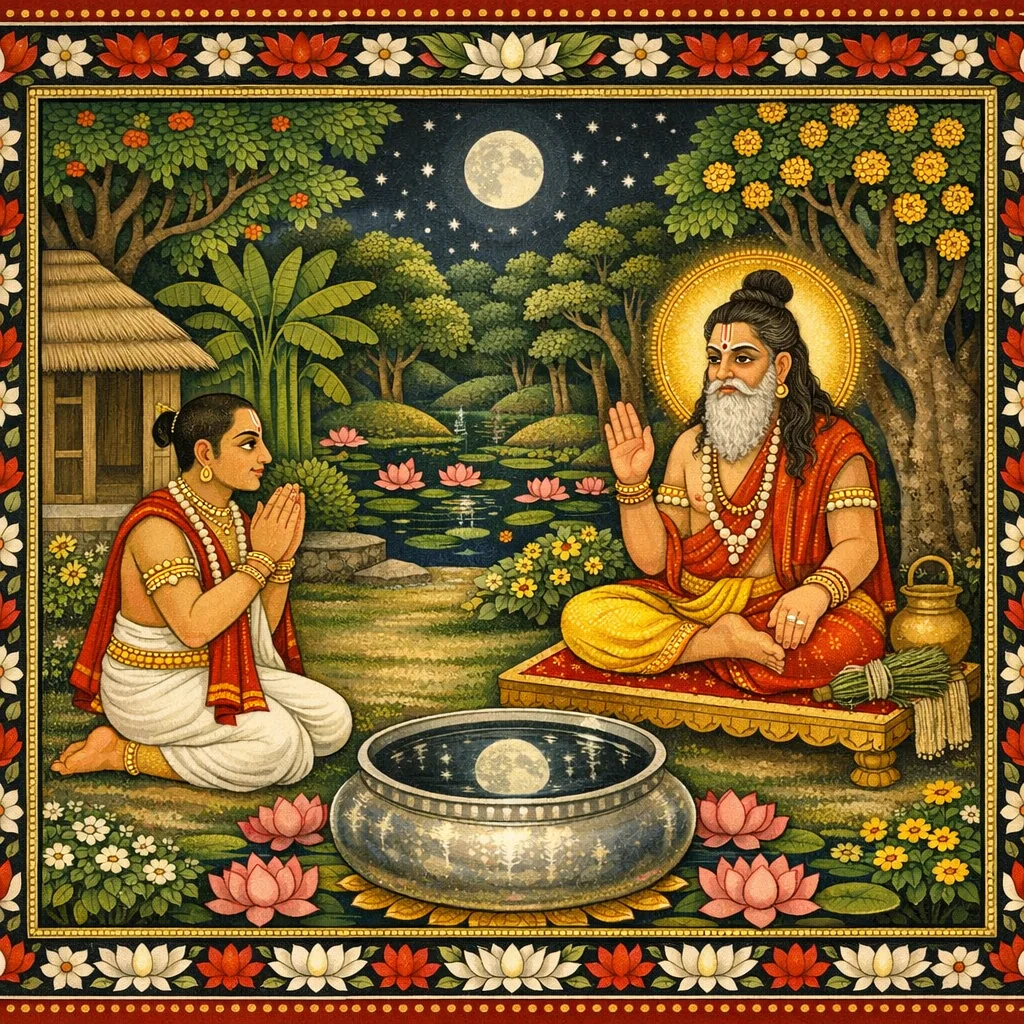
क्रीडायामुद्यमोऽर्भस्य कामश्चिक्रीडिषान्यत: । स्वतस्तृप्तस्य च कथं निवृत्तस्य सदान्यत: ॥ ३ ॥
Boys are enthusiastic to play with other boys or with various diversions because they are encouraged by desire. But there is no possibility of such desire for the Lord because He is self-satisfied and detached from everything at all times.
Verse 4
अस्राक्षीद्भगवान् विश्वं गुणमय्यात्ममायया । तया संस्थापयत्येतद्भूय: प्रत्यपिधास्यति ॥ ४ ॥
By His self-sheltered potency of the three modes of material nature, the Lord has caused the creation of this universe. By her He maintains the creation and conversely dissolves it, again and again.
Verse 5
देशत: कालतो योऽसाववस्थात: स्वतोऽन्यत: । अविलुप्तावबोधात्मा स युज्येताजया कथम् ॥ ५ ॥
The pure soul is pure consciousness and is never out of consciousness, either due to circumstances, time, situations, dreams or other causes. How then does he become engaged in nescience?
Verse 6
भगवानेक एवैष सर्वक्षेत्रेष्ववस्थित: । अमुष्य दुर्भगत्वं वा क्लेशो वा कर्मभि: कुत: ॥ ६ ॥
The Lord, as the Supersoul, is situated in every living being’s heart. Why then do the living entities’ activities result in misfortune and misery?
Verse 7
एतस्मिन्मे मनो विद्वन् खिद्यतेऽज्ञानसङ्कटे । तन्न: पराणुद विभो कश्मलं मानसं महत् ॥ ७ ॥
O great and learned one, my mind is greatly illusioned by the distress of this nescience, and I therefore request you to clear it up.
Verse 8
श्रीशुक उवाच स इत्थं चोदित: क्षत्त्रा तत्त्वजिज्ञासुना मुनि: । प्रत्याह भगवच्चित्त: स्मयन्निव गतस्मय: ॥ ८ ॥
Śrī Śukadeva Gosvāmī said: O King, Maitreya, being thus agitated by the inquisitive Vidura, at first seemed astonished, but then he replied to him without hesitation, since he was fully God conscious.
Verse 9
मैत्रेय उवाच सेयं भगवतो माया यन्नयेन विरुध्यते । ईश्वरस्य विमुक्तस्य कार्पण्यमुत बन्धनम् ॥ ९ ॥
Śrī Maitreya said: Certain conditioned souls put forward the theory that the Supreme Brahman, or the Personality of Godhead, is overcome by illusion, or māyā, and at the same time they maintain that He is unconditioned. This is against all logic.
Verse 10
यदर्थेन विनामुष्य पुंस आत्मविपर्यय: । प्रतीयत उपद्रष्टु: स्वशिरश्छेदनादिक: ॥ १० ॥
The living entity is in distress regarding his self-identity. He has no factual background, like a man who dreams that he sees his head cut off.
Verse 11
यथा जले चन्द्रमस: कम्पादिस्तत्कृतो गुण: । दृश्यतेऽसन्नपि द्रष्टुरात्मनोऽनात्मनो गुण: ॥ ११ ॥
As the moon reflected on water appears to the seer to tremble due to being associated with the quality of the water, so the self associated with matter appears to be qualified as matter.
Verse 12
स वै निवृत्तिधर्मेण वासुदेवानुकम्पया । भगवद्भक्तियोगेन तिरोधत्ते शनैरिह ॥ १२ ॥
But that misconception of self-identity can be diminished gradually by the mercy of the Personality of Godhead, Vāsudeva, through the process of devotional service to the Lord in the mode of detachment.
Verse 13
यदेन्द्रियोपरामोऽथ द्रष्ट्रात्मनि परे हरौ । विलीयन्ते तदा क्लेशा: संसुप्तस्येव कृत्स्नश: ॥ १३ ॥
When the senses are satisfied in the seer-Supersoul, the Personality of Godhead, and merge in Him, all miseries are completely vanquished, as after a sound sleep.
Verse 14
अशेषसंक्लेशशमं विधत्ते गुणानुवादश्रवणं मुरारे: । किं वा पुनस्तच्चरणारविन्दपरागसेवारतिरात्मलब्धा ॥ १४ ॥
Simply by chanting and hearing of the transcendental name, form, etc., of the Personality of Godhead, Śrī Kṛṣṇa, one can achieve the cessation of unlimited miserable conditions. Therefore what to speak of those who have attained attraction for serving the flavor of the dust of the Lord’s lotus feet?
Verse 15
विदुर उवाच संछिन्न: संशयो मह्यं तव सूक्तासिना विभो । उभयत्रापि भगवन्मनो मे सम्प्रधावति ॥ १५ ॥
Vidura said: O powerful sage, my lord, all my doubts about the Supreme Personality of Godhead and the living entities have now been removed by your convincing words. My mind is now perfectly entering into them.
Verse 16
साध्वेतद् व्याहृतं विद्वन्नात्ममायायनं हरे: । आभात्यपार्थं निर्मूलं विश्वमूलं न यद्बहि: ॥ १६ ॥
O learned sage, your explanations are very good, as they should be. Disturbances to the conditioned soul have no other basis than the movement of the external energy of the Lord.
Verse 17
यश्च मूढतमो लोके यश्च बुद्धे: परं गत: । तावुभौ सुखमेधेते क्लिश्यत्यन्तरितो जन: ॥ १७ ॥
Both the lowest of fools and he who is transcendental to all intelligence enjoy happiness, whereas persons between them suffer the material pangs.
Verse 18
अर्थाभावं विनिश्चित्य प्रतीतस्यापि नात्मन: । तां चापि युष्मच्चरणसेवयाहं पराणुदे ॥ १८ ॥
But, my dear sir, I am obliged to you because now I can understand that this material manifestation is without substance, although it appears real. I am confident that by serving your feet it will be possible for me to give up the false idea.
Verse 19
यत्सेवया भगवत: कूटस्थस्य मधुद्विष: । रतिरासो भवेत्तीव्र: पादयोर्व्यसनार्दन: ॥ १९ ॥
By serving the feet of the spiritual master, one is enabled to develop transcendental ecstasy in the service of the Personality of Godhead, who is the unchangeable enemy of the Madhu demon and whose service vanquishes one’s material distresses.
Verse 20
दुरापा ह्यल्पतपस: सेवा वैकुण्ठवर्त्मसु । यत्रोपगीयते नित्यं देवदेवो जनार्दन: ॥ २० ॥
Persons whose austerity is meager can hardly obtain the service of the pure devotees who are progressing on the path back to the kingdom of Godhead, the Vaikuṇṭhas. Pure devotees engage one hundred percent in glorifying the Supreme Lord, who is the Lord of the demigods and the controller of all living entities.
Verse 21
सृष्ट्वाग्रे महदादीनि सविकाराण्यनुक्रमात् । तेभ्यो विराजमुद्धृत्य तमनु प्राविशद्विभु: ॥ २१ ॥
After creating the total material energy, the mahat-tattva, and thereby manifesting the gigantic universal form with senses and sense organs, the Supreme Lord entered within it.
Verse 22
यमाहुराद्यं पुरुषं सहस्राङ्घ्र्यूरुबाहुकम् । यत्र विश्व इमे लोका: सविकाशं त आसते ॥ २२ ॥
The puruṣa incarnation lying on the Causal Ocean is called the original puruṣa in the material creations, and in His virāṭ form, in whom all the planets and their inhabitants live, He has many thousands of legs and hands.
Verse 23
यस्मिन् दशविध: प्राण: सेन्द्रियार्थेन्द्रियस्त्रिवृत् । त्वयेरितो यतो वर्णास्तद्विभूतीर्वदस्व न: ॥ २३ ॥
O great brāhmaṇa, you have told me that the gigantic virāṭ form and His senses, sense objects and ten kinds of life air exist with three kinds of life vigor. Now, if you will, kindly explain to me the different powers of the specific divisions.
Verse 24
यत्र पुत्रैश्च पौत्रैश्च नप्तृभि: सह गोत्रजै: । प्रजा विचित्राकृतय आसन् याभिरिदं ततम् ॥ २४ ॥
O my lord, I think that the process manifest in the forms of sons, grandsons and family members has spread all over the universe in different varieties and species.
Verse 25
प्रजापतीनां स पतिश्चक्लृपे कान् प्रजापतीन् । सर्गांश्चैवानुसर्गांश्च मनून्मन्वन्तराधिपान् ॥ २५ ॥
O learned brāhmaṇa, please describe how the leader of all the demigods, namely the Prajāpati, Brahmā, decided to establish the various Manus, the heads of the ages. Please describe the Manus also, and please describe the descendants of those Manus.
Verse 26
उपर्यधश्च ये लोका भूमेर्मित्रात्मजासते । तेषां संस्थां प्रमाणं च भूर्लोकस्य च वर्णय ॥ २६ ॥
O son of Mitrā, kindly describe how the planets are situated above the earth as well as underneath it, and also please mention their measurement as well as that of the earthly planets.
Verse 27
तिर्यङ्मानुषदेवानां सरीसृपपतत्त्रिणाम् । वद न: सर्गसंव्यूहं गार्भस्वेदद्विजोद्भिदाम् ॥ २७ ॥
Also please describe the living beings under different classifications: subhumans, humans, those born of the embryo, those born of perspiration, those who are twice-born [birds], and the plants and vegetables. Kindly describe their generations and subdivisions also.
Verse 28
गुणावतारैर्विश्वस्य सर्गस्थित्यप्ययाश्रयम् । सृजत: श्रीनिवासस्य व्याचक्ष्वोदारविक्रमम् ॥ २८ ॥
Please also describe the incarnations of the material modes of nature — Brahmā, Viṣṇu and Maheśvara — and please describe the incarnation of the Supreme Personality of Godhead and His magnanimous activities.
Verse 29
वर्णाश्रमविभागांश्च रूपशीलस्वभावत: । ऋषीणां जन्मकर्माणि वेदस्य च विकर्षणम् ॥ २९ ॥
O great sage, kindly describe the divisions and orders of human society in terms of symptoms, behavior and the characteristics of mental equilibrium and sense control. Also please describe the births of the great sages and the categorical divisions of the Vedas.
Verse 30
यज्ञस्य च वितानानि योगस्य च पथ: प्रभो । नैष्कर्म्यस्य च सांख्यस्य तन्त्रं वा भगवत्स्मृतम् ॥ ३० ॥
Please also describe the expansions of different sacrifices and the paths of mystic powers, analytical study of knowledge, and devotional service, all with their respective regulations.
Verse 31
पाषण्डपथवैषम्यं प्रतिलोमनिवेशनम् । जीवस्य गतयो याश्च यावतीर्गुणकर्मजा: ॥ ३१ ॥
Please also describe the imperfections and contradictions of the faithless atheists, the situation of crossbreeding, and the movements of the living entities in various species of life according to their particular modes of nature and work.
Verse 32
धर्मार्थकाममोक्षाणां निमित्तान्यविरोधत: । वार्ताया दण्डनीतेश्च श्रुतस्य च विधिं पृथक् ॥ ३२ ॥
You may also describe the noncontradictory causes of religiosity, economic development, sense gratification and salvation and also the different means of livelihood and different processes of law and order as mentioned in the revealed scriptures.
Verse 33
श्राद्धस्य च विधिं ब्रह्मन् पितृणां सर्गमेव च । ग्रहनक्षत्रताराणां कालावयवसंस्थितिम् ॥ ३३ ॥
Please also explain the regulations for offering respects to the forefathers, the creation of the Pitṛloka, the time schedule in the planets, stars and luminaries, and their respective situations.
Verse 34
दानस्य तपसो वापि यच्चेष्टापूर्तयो: फलम् । प्रवासस्थस्य यो धर्मो यश्च पुंस उतापदि ॥ ३४ ॥
Please also describe the fruitive results of charity and penance and of digging reservoirs of water. Please describe the situation of persons who are away from home and also the duty of a man in an awkward position.
Verse 35
येन वा भगवांस्तुष्येद्धर्मयोनिर्जनार्दन: । सम्प्रसीदति वा येषामेतदाख्याहि मेऽनघ ॥ ३५ ॥
O sinless one, because the Personality of Godhead, the controller of all living entities, is the father of all religion and all those who are candidates for religious activities, kindly describe how He can be completely satisfied.
Verse 36
अनुव्रतानां शिष्याणां पुत्राणां च द्विजोत्तम । अनापृष्टमपि ब्रूयुर्गुरवो दीनवत्सला: ॥ ३६ ॥
O best among the brāhmaṇas, those who are spiritual masters are very kind to the needy. They are always kind to their followers, disciples and sons, and without being asked by them, the spiritual master describes all that is knowledge.
Verse 37
तत्त्वानां भगवंस्तेषां कतिधा प्रतिसंक्रम: । तत्रेमं क उपासीरन् क उ स्विदनुशेरते ॥ ३७ ॥
Please describe how many dissolutions there are for the elements of material nature and who survives after the dissolutions to serve the Lord while He is asleep.
Verse 38
पुरुषस्य च संस्थानं स्वरूपं वा परस्य च । ज्ञानं च नैगमं यत्तद्गुरुशिष्यप्रयोजनम् ॥ ३८ ॥
What are the truths regarding the living entities and the Supreme Personality of Godhead? What are their identities? What are the specific values in the knowledge in the Vedas, and what are the necessities for the spiritual master and his disciples?
Verse 39
निमित्तानि च तस्येह प्रोक्तान्यनघसूरिभि: । स्वतो ज्ञानं कुत: पुंसां भक्तिर्वैराग्यमेव वा ॥ ३९ ॥
Spotless devotees of the Lord have mentioned the source of such knowledge. How could one have knowledge of devotional service and detachment without the help of such devotees?
Verse 40
एतान्मे पृच्छत: प्रश्नान् हरे: कर्मविवित्सया । ब्रूहि मेऽज्ञस्य मित्रत्वादजया नष्टचक्षुष: ॥ ४० ॥
My dear sage, I have put all these questions before you with a view to knowing the pastimes of Hari, the Supreme Personality of Godhead. You are the friend of all, so kindly describe them for all those who have lost their vision.
Verse 41
सर्वे वेदाश्च यज्ञाश्च तपो दानानि चानघ । जीवाभयप्रदानस्य न कुर्वीरन् कलामपि ॥ ४१ ॥
O spotless one, your answers to all these questions will grant immunity from all material miseries. Such charity is greater than all Vedic charities, sacrifices, penances, etc.
Verse 42
श्रीशुक उवाच स इत्थमापृष्टपुराणकल्प: कुरुप्रधानेन मुनिप्रधान: । प्रवृद्धहर्षो भगवत्कथायां सञ्चोदितस्तं प्रहसन्निवाह ॥ ४२ ॥
Śrī Śukadeva Gosvāmī said: Thus the chief of the sages, who was always enthusiastic about describing topics regarding the Personality of Godhead, began to narrate the descriptive explanation of the Purāṇas, being so infused by Vidura. He was very much enlivened by speaking on the transcendental activities of the Lord.
Frequently Asked Questions
The Bhāgavata explains that Bhagavān remains avikāra (unchanged) while His external potency (māyā/guṇa-śakti) performs the functions of creation, maintenance, and dissolution. The Lord is the supreme cause and controller, but the transformations occur in prakṛti, not in His spiritual identity. Thus, the guṇas act under His supervision without compromising His transcendence.
Paramātmā’s presence does not force the jīva’s perception or choices; misery arises from avidyā—misidentifying the self with body-mind and guṇa-driven karma. Like a dream that feels real, the conditioned jīva suffers due to false identity and consequent action-reaction. Relief comes when the same indwelling Lord bestows mercy through bhakti, dissolving ignorance and restoring true self-understanding.
They illustrate that bondage is epistemic (a mistaken cognition) rather than a real defect in the soul. The dream analogy shows intense distress can occur without factual basis; the moon-reflection analogy shows the self appears to “tremble” or take on material qualities due to association with matter—just as the moon seems to tremble because water moves—while the moon itself is unaffected.
Śravaṇa and kīrtana—hearing and chanting the Lord’s names, forms, and qualities—performed in a mood of devotion and detachment, supported by service to the spiritual master and association with pure devotees. The chapter explicitly states that even chanting and hearing can end unlimited miserable conditions, and deeper attraction to the Lord’s service completes the cure.
Vidura asks for a comprehensive mapping of cosmology and dharma: the virāṭ/puruṣa structure, planetary systems and measurements, Manus and descendants, species classifications, guṇa-avatāras and divine incarnations, varṇāśrama, Vedic divisions, yajña, yoga/jñāna/bhakti regulations, atheistic contradictions, transmigration by guṇa and karma, Pitṛloka rites, time calculations, charity/penance results, and types of dissolution. This functions as an outline for the upcoming chapters, signaling a transition from resolving the māyā paradox to systematic exposition of universal order (sthāna) and governance.