Adhyaya 3
Uddhava Recalls Kṛṣṇa’s Mission: Earth’s Burden, Royal Dharma, and the Prelude to Dvārakā’s Withdrawal
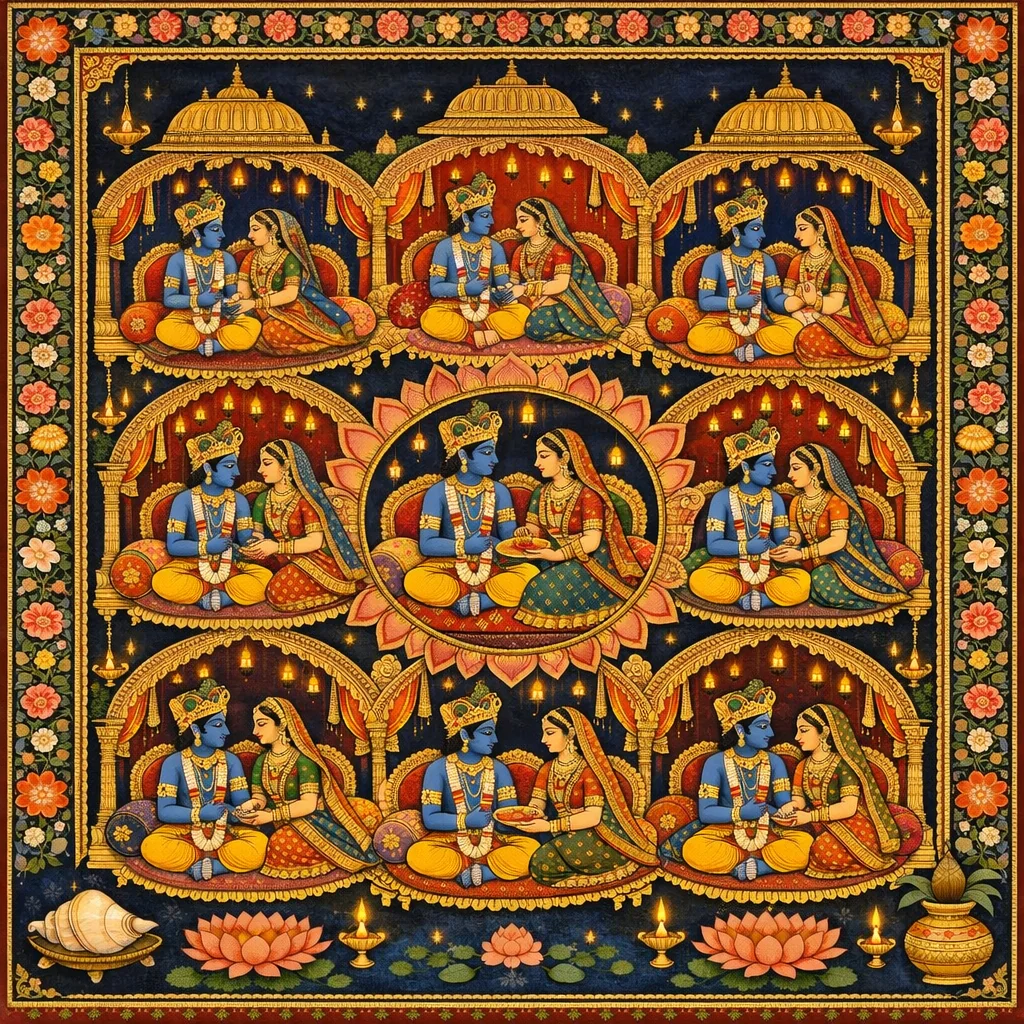
Continuing Vidura’s inquiry, Uddhava compresses Kṛṣṇa’s public mission into a theological timeline: the Lord removes oppressive powers (Kaṁsa and other asuras), displays omniscience and compassion (mastering the Vedas; reviving Sāndīpani’s son), and establishes dharmic order through marriages and protection of the distressed (Rukmiṇī, Nāgnijitī, the rescued princesses). He demonstrates divine sovereignty even within household life—expanding into many forms to honor each queen—while remaining detached, illustrating that transcendence can coexist with social duty. Uddhava then links the Kurukṣetra war to the Lord’s purpose of reducing the earth’s burden and highlights Kṛṣṇa’s concern that even the Yadu strength could become a future burden. The chapter moves toward the Lord’s planned withdrawal: a sage’s curse, the pilgrimage to Prabhāsa, and the Yadus’ acts of charity and ritual propriety, setting the narrative momentum for the dissolution of Dvārakā’s visible era in the chapters ahead.
Shlokas
Verse 1
उद्धव उवाच तत: स आगत्य पुरं स्वपित्रो- श्चिकीर्षया शं बलदेवसंयुत: । निपात्य तुङ्गाद्रिपुयूथनाथं हतं व्यकर्षद् व्यसुमोजसोर्व्याम् ॥ १ ॥
Śrī Uddhava said: Thereafter Lord Kṛṣṇa went to Mathurā City with Śrī Baladeva, and to please Their parents They dragged Kaṁsa, the leader of public enemies, down from his throne and killed him, pulling him along the ground with great strength.
Verse 2
सान्दीपने: सकृत्प्रोक्तं ब्रह्माधीत्य सविस्तरम् । तस्मै प्रादाद्वरं पुत्रं मृतं पञ्चजनोदरात् ॥ २ ॥
The Lord learned all the Vedas with their different branches simply by hearing them once from His teacher, Sāndīpani Muni, whom He rewarded by bringing back his dead son from the region of Yamaloka.
Verse 3
समाहुता भीष्मककन्यया ये श्रिय: सवर्णेन बुभूषयैषाम् । गान्धर्ववृत्त्या मिषतां स्वभागं जह्रे पदं मूर्ध्नि दधत्सुपर्ण: ॥ ३ ॥
Attracted by the beauty and fortune of Rukmiṇī, the daughter of King Bhīṣmaka, many great princes and kings assembled to marry her. But Lord Kṛṣṇa, stepping over the other hopeful candidates, carried her away as His own share, as Garuḍa carried away nectar.
Verse 4
ककुद्मिनोऽविद्धनसो दमित्वा स्वयंवरे नाग्नजितीमुवाह । तद्भग्नमानानपि गृध्यतोऽज्ञा- ञ्जघ्नेऽक्षत: शस्त्रभृत: स्वशस्त्रै: ॥ ४ ॥
By subduing seven bulls whose noses were not pierced, the Lord achieved the hand of Princess Nāgnijitī in the open competition to select her bridegroom. Although the Lord was victorious, His competitors asked the hand of the princess, and thus there was a fight. Well equipped with weapons, the Lord killed or wounded all of them, but He Himself was not hurt.
Verse 5
प्रियं प्रभुर्ग्राम्य इव प्रियाया विधित्सुरार्च्छद् द्युतरुं यदर्थे । वज्र्याद्रवत्तं सगणो रुषान्ध: क्रीडामृगो नूनमयं वधूनाम् ॥ ५ ॥
Just to please His dear wife, the Lord brought back the pārijāta tree from heaven, just as an ordinary husband would do. But Indra, the King of heaven, induced by his wives (henpecked as he was), ran after the Lord with full force to fight Him.
Verse 6
सुतं मृधे खं वपुषा ग्रसन्तं दृष्ट्वा सुनाभोन्मथितं धरित्र्या । आमन्त्रितस्तत्तनयाय शेषं दत्त्वा तदन्त:पुरमाविवेश ॥ ६ ॥
Narakāsura, the son of Dharitrī, the earth, tried to grasp the whole sky, and for this he was killed by the Lord in a fight. His mother then prayed to the Lord. This led to the return of the kingdom to the son of Narakāsura, and thus the Lord entered the house of the demon.
Verse 7
तत्राहृतास्ता नरदेवकन्या: कुजेन दृष्ट्वा हरिमार्तबन्धुम् । उत्थाय सद्यो जगृहु: प्रहर्ष- व्रीडानुरागप्रहितावलोकै: ॥ ७ ॥
There in the house of the demon, all the princesses kidnapped by Narakāsura at once became alert upon seeing the Lord, the friend of the distressed. They looked upon Him with eagerness, joy and shyness and offered to be His wives.
Verse 8
आसां मुहूर्त एकस्मिन्नानागारेषु योषिताम् । सविधं जगृहे पाणीननुरूप: स्वमायया ॥ ८ ॥
All those princesses were lodged in different apartments, and the Lord simultaneously assumed different bodily expansions exactly matching each and every princess. He accepted their hands in perfect rituals by His internal potency.
Verse 9
तास्वपत्यान्यजनयदात्मतुल्यानि सर्वत: । एकैकस्यां दश दश प्रकृतेर्विबुभूषया ॥ ९ ॥
Just to expand Himself according to His transcendental features, the Lord begot in each and every one of them ten offspring with exactly His own qualities.
Verse 10
कालमागधशाल्वादीननीकै रुन्धत: पुरम् । अजीघनत्स्वयं दिव्यं स्वपुंसां तेज आदिशत् ॥ १० ॥
Kālayavana, the King of Magadha and Sālva attacked the city of Mathurā, but when the city was encircled by their soldiers, the Lord refrained from killing them personally, just to show the power of His own men.
Verse 11
शम्बरं द्विविदं बाणं मुरं बल्वलमेव च । अन्यांश्च दन्तवक्रादीनवधीत्कांश्च घातयत् ॥ ११ ॥
Of kings like Śambara, Dvivida, Bāṇa, Mura, Balvala and many other demons, such as Dantavakra, some He killed Himself, and some He caused to be killed by others [Śrī Baladeva, etc.].
Verse 12
अथ ते भ्रातृपुत्राणां पक्षयो: पतितान्नृपान् । चचाल भू: कुरुक्षेत्रं येषामापततां बलै: ॥ १२ ॥
Then, O Vidura, the Lord caused all the kings, both the enemies and those on the side of your fighting nephews, to be killed in the Battle of Kurukṣetra. All those kings were so great and strong that the earth seemed to shake as they traversed the warfield.
Verse 13
सकर्णदु:शासनसौबलानां कुमन्त्रपाकेन हतश्रियायुषम् । सुयोधनं सानुचरं शयानं भग्नोरुमूर्व्यां न ननन्द पश्यन् ॥ १३ ॥
Duryodhana was bereft of his fortune and duration of life because of the intricacy of ill advice given by Karṇa, Duḥśāsana and Saubala. When he lay on the ground with his followers, his thighs broken although he was powerful, the Lord was not happy to see the scene.
Verse 14
कियान् भुवोऽयं क्षपितोरुभारो यद्द्रोणभीष्मार्जुनभीममूलै: । अष्टादशाक्षौहिणिको मदंशै- रास्ते बलं दुर्विषहं यदूनाम् ॥ १४ ॥
[After the end of the Battle of Kurukṣetra, the Lord said:] The abatement of the earth’s great burden, eighteen akṣauhiṇīs, has now been effected with the help of Droṇa, Bhīṣma, Arjuna and Bhīma. But what is this? There is still the great strength of the Yadu dynasty, born of Myself, which may be a more unbearable burden.
Verse 15
मिथो यदैषां भविता विवादो मध्वामदाताम्रविलोचनानाम् । नैषां वधोपाय इयानतोऽन्यो मय्युद्यतेऽन्तर्दधते स्वयं स्म ॥ १५ ॥
When they quarrel among themselves, influenced by intoxication, with their eyes red like copper because of drinking [madhu], then only will they disappear; otherwise, it will not be possible. On My disappearance, this incident will take place.
Verse 16
एवं सञ्चिन्त्य भगवान् स्वराज्ये स्थाप्य धर्मजम् । नन्दयामास सुहृद: साधूनां वर्त्म दर्शयन् ॥ १६ ॥
Lord Śrī Kṛṣṇa, thus thinking to Himself, established Mahārāja Yudhiṣṭhira in the position of supreme control of the world in order to show the ideal of administration on the path of piety.
Verse 17
उत्तरायां धृत: पूरोर्वंश: साध्वभिमन्युना । स वै द्रौण्यस्त्रसंप्लुष्ट: पुनर्भगवता धृत: ॥ १७ ॥
The embryo of Pūru’s descendant begotten by the great hero Abhimanyu in the womb of Uttarā, his wife, was burnt by the weapon of the son of Droṇa, but later he was again protected by the Lord.
Verse 18
अयाजयद्धर्मसुतमश्वमेधैस्त्रिभिर्विभु: । सोऽपि क्ष्मामनुजै रक्षन् रेमे कृष्णमनुव्रत: ॥ १८ ॥
The Supreme Lord induced the son of Dharma to perform three horse sacrifices, and Mahārāja Yudhiṣṭhira, constantly following Kṛṣṇa, the Personality of Godhead, protected and enjoyed the earth, assisted by his younger brothers.
Verse 19
भगवानपि विश्वात्मा लोकवेदपथानुग: । कामान् सिषेवे द्वार्वत्यामसक्त: सांख्यमास्थित: ॥ १९ ॥
Simultaneously, the Personality of Godhead enjoyed life in the city of Dvārakā, strictly in conformity with the Vedic customs of society. He was situated in detachment and knowledge, as enunciated by the Sāṅkhya system of philosophy.
Verse 20
स्निग्धस्मितावलोकेन वाचा पीयूषकल्पया । चरित्रेणानवद्येन श्रीनिकेतेन चात्मना ॥ २० ॥
He was there in His transcendental body, the residence of the goddess of fortune, with His usual gentle and sweetly smiling face, His nectarean words and His flawless character.
Verse 21
इमं लोकममुं चैव रमयन् सुतरां यदून् । रेमे क्षणदया दत्तक्षणस्त्रीक्षणसौहृद: ॥ २१ ॥
The Lord enjoyed His pastimes, both in this world and in other worlds [higher planets], specifically in the association of the Yadu dynasty. At leisure hours offered by night, He enjoyed the friendship of conjugal love with women.
Verse 22
तस्यैवं रममाणस्य संवत्सरगणान् बहून् । गृहमेधेषु योगेषु विराग: समजायत ॥ २२ ॥
The Lord was thus engaged in household life for many, many years, but at last His detachment from ephemeral sex life was fully manifested.
Verse 23
दैवाधीनेषु कामेषु दैवाधीन: स्वयं पुमान् । को विश्रम्भेत योगेन योगेश्वरमनुव्रत: ॥ २३ ॥
Every living entity is controlled by a supernatural force, and thus his sense enjoyment is also under the control of that supernatural force. No one, therefore, can put his faith in Lord Kṛṣṇa’s transcendental sense activities but one who has become a devotee of the Lord by rendering devotional service.
Verse 24
पुर्यां कदाचित्क्रीडद्भिर्यदुभोजकुमारकै: । कोपिता मुनय: शेपुर्भगवन्मतकोविदा: ॥ २४ ॥
Once upon a time, great sages were made angry by the sporting activities of the princely descendants of the Yadu and Bhoja dynasties, and thus, as desired by the Lord, the sages cursed them.
Verse 25
तत: कतिपयैर्मासैर्वृष्णिभोजान्धकादय: । ययु: प्रभासं संहृष्टा रथैर्देवविमोहिता: ॥ २५ ॥
A few months passed, and then, bewildered by Kṛṣṇa, all the descendants of Vṛṣṇi, Bhoja and Andhaka who were incarnations of demigods went to Prabhāsa, while those who were eternal devotees of the Lord did not leave but remained in Dvārakā.
Verse 26
तत्र स्नात्वा पितृन्देवानृषींश्चैव तदम्भसा । तर्पयित्वाथ विप्रेभ्यो गावो बहुगुणा ददु: ॥ २६ ॥
After arriving there, all of them took bath, and with the water of this place of pilgrimage they offered their respects to the forefathers, demigods and great sages and thus satisfied them. They gave cows to the brāhmaṇas in royal charity.
Verse 27
हिरण्यं रजतं शय्यां वासांस्यजिनकम्बलान् । यानं रथानिभान् कन्या धरां वृत्तिकरीमपि ॥ २७ ॥
The brāhmaṇas were not only given well-fed cows in charity, but also gold, gold coins, bedding, clothing, animal-skin seats, blankets, horses, elephants, girls and sufficient land for maintenance.
Verse 28
अन्नं चोरुरसं तेभ्यो दत्त्वा भगवदर्पणम् । गोविप्रार्थासव: शूरा: प्रणेमुर्भुवि मूर्धभि: ॥ २८ ॥
Thereafter they offered the brāhmaṇas highly delicious foodstuffs first offered to the Personality of Godhead and offered their respectful obeisances by touching their heads to the ground. They lived perfectly by protecting the cows and the brāhmaṇas.
Frequently Asked Questions
Bhāgavata narration presents this as līlā and loka-saṅgraha (teaching by example): the Lord honors the guru-śiṣya system, demonstrating that Vedic knowledge is traditionally received through śravaṇa (hearing) and disciplined service. By rewarding Sāndīpani through restoring his son, Kṛṣṇa also teaches gratitude (guru-dakṣiṇā) and His supremacy over death and cosmic jurisdictions such as Yamaloka.
The chapter explicitly qualifies that His sense activities cannot be judged materially except by one grounded in bhakti. Kṛṣṇa’s expansions to reciprocate with each queen are attributed to His internal potency (acintya-śakti), and His eventual manifest detachment confirms that He is never compelled by guṇas or karma. The Bhāgavata’s intent is theological: to show perfect reciprocity with devotees while remaining ātmārāma (self-satisfied) and the controller of māyā, not controlled by it.