Adhyaya 22
Manu Offers Devahūti to Kardama; The Sage Accepts with a Devotional Vow
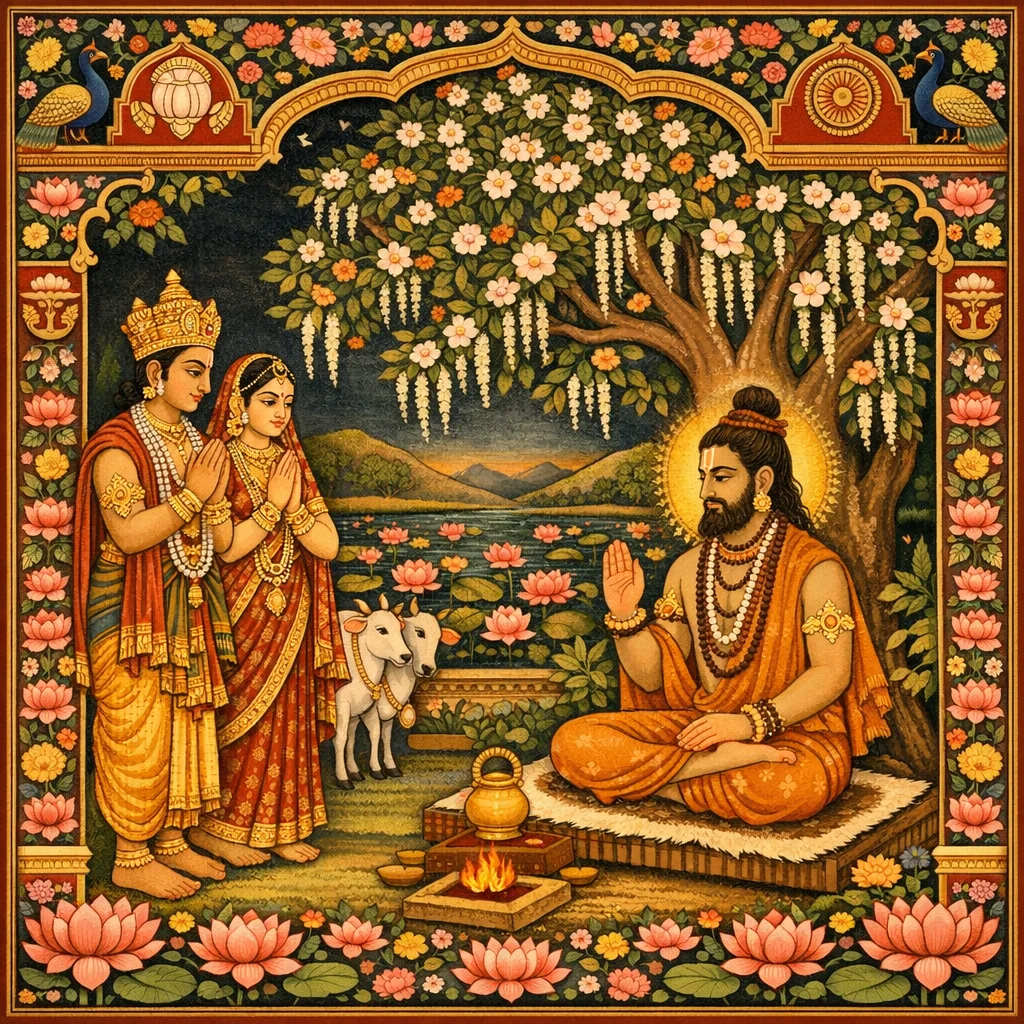
Following the prior glorification of Svāyambhuva Manu’s saintly rule and the king’s reception of Kardama Muni, the dialogue turns intimate and dynastic. Manu, humbled after hearing the sage’s assessment of royal duty, praises the brāhmaṇa–kṣatriya interdependence as divinely ordained protection (rakṣaṇa) and confesses a personal concern: affection for his daughter Devahūti. He petitions Kardama to accept her, citing her voluntary attraction upon hearing Nārada’s praise. Kardama agrees under Vedic propriety, extols Devahūti’s beauty, and sets a condition: after begetting offspring he will embrace the higher life of devotional service as taught by Viṣṇu, acknowledging the Supreme Lord as the ultimate authority and source of creation. The marriage is arranged with dowry and poignant parental separation. Manu returns to Barhiṣmatī, whose sanctity is tied to Varāha and kuśa grass, worships Viṣṇu, and rules in a Kṛṣṇa-conscious atmosphere—spending his vast manvantara lifespan in hearing and chanting. The chapter closes by transitioning back to Devahūti’s future flourishing, preparing for Kapila’s advent and teachings.
Shlokas
Verse 1
मैत्रेय उवाच एवमाविष्कृताशेषगुणकर्मोदयो मुनिम् । सव्रीड इव तं सम्राडुपारतमुवाच ह ॥ १ ॥
Śrī Maitreya said: After describing the greatness of the Emperor’s manifold qualities and activities, the sage became silent, and the Emperor, feeling modesty, addressed him as follows.
Verse 2
मनुरुवाच ब्रह्मासृजत्स्वमुखतो युष्मानात्मपरीप्सया । छन्दोमयस्तपोविद्यायोगयुक्तानलम्पटान् ॥ २ ॥
Manu replied: To expand himself in Vedic knowledge, Lord Brahmā, the personified Veda, from his face created you, the brāhmaṇas, who are full of austerity, knowledge and mystic power and are averse to sense gratification.
Verse 3
तत्त्राणायासृजच्चास्मान् दो:सहस्रात्सहस्रपात् । हृदयं तस्य हि ब्रह्म क्षत्रमङ्गं प्रचक्षते ॥ ३ ॥
For the protection of the brāhmaṇas, the thousand-legged Supreme Being created us, the kṣatriyas, from His thousand arms. Hence the brāhmaṇas are said to be His heart and the kṣatriyas His arms.
Verse 4
अतो ह्यन्योन्यमात्मानं ब्रह्म क्षत्रं च रक्षत: । रक्षति स्माव्ययो देव: स य: सदसदात्मक: ॥ ४ ॥
That is why the brāhmaṇas and kṣatriyas protect each other, as well as themselves; and the Lord Himself, who is both the cause and effect and is yet immutable, protects them through each other.
Verse 5
तव सन्दर्शनादेवच्छिन्ना मे सर्वसंशया: । यत्स्वयं भगवान् प्रीत्या धर्ममाह रिरक्षिषो: ॥ ५ ॥
Now I have resolved all my doubts simply by meeting you, for Your Lordship has very kindly and clearly explained the duty of a king who desires to protect his subjects.
Verse 6
दिष्टया मे भगवान् दृष्टो दुर्दर्शो योऽकृतात्मनाम् । दिष्टया पादरज: स्पृष्टं शीर्ष्णा मे भवत: शिवम् ॥ ६ ॥
It is my good fortune that I have been able to see you, for you cannot easily be seen by persons who have not subdued the mind or controlled the senses. I am all the more fortunate to have touched with my head the blessed dust of your feet.
Verse 7
दिष्टया त्वयानुशिष्टोऽहं कृतश्चानुग्रहो महान् । अपावृतै: कर्णरन्ध्रैर्जुष्टा दिष्ट्योशतीर्गिर: ॥ ७ ॥
I have fortunately been instructed by you, and thus great favor has been bestowed upon me. I thank God that I have listened with open ears to your pure words.
Verse 8
स भवान्दुहितृस्नेहपरिक्लिष्टात्मनो मम । श्रोतुमर्हसि दीनस्य श्रावितं कृपया मुने ॥ ८ ॥
O great sage, graciously be pleased to listen to the prayer of my humble self, for my mind is troubled by affection for my daughter.
Verse 9
प्रियव्रतोत्तानपदो: स्वसेयं दुहिता मम । अन्विच्छति पतिं युक्तं वय: शीलगुणादिभि: ॥ ९ ॥
My daughter is the sister of Priyavrata and Uttānapāda. She is seeking a suitable husband in terms of age, character and good qualities.
Verse 10
यदा तु भवत: शीलश्रुतरूपवयोगुणान् । अशृणोन्नारदादेषा त्वय्यासीत्कृतनिश्चया ॥ १० ॥
The moment she heard from the sage Nārada of your noble character, learning, beautiful appearance, youth and other virtues, she fixed her mind upon you.
Verse 11
तत्प्रतीच्छ द्विजाग्र्येमां श्रद्धयोपहृतां मया । सर्वात्मनानुरूपां ते गृहमेधिषु कर्मसु ॥ ११ ॥
Therefore please accept her, O chief of the brāhmaṇas, for I offer her with faith and she is in every respect fit to be your wife and take charge of your household duties.
Verse 12
उद्यतस्य हि कामस्य प्रतिवादो न शस्यते । अपि निर्मुक्तसङ्गस्य कामरक्तस्य किं पुन: ॥ १२ ॥
To deny an offering that has come of itself is not commendable even for one absolutely free from all attachment, much less one addicted to sensual pleasure.
Verse 13
य उद्यतमनादृत्य कीनाशमभियाचते । क्षीयते तद्यश: स्फीतं मानश्चावज्ञया हत: ॥ १३ ॥
One who rejects an offering that comes of its own accord but later begs a boon from a miser thus loses his widespread reputation, and his pride is humbled by the neglectful behavior of others.
Verse 14
अहं त्वाशृणवं विद्वन् विवाहार्थं समुद्यतम् । अतस्त्वमुपकुर्वाण: प्रत्तां प्रतिगृहाण मे ॥ १४ ॥
Svāyambhuva Manu continued: O wise man, I heard that you were prepared to marry. Please accept her hand, which is being offered to you by me, since you have not taken a vow of perpetual celibacy.
Verse 15
ऋषिरुवाच बाढमुद्वोढुकामोऽहमप्रत्ता च तवात्मजा । आवयोरनुरूपोऽसावाद्यो वैवाहिको विधि: ॥ १५ ॥
The great sage replied: Certainly I have a desire to marry, and your daughter has not yet married or given her word to anyone. Therefore our marriage according to the Vedic system can take place.
Verse 16
काम: स भूयान्नरदेव तेऽस्या: पुत्र्या: समाम्नायविधौ प्रतीत: । क एव ते तनयां नाद्रियेत स्वयैव कान्त्या क्षिपतीमिव श्रियम् ॥ १६ ॥
Let your daughter’s desire for marriage, which is recognized in the Vedic scriptures, be fulfilled. Who would not accept her hand? She is so beautiful that by her bodily luster alone she excels the beauty of her ornaments.
Verse 17
यां हर्म्यपृष्ठे क्वणदङ्घ्रिशोभां विक्रीडतीं कन्दुकविह्वलाक्षीम् । विश्वावसुर्न्यपतत्स्वाद्विमाना- द्विलोक्य सम्मोहविमूढचेता: ॥ १७ ॥
I have heard that Viśvāvasu, the great Gandharva, his mind stupefied with infatuation, fell from his airplane after seeing your daughter playing with a ball on the roof of the palace, for she was indeed beautiful with her tinkling ankle bells and her eyes moving to and fro.
Verse 18
तां प्रार्थयन्तीं ललनाललाम- मसेवितश्रीचरणैरदृष्टाम् । वत्सां मनोरुच्चपद: स्वसारं को नानुमन्येत बुधोऽभियाताम् ॥ १८ ॥
What wise man would not welcome her, the very ornament of womanhood, the beloved daughter of Svāyambhuva Manu and sister of Uttānapāda? Those who have not worshiped the gracious feet of the goddess of fortune cannot even perceive her, yet she has come of her own accord to seek my hand.
Verse 19
अतो भजिष्ये समयेन साध्वीं यावत्तेजो बिभृयादात्मनो मे । अतो धर्मान् पारमहंस्यमुख्यान् शुक्लप्रोक्तान् बहु मन्येऽविहिंस्रान् ॥ १९ ॥
Therefore I shall accept this chaste girl as my wife, on the condition that after she bears semen from my body, I shall accept the life of devotional service accepted by the most perfect human beings. That process was described by Lord Viṣṇu. It is free from envy.
Verse 20
यतोऽभवद्विश्वमिदं विचित्रं संस्थास्यते यत्र च वावतिष्ठते । प्रजापतीनां पतिरेष मह्यं परं प्रमाणं भगवाननन्त: ॥ २० ॥
The highest authority for me is the unlimited Supreme Personality of Godhead, from whom this wonderful creation emanates and in whom its sustenance and dissolution rest. He is the origin of all Prajāpatis, the personalities meant to produce living entities in this world.
Verse 21
मैत्रेय उवाच स उग्रधन्वन्नियदेवाबभाषे आसीच्च तूष्णीमरविन्दनाभम् । धियोपगृह्णन् स्मितशोभितेन मुखेन चेतो लुलुभे देवहूत्या: ॥ २१ ॥
Śrī Maitreya said: O great warrior Vidura, the sage Kardama said this much only and then became silent, thinking of his worshipable Lord Viṣṇu, who has a lotus on His navel. As he silently smiled, his face captured the mind of Devahūti, who began to meditate upon the great sage.
Verse 22
सोऽनुज्ञात्वा व्यवसितं महिष्या दुहितु: स्फुटम् । तस्मै गुणगणाढ्याय ददौ तुल्यां प्रहर्षित: ॥ २२ ॥
After having unmistakably known the decision of the Queen, as well as that of Devahūti, the Emperor most gladly gave his daughter to the sage, whose host of virtues was equaled by hers.
Verse 23
शतरूपा महाराज्ञी पारिबर्हान्महाधनान् । दम्पत्यो: पर्यदात्प्रीत्या भूषावास: परिच्छदान् ॥ २३ ॥
Empress Śatarūpā lovingly gave most valuable presents, suitable for the occasion, such as jewelry, clothes and household articles, in dowry to the bride and bridegroom.
Verse 24
प्रत्तां दुहितरं सम्राट् सदृक्षाय गतव्यथ: । उपगुह्य च बाहुभ्यामौत्कण्ठ्योन्मथिताशय: ॥ २४ ॥
Thus relieved of his responsibility by handing over his daughter to a suitable man, Svāyambhuva Manu, his mind agitated by feelings of separation, embraced his affectionate daughter with both his arms.
Verse 25
अशक्नुवंस्तद्विरहं मुञ्चन् बाष्पकलां मुहु: । आसिञ्चदम्ब वत्सेति नेत्रोदैर्दुहितु: शिखा: ॥ २५ ॥
The Emperor was unable to bear the separation of his daughter. Therefore tears poured from his eyes again and again, drenching his daughter’s head as he cried, “My dear mother! My dear daughter!”
Verse 26
आमन्त्र्य तं मुनिवरमनुज्ञात: सहानुग: । प्रतस्थे रथमारुह्य सभार्य: स्वपुरं नृप: ॥ २६ ॥ उभयोऋर्षिकुल्याया: सरस्वत्या: सुरोधसो: । ऋषीणामुपशान्तानां पश्यन्नाश्रमसम्पद: ॥ २७ ॥
After asking and obtaining the great sage’s permission to leave, the monarch mounted his chariot with his wife and started for his capital, followed by his retinue. Along the way he saw the prosperity of the tranquil seers’ beautiful hermitages on both the charming banks of the Sarasvatī, the river so agreeable to saintly persons.
Verse 27
आमन्त्र्य तं मुनिवरमनुज्ञात: सहानुग: । प्रतस्थे रथमारुह्य सभार्य: स्वपुरं नृप: ॥ २६ ॥ उभयोऋर्षिकुल्याया: सरस्वत्या: सुरोधसो: । ऋषीणामुपशान्तानां पश्यन्नाश्रमसम्पद: ॥ २७ ॥
After asking and obtaining the great sage’s permission to leave, the monarch mounted his chariot with his wife and started for his capital, followed by his retinue. Along the way he saw the prosperity of the tranquil seers’ beautiful hermitages on both the charming banks of the Sarasvatī, the river so agreeable to saintly persons.
Verse 28
तमायान्तमभिप्रेत्य ब्रह्मावर्तात्प्रजा: पतिम् । गीतसंस्तुतिवादित्रै: प्रत्युदीयु: प्रहर्षिता: ॥ २८ ॥
Overjoyed to know of his arrival, his subjects came forth from Brahmāvarta to greet their returning lord with songs, prayers and musical instruments.
Verse 29
बर्हिष्मती नाम पुरी सर्वसम्पत्समन्विता । न्यपतन् यत्र रोमाणि यज्ञस्याङ्गं विधुन्वत: ॥ २९ ॥ कुशा: काशास्त एवासन् शश्वद्धरितवर्चस: । ऋषयो यै: पराभाव्य यज्ञघ्नान् यज्ञमीजिरे ॥ ३० ॥
The city of Barhiṣmatī, rich in all kinds of wealth, was so called because Lord Viṣṇu’s hair dropped there from His body when He manifested Himself as Lord Boar. As He shook His body, this very hair fell and turned into blades of evergreen kuśa grass and kāśa [another kind of grass used for mats], by means of which the sages worshiped Lord Viṣṇu after defeating the demons who had interfered with the performance of their sacrifices.
Verse 30
बर्हिष्मती नाम पुरी सर्वसम्पत्समन्विता । न्यपतन् यत्र रोमाणि यज्ञस्याङ्गं विधुन्वत: ॥ २९ ॥ कुशा: काशास्त एवासन् शश्वद्धरितवर्चस: । ऋषयो यै: पराभाव्य यज्ञघ्नान् यज्ञमीजिरे ॥ ३० ॥
The city of Barhiṣmatī, rich in all kinds of wealth, was so called because Lord Viṣṇu’s hair dropped there from His body when He manifested Himself as Lord Boar. As He shook His body, this very hair fell and turned into blades of evergreen kuśa grass and kāśa [another kind of grass used for mats], by means of which the sages worshiped Lord Viṣṇu after defeating the demons who had interfered with the performance of their sacrifices.
Verse 31
कुशकाशमयं बर्हिरास्तीर्य भगवान्मनु: । अयजद्यज्ञपुरुषं लब्धा स्थानं यतो भुवम् ॥ ३१ ॥
Manu spread a seat of kuśas and kāśas and worshiped the Lord, the Personality of Godhead, by whose grace he had obtained the rule of the terrestrial globe.
Verse 32
बर्हिष्मतीं नाम विभुर्यां निर्विश्य समावसत् । तस्यां प्रविष्टो भवनं तापत्रयविनाशनम् ॥ ३२ ॥
Having entered the city of Barhiṣmatī, in which he had previously lived, Manu entered his palace, which was filled with an atmosphere that eradicated the three miseries of material existence.
Verse 33
सभार्य: सप्रज: कामान् बुभुजेऽन्याविरोधत: । सङ्गीयमानसत्कीर्ति: सस्त्रीभि: सुरगायकै: । प्रत्यूषेष्वनुबद्धेन हृदा शृण्वन् हरे: कथा: ॥ ३३ ॥
Emperor Svāyambhuva Manu enjoyed life with his wife and subjects and fulfilled his desires without being disturbed by unwanted principles contrary to the process of religion. Celestial musicians and their wives sang in chorus about the pure reputation of the Emperor, and early in the morning, every day, he used to listen to the pastimes of the Supreme Personality of Godhead with a loving heart.
Verse 34
निष्णातं योगमायासु मुनिं स्वायम्भुवं मनुम् । यदाभ्रंशयितुं भोगा न शेकुर्भगवत्परम् ॥ ३४ ॥
Thus Svāyambhuva Manu was a saintly king. Although absorbed in material happiness, he was not dragged to the lowest grade of life, for he always enjoyed his material happiness in a Kṛṣṇa conscious atmosphere.
Verse 35
अयातयामास्तस्यासन् यामा:स्वान्तरयापना: । शृण्वतो ध्यायतो विष्णो: कुर्वतो ब्रुवत: कथा: ॥ ३५ ॥
Consequently, although his duration of life gradually came to an end, his long life, consisting of a Manvantara era, was not spent in vain, since he ever engaged in hearing, contemplating, writing down and chanting the pastimes of the Lord.
Verse 36
स एवं स्वान्तरं निन्ये युगानामेकसप्ततिम् । वासुदेवप्रसङ्गेन परिभूतगतित्रय: ॥ ३६ ॥
He passed his time, which lasted seventy-one cycles of the four ages [71 × 4,320,000 years], always thinking of Vāsudeva and always engaged in matters regarding Vāsudeva. Thus he transcended the three destinations.
Verse 37
शारीरा मानसा दिव्या वैयासे ये च मानुषा: । भौतिकाश्च कथं क्लेशा बाधन्ते हरिसंश्रयम् ॥ ३७ ॥
Therefore, O Vidura, how can persons completely under the shelter of Lord Kṛṣṇa in devotional service be put into miseries pertaining to the body, the mind, nature, and other men and living creatures?
Verse 38
य: पृष्टो मुनिभि: प्राह धर्मान्नानाविदाञ्छुभान् । नृणां वर्णाश्रमाणां च सर्वभूतहित: सदा ॥ ३८ ॥
In reply to questions asked by certain sages, he [Svāyambhuva Manu], out of compassion for all living entities, taught the diverse sacred duties of men in general and the different varṇas and āśramas.
Verse 39
एतत्त आदिराजस्य मनोश्चरितमद्भुतम् । वर्णितं वर्णनीयस्य तदपत्योदयं शृणु ॥ ३९ ॥
I have spoken to you of the wonderful character of Svāyambhuva Manu, the original king, whose reputation is worthy of description. Please hear as I speak of the flourishing of his daughter Devahūti.
Frequently Asked Questions
Manu frames social order as a divinely rooted organism: brāhmaṇas embody spiritual intelligence, austerity, and Vedic authority (the “heart”), while kṣatriyas embody protective power and governance (the “arms”). The point is rakṣaṇa—mutual protection—where knowledge guides power and power safeguards knowledge, preventing both anarchy and tyranny under the Lord’s overarching sovereignty.
Kardama accepts marriage as a regulated Vedic duty (gṛhastha-dharma) aimed at producing worthy progeny, but he explicitly conditions it with a post-progeny transition to dedicated devotional life. The chapter presents household life not as an end in itself but as a stage that can be spiritually complete when subordinated to bhakti and the Lord’s purpose.
Devahūti is Svāyambhuva Manu’s daughter and the future mother of Lord Kapila. Her marriage to Kardama establishes the lineage through which Kapila appears to teach devotional Sāṅkhya, making this episode a pivotal narrative bridge from royal dharma and manvantara history to philosophical liberation-teachings grounded in bhakti.
Barhiṣmatī is sacralized by a Varāha-līlā memory: Viṣṇu’s hairs are described as becoming kuśa and kāśa grasses used in sacrifice. The passage ties geography to theology—tīrtha identity is anchored in divine intervention—while also highlighting how Vedic ritual implements are ultimately sourced in the Lord, reinforcing devotion as the root of dharma.