Adhyaya 20
Secondary Creation Begins: Brahmā’s Productions, the Guṇas, and the Emergence of Orders of Beings
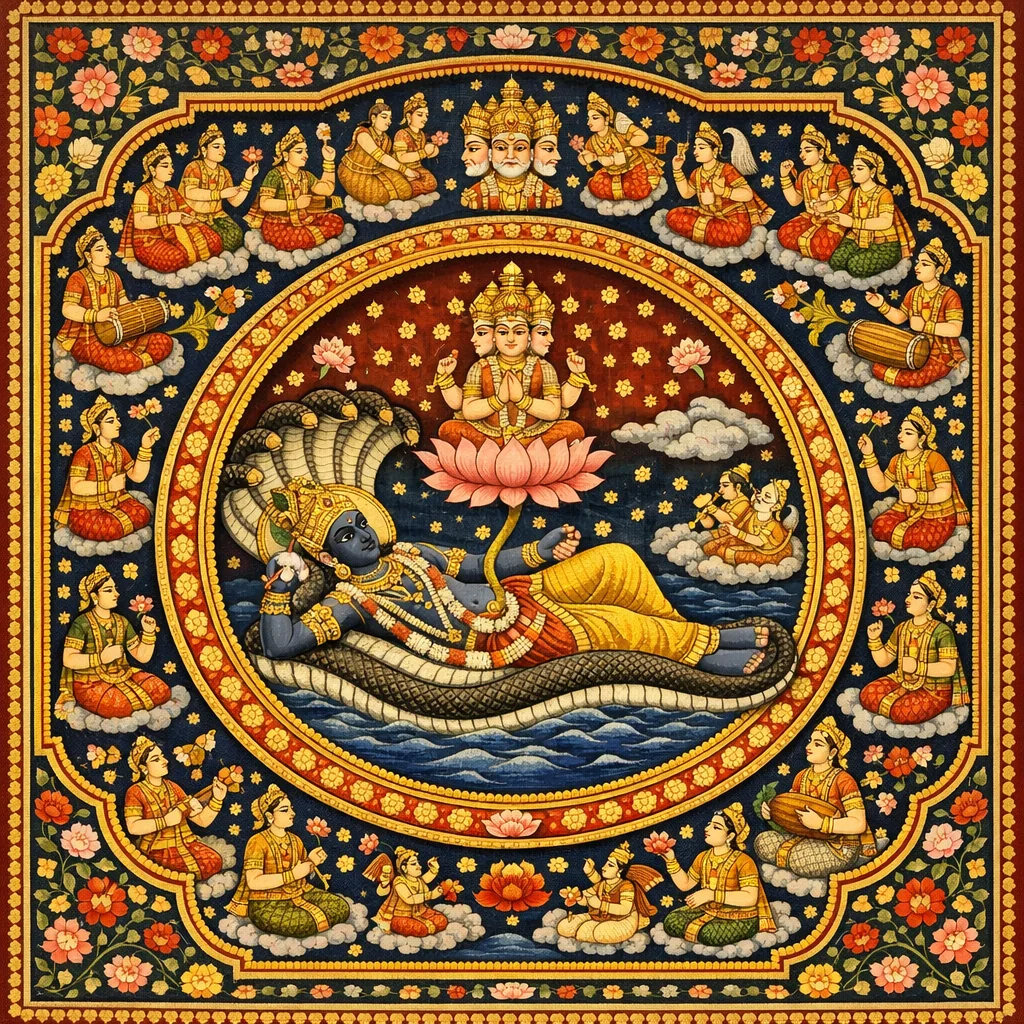
The chapter opens with Śaunaka urging Sūta to continue the Vidura–Maitreya narration, praising hearing as purifying like Gaṅgā-snān. Vidura, having heard the Varāha-līlā, presses forward: after Brahmā evolves the Prajāpatis, how does creation proceed—individually, with wives, or collectively? Maitreya answers by outlining the cosmological sequence: agitation of the guṇas by kāla, Mahā-Viṣṇu, and jīva-karma produces the elements; from mahat evolves tri-fold ahaṅkāra; the elements combine by the Lord’s energy into the cosmic egg; the Lord enters as Garbhodakaśāyī Viṣṇu; from His navel arises the lotus and Brahmā, who receives inner guidance to recreate. Brahmā’s subsequent creations unfold through casting off bodies that become night, twilight, and other conditions, while various classes (Yakṣas/Rākṣasas, Devas, Asuras, Gandharvas/Apsarās, ghosts, Pitṛs, Siddhas, etc.) arise in alignment with guṇic tendencies. The chapter sets up the next phase: stabilized human order (Manus) and the emergence of ṛṣis to accelerate creation and dharma.
Shlokas
Verse 1
शौनक उवाच महीं प्रतिष्ठामध्यस्य सौते स्वायम्भुवो मनु: । कान्यन्वतिष्ठद् द्वाराणि मार्गायावरजन्मनाम् ॥ १ ॥
Śrī Śaunaka inquired: O Sūta Gosvāmī, after the earth was again situated in its orbit, what did Svāyambhuva Manu do to show the path of liberation to persons who were to take birth later on?
Verse 2
क्षत्ता महाभागवत: कृष्णस्यैकान्तिक: सुहृत् । यस्तत्याजाग्रजं कृष्णे सापत्यमघवानिति ॥ २ ॥
Śaunaka Ṛṣi inquired about Vidura, who was a great devotee and friend of Lord Kṛṣṇa and who gave up the company of his elder brother because the latter, along with his sons, played tricks against the desires of the Lord.
Verse 3
द्वैपायनादनवरो महित्वे तस्य देहज: । सर्वात्मना श्रित: कृष्णं तत्परांश्चाप्यनुव्रत: ॥ ३ ॥
Vidura was born from the body of Vedavyāsa and was not less than he. Thus he accepted the lotus feet of Kṛṣṇa wholeheartedly and was attached to His devotees.
Verse 4
किमन्वपृच्छन्मैत्रेयं विरजास्तीर्थसेवया । उपगम्य कुशावर्त आसीनं तत्त्ववित्तमम् ॥ ४ ॥
Vidura was purified of all passion by wandering in sacred places, and at last he reached Hardwar, where he met the great sage who knew the science of spiritual life, and he inquired from him. Śaunaka Ṛṣi therefore asked: What more did Vidura inquire from Maitreya?
Verse 5
तयो: संवदतो: सूत प्रवृत्ता ह्यमला: कथा: । आपो गाङ्गा इवाघघ्नीर्हरे: पादाम्बुजाश्रया: ॥ ५ ॥
Śaunaka inquired about the conversation between Vidura and Maitreya: There must have been many narrations of the spotless pastimes of the Lord. The hearing of such narrations is exactly like bathing in the water of the Ganges, for it can free one from all sinful reactions.
Verse 6
ता न: कीर्तय भद्रं ते कीर्तन्योदारकर्मण: । रसज्ञ: को नु तृप्येत हरिलीलामृतं पिबन् ॥ ६ ॥
O Sūta Gosvāmī, all good fortune to you! Please narrate the activities of the Lord, which are all magnanimous and worth glorifying. What sort of devotee can be satiated by hearing the nectarean pastimes of the Lord?
Verse 7
एवमुग्रश्रवा: पृष्ट ऋषिभिर्नैमिषायनै: । भगवत्यर्पिताध्यात्मस्तानाह श्रूयतामिति ॥ ७ ॥
On being asked to speak by the great sages of Naimiṣāraṇya, the son of Romaharṣaṇa, Sūta Gosvāmī, whose mind was absorbed in the transcendental pastimes of the Lord, said: Please hear what I shall now speak.
Verse 8
सूत उवाच हरेर्धृतक्रोडतनो: स्वमायया निशम्य गोरुद्धरणं रसातलात् । लीलां हिरण्याक्षमवज्ञया हतं सञ्जातहर्षो मुनिमाह भारत: ॥ ८ ॥
Sūta Gosvāmī continued: Vidura, the descendant of Bharata, was delighted to hear the story of the Lord, who, having assumed by His own divine potency the form of a boar, had enacted the sport of lifting the earth from the bottom of the ocean and indifferently killing the demon Hiraṇyākṣa. Vidura then spoke to the sage as follows.
Verse 9
विदुर उवाच प्रजापतिपति: सृष्ट्वा प्रजासर्गे प्रजापतीन् । किमारभत मे ब्रह्मन् प्रब्रूह्यव्यक्तमार्गवित् ॥ ९ ॥
Vidura said: Since you know of matters inconceivable to us, tell me, O holy sage, what did Brahmā do to create living beings after evolving the Prajāpatis, the progenitors of living beings?
Verse 10
ये मरीच्यादयो विप्रा यस्तु स्वायम्भुवो मनु: । ते वै ब्रह्मण आदेशात्कथमेतदभावयन् ॥ १० ॥
Vidura inquired: How did the Prajāpatis [such progenitors of living entities as Marīci and Svāyambhuva Manu] create according to the instruction of Brahmā, and how did they evolve this manifested universe?
Verse 11
सद्वितीया: किमसृजन् स्वतन्त्रा उत कर्मसु । आहोस्वित्संहता: सर्व इदं स्म समकल्पयन् ॥ ११ ॥
Did they evolve the creation in conjunction with their respective wives, did they remain independent in their action, or did they all jointly produce it?
Verse 12
मैत्रेय उवाच दैवेन दुर्वितर्क्येण परेणानिमिषेण च । जातक्षोभाद्भगवतो महानासीद् गुणत्रयात् ॥ १२ ॥
Maitreya said: When the equilibrium of the combination of the three modes of nature was agitated by the unseen activity of the living entity, by Mahā-Viṣṇu and by the force of time, the total material elements were produced.
Verse 13
रज:प्रधानान्महतस्त्रिलिङ्गो दैवचोदितात् । जात: ससर्ज भूतादिर्वियदादीनि पञ्चश: ॥ १३ ॥
As impelled by the destiny of the jīva, the false ego, which is of three kinds, evolved from the mahat-tattva, in which the element of rajas predominates. From the ego, in turn, evolved many groups of five principles.
Verse 14
तानि चैकैकश: स्रष्टुमसमर्थानि भौतिकम् । संहत्य दैवयोगेन हैममण्डमवासृजन् ॥ १४ ॥
Separately unable to produce the material universe, they combined with the help of the energy of the Supreme Lord and were able to produce a shining egg.
Verse 15
सोऽशयिष्टाब्धिसलिले आण्डकोशो निरात्मक: । साग्रं वै वर्षसाहस्रमन्ववात्सीत्तमीश्वर: ॥ १५ ॥
For over one thousand years the shiny egg lay on the waters of the Causal Ocean in the lifeless state. Then the Lord entered it as Garbhodakaśāyī Viṣṇu.
Verse 16
तस्य नाभेरभूत्पद्मं सहस्रार्कोरुदीधिति । सर्वजीवनिकायौको यत्र स्वयमभूत्स्वराट् ॥ १६ ॥
From the navel of the Personality of Godhead Garbhodakaśāyī Viṣṇu sprouted a lotus flower effulgent like a thousand blazing suns. This lotus flower is the reservoir of all conditioned souls, and the first living entity who came out of the lotus flower was the omnipotent Brahmā
Verse 17
सोऽनुविष्टो भगवता य: शेते सलिलाशये । लोकसंस्थां यथापूर्वं निर्ममे संस्थया स्वया ॥ १७ ॥
When that Supreme Personality of Godhead who is lying on the Garbhodaka Ocean entered the heart of Brahmā, Brahmā brought his intelligence to bear, and with the intelligence invoked he began to create the universe as it was before.
Verse 18
ससर्ज च्छाययाविद्यां पञ्चपर्वाणमग्रत: । तामिस्रमन्धतामिस्रं तमो मोहो महातम: ॥ १८ ॥
First of all, Brahmā created from his shadow the coverings of ignorance of the conditioned souls. They are five in number and are called tāmisra, andha-tāmisra, tamas, moha and mahā-moha.
Verse 19
विससर्जात्मन: कायं नाभिनन्दंस्तमोमयम् । जगृहुर्यक्षरक्षांसि रात्रिं क्षुत्तृट्समुद्भवाम् ॥ १९ ॥
Out of disgust, Brahmā threw off the body of ignorance, and taking this opportunity, Yakṣas and Rākṣasas sprang for possession of the body, which continued to exist in the form of night. Night is the source of hunger and thirst.
Verse 20
क्षुत्तृड्भ्यामुपसृष्टास्ते तं जग्धुमभिदुद्रुवु: । मा रक्षतैनं जक्षध्वमित्यूचु: क्षुत्तृडर्दिता: ॥ २० ॥
Overpowered by hunger and thirst, they ran to devour Brahmā from all sides and cried, “Spare him not! Eat him up!”
Verse 21
देवस्तानाह संविग्नो मा मां जक्षत रक्षत । अहो मे यक्षरक्षांसि प्रजा यूयं बभूविथ ॥ २१ ॥
Brahmā, the head of the demigods, full of anxiety, asked them, “Do not eat me, but protect me. You are born from me and have become my sons. Therefore you are Yakṣas and Rākṣasas.”
Verse 22
देवता: प्रभया या या दीव्यन् प्रमुखतोऽसृजत् । ते अहार्षुर्देवयन्तो विसृष्टां तां प्रभामह: ॥ २२ ॥
He then created the chief demigods, who were shining with the glory of goodness. He dropped before them the effulgent form of daytime, and the demigods sportingly took possession of it.
Verse 23
देवोऽदेवाञ्जघनत: सृजति स्मातिलोलुपान् । त एनं लोलुपतया मैथुनायाभिपेदिरे ॥ २३ ॥
Lord Brahmā then gave birth to the demons from his buttocks, and they were very fond of sex. Because they were too lustful, they approached him for copulation.
Verse 24
ततो हसन् स भगवानसुरैर्निरपत्रपै: । अन्वीयमानस्तरसा क्रुद्धो भीत: परापतत् ॥ २४ ॥
The worshipful Brahmā first laughed at their stupidity, but finding the shameless asuras close upon him, he grew indignant and ran in great haste out of fear.
Verse 25
स उपव्रज्य वरदं प्रपन्नार्तिहरं हरिम् । अनुग्रहाय भक्तानामनुरूपात्मदर्शनम् ॥ २५ ॥
He approached the Personality of Godhead, who bestows all boons and who dispels the agony of His devotees and of those who take shelter of His lotus feet. He manifests His innumerable transcendental forms for the satisfaction of His devotees.
Verse 26
पाहि मां परमात्मंस्ते प्रेषणेनासृजं प्रजा: । ता इमा यभितुं पापा उपाक्रामन्ति मां प्रभो ॥ २६ ॥
Lord Brahmā, approaching the Lord, addressed Him thus: My Lord, please protect me from these sinful demons, who were created by me under Your order. They are infuriated by an appetite for sex and have come to attack me.
Verse 27
त्वमेक: किल लोकानां क्लिष्टानां क्लेशनाशन: । त्वमेक: क्लेशदस्तेषामनासन्नपदां तव ॥ २७ ॥
My Lord, You are the only one capable of ending the affliction of the distressed and inflicting agony on those who never resort to Your feet.
Verse 28
सोऽवधार्यास्य कार्पण्यं विविक्ताध्यात्मदर्शन: । विमुञ्चात्मतनुं घोरामित्युक्तो विमुमोच ह ॥ २८ ॥
The Lord, who can distinctly see the minds of others, perceived Brahmā’s distress and said to him: “Cast off this impure body of yours.” Thus commanded by the Lord, Brahmā cast off his body.
Verse 29
तां क्वणच्चरणाम्भोजां मदविह्वललोचनाम् । काञ्चीकलापविलसद्दुकूलच्छन्नरोधसम् ॥ २९ ॥
The body given up by Brahmā took the form of the evening twilight, when the day and night meet, a time which kindles passion. The asuras, who are passionate by nature, dominated as they are by the element of rajas, took it for a damsel, whose lotus feet resounded with the tinkling of anklets, whose eyes were wide with intoxication and whose hips were covered by fine cloth, over which shone a girdle.
Verse 30
अन्योन्यश्लेषयोत्तुङ्गनिरन्तरपयोधराम् । सुनासां सुद्विजां स्निग्धहासलीलावलोकनाम् ॥ ३० ॥
Her breasts projected upward because of their clinging to each other, and they were too contiguous to admit any intervening space. She had a shapely nose and beautiful teeth, a lovely smile played on her lips, and she cast a sportful glance at the asuras.
Verse 31
गूहन्तीं व्रीडयात्मानं नीलालकवरूथिनीम् । उपलभ्यासुरा धर्म सर्वे सम्मुमुहु: स्त्रियम् ॥ ३१ ॥
Adorned with dark tresses, she hid herself, as it were, out of shyness. Upon seeing that girl, the asuras were all infatuated with an appetite for sex.
Verse 32
अहो रूपमहो धैर्यमहो अस्या नवं वय: । मध्ये कामयमानानामकामेव विसर्पति ॥ ३२ ॥
The demons praised her: Oh, what a beauty! What rare self-control! What a budding youth! In the midst of us all, who are passionately longing for her, she is moving about like one absolutely free from passion.
Verse 33
वितर्कयन्तो बहुधा तां सन्ध्यां प्रमदाकृतिम् । अभिसम्भाव्य विश्रम्भात्पर्यपृच्छन् कुमेधस: ॥ ३३ ॥
Indulging in various speculations about the evening twilight, which appeared to them endowed with the form of a young woman, the wicked-minded asuras treated her with respect and fondly spoke to her as follows.
Verse 34
कासि कस्यासि रम्भोरु को वार्थस्तेऽत्र भामिनि । रूपद्रविणपण्येन दुर्भगान्नो विबाधसे ॥ ३४ ॥
Who are you, O pretty girl? Whose wife or daughter are you, and what can be the object of your appearing before us? Why do you tantalize us, unfortunate as we are, with the priceless commodity of your beauty?
Verse 35
या वा काचित्त्वमबले दिष्टया सन्दर्शनं तव । उत्सुनोषीक्षमाणानां कन्दुकक्रीडया मन: ॥ ३५ ॥
Whosoever you may be, O beautiful girl, we are fortunate in being able to see you. While playing with a ball, you have agitated the minds of all onlookers.
Verse 36
नैकत्र ते जयति शालिनि पादपद्मं घ्नन्त्या मुहु: करतलेन पतत्पतङ्गम् । मध्यं विषीदति बृहत्स्तनभारभीतं शान्तेव दृष्टिरमला सुशिखासमूह: ॥ ३६ ॥
O beautiful woman, when you strike the bouncing ball against the ground with your hand again and again, your lotus feet do not stay in one place. Oppressed by the weight of your full-grown breasts, your waist becomes fatigued, and your clear vision grows dull, as it were. Pray braid your comely hair.
Verse 37
इति सायन्तनीं सन्ध्यामसुरा: प्रमदायतीम् । प्रलोभयन्तीं जगृहुर्मत्वा मूढधिय: स्त्रियम् ॥ ३७ ॥
The asuras, clouded in their understanding, took the evening twilight to be a beautiful woman showing herself in her alluring form, and they seized her.
Verse 38
प्रहस्य भावगम्भीरं जिघ्रन्त्यात्मानमात्मना । कान्त्या ससर्ज भगवान् गन्धर्वाप्सरसां गणान् ॥ ३८ ॥
With a laugh full of deep significance, the worshipful Brahmā then evolved by his own loveliness, which seemed to enjoy itself by itself, the hosts of Gandharvas and Apsarās.
Verse 39
विससर्ज तनुं तां वैज्योत्स्नां कान्तिमतीं प्रियाम् । त एव चाददु: प्रीत्या विश्वावसुपुरोगमा: ॥ ३९ ॥
After that, Brahmā gave up that shining and beloved form of moonlight. Viśvāvasu and other Gandharvas gladly took possession of it.
Verse 40
सृष्ट्वा भूतपिशाचांश्च भगवानात्मतन्द्रिणा । दिग्वाससो मुक्तकेशान् वीक्ष्य चामीलयद् दृशौ ॥ ४० ॥
The glorious Brahmā next evolved from his sloth the ghosts and fiends, but he closed his eyes when he saw them stand naked with their hair scattered.
Verse 41
जगृहुस्तद्विसृष्टां तां जृम्भणाख्यां तनुं प्रभो: । निद्रामिन्द्रियविक्लेदो यया भूतेषु दृश्यते । येनोच्छिष्टान्धर्षयन्ति तमुन्मादं प्रचक्षते ॥ ४१ ॥
The ghosts and hobgoblins took possession of the body thrown off in the form of yawning by Brahmā, the creator of the living entities. This is also known as the sleep which causes drooling. The hobgoblins and ghosts attack men who are impure, and their attack is spoken of as insanity.
Verse 42
ऊर्जस्वन्तं मन्यमान आत्मानं भगवानज: । साध्यान् गणान् पितृगणान् परोक्षेणासृजत्प्रभु: ॥ ४२ ॥
Recognizing himself to be full of desire and energy, the worshipful Brahmā, the creator of the living entities, evolved from his own invisible form, from his navel, the hosts of Sādhyas and Pitās.
Verse 43
त आत्मसर्गं तं कायं पितर: प्रतिपेदिरे । साध्येभ्यश्च पितृभ्यश्च कवयो यद्वितन्वते ॥ ४३ ॥
The Pitās themselves took possession of the invisible body, the source of their existence. It is through the medium of this invisible body that those well versed in the rituals offer oblations to the Sādhyas and Pitās [in the form of their departed ancestors] on the occasion of śrāddha.
Verse 44
सिद्धान् विद्याधरांश्चैव तिरोधानेन सोऽसृजत् । तेभ्योऽददात्तमात्मानमन्तर्धानाख्यमद्भुतम् ॥ ४४ ॥
Then Lord Brahmā, by his ability to be hidden from vision, created the Siddhas and Vidyādharas and gave them that wonderful form of his known as the Antardhāna.
Verse 45
स किन्नरान किम्पुरुषान् प्रत्यात्म्येनासृजत्प्रभु: । मानयन्नात्मनात्मानमात्माभासं विलोकयन् ॥ ४५ ॥
One day, Brahmā, the creator of the living entities, beheld his own reflection in the water, and admiring himself, he evolved Kimpuruṣas as well as Kinnaras out of that reflection.
Verse 46
ते तु तज्जगृहू रूपं त्यक्तं यत्परमेष्ठिना । मिथुनीभूय गायन्तस्तमेवोषसि कर्मभि: ॥ ४६ ॥
The Kimpuruṣas and Kinnaras took possession of that shadowy form left by Brahmā. That is why they and their spouses sing his praises by recounting his exploits at every daybreak.
Verse 47
देहेन वै भोगवता शयानो बहुचिन्तया । सर्गेऽनुपचिते क्रोधादुत्ससर्ज ह तद्वपु: ॥ ४७ ॥
Once Brahmā lay down with his body stretched at full length. He was very concerned that the work of creation had not proceeded apace, and in a sullen mood he gave up that body too.
Verse 48
येऽहीयन्तामुत: केशा अहयस्तेऽङ्ग जज्ञिरे । सर्पा: प्रसर्पत: क्रूरा नागा भोगोरुकन्धरा: ॥ ४८ ॥
O dear Vidura, the hair that dropped from that body transformed into snakes, and even while the body crawled along with its hands and feet contracted, there sprang from it ferocious serpents and Nāgas with their hoods expanded.
Verse 49
स आत्मान् मन्यमान: कृतकृत्यमिवात्मभू: । तदा मनून् ससर्जान्ते मनसा लोकभावनान् ॥ ४९ ॥
One day Brahmā, the self-born, the first living creature, felt as if the object of his life had been accomplished. At that time he evolved from his mind the Manus, who promote the welfare activities of the universe.
Verse 50
तेभ्य: सोऽसृजत्स्वीयं पुरं पुरुषमात्मवान् । तान् दृष्ट्वा ये पुरा सृष्टा: प्रशशंसु: प्रजापतिम् ॥ ५० ॥
The self-possessed creator gave them his own human form. On seeing the Manus, those who had been created earlier — the demigods, the Gandharvas and so on — applauded Brahmā, the lord of the universe.
Verse 51
अहो एतज्जगत्स्रष्ट: सुकृतं बत ते कृतम् । प्रतिष्ठिता: क्रिया यस्मिन् साकमन्नमदामहे ॥ ५१ ॥
They prayed: O creator of the universe, we are glad; what you have produced is well done. Since ritualistic acts have now been established soundly in this human form, we shall all share the sacrificial oblations.
Verse 52
तपसा विद्यया युक्तो योगेन सुसमाधिना । ऋषीनृषिर्हृषीकेश: ससर्जाभिमता: प्रजा: ॥ ५२ ॥
Having equipped himself with austere penance, adoration, mental concentration and absorption in devotion, accompanied by dispassion, and having controlled his senses, Brahmā, the self-born living creature, evolved great sages as his beloved sons.
Verse 53
तेभ्यश्चैकैकश: स्वस्य देहस्यांशमदादज: । यत्तत्समाधियोगर्द्धितपोविद्याविरक्तिमत् ॥ ५३ ॥
To each one of these sons the unborn creator of the universe gave a part of his own body, which was characterized by deep meditation, mental concentration, supernatural power, austerity, adoration and renunciation.
Frequently Asked Questions
The brahmāṇḍa marks the first coherent integration of the otherwise separate elements; it becomes viable only when empowered by the Lord’s śakti. The Lord’s entry as Garbhodakaśāyī Viṣṇu establishes that creation is not merely mechanical: divine immanence sustains order, enables Brahmā’s birth from the lotus, and provides the inner intelligence (buddhi-yoga in principle) by which Brahmā can ‘recreate as before.’ The theology safeguards transcendence (the Lord is beyond guṇas) while affirming governance (He animates and directs the cosmos).
The narrative links certain beings to guṇa-dominant conditions: when Brahmā first produces coverings of ignorance, the cast-off ‘body of ignorance’ becomes night, associated with hunger and thirst. Yakṣas and Rākṣasas, driven by consumption and agitation, seize that condition. Symbolically, ‘night’ represents tamas—confusion and compulsive appetite—showing how psychological states (hunger, thirst, delusion) are mapped onto cosmic functions and species-types in Visarga.
The Manus are progenitors and administrators who establish human social-religious order conducive to yajña and welfare (loka-saṅgraha). Other classes celebrate because the human form becomes the stable venue for ritual exchange—sacrificial offerings that nourish the devas and uphold cosmic reciprocity. In Bhāgavatam’s frame, this is not mere ritualism; it is a step toward regulated life that can mature into devotion and liberation.