Adhyaya 17
Portents at the Birth of Diti’s Sons and Hiraṇyākṣa Challenges Varuṇa
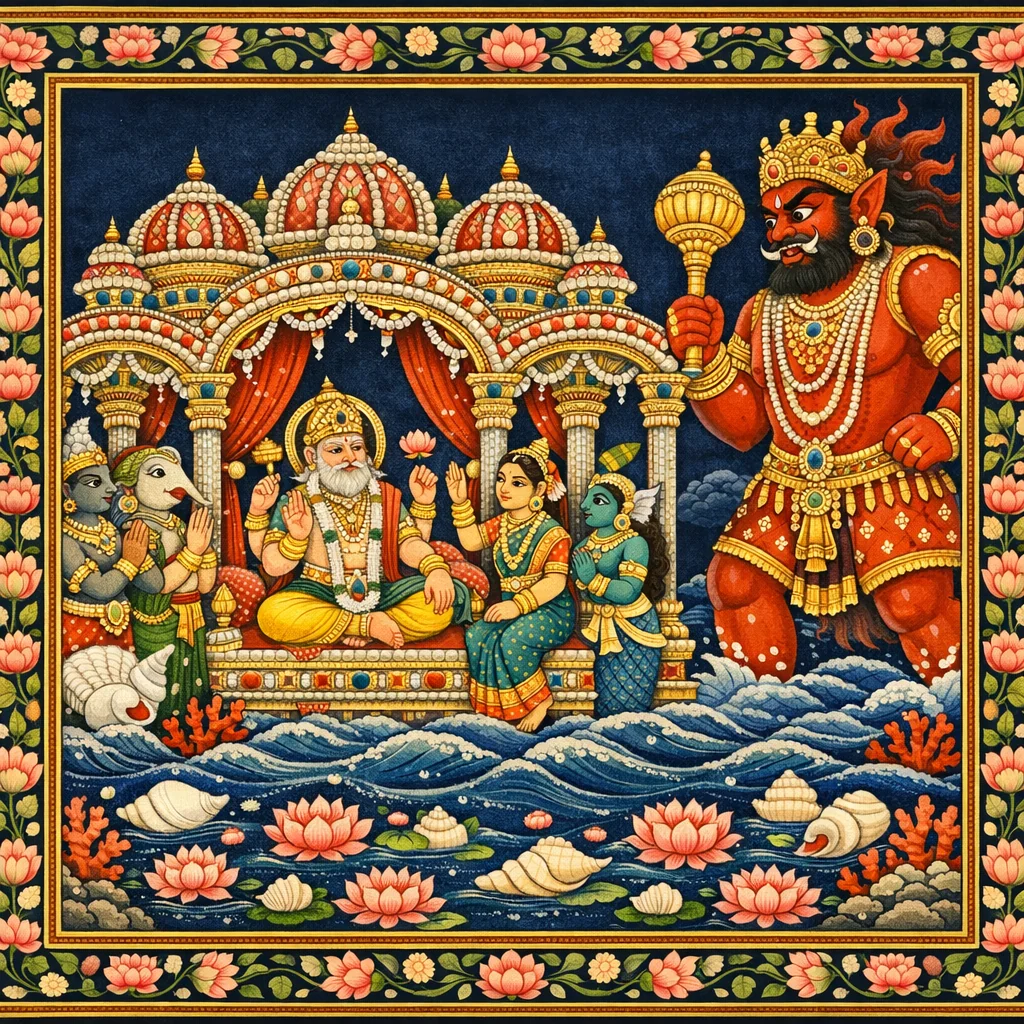
Maitreya narrates to Vidura that after Brahmā explains the cause of prior darkness, the devas regain composure and return to their abodes. The focus then shifts to Diti, who—despite foreboding and Kaśyapa’s warning—gives birth to twin Daitya sons after an extraordinary hundred-year gestation. Their birth triggers terrifying cosmic omens across heaven, earth, and the intermediate regions: earthquakes, unnatural winds, eclipses, inauspicious planetary dominance, animal cries, and even ritual icons weeping—signaling adharma’s rise. Only Brahmā’s four Kumāras, aware of Jaya and Vijaya’s descent, understand these portents and do not fear pralaya. The twins rapidly grow to mountain-like proportions; Kaśyapa names them Hiraṇyākṣa and Hiraṇyakaśipu. Empowered by boons, Hiraṇyakaśipu subjugates the three worlds, while Hiraṇyākṣa roams aggressively seeking combat. Finding the devas hidden, he roars and dives into the ocean, reaches Varuṇa’s capital, and mockingly demands battle. Varuṇa restrains anger and redirects him to Viṣṇu, predicting that the Lord will end his pride—thus setting the narrative momentum toward the Varāha avatāra confrontation in the next progression of chapters.
Shlokas
Verse 1
मैत्रेय उवाच निशम्यात्मभुवा गीतं कारणं शङ्कयोज्झिता: । तत: सर्वे न्यवर्तन्त त्रिदिवाय दिवौकस: ॥ १ ॥
Śrī Maitreya said: The demigods, the inhabitants of the higher planets, were freed from all fear upon hearing the cause of the darkness explained by Brahmā, who was born from Viṣṇu. Thus they all returned to their respective planets.
Verse 2
दितिस्तु भर्तुरादेशादपत्यपरिशङ्किनी । पूर्णे वर्षशते साध्वी पुत्रौ प्रसुषुवे यमौ ॥ २ ॥
The virtuous lady Diti had been very apprehensive of trouble to the gods from the children in her womb, and her husband predicted the same. She brought forth twin sons after a full one hundred years of pregnancy.
Verse 3
उत्पाता बहवस्तत्र निपेतुर्जायमानयो: । दिवि भुव्यन्तरिक्षे च लोकस्योरुभयावहा: ॥ ३ ॥
On the birth of the two demons there were many natural disturbances, all very fearful and wonderful, in the heavenly planets, the earthly planets and in between them.
Verse 4
सहाचला भुवश्चेलुर्दिश: सर्वा: प्रजज्वलु: । सोल्काश्चाशनय: पेतु: केतवश्चार्तिहेतव: ॥ ४ ॥
There were earthquakes along the mountains on the earth, and it appeared that there was fire everywhere. Many inauspicious planets like Saturn appeared, along with comets, meteors and thunderbolts.
Verse 5
ववौ वायु: सुदु:स्पर्श: फूत्कारानीरयन्मुहु: । उन्मूलयन्नगपतीन्वात्यानीको रजोध्वज: ॥ ५ ॥
There blew winds which were most uninviting to the touch, hissing again and again and uprooting gigantic trees. They had storms for their armies and clouds of dust for their ensigns.
Verse 6
उद्धसत्तडिदम्भोदघटया नष्टभागणे । व्योम्नि प्रविष्टतमसा न स्म व्यादृश्यते पदम् ॥ ६ ॥
The luminaries in the heavens were screened by masses of clouds, in which lightning sometimes flashed as though laughing. Darkness reigned everywhere, and nothing could be seen.
Verse 7
चुक्रोश विमना वार्धिरुदूर्मि: क्षुभितोदर: । सोदपानाश्च सरितश्चुक्षुभु: शुष्कपङ्कजा: ॥ ७ ॥
The ocean with its high waves wailed aloud as if stricken with sorrow, and there was a commotion among the creatures inhabiting the ocean. The rivers and lakes were also agitated, and lotuses withered.
Verse 8
मुहु: परिधयोऽभूवन् सराह्वो: शशिसूर्ययो: । निर्घाता रथनिर्ह्रादा विवरेभ्य: प्रजज्ञिरे ॥ ८ ॥
Misty halos appeared around the sun and the moon during solar and lunar eclipses again and again. Claps of thunder were heard even without clouds, and sounds like those of rattling chariots emerged from the mountain caves.
Verse 9
अन्तर्ग्रामेषु मुखतो वमन्त्यो वह्निमुल्बणम् । सृगालोलूकटङ्कारै: प्रणेदुरशिवं शिवा: ॥ ९ ॥
In the interior of the villages she-jackals yelled portentously, vomiting strong fire from their mouths, and jackals and owls also joined them with their cries.
Verse 10
सङ्गीतवद्रोदनवदुन्नमय्य शिरोधराम् । व्यमुञ्चन् विविधा वाचो ग्रामसिंहास्ततस्तत: ॥ १० ॥
Raising their necks, dogs cried here and there, now in the manner of singing and now of wailing.
Verse 11
खराश्च कर्कशै: क्षत्त: खुरैर्घ्नन्तो धरातलम् । खार्काररभसा मत्ता: पर्यधावन् वरूथश: ॥ ११ ॥
O Vidura, the asses ran hither and thither in herds, striking the earth with their hard hooves and wildly braying.
Verse 12
रुदन्तो रासभत्रस्ता नीडादुदपतन् खगा: । घोषेऽरण्ये च पशव: शकृन्मूत्रमकुर्वत ॥ १२ ॥
Frightened by the braying of the asses, birds flew shrieking from their nests, while cattle in the cowsheds as well as in the woods passed dung and urine.
Verse 13
गावोऽत्रसन्नसृग्दोहास्तोयदा: पूयवर्षिण: । व्यरुदन्देवलिङ्गानि द्रुमा: पेतुर्विनानिलम् ॥ १३ ॥
Cows, terrified, yielded blood in place of milk, clouds rained pus, the images of the gods in the temples shed tears, and trees fell down without a blast of wind.
Verse 14
ग्रहान् पुण्यतमानन्ये भगणांश्चापि दीपिता: । अतिचेरुर्वक्रगत्या युयुधुश्च परस्परम् ॥ १४ ॥
Ominous planets such as Mars and Saturn shone brighter and surpassed the auspicious ones such as Mercury, Jupiter and Venus as well as a number of lunar mansions. Taking seemingly retrograde courses, the planets came in conflict with one another.
Verse 15
दृष्ट्वान्यांश्च महोत्पातानतत्तत्त्वविद: प्रजा: । ब्रह्मपुत्रानृते भीता मेनिरे विश्वसम्प्लवम् ॥ १५ ॥
Marking these and many other omens of evil times, everyone but the four sage sons of Brahmā, who were aware of the fall of Jaya and Vijaya and of their birth as Diti’s sons, was seized with fear. They did not know the secrets of these portents and thought that the dissolution of the universe was at hand.
Verse 16
तावादिदैत्यौ सहसा व्यज्यमानात्मपौरुषौ । ववृधातेऽश्मसारेण कायेनाद्रिपती इव ॥ १६ ॥
These two demons who appeared in ancient times soon began to exhibit uncommon bodily features; they had steel-like frames which began to grow just like two great mountains.
Verse 17
दिविस्पृशौ हेमकिरीटकोटिभि- र्निरुद्धकाष्ठौ स्फुरदङ्गदाभुजौ । गां कम्पयन्तौ चरणै: पदे पदे कट्या सुकाञ्च्यार्कमतीत्य तस्थतु: ॥ १७ ॥
Their bodies became so tall that they seemed to kiss the sky with the crests of their gold crowns. They blocked the view of all directions and while walking shook the earth at every step. Their arms were adorned with brilliant bracelets, and they stood as if covering the sun with their waists, which were bound with excellent and beautiful girdles.
Verse 18
प्रजापतिर्नाम तयोरकार्षीद् य: प्राक् स्वदेहाद्यमयोरजायत । तं वै हिरण्यकशिपुं विदु: प्रजा यं तं हिरण्याक्षमसूत साग्रत: ॥ १८ ॥
Prajāpati Kaśyapa, the creator of the living entities, gave his twin sons their names; the one who was born first he named Hiraṇyākṣa, and the one who was first conceived by Diti he named Hiraṇyakaśipu.
Verse 19
चक्रे हिरण्यकशिपुर्दोर्भ्यां ब्रह्मवरेण च । वशे सपालाँल्लोकांस्त्रीनकुतोमृत्युरुद्धत: ॥ १९ ॥
The elder child, Hiraṇyakaśipu, was unafraid of death from anyone within the three worlds because he received a benediction from Lord Brahmā. He was proud and puffed up due to this benediction and was able to bring all three planetary systems under his control.
Verse 20
हिरण्याक्षोऽनुजस्तस्य प्रिय: प्रीतिकृदन्वहम् । गदापाणिर्दिवं यातो युयुत्सुर्मृगयन् रणम् ॥ २० ॥
His younger brother, Hiraṇyākṣa, was always ready to satisfy his elder brother by his activities. Hiraṇyākṣa took a club on his shoulder and traveled all over the universe with a fighting spirit just to satisfy Hiraṇyakaśipu.
Verse 21
तं वीक्ष्य दु:सहजवं रणत्काञ्चननूपुरम् । वैजयन्त्या स्रजा जुष्टमंसन्यस्तमहागदम् ॥ २१ ॥
Hiraṇyākṣa’s temper was difficult to control. He had anklets of gold tinkling about his feet, he was adorned with a gigantic garland, and he rested his huge mace on one of his shoulders.
Verse 22
मनोवीर्यवरोत्सिक्तमसृण्यमकुतोभयम् । भीता निलिल्यिरे देवास्तार्क्ष्यत्रस्ता इवाहय: ॥ २२ ॥
His mental and bodily strength as well as the boon conferred upon him had made him proud. He feared death at the hands of no one, and there was no checking him. The gods, therefore, were seized with fear at his very sight, and they hid themselves even as snakes hide themselves for fear of Garuḍa.
Verse 23
स वै तिरोहितान् दृष्ट्वा महसा स्वेन दैत्यराट् । सेन्द्रान्देवगणान् क्षीबानपश्यन् व्यनदद् भृशम् ॥ २३ ॥
On not finding Indra and the other demigods, who had previously been intoxicated with power, the chief of the Daityas, seeing that they had all vanished before his might, roared loudly.
Verse 24
ततो निवृत्त: क्रीडिष्यन् गम्भीरं भीमनिस्वनम् । विजगाहे महासत्त्वो वार्धिं मत्त इव द्विप: ॥ २४ ॥
After returning from the heavenly kingdom, the mighty demon, who was like an elephant in wrath, for the sake of sport dived into the deep ocean, which was roaring terribly.
Verse 25
तस्मिन् प्रविष्टे वरुणस्य सैनिका यादोगणा: सन्नधिय: ससाध्वसा: । अहन्यमाना अपि तस्य वर्चसा प्रधर्षिता दूरतरं प्रदुद्रुवु: ॥ २५ ॥
On his entering the ocean, the aquatic animals who formed the host of Varuṇa were stricken with fear and ran far away. Thus Hiraṇyākṣa showed his splendor without dealing a blow.
Verse 26
स वर्षपूगानुदधौ महाबल- श्चरन्महोर्मीञ्छ्वसनेरितान्मुहु: । मौर्व्याभिजघ्ने गदया विभावरी- मासेदिवांस्तात पुरीं प्रचेतस: ॥ २६ ॥
Moving about in the ocean for many, many years, the mighty Hiraṇyākṣa smote the gigantic wind-tossed waves again and again with his iron mace and reached Vibhāvarī, the capital of Varuṇa.
Verse 27
तत्रोपलभ्यासुरलोकपालकं यादोगणानामृषभं प्रचेतसम् । स्मयन् प्रलब्धुं प्रणिपत्य नीचव- ज्जगाद मे देह्यधिराज संयुगम ॥ २७ ॥
Vibhāvarī is the home of Varuṇa, lord of the aquatic creatures and guardian of the lower regions of the universe, where the demons generally reside. There Hiraṇyākṣa fell at Varuṇa’s feet like a lowborn man, and to make fun of him he said with a smile, “Give me battle, O Supreme Lord!”
Verse 28
त्वं लोकपालोऽधिपतिर्बृहच्छ्रवा वीर्यापहो दुर्मदवीरमानिनाम् । विजित्य लोकेऽखिलदैत्यदानवान् यद्राजसूयेन पुरायजत्प्रभो ॥ २८ ॥
You are the guardian of an entire sphere and a ruler of wide fame. Having crushed the might of arrogant and conceited warriors and having conquered all the Daityas and Dānavas in the world, you once performed a Rājasūya sacrifice to the Lord.
Verse 29
स एवमुत्सिक्तमदेन विद्विषा दृढं प्रलब्धो भगवानपां पति: । रोषं समुत्थं शमयन् स्वया धिया व्यवोचदङ्गोपशमं गता वयम् ॥ २९ ॥
Thus mocked by an enemy whose vanity knew no bounds, the worshipful lord of the waters waxed angry, but by dint of his reason he managed to curb the anger that had sprung up in him, and he replied: O dear one, we have now desisted from warfare, having grown too old for combat.
Verse 30
पश्यामि नान्यं पुरुषात्पुरातनाद् य: संयुगे त्वां रणमार्गकोविदम् । आराधयिष्यत्यसुरर्षभेहि तं मनस्विनो यं गृणते भवादृशा: ॥ ३० ॥
You are so skilled in war that I do not see anyone else but the most ancient person, Lord Viṣṇu, who can give satisfaction in battle to you. Therefore, O chief of the asuras, approach Him, whom even heroes like you mention with praise.
Verse 31
तं वीरमारादभिपद्य विस्मय: शयिष्यसे वीरशये श्वभिर्वृत: । यस्त्वद्विधानामसतां प्रशान्तये रूपाणि धत्ते सदनुग्रहेच्छया ॥ ३१ ॥
Varuṇa continued: On reaching Him you will be rid of your pride at once and will lie down on the field of battle, surrounded by dogs, for eternal sleep. It is in order to exterminate wicked fellows like you and to show His grace to the virtuous that He assumes His various incarnations like Varāha.
Frequently Asked Questions
In Purāṇic historiography, the cosmos is ethically responsive: widespread omens mirror the rise of adharma and the impending oppression of the devas. The disturbances function as narrative diagnostics—signs that destructive power backed by boons is entering the world-system. The Kumāras’ calm underscores that these omens do not indicate random chaos or final pralaya, but a divinely overseen sequence culminating in the Lord’s corrective descent (avatāra).
They are the four Kumāras—Sanaka, Sanandana, Sanātana, and Sanat-kumāra—renunciant sages with higher knowledge. They are not frightened because they know the hidden cause: Jaya and Vijaya’s fall and their destined births as Diti’s sons. With that context, the omens are read as part of the Lord’s plan to remove burden and display protection, not as signs of universal dissolution.
Varuṇa models restraint and discernment: though provoked, he curbs anger and recognizes that the demon’s inflated pride requires a divinely calibrated opponent. By directing Hiraṇyākṣa to Viṣṇu, Varuṇa affirms that ultimate sovereignty and the final resolution of cosmic imbalance belong to Bhagavān, whose avatāras appear to protect the virtuous and eliminate destructive forces.
The episode dramatizes the inversion of cosmic administration when adharma gains temporary ascendancy through boons and brute force. The devas’ hiding illustrates that power without righteousness destabilizes governance; it also creates narrative necessity for the Lord’s intervention, preparing the reader for the Varāha cycle where divine authority restores order.