Adhyaya 7
Bṛhaspati Rejects the Demigods: The Root of Deva Weakness and the Need for Humility
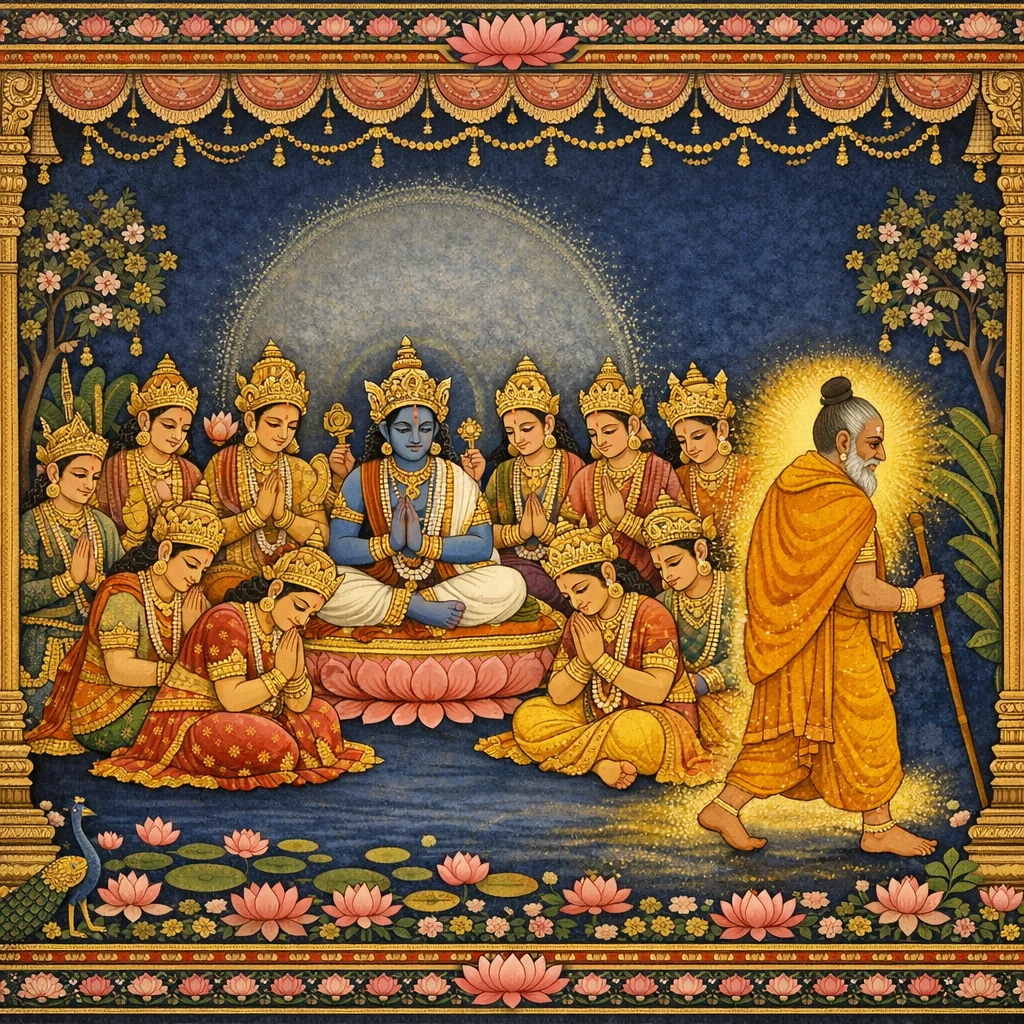
Following the prior developments in the deva–asura conflict and the broader Skandha 6 emphasis on inner qualification over external status, Mahārāja Parīkṣit presses Śukadeva Gosvāmī on a key turning point: why Bṛhaspati, guru of the devas, withdrew from his own disciples. This chapter opens by identifying the devas’ offense as a breach of proper honor and attentiveness toward their spiritual master—an instance of guru-aparādha arising from pride in position and preoccupation with political power. As Bṛhaspati departs, the devas’ spiritual backing weakens, setting the conditions for strategic and moral confusion in their struggle with the asuras. The narrative thus bridges the ethical teachings of atonement and purification with governance in the heavenly administration: when dharma is neglected at its root—reverence for guru and dependence on Bhagavān—cosmic order falters. The chapter’s trajectory points forward to the devas seeking alternative counsel and ultimately being compelled back toward genuine humility and Viṣṇu-centered reliance in the unfolding Vṛtrāsura arc.
Shlokas
Frequently Asked Questions
Because the devas failed in proper guru-sevā and respect—an offense rooted in pride and neglect. In Bhāgavata theology, the guru is not merely an advisor but the channel of dharma and divine favor; when disciples disregard him, their spiritual potency and right judgment diminish, and their worldly power becomes unreliable.
They violated appropriate etiquette and honor toward him—treating the guru as secondary to courtly and political concerns. Such disrespect constitutes guru-aparādha, which is portrayed as spiritually corrosive: it blocks blessings, weakens protection (poṣaṇa), and invites disorder even among the devas.
Bṛhaspati’s withdrawal explains the devas’ ensuing vulnerability and missteps, preparing the ground for the larger lesson that victory depends on humility, proper shelter, and Viṣṇu’s will—not merely celestial weaponry. This moral causality culminates in the Vṛtrāsura episodes, where devotion and surrender overturn simplistic labels of ‘deva’ and ‘asura.’