Adhyaya 14
Inauspicious Omens and Arjuna’s Return from Dvārakā
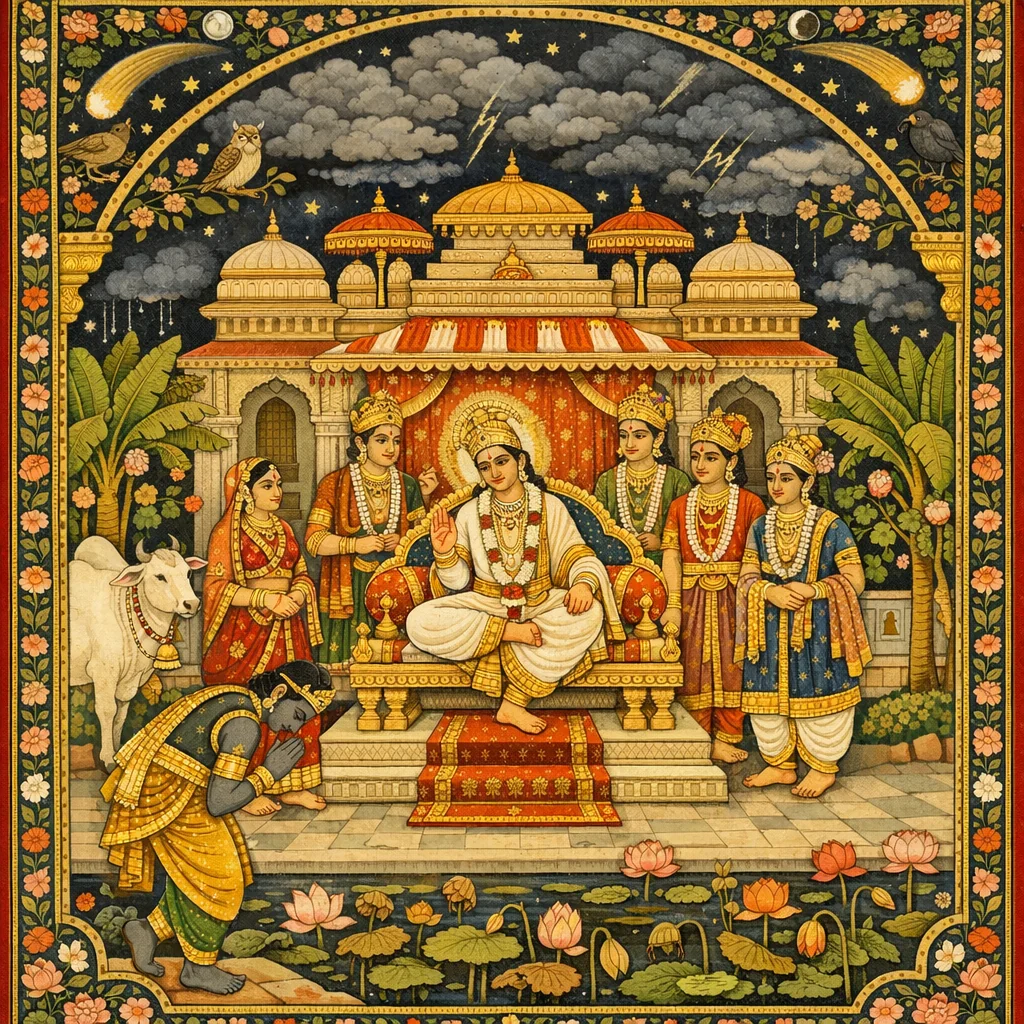
Continuing the post-war tension of Hastināpura’s reliance on Śrī Kṛṣṇa, Arjuna departs for Dvārakā to meet the Lord and learn His forthcoming plans. Months pass without his return, and Mahārāja Yudhiṣṭhira perceives a systemic disturbance in kāla: seasonal disorder, moral decay in society, and a cascade of ominous portents in animals, weather, celestial phenomena, rivers, and temple Deities. Reading these as more than private anxiety, he interprets them as signs of a world-level misfortune—possibly the withdrawal of the Lord’s lotus-foot presence from the earth, as Nārada had indicated. Arjuna finally returns, visibly devastated and drained of luster, confirming Yudhiṣṭhira’s fears. The chapter ends with Yudhiṣṭhira’s compassionate but probing inquiry: he asks about the welfare of the Yadus and Kṛṣṇa’s associates, and then explores whether Arjuna’s dejection could be due to social failures—or only the unbearable possibility of separation from Kṛṣṇa—thus setting up the next chapter’s disclosures about Dvārakā and the Lord’s departure.
Shlokas
Verse 1
सूत उवाच सम्प्रस्थिते द्वारकायां जिष्णौ बन्धुदिदृक्षया । ज्ञातुं च पुण्यश्लोकस्य कृष्णस्य च विचेष्टितम् ॥ १ ॥
Śrī Sūta Gosvāmī said: Arjuna went to Dvārakā to see Lord Śrī Kṛṣṇa and other friends and also to learn from the Lord of His next activities.
Verse 2
व्यतीता: कतिचिन्मासास्तदा नायात्ततोऽर्जुन: । ददर्श घोररूपाणि निमित्तानि कुरूद्वह: ॥ २ ॥
A few months passed, and Arjuna did not return. Mahārāja Yudhiṣṭhira then began to observe some inauspicious omens, which were fearful in themselves.
Verse 3
कालस्य च गतिं रौद्रां विपर्यस्तर्तुधर्मिण: । पापीयसीं नृणां वार्तां क्रोधलोभानृतात्मनाम् ॥ ३ ॥
He saw that the direction of eternal time had changed, and this was very fearful. There were disruptions in the seasonal regularities. The people in general had become very greedy, angry and deceitful. And he saw that they were adopting foul means of livelihood.
Verse 4
जिह्मप्रायं व्यवहृतं शाठ्यमिश्रं च सौहृदम् । पितृमातृसुहृद्भ्रातृदम्पतीनां च कल्कनम् ॥ ४ ॥
All ordinary transactions and dealings became polluted with cheating, even between friends. And in familial affairs, there was always misunderstanding between fathers, mothers and sons, between well-wishers, and between brothers. Even between husband and wife there was always strain and quarrel.
Verse 5
निमित्तान्यत्यरिष्टानि काले त्वनुगते नृणाम् । लोभाद्यधर्मप्रकृतिं दृष्ट्वोवाचानुजं नृप: ॥ ५ ॥
In course of time it came to pass that people in general became accustomed to greed, anger, pride, etc. Mahārāja Yudhiṣṭhira, observing all these omens, spoke to his younger brother.
Verse 6
युधिष्ठिर उवाच सम्प्रेषितो द्वारकायां जिष्णुर्बन्धुदिदृक्षया । ज्ञातुं च पुण्यश्लोकस्य कृष्णस्य च विचेष्टितम् ॥ ६ ॥
Mahārāja Yudhiṣṭhira said to his younger brother Bhīmasena: I sent Arjuna to Dvārakā to meet his friends and to learn from the Personality of Godhead, Kṛṣṇa, of His program of work.
Verse 7
गता: सप्ताधुना मासा भीमसेन तवानुज: । नायाति कस्य वा हेतोर्नाहं वेदेदमञ्जसा ॥ ७ ॥
Since he departed, seven months have passed, yet he has not returned. I do not know factually how things are going there.
Verse 8
अपि देवर्षिणादिष्ट: स कालोऽयमुपस्थित: । यदात्मनोऽङ्गमाक्रीडं भगवानुत्सिसृक्षति ॥ ८ ॥
Is He going to quit His earthly pastimes, as Devarṣi Nārada indicated? Has that time already arrived?
Verse 9
यस्मान्न: सम्पदो राज्यं दारा: प्राणा: कुलं प्रजा: । आसन्सपत्नविजयो लोकाश्च यदनुग्रहात् ॥ ९ ॥
From Him only, all our kingly opulence, good wives, lives, progeny, control over our subjects, victory over our enemies, and future accommodations in higher planets have become possible. All this is due to His causeless mercy upon us.
Verse 10
पश्योत्पातान्नरव्याघ्र दिव्यान् भौमान् सदैहिकान् । दारुणान् शंसतोऽदूराद्भयं नो बुद्धिमोहनम् ॥ १० ॥
Just see, O man with a tiger’s strength, how many miseries due to celestial influences, earthly reactions and bodily pains — all very dangerous in themselves — are foreboding danger in the near future by deluding our intelligence.
Verse 11
ऊर्वक्षिबाहवो मह्यं स्फुरन्त्यङ्ग पुन: पुन: । वेपथुश्चापि हृदये आराद्दास्यन्ति विप्रियम् ॥ ११ ॥
The left side of my body — my thighs, arms and eyes — are all quivering again and again. I am having heart palpitations due to fear. All this indicates undesirable happenings.
Verse 12
शिवैषोद्यन्तमादित्यमभिरौत्यनलानना । मामङ्ग सारमेयोऽयमभिरेभत्यभीरुवत् ॥ १२ ॥
Just see, O Bhīma, how the she-jackal cries at the rising sun and vomits fire, and how the dog barks at me fearlessly.
Verse 13
शस्ता: कुर्वन्ति मां सव्यं दक्षिणं पशवोऽपरे । वाहांश्च पुरुषव्याघ्र लक्षये रुदतो मम ॥ १३ ॥
O Bhīmasena, tiger amongst men, now useful animals like cows are passing me on my left side, and lower animals like the asses are circumambulating me. My horses appear to weep upon seeing me.
Verse 14
मृत्युदूत: कपोतोऽयमुलूक: कम्पयन् मन: । प्रत्युलूकश्च कुह्वानैर्विश्वं वै शून्यमिच्छत: ॥ १४ ॥
Just see! This pigeon is like a messenger of death. The shrieks of the owls and their rival crows make my heart tremble. It appears that they want to make a void of the whole universe.
Verse 15
धूम्रा दिश: परिधय: कम्पते भू: सहाद्रिभि: । निर्घातश्च महांस्तात साकं च स्तनयित्नुभि: ॥ १५ ॥
Just see how the smoke encircles the sky. It appears that the earth and mountains are throbbing. Just hear the cloudless thunder and see the bolts from the blue.
Verse 16
वायुर्वाति खरस्पर्शो रजसा विसृजंस्तम: । असृग् वर्षन्ति जलदा बीभत्समिव सर्वत: ॥ १६ ॥
The wind blows violently, blasting dust everywhere and creating darkness. Clouds are raining everywhere with bloody disasters.
Verse 17
सूर्यं हतप्रभं पश्य ग्रहमर्दं मिथो दिवि । ससङ्कुलैर्भूतगणैर्ज्वलिते इव रोदसी ॥ १७ ॥
The rays of the sun are declining, and the stars appear to be fighting amongst themselves. Confused living entities appear to be ablaze and weeping.
Verse 18
नद्यो नदाश्च क्षुभिता: सरांसि च मनांसि च । न ज्वलत्यग्निराज्येन कालोऽयं किं विधास्यति ॥ १८ ॥
Rivers, tributaries, ponds, reservoirs and the mind are all perturbed. Butter no longer ignites fire. What is this extraordinary time? What is going to happen?
Verse 19
न पिबन्ति स्तनं वत्सा न दुह्यन्ति च मातर: । रुदन्त्यश्रुमुखा गावो न हृष्यन्त्यृषभा व्रजे ॥ १९ ॥
The calves do not suck the teats of the cows, nor do the cows give milk. They are standing, crying, tears in their eyes, and the bulls take no pleasure in the pasturing grounds.
Verse 20
दैवतानि रुदन्तीव स्विद्यन्ति ह्युच्चलन्ति च । इमे जनपदा ग्रामा: पुरोद्यानाकराश्रमा: । भ्रष्टश्रियो निरानन्दा: किमघं दर्शयन्ति न: ॥ २० ॥
The Deities seem to be crying in the temple, lamenting and perspiring. They seem about to leave. All the cities, villages, towns, gardens, mines and hermitages are now devoid of beauty and bereft of all happiness. I do not know what sort of calamities are now awaiting us.
Verse 21
मन्य एतैर्महोत्पातैर्नूनं भगवत: पदै: । अनन्यपुरुषश्रीभिर्हीना भूर्हतसौभगा ॥ २१ ॥
I think that all these earthly disturbances indicate some greater loss to the good fortune of the world. The world was fortunate to have been marked with the footprints of the lotus feet of the Lord. These signs indicate that this will no longer be.
Verse 22
इति चिन्तयतस्तस्य दृष्टारिष्टेन चेतसा । राज्ञ: प्रत्यागमद् ब्रह्मन् यदुपुर्या: कपिध्वज: ॥ २२ ॥
O Brāhmaṇa Śaunaka, while Mahārāja Yudhiṣṭhira, observing the inauspicious signs on the earth at that time, was thus thinking to himself, Arjuna came back from the city of the Yadus [Dvārakā].
Verse 23
तं पादयोर्निपतितमयथापूर्वमातुरम् । अधोवदनमब्बिन्दून् सृजन्तं नयनाब्जयो: ॥ २३ ॥
When he bowed at his feet, the King saw that his dejection was unprecedented. His head was down, and tears glided from his lotus eyes.
Verse 24
विलोक्योद्विग्नहृदयो विच्छायमनुजं नृप: । पृच्छति स्म सुहृन्मध्ये संस्मरन्नारदेरितम् ॥ २४ ॥
Seeing Arjuna pale due to heartfelt anxieties, the King, remembering the indications of the sage Nārada, questioned him in the midst of friends.
Verse 25
युधिष्ठिर उवाच कच्चिदानर्तपुर्यां न: स्वजना: सुखमासते । मधुभोजदशार्हार्हसात्वतान्धकवृष्णय: ॥ २५ ॥
Mahārāja Yudhiṣṭhira said: My dear brother, please tell me whether our friends and relatives, such as Madhu, Bhoja, Daśārha, Ārha, Sātvata, Andhaka and the members of the Yadu family are all passing their days in happiness.
Verse 26
शूरो मातामह: कच्चित्स्वस्त्यास्ते वाथ मारिष: । मातुल: सानुज: कच्चित्कुशल्यानकदुन्दुभि: ॥ २६ ॥
Is my respectable grandfather Śūrasena in a happy mood? And are my maternal uncle Vasudeva and his younger brothers all doing well?
Verse 27
सप्त स्वसारस्तत्पत्न्यो मातुलान्य: सहात्मजा: । आसते सस्नुषा: क्षेमं देवकीप्रमुखा: स्वयम् ॥ २७ ॥
His seven wives, headed by Devakī, are all sisters. Are they and their sons and daughters-in-law all happy?
Verse 28
कच्चिद्राजाहुको जीवत्यसत्पुत्रोऽस्य चानुज: । हृदीक: ससुतोऽक्रूरो जयन्तगदसारणा: ॥ २८ ॥ आसते कुशलं कच्चिद्ये च शत्रुजिदादय: । कच्चिदास्ते सुखं रामो भगवान् सात्वतां प्रभु: ॥ २९ ॥
Are Ugrasena, whose son was the mischievous Kaṁsa, and his younger brother still living? Are Hṛdīka and his son Kṛtavarmā happy? Are Akrūra, Jayanta, Gada, Sāraṇa and Śatrujit all happy? How is Balarāma, the Personality of Godhead and the protector of devotees?
Verse 29
कच्चिद्राजाहुको जीवत्यसत्पुत्रोऽस्य चानुज: । हृदीक: ससुतोऽक्रूरो जयन्तगदसारणा: ॥ २८ ॥ आसते कुशलं कच्चिद्ये च शत्रुजिदादय: । कच्चिदास्ते सुखं रामो भगवान् सात्वतां प्रभु: ॥ २९ ॥
Are Ugrasena, whose son was the mischievous Kaṁsa, and his younger brother still living? Are Hṛdīka and his son Kṛtavarmā happy? Are Akrūra, Jayanta, Gada, Sāraṇa and Śatrujit all happy? How is Balarāma, the Personality of Godhead and the protector of devotees?
Verse 30
प्रद्युम्न: सर्ववृष्णीनां सुखमास्ते महारथ: । गम्भीररयोऽनिरुद्धो वर्धते भगवानुत ॥ ३० ॥
How is Pradyumna, the great general of the Vṛṣṇi family? Is He happy? And is Aniruddha, the plenary expansion of the Personality of Godhead, faring well?
Verse 31
सुषेणश्चारुदेष्णश्च साम्बो जाम्बवतीसुत: । अन्ये च कार्ष्णिप्रवरा: सपुत्रा ऋषभादय: ॥ ३१ ॥
Are all the chieftain sons of Lord Kṛṣṇa, such as Suṣeṇa, Cārudeṣṇa, Sāmba the son of Jāmbavatī, and Ṛṣabha, along with their sons, all doing well?
Verse 32
तथैवानुचरा: शौरे: श्रुतदेवोद्धवादय: । सुनन्दनन्दशीर्षण्या ये चान्ये सात्वतर्षभा: ॥ ३२ ॥ अपि स्वस्त्यासते सर्वे रामकृष्णभुजाश्रया: । अपि स्मरन्ति कुशलमस्माकं बद्धसौहृदा: ॥ ३३ ॥
Also, Śrutadeva, Uddhava and others, Nanda, Sunanda and other leaders of liberated souls who are constant companions of the Lord are protected by Lord Balarāma and Kṛṣṇa. Are they all doing well in their respective functions? Do they, who are all eternally bound in friendship with us, remember our welfare?
Verse 33
तथैवानुचरा: शौरे: श्रुतदेवोद्धवादय: । सुनन्दनन्दशीर्षण्या ये चान्ये सात्वतर्षभा: ॥ ३२ ॥ अपि स्वस्त्यासते सर्वे रामकृष्णभुजाश्रया: । अपि स्मरन्ति कुशलमस्माकं बद्धसौहृदा: ॥ ३३ ॥
Also, Śrutadeva, Uddhava and others, Nanda, Sunanda and other leaders of liberated souls who are constant companions of the Lord are protected by Lord Balarāma and Kṛṣṇa. Are they all doing well in their respective functions? Do they, who are all eternally bound in friendship with us, remember our welfare?
Verse 34
भगवानपि गोविन्दो ब्रह्मण्यो भक्तवत्सल: । कच्चित्पुरे सुधर्मायां सुखमास्ते सुहृद्वृत: ॥ ३४ ॥
Is Lord Kṛṣṇa, the Supreme Personality of Godhead, who gives pleasure to the cows, the senses and the brāhmaṇas, who is very affectionate towards His devotees, enjoying the pious assembly at Dvārakā Purī surrounded by friends?
Verse 35
मङ्गलाय च लोकानां क्षेमाय च भवाय च । आस्ते यदुकुलाम्भोधावाद्योऽनन्तसख: पुमान् ॥ ३५ ॥ यद्बाहुदण्डगुप्तायां स्वपुर्यां यदवोऽर्चिता: । क्रीडन्ति परमानन्दं महापौरुषिका इव ॥ ३६ ॥
The original Personality of Godhead, the enjoyer, and Balarāma, the primeval Lord Ananta, are staying in the ocean of the Yadu dynasty for the welfare, protection and general progress of the entire universe. And the members of the Yadu dynasty, being protected by the arms of the Lord, are enjoying life like the residents of the spiritual sky.
Verse 36
मङ्गलाय च लोकानां क्षेमाय च भवाय च । आस्ते यदुकुलाम्भोधावाद्योऽनन्तसख: पुमान् ॥ ३५ ॥ यद्बाहुदण्डगुप्तायां स्वपुर्यां यदवोऽर्चिता: । क्रीडन्ति परमानन्दं महापौरुषिका इव ॥ ३६ ॥
The original Personality of Godhead, the enjoyer, and Balarāma, the primeval Lord Ananta, are staying in the ocean of the Yadu dynasty for the welfare, protection and general progress of the entire universe. And the members of the Yadu dynasty, being protected by the arms of the Lord, are enjoying life like the residents of the spiritual sky.
Verse 37
यत्पादशुश्रूषणमुख्यकर्मणा सत्यादयो द्व्यष्टसहस्रयोषित: । निर्जित्य सङ्ख्ये त्रिदशांस्तदाशिषो हरन्ति वज्रायुधवल्लभोचिता: ॥ ३७ ॥
Simply by administering comforts at the lotus feet of the Lord, which is the most important of all services, the queens at Dvārakā, headed by Satyabhāmā, induced the Lord to conquer the demigods. Thus the queens enjoy things which are prerogatives of the wives of the controller of thunderbolts.
Verse 38
यद्बाहुदण्डाभ्युदयानुजीविनो यदुप्रवीरा ह्यकुतोभया मुहु: । अधिक्रमन्त्यङ्घ्रिभिराहृतां बलात् सभां सुधर्मां सुरसत्तमोचिताम् ॥ ३८ ॥
The great heroes of the Yadu dynasty, being protected by the arms of Lord Śrī Kṛṣṇa, always remain fearless in every respect. And therefore their feet trample over the Sudharmā assembly house, which the best demigods deserved but which was taken away from them.
Verse 39
कच्चित्तेऽनामयं तात भ्रष्टतेजा विभासि मे । अलब्धमानोऽवज्ञात: किं वा तात चिरोषित: ॥ ३९ ॥
My brother Arjuna, please tell me whether your health is all right. You appear to have lost your bodily luster. Is this due to others disrespecting and neglecting you because of your long stay at Dvārakā?
Verse 40
कच्चिन्नाभिहतोऽभावै: शब्दादिभिरमङ्गलै: । न दत्तमुक्तमर्थिभ्य आशया यत्प्रतिश्रुतम् ॥ ४० ॥
Has someone addressed you with unfriendly words or threatened you? Could you not give charity to one who asked, or could you not keep your promise to someone?
Verse 41
कच्चित्त्वं ब्राह्मणं बालं गां वृद्धं रोगिणं स्त्रियम् । शरणोपसृतं सत्त्वं नात्याक्षी: शरणप्रद: ॥ ४१ ॥
You are always the protector of the deserving living beings, such as brāhmaṇas, children, cows, women and the diseased. Could you not give them protection when they approached you for shelter?
Verse 42
कच्चित्त्वं नागमोऽगम्यां गम्यां वासत्कृतां स्त्रियम् । पराजितो वाथ भवान्नोत्तमैर्नासमै: पथि ॥ ४२ ॥
Have you contacted a woman of impeachable character, or have you not properly treated a deserving woman? Or have you been defeated on the way by someone who is inferior or equal to you?
Verse 43
अपि स्वित्पर्यभुङ्क्थास्त्वं सम्भोज्यान् वृद्धबालकान् । जुगुप्सितं कर्म किञ्चित्कृतवान्न यदक्षमम् ॥ ४३ ॥
Have you not taken care of old men and boys who deserve to dine with you? Have you left them and taken your meals alone? Have you committed some unpardonable mistake which is considered to be abominable?
Verse 44
कच्चित् प्रेष्ठतमेनाथ हृदयेनात्मबन्धुना । शून्योऽस्मि रहितो नित्यं मन्यसे तेऽन्यथा न रुक् ॥ ४४ ॥
Or is it that you are feeling empty for all time because you might have lost your most intimate friend, Lord Kṛṣṇa? O my brother Arjuna, I can think of no other reason for your becoming so dejected.
Frequently Asked Questions
In the Bhāgavata worldview, kāla operates under the Lord, and the Lord’s manifest presence stabilizes dharma and prosperity. Yudhiṣṭhira’s omens span nature (seasons, rivers, celestial disorder), society (greed, deceit, family quarrel), and worship (Deities ‘weeping’), indicating a comprehensive withdrawal of auspiciousness (śrī). Because Nārada had already hinted at the Lord concluding His earthly līlā, Yudhiṣṭhira reads the converging signs as the world reacting to that impending separation.
Traditional reading allows both. Literally, they function as narrative indicators of a cosmic transition into Kali-yuga, where order (ṛta) becomes disrupted. Symbolically, they externalize the inner truth that without the Lord’s manifest līlā, human conduct decays and even sacred spaces feel bereft. The Bhāgavata uses omens to show that dharma is not merely social policy but a resonance with divine presence.
The Yadus are Kṛṣṇa’s dynastic community in Dvārakā, including clans and allies (Madhu, Bhoja, Daśārha, Sātvata, Andhaka, etc.). Yudhiṣṭhira’s catalog underscores Dvārakā as the Lord’s protective ‘ocean’ for His devotees and highlights the relational theology of the Bhāgavata: Kṛṣṇa’s presence is known through His devotees, family, and associates, not only through abstract divinity.
A dhārmic king diagnoses suffering by first examining possible breaches of duty (dharma): failure in charity, truthfulness, protection of the vulnerable, or moral conduct. Yet the questioning is also rhetorical and compassionate—Yudhiṣṭhira cannot find any plausible mundane cause sufficient to explain Arjuna’s collapse, directing the reader to the real cause: separation from Kṛṣṇa and the end of His manifest pastimes.