Adhyaya 7
Purukutsa’s Rasātala Victory; Triśaṅku and Hariścandra; Rohita and Śunaḥśepha
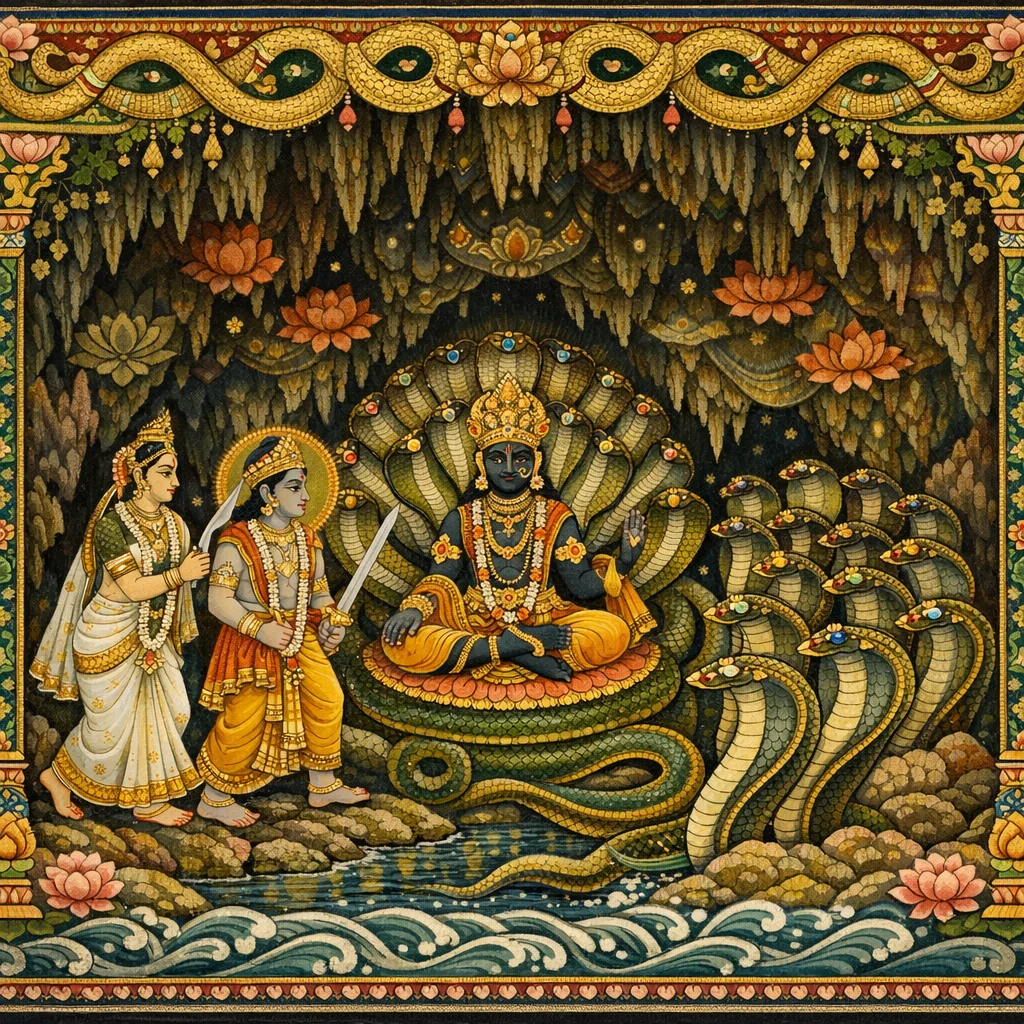
Continuing the Sūrya-vaṁśa succession after Māndhātā, the chapter first situates Ambarīṣa and his notable descendants, then shifts to Purukutsa, who is guided by Narmadā into Rasātala on Vāsuki’s request. Empowered by Lord Viṣṇu, Purukutsa destroys hostile Gandharvas, and the Nāgas grant a protective phala-śruti: remembrance of this episode safeguards one from snake attacks. The genealogy proceeds through Trasaddasyu to Triśaṅku (Satyavrata), whose transgression and curse lead to the paradoxical ‘hanging in the sky’ episode through Viśvāmitra’s power. From Triśaṅku comes Hariścandra, whose vow to Varuṇa for a son becomes a moral crisis: repeated postponements of the promised sacrifice bring Varuṇa’s affliction, while Rohita flees and is repeatedly redirected by Indra toward tīrtha-wandering. The arc culminates in Rohita purchasing Śunaḥśepha as the substitute victim, enabling Hariścandra’s sacrifice under major ṛṣis. The chapter ends with Hariścandra’s purification and a compact sāṅkhya-like dissolution sequence, preparing the text to expand Śunaḥśepha/Viśvāmitra-related narratives in the next progression.
Shlokas
Verse 1
श्रीशुक उवाच मान्धातु: पुत्रप्रवरो योऽम्बरीष: प्रकीर्तित: । पितामहेन प्रवृतो यौवनाश्वस्तु तत्सुत: । हारीतस्तस्य पुत्रोऽभून्मान्धातृप्रवरा इमे ॥ १ ॥
Śukadeva Gosvāmī said: The most prominent among the sons of Māndhātā was he who is celebrated as Ambarīṣa. Ambarīṣa was accepted as son by his grandfather Yuvanāśva. Ambarīṣa’s son was Yauvanāśva, and Yauvanāśva’s son was Hārīta. In Māndhātā’s dynasty, Ambarīṣa, Hārīta and Yauvanāśva were very prominent.
Verse 2
नर्मदा भ्रातृभिर्दत्ता पुरुकुत्साय योरगै: । तया रसातलं नीतो भुजगेन्द्रप्रयुक्तया ॥ २ ॥
The serpent brothers of Narmadā gave Narmadā to Purukutsa. Being sent by Vāsuki, she took Purukutsa to the lower region of the universe.
Verse 3
गन्धर्वानवधीत् तत्र वध्यान् वै विष्णुशक्तिधृक् । नागाल्लब्धवर: सर्पादभयं स्मरतामिदम् ॥ ३ ॥
There in Rasātala, the lower region of the universe, Purukutsa, being empowered by Lord Viṣṇu, was able to kill all the Gandharvas who deserved to be killed. Purukutsa received the benediction from the serpents that anyone who remembers this history of his being brought by Narmadā to the lower region of the universe will be assured of safety from the attack of snakes.
Verse 4
त्रसद्दस्यु: पौरुकुत्सो योऽनरण्यस्य देहकृत् । हर्यश्वस्तत्सुतस्तस्मात्प्रारुणोऽथ त्रिबन्धन: ॥ ४ ॥
The son of Purukutsa was Trasaddasyu, who was the father of Anaraṇya. Anaraṇya’s son was Haryaśva, the father of Prāruṇa. Prāruṇa was the father of Tribandhana.
Verse 5
तस्य सत्यव्रत: पुत्रस्त्रिशङ्कुरिति विश्रुत: । प्राप्तश्चाण्डालतां शापाद् गुरो: कौशिकतेजसा ॥ ५ ॥ सशरीरो गत: स्वर्गमद्यापि दिवि दृश्यते । पातितोऽवाक् शिरा देवैस्तेनैव स्तम्भितो बलात् ॥ ६ ॥
The son of Tribandhana was Satyavrata, who is celebrated by the name Triśaṅku. Because he kidnapped the daughter of a brāhmaṇa when she was being married, his father cursed him to become a caṇḍāla, lower than a śūdra. Thereafter, by the influence of Viśvāmitra, he went to the higher planetary system, the heavenly planets, in his material body, but because of the prowess of the demigods he fell back downward. Nonetheless, by the power of Viśvāmitra, he did not fall all the way down; even today he can still be seen hanging in the sky, head downward.
Verse 6
तस्य सत्यव्रत: पुत्रस्त्रिशङ्कुरिति विश्रुत: । प्राप्तश्चाण्डालतां शापाद् गुरो: कौशिकतेजसा ॥ ५ ॥ सशरीरो गत: स्वर्गमद्यापि दिवि दृश्यते । पातितोऽवाक् शिरा देवैस्तेनैव स्तम्भितो बलात् ॥ ६ ॥
The son of Tribandhana was Satyavrata, who is celebrated by the name Triśaṅku. Because he kidnapped the daughter of a brāhmaṇa when she was being married, his father cursed him to become a caṇḍāla, lower than a śūdra. Thereafter, by the influence of Viśvāmitra, he went to the higher planetary system, the heavenly planets, in his material body, but because of the prowess of the demigods he fell back downward. Nonetheless, by the power of Viśvāmitra, he did not fall all the way down; even today he can still be seen hanging in the sky, head downward.
Verse 7
त्रैशङ्कवो हरिश्चन्द्रो विश्वामित्रवसिष्ठयो: । यन्निमित्तमभूद् युद्धं पक्षिणोर्बहुवार्षिकम् ॥ ७ ॥
The son of Triśaṅku was Hariścandra. Because of Hariścandra there was a quarrel between Viśvāmitra and Vasiṣṭha, who for many years fought one another, having been transformed into birds.
Verse 8
सोऽनपत्यो विषण्णात्मा नारदस्योपदेशत: । वरुणं शरणं यात: पुत्रो मे जायतां प्रभो ॥ ८ ॥
Hariścandra had no son and was therefore extremely morose. Once, therefore, following the advice of Nārada, he took shelter of Varuṇa and said to him, “My lord, I have no son. Would you kindly give me one?”
Verse 9
यदि वीरो महाराज तेनैव त्वां यजे इति । तथेति वरुणेनास्य पुत्रो जातस्तु रोहित: ॥ ९ ॥
O King Parīkṣit, Hariścandra begged Varuṇa, “My lord, if a son is born to me, with that son I shall perform a sacrifice for your satisfaction.” When Hariścandra said this, Varuṇa replied, “Let it be so.” Because of Varuṇa’s benediction, Hariścandra begot a son named Rohita.
Verse 10
जात: सुतो ह्यनेनाङ्ग मां यजस्वेति सोऽब्रवीत् । यदा पशुर्निर्दश: स्यादथ मेध्यो भवेदिति ॥ १० ॥
Thereafter, when the child was born, Varuṇa approached Hariścandra and said, “Now you have a son. With this son you can offer me a sacrifice.” In answer to this, Hariścandra said, “After ten days have passed since an animal’s birth, the animal becomes fit to be sacrificed.”
Verse 11
निर्दशे च स आगत्य यजस्वेत्याह सोऽब्रवीत् । दन्ता: पशोर्यज्जायेरन्नथ मेध्यो भवेदिति ॥ ११ ॥
After ten days, Varuṇa came again and said to Hariścandra, “Now you can perform the sacrifice.” Hariścandra replied, “When an animal grows teeth, then it becomes pure enough to be sacrificed.”
Verse 12
दन्ता जाता यजस्वेति स प्रत्याहाथ सोऽब्रवीत् । यदा पतन्त्यस्य दन्ता अथ मेध्यो भवेदिति ॥ १२ ॥
When the teeth grew, Varuṇa came and said to Hariścandra, “Now the animal has grown teeth, and you can perform the sacrifice.” Hariścandra replied, “When all its teeth have fallen out, then it will be fit for sacrifice.”
Verse 13
पशोर्निपतिता दन्ता यजस्वेत्याह सोऽब्रवीत् । यदा पशो: पुनर्दन्ता जायन्तेऽथ पशु: शुचि: ॥ १३ ॥
When the teeth had fallen out, Varuṇa returned and said to Hariścandra, “Now the animal’s teeth have fallen out, and you can perform the sacrifice.” But Hariścandra replied, “When the animal’s teeth grow in again, then he will be pure enough to be sacrificed.”
Verse 14
पुनर्जाता यजस्वेति स प्रत्याहाथ सोऽब्रवीत् । सान्नाहिको यदा राजन् राजन्योऽथ पशु: शुचि: ॥ १४ ॥
When the teeth grew in again, Varuṇa came and said to Hariścandra, “Now you can perform the sacrifice.” But Hariścandra then said, “O King, when the sacrificial animal becomes a kṣatriya and is able to shield himself to fight with the enemy, then he will be purified.”
Verse 15
इति पुत्रानुरागेण स्नेहयन्त्रितचेतसा । कालं वञ्चयता तं तमुक्तो देवस्तमैक्षत ॥ १५ ॥
Hariścandra was certainly very much attached to his son. Because of this affection, he asked the demigod Varuṇa to wait. Thus Varuṇa waited and waited for the time to come.
Verse 16
रोहितस्तदभिज्ञाय पितु: कर्म चिकीर्षितम् । प्राणप्रेप्सुर्धनुष्पाणिररण्यं प्रत्यपद्यत ॥ १६ ॥
Rohita could understand that his father intended to offer him as the animal for sacrifice. Therefore, just to save himself from death, he equipped himself with bow and arrows and went to the forest.
Verse 17
पितरं वरुणग्रस्तं श्रुत्वा जातमहोदरम् । रोहितो ग्राममेयाय तमिन्द्र: प्रत्यषेधत ॥ १७ ॥
When Rohita heard that his father had been attacked by dropsy due to Varuṇa and that his abdomen had grown very large, he wanted to return to the capital, but King Indra forbade him to do so.
Verse 18
भूमे: पर्यटनं पुण्यं तीर्थक्षेत्रनिषेवणै: । रोहितायादिशच्छक्र: सोऽप्यरण्येऽवसत् समाम् ॥ १८ ॥
King Indra advised Rohita to travel to different pilgrimage sites and holy places, for such activities are pious indeed. Following this instruction, Rohita went to the forest for one year.
Verse 19
एवं द्वितीये तृतीये चतुर्थे पञ्चमे तथा । अभ्येत्याभ्येत्य स्थविरो विप्रो भूत्वाह वृत्रहा ॥ १९ ॥
In this way, at the end of the second, third, fourth and fifth years, when Rohita wanted to return to his capital, the King of heaven, Indra, approached him as an old brāhmaṇa and forbade him to return, repeating the same words as in the previous year.
Verse 20
षष्ठं संवत्सरं तत्र चरित्वा रोहित: पुरीम् । उपव्रजन्नजीगर्तादक्रीणान्मध्यमं सुतम् । शुन:शेफं पशुं पित्रे प्रदाय समवन्दत ॥ २० ॥
Thereafter, in the sixth year, after wandering in the forest, Rohita returned to the capital of his father. He purchased from Ajīgarta his second son, named Śunaḥśepha. Then he offered Śunaḥśepha to his father, Hariścandra, to be used as the sacrificial animal and offered Hariścandra his respectful obeisances.
Verse 21
तत: पुरुषमेधेन हरिश्चन्द्रो महायशा: । मुक्तोदरोऽयजद् देवान् वरुणादीन् महत्कथ: ॥ २१ ॥
Thereafter, the famous King Hariścandra, one of the exalted persons in history, performed grand sacrifices by sacrificing a man and pleased all the demigods. In this way his dropsy created by Varuṇa was cured.
Verse 22
विश्वामित्रोऽभवत् तस्मिन् होता चाध्वर्युरात्मवान् । जमदग्निरभूद् ब्रह्मा वसिष्ठोऽयास्य: सामग: ॥ २२ ॥
In that great human sacrifice, Viśvāmitra was the chief priest to offer oblations, the perfectly self-realized Jamadagni had the responsibility for chanting the mantras from the Yajur Veda, Vasiṣṭha was the chief brahminical priest, and the sage Ayāsya was the reciter of the hymns of the Sāma Veda.
Verse 23
तस्मै तुष्टो ददाविन्द्र: शातकौम्भमयं रथम् । शुन:शेफस्य माहात्म्यमुपरिष्टात् प्रचक्ष्यते ॥ २३ ॥
King Indra, being very pleased with Hariścandra, offered him a gift of a golden chariot. Śunaḥśepha’s glories will be presented along with the description of the son of Viśvāmitra.
Verse 24
सत्यं सारं धृतिं दृष्ट्वा सभार्यस्य च भूपते: । विश्वामित्रो भृशं प्रीतो ददावविहतां गतिम् ॥ २४ ॥
The great sage Viśvāmitra saw that Mahārāja Hariścandra, along with his wife, was truthful, forbearing and concerned with the essence. Thus he gave them imperishable knowledge for fulfillment of the human mission.
Verse 25
मन: पृथिव्यां तामद्भिस्तेजसापोऽनिलेन तत् । खे वायुं धारयंस्तच्च भूतादौ तं महात्मनि । तस्मिञ्ज्ञानकलां ध्यात्वा तयाज्ञानं विनिर्दहन् ॥ २५ ॥ हित्वा तां स्वेन भावेन निर्वाणसुखसंविदा । अनिर्देश्याप्रतर्क्येण तस्थौ विध्वस्तबन्धन: ॥ २६ ॥
Mahārāja Hariścandra first purified his mind, which was full of material enjoyment, by amalgamating it with the earth. Then he amalgamated the earth with water, the water with fire, the fire with the air, and the air with the sky. Thereafter, he amalgamated the sky with the total material energy, and the total material energy with spiritual knowledge. This spiritual knowledge is realization of one’s self as part of the Supreme Lord. When the self-realized spiritual soul is engaged in service to the Lord, he is eternally imperceptible and inconceivable. Thus established in spiritual knowledge, he is completely freed from material bondage.
Verse 26
मन: पृथिव्यां तामद्भिस्तेजसापोऽनिलेन तत् । खे वायुं धारयंस्तच्च भूतादौ तं महात्मनि । तस्मिञ्ज्ञानकलां ध्यात्वा तयाज्ञानं विनिर्दहन् ॥ २५ ॥ हित्वा तां स्वेन भावेन निर्वाणसुखसंविदा । अनिर्देश्याप्रतर्क्येण तस्थौ विध्वस्तबन्धन: ॥ २६ ॥
Mahārāja Hariścandra first purified his mind, which was full of material enjoyment, by amalgamating it with the earth. Then he amalgamated the earth with water, the water with fire, the fire with the air, and the air with the sky. Thereafter, he amalgamated the sky with the total material energy, and the total material energy with spiritual knowledge. This spiritual knowledge is realization of one’s self as part of the Supreme Lord. When the self-realized spiritual soul is engaged in service to the Lord, he is eternally imperceptible and inconceivable. Thus established in spiritual knowledge, he is completely freed from material bondage.
Frequently Asked Questions
The chapter presents this as a phala-śruti granted by the Nāgas: Purukutsa, empowered by Viṣṇu, relieved them by destroying inimical Gandharvas in Rasātala. In gratitude they bless the narrative itself with protective efficacy—remembrance aligns the listener with Viṣṇu’s protection and the Nāgas’ benediction, neutralizing fear of serpent harm.
Triśaṅku’s ascent is attributed to Viśvāmitra’s extraordinary tapas and resolve, overriding ordinary eligibility. The devas resisted and caused his fall; Viśvāmitra’s counter-power halted the descent, producing the liminal condition: neither fully admitted nor fully returned. The image teaches that siddhi without full dharmic alignment creates unstable results, while also illustrating the potency—and limits—of contested cosmic authority.
Śunaḥśepha is the brāhmaṇa boy purchased by Rohita from Ajīgarta to serve as the substitute sacrificial victim when Rohita refuses to be offered. He becomes central because the episode tests the boundaries of vow-keeping, compassion, and priestly ethics, and it later connects to Viśvāmitra’s lineage and instruction, which the text signals will be elaborated subsequently.
Indra’s repeated interventions function as a narrative mechanism to extend Rohita’s exile into a sustained tapas-like wandering through forests and tīrthas. It delays the immediate resolution of the vow-crisis, intensifies the karmic pressure on Hariścandra, and frames pilgrimage as a purifier of intent—while also showing how devas may influence human choices to protect broader cosmic order.
The sequence depicts progressive purification and dissolution: mind’s material tendencies are neutralized by grounding into the elements (earth → water → fire → air → ether), then into the total material energy, and finally into spiritual knowledge (ātma-jñāna). The conclusion stresses that true freedom is attained when realized consciousness becomes engaged in the Lord’s service—bhakti is presented as the stable, transcendent completion of purification.