Adhyaya 4
Parīkṣit’s Full Surrender and Śukadeva’s Maṅgalācaraṇa to Kṛṣṇa (Inquiry into Creation, Maintenance, and Dissolution)
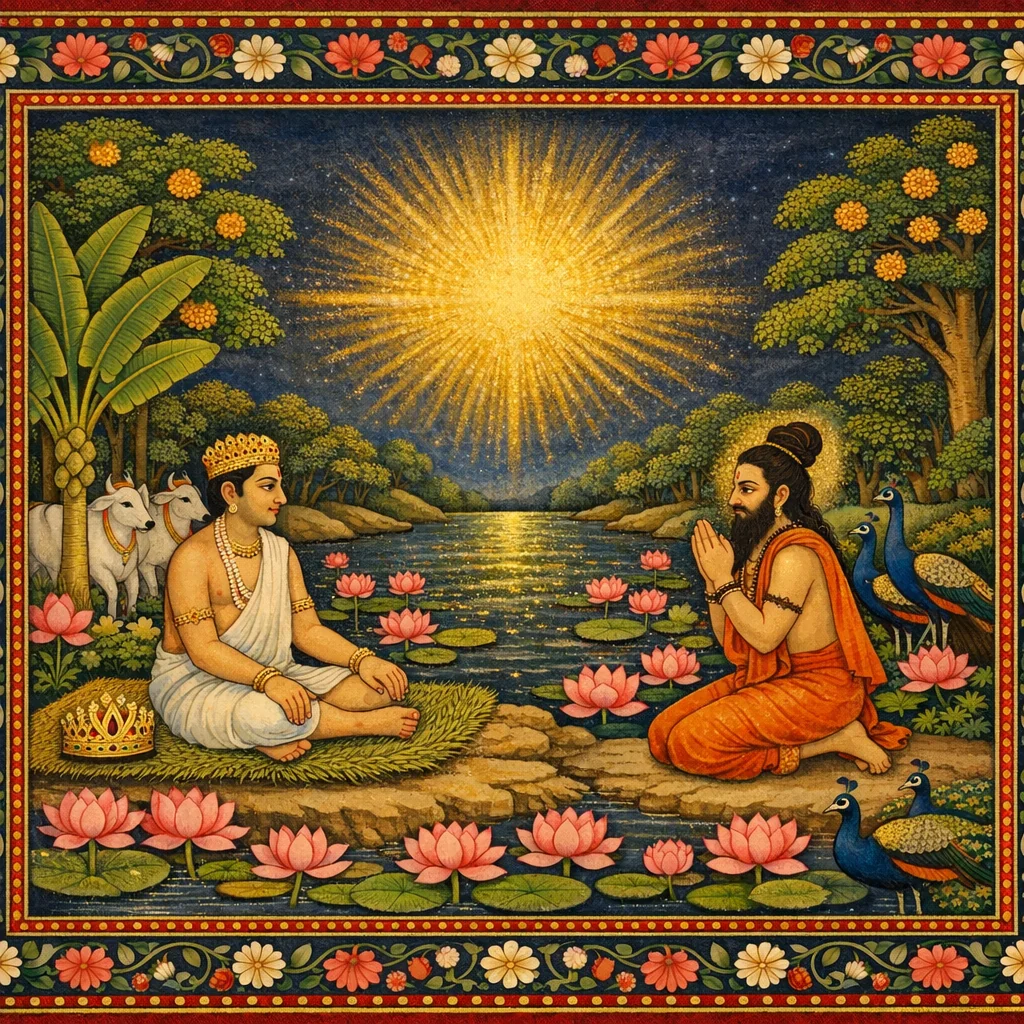
Continuing the deathbed dialogue, Sūta describes how Parīkṣit—having heard self-realization topics from Śukadeva—becomes intensely absorbed in Kṛṣṇa and relinquishes attachment to body, family, royal opulence, and even the standard triad of karma-driven pursuits (dharma, artha, kāma). From this purified platform, Parīkṣit frames precise, “People’s questions” about the Lord’s acintya śaktis: how Bhagavān creates innumerable universes, how He deploys modes (guṇas) and expansions (aṁśa/kalā) to maintain and dissolve the cosmos, and how the One appears to act singly, simultaneously, or sequentially. Śukadeva, requested to speak on the Lord’s creative energy, first remembers Hṛṣīkeśa (master of the senses) and offers a sustained series of obeisances that function as a theological preface: Kṛṣṇa purifies through bhakti-acts, grants liberation, empowers Brahmā with Vedic knowledge, enters the universe as the puruṣa, and even delivers the most fallen through association with devotees. The chapter closes by pointing forward to the paramparā source: Brahmā answering Nārada as received directly from the Lord—setting up the next stage of systematic cosmological exposition.
Shlokas
Verse 1
सूत उवाच वैयासकेरिति वचस्तत्त्वनिश्चयमात्मन: । उपधार्य मतिं कृष्णे औत्तरेय: सतीं व्यधात् ॥ १ ॥
Sūta Gosvāmī said: Mahārāja Parīkṣit, the son of Uttarā, after hearing the speeches of Śukadeva Gosvāmī, which were all about the truth of the self, applied his concentration faithfully upon Lord Kṛṣṇa.
Verse 2
आत्मजायासुतागारपशुद्रविणबन्धुषु । राज्ये चाविकले नित्यं विरूढां ममतां जहौ ॥ २ ॥
Mahārāja Parīkṣit, as a result of his wholehearted attraction for Lord Kṛṣṇa, was able to give up all deep-rooted affection for his personal body, his wife, his children, his palace, his animals like horses and elephants, his treasury house, his friends and relatives, and his undisputed kingdom.
Verse 3
पप्रच्छ चेममेवार्थं यन्मां पृच्छथ सत्तमा: । कृष्णानुभावश्रवणे श्रद्दधानो महामना: ॥ ३ ॥ संस्थां विज्ञाय संन्यस्य कर्म त्रैवर्गिकं च यत् । वासुदेवे भगवति आत्मभावं दृढं गत: ॥ ४ ॥
O great sages, the great soul Mahārāja Parīkṣit, constantly rapt in thought of Lord Kṛṣṇa, knowing well of his imminent death, renounced all sorts of fruitive activities, namely acts of religion, economic development and sense gratification, and thus fixed himself firmly in his natural love for Kṛṣṇa and asked all these questions, exactly as you are asking me.
Verse 4
पप्रच्छ चेममेवार्थं यन्मां पृच्छथ सत्तमा: । कृष्णानुभावश्रवणे श्रद्दधानो महामना: ॥ ३ ॥ संस्थां विज्ञाय संन्यस्य कर्म त्रैवर्गिकं च यत् । वासुदेवे भगवति आत्मभावं दृढं गत: ॥ ४ ॥
O great sages, the great soul Mahārāja Parīkṣit, constantly rapt in thought of Lord Kṛṣṇa, knowing well of his imminent death, renounced all sorts of fruitive activities, namely acts of religion, economic development and sense gratification, and thus fixed himself firmly in his natural love for Kṛṣṇa and asked all these questions, exactly as you are asking me.
Verse 5
राजोवाच समीचीनं वचो ब्रह्मन् सर्वज्ञस्य तवानघ । तमो विशीर्यते मह्यं हरे: कथयत: कथाम् ॥ ५ ॥
Mahārāja Parīkṣit said: O learned brāhmaṇa, you know everything because you are without material contamination. Therefore whatever you have spoken to me appears perfectly right. Your speeches are gradually destroying the darkness of my ignorance, for you are narrating the topics of the Lord.
Verse 6
भूय एव विवित्सामि भगवानात्ममायया । यथेदं सृजते विश्वं दुर्विभाव्यमधीश्वरै: ॥ ६ ॥
I beg to know from you how the Personality of Godhead, by His personal energies, creates these phenomenal universes as they are, which are inconceivable even to the great demigods.
Verse 7
यथा गोपायति विभुर्यथा संयच्छते पुन: । यां यां शक्तिमुपाश्रित्य पुरुशक्ति: पर: पुमान् । आत्मानं क्रीडयन् क्रीडन् करोति विकरोति च ॥ ७ ॥
Kindly describe how the Supreme Lord, who is all-powerful, engages His different energies and different expansions in maintaining and again winding up the phenomenal world in the sporting spirit of a player.
Verse 8
नूनं भगवतो ब्रह्मन् हरेरद्भुतकर्मण: । दुर्विभाव्यमिवाभाति कविभिश्चापि चेष्टितम् ॥ ८ ॥
O learned brāhmaṇa, the transcendental activities of the Lord are all wonderful, and they appear inconceivable because even great endeavors by many learned scholars have still proved insufficient for understanding them.
Verse 9
यथा गुणांस्तु प्रकृतेर्युगपत् क्रमशोऽपि वा । बिभर्ति भूरिशस्त्वेक: कुर्वन् कर्माणि जन्मभि: ॥ ९ ॥
The Supreme Personality of Godhead is one, whether He alone acts with the modes of material nature, or simultaneously expands in many forms, or expands consecutively to direct the modes of nature.
Verse 10
विचिकित्सितमेतन्मे ब्रवीतु भगवान् यथा । शाब्दे ब्रह्मणि निष्णात: परस्मिंश्च भवान्खलु ॥ १० ॥
Kindly clear up all these doubtful inquiries, because you are not only vastly learned in the Vedic literatures and self-realized in transcendence, but are also a great devotee of the Lord and are therefore as good as the Personality of Godhead.
Verse 11
सूत उवाच इत्युपामन्त्रितो राज्ञा गुणानुकथने हरे: । हृषीकेशमनुस्मृत्य प्रतिवक्तुं प्रचक्रमे ॥ ११ ॥
Sūta Gosvāmī said: When Śukadeva Gosvāmī was thus requested by the King to describe the creative energy of the Personality of Godhead, he then systematically remembered the master of the senses [Śrī Kṛṣṇa], and to reply properly he spoke thus.
Verse 12
श्री शुक उवाच नम: परस्मै पुरुषाय भूयसे सदुद्भवस्थाननिरोधलीलया । गृहीतशक्तित्रितयाय देहिना- मन्तर्भवायानुपलक्ष्यवर्त्मने ॥ १२ ॥
Śukadeva Gosvāmī said: Let me offer my respectful obeisances unto the Supreme Personality of Godhead, who, for the creation of the material world, accepts the three modes of nature. He is the complete whole residing within the body of everyone, and His ways are inconceivable.
Verse 13
भूयो नम: सद्वृजिनच्छिदेऽसता- मसम्भवायाखिलसत्त्वमूर्तये । पुंसां पुन: पारमहंस्य आश्रमे व्यवस्थितानामनुमृग्यदाशुषे ॥ १३ ॥
I again offer my respectful obeisances unto the form of complete existence and transcendence, who is the liberator of the pious devotees from all distresses and the destroyer of the further advances in atheistic temperament of the nondevotee-demons. For the transcendentalists who are situated in the topmost spiritual perfection, He grants their specific destinations.
Verse 14
नमो नमस्तेऽस्त्वृषभाय सात्वतां विदूरकाष्ठाय मुहु: कुयोगिनाम् । निरस्तसाम्यातिशयेन राधसा स्वधामनि ब्रह्मणि रंस्यते नम: ॥ १४ ॥
Let me offer my respectful obeisances unto Him who is the associate of the members of the Yadu dynasty and who is always a problem for the nondevotees. He is the supreme enjoyer of both the material and spiritual worlds, yet He enjoys His own abode in the spiritual sky. There is no one equal to Him because His transcendental opulence is immeasurable.
Verse 15
यत्कीर्तनं यत्स्मरणं यदीक्षणं यद्वन्दनं यच्छ्रवणं यदर्हणम् । लोकस्य सद्यो विधुनोति कल्मषं तस्मै सुभद्रश्रवसे नमो नम: ॥ १५ ॥
Let me offer my respectful obeisances unto the all-auspicious Lord Śrī Kṛṣṇa, about whom glorification, remembrances, audience, prayers, hearing and worship can at once cleanse the effects of all sins of the performer.
Verse 16
विचक्षणा यच्चरणोपसादनात् सङ्गं व्युदस्योभयतोऽन्तरात्मन: । विन्दन्ति हि ब्रह्मगतिं गतक्लमा- स्तस्मै सुभद्रश्रवसे नमो नम: ॥ १६ ॥
Let me offer my respectful obeisances again and again unto the all-auspicious Lord Śrī Kṛṣṇa. The highly intellectual, simply by surrendering unto His lotus feet, are relieved of all attachments to present and future existences and without difficulty progress toward spiritual existence.
Verse 17
तपस्विनो दानपरा यशस्विनो मनस्विनो मन्त्रविद: सुमङ्गला: । क्षेमं न विन्दन्ति विना यदर्पणं तस्मै सुभद्रश्रवसे नमो नम: ॥ १७ ॥
Let me offer my respectful obeisances unto the all-auspicious Lord Śrī Kṛṣṇa again and again because the great learned sages, the great performers of charity, the great workers of distinction, the great philosophers and mystics, the great chanters of the Vedic hymns and the great followers of Vedic principles cannot achieve any fruitful result without dedication of such great qualities to the service of the Lord.
Verse 18
किरातहूणान्ध्रपुलिन्दपुल्कशा आभीरशुम्भा यवना: खसादय: । येऽन्ये च पापा यदपाश्रयाश्रया: शुध्यन्ति तस्मै प्रभविष्णवे नम: ॥ १८ ॥
Kirāta, Hūṇa, Āndhra, Pulinda, Pulkaśa, Ābhīra, Śumbha, Yavana, members of the Khasa races and even others addicted to sinful acts can be purified by taking shelter of the devotees of the Lord, due to His being the supreme power. I beg to offer my respectful obeisances unto Him.
Verse 19
स एष आत्मात्मवतामधीश्वर- स्त्रयीमयो धर्ममयस्तपोमय: । गतव्यलीकैरजशङ्करादिभि- र्वितर्क्यलिङ्गो भगवान् प्रसीदताम् ॥ १९ ॥
He is the Supersoul and the Supreme Lord of all self-realized souls. He is the personification of the Vedas, religious scriptures and austerities. He is worshiped by Lord Brahmā and Śiva and all those who are transcendental to all pretensions. Being so revered with awe and veneration, may that Supreme Absolute be pleased with me.
Verse 20
श्रिय: पतिर्यज्ञपति: प्रजापति- र्धियां पतिर्लोकपतिर्धरापति: । पतिर्गतिश्चान्धकवृष्णिसात्वतां प्रसीदतां मे भगवान् सतां पति: ॥ २० ॥
May Lord Śrī Kṛṣṇa, who is the worshipable Lord of all devotees, the protector and glory of all the kings like Andhaka and Vṛṣṇi of the Yadu dynasty, the husband of all goddesses of fortune, the director of all sacrifices and therefore the leader of all living entities, the controller of all intelligence, the proprietor of all planets, spiritual and material, and the supreme incarnation on the earth (the supreme all in all), be merciful upon me.
Verse 21
यदङ्घ्र्यध्यानसमाधिधौतया धियानुपश्यन्ति हि तत्त्वमात्मन: । वदन्ति चैतत् कवयो यथारुचं स मे मुकुन्दो भगवान् प्रसीदताम् ॥ २१ ॥
It is the Personality of Godhead Śrī Kṛṣṇa who gives liberation. By thinking of His lotus feet at every second, following in the footsteps of authorities, the devotee in trance can see the Absolute Truth. The learned mental speculators, however, think of Him according to their whims. May the Lord be pleased with me.
Verse 22
प्रचोदिता येन पुरा सरस्वती वितन्वताजस्य सतीं स्मृतिं हृदि । स्वलक्षणा प्रादुरभूत् किलास्यत: स मे ऋषीणामृषभ: प्रसीदताम् ॥ २२ ॥
May the Lord, who in the beginning of the creation amplified the potent knowledge of Brahmā from within his heart and inspired him with full knowledge of creation and of His own Self, and who appeared to be generated from the mouth of Brahmā, be pleased with me.
Verse 23
भूतैर्महद्भिर्य इमा: पुरो विभु- र्निर्माय शेते यदमूषु पूरुष: । भुङ्क्ते गुणान् षोडश षोडशात्मक: सोऽलङ्कृषीष्ट भगवान् वचांसि मे ॥ २३ ॥
May the Supreme Personality of Godhead, who enlivens the materially created bodies of the elements by lying down within the universe, and who in His puruṣa incarnation causes the living being to be subjected to the sixteen divisions of material modes which are his generator, be pleased to decorate my statements.
Verse 24
नमस्तस्मै भगवते वासुदेवाय वेधसे । पपुर्ज्ञानमयं सौम्या यन्मुखाम्बुरुहासवम् ॥ २४ ॥
I offer my respectful obeisances unto Śrīla Vyāsadeva, the incarnation of Vāsudeva who compiled the Vedic scriptures. The pure devotees drink up the nectarean transcendental knowledge dropping from the lotuslike mouth of the Lord.
Verse 25
एतदेवात्मभू राजन् नारदाय विपृच्छते । वेदगर्भोऽभ्यधात् साक्षाद् यदाह हरिरात्मन: ॥ २५ ॥
My dear King, Brahmā, the firstborn, on being questioned by Nārada, exactly apprised him on this subject as it had been directly spoken by the Lord to His own son, who was impregnated with Vedic knowledge from his very birth.
Frequently Asked Questions
Parīkṣit renounces fruitive motivation (karma-miśra aims) because death is imminent and because attraction to Kṛṣṇa has matured into niṣkāma-bhakti. His questions are not curiosity for control or prestige; they are bhakti-driven inquiry (paripraśna) meant to fix consciousness on Bhagavān. In the Bhāgavata, cosmology becomes a meditation-object: by hearing how everything depends on Kṛṣṇa’s śakti, the listener’s attachment to temporary designations dissolves.
Bhagavān is advaya (non-dual) in essence, yet manifests variegated expansions through His internal and external energies. The guṇas belong to prakṛti (material nature), while the Lord remains transcendental; He can preside over the guṇas via puruṣa expansions without becoming conditioned. Thus, the One may appear to act alone, simultaneously in multiple forms, or sequentially—without compromising unity—because all forms are expressions of the same supreme reality and will.
They denote groups traditionally viewed as mleccha or outside orthodox Vedic culture. The Bhāgavata’s theological point is universal eligibility: even those habituated to pāpa (sin) can be purified by taking shelter of the Lord’s devotees (bhakta-āśraya). Deliverance is attributed to the Lord’s supreme power operating through sādhus, emphasizing sadhu-saṅga as a decisive means of purification.
This functions as maṅgalācaraṇa (auspicious invocation) and a hermeneutic key: the subject of creation must be approached through devotion and humility, not mere speculation. The prayers also summarize core doctrines—Kṛṣṇa as liberator, indwelling Supersoul, source of Brahmā’s knowledge, and puruṣa entering the cosmos—thereby framing the forthcoming cosmology as bhakti-siddhānta rather than impersonal physics.