Adhyaya 1
Kali-yuga Dynasties and the Degradation of Kingship
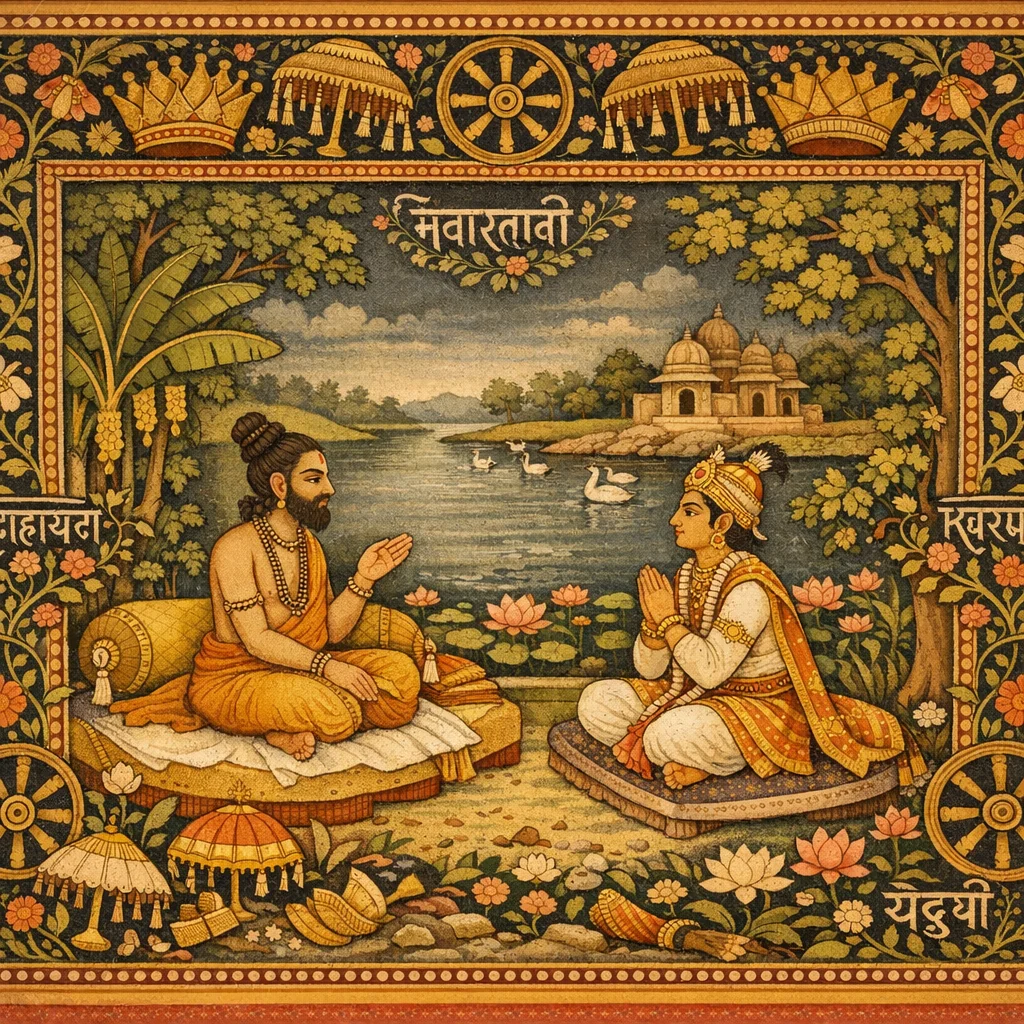
Continuing the prior enumeration of future rulers, Śukadeva Gosvāmī extends the vaṁśānucarita into Kali-yuga by tracing successive dynastic turnovers marked by assassination, ministerial coups, and the rise of non-kṣatriya power. He lists the Pradyotana line, then the Śiśunāga kings, culminating in Mahānandi’s son Nanda—born of a śūdra woman—whose immense military and wealth signal a decisive shift in political dharma and the marginalization of traditional kṣatriya leadership. The narrative proceeds through the Nandas and the intervention of the brāhmaṇa Cāṇakya, who topples them and installs the Mauryas, followed by the Śuṅgas and then the Kāṇvas. After the Kāṇvas fall to an Andhra śūdra servant, a long Andhra sequence is outlined, followed by other groups (Ābhīras, Gardabhīs, Kaṅkas, Yavanas, Turuṣkas, Guruṇḍas, Maulas, and the Kilakilā kings). The chapter then shifts from lists to moral prognosis: barbarous rulers will exploit citizens and dismantle Vedic standards, and the populace will imitate such conduct—setting up the next chapter’s broader Kali-yuga symptoms and spiritual remedies.
Shlokas
Verse 1
श्रीशुक उवाच योऽन्त्य: पुरञ्जयो नाम भविष्यो बारहद्रथ: । तस्यामात्यस्तु शुनको हत्वा स्वामिनमात्मजम् ॥ १ ॥ प्रद्योतसंज्ञं राजानं कर्ता यत् पालक: सुत: । विशाखयूपस्तत्पुत्रो भविता राजकस्तत: ॥ २ ॥
Śukadeva Gosvāmī said: The last king mentioned in our previous enumeration of the future rulers of the Māgadha dynasty was Purañjaya, who will take birth as the descendant of Bṛhadratha. Purañjaya’s minister Śunaka will assassinate the king and install his own son, Pradyota, on the throne. The son of Pradyota will be Pālaka, his son will be Viśākhayūpa, and his son will be Rājaka.
Verse 2
श्रीशुक उवाच योऽन्त्य: पुरञ्जयो नाम भविष्यो बारहद्रथ: । तस्यामात्यस्तु शुनको हत्वा स्वामिनमात्मजम् ॥ १ ॥ प्रद्योतसंज्ञं राजानं कर्ता यत् पालक: सुत: । विशाखयूपस्तत्पुत्रो भविता राजकस्तत: ॥ २ ॥
Śukadeva Gosvāmī said: The last king mentioned in our previous enumeration of the future rulers of the Māgadha dynasty was Purañjaya, who will take birth as the descendant of Bṛhadratha. Purañjaya’s minister Śunaka will assassinate the king and install his own son, Pradyota, on the throne. The son of Pradyota will be Pālaka, his son will be Viśākhayūpa, and his son will be Rājaka.
Verse 3
नन्दिवर्धनस्तत्पुत्र: पञ्च प्रद्योतना इमे । अष्टत्रिंशोत्तरशतं भोक्ष्यन्ति पृथिवीं नृपा: ॥ ३ ॥
The son of Rājaka will be Nandivardhana, and thus in the Pradyotana dynasty there will be five kings, who will enjoy the earth for 138 years.
Verse 4
शिशुनागस्ततो भाव्य: काकवर्णस्तु तत्सुत: । क्षेमधर्मा तस्य सुत: क्षेत्रज्ञ: क्षेमधर्मज: ॥ ४ ॥
Nandivardhana will have a son named Śiśunāga, and his son will be known as Kākavarṇa. The son of Kākavarṇa will be Kṣemadharmā, and the son of Kṣemadharmā will be Kṣetrajña.
Verse 5
विधिसार: सुतस्तस्याजातशत्रुर्भविष्यति । दर्भकस्तत्सुतो भावी दर्भकस्याजय: स्मृत: ॥ ५ ॥
The son of Kṣetrajña will be Vidhisāra, and his son will be Ajātaśatru. Ajātaśatru will have a son named Darbhaka, and his son will be Ajaya.
Verse 6
नन्दिवर्धन आजेयो महानन्दि: सुतस्तत: । शिशुनागा दशैवैते सष्ट्युत्तरशतत्रयम् ॥ ६ ॥ समा भोक्ष्यन्ति पृथिवीं कुरुश्रेष्ठ कलौ नृपा: । महानन्दिसुतो राजन् शूद्रागर्भोद्भवो बली ॥ ७ ॥ महापद्मपति: कश्चिन्नन्द: क्षत्रविनाशकृत् । ततो नृपा भविष्यन्ति शूद्रप्रायास्त्वधार्मिका: ॥ ८ ॥
Ajaya will father a second Nandivardhana, whose son will be Mahānandi. O best of the Kurus, these ten kings of the Śiśunāga dynasty will rule the earth for a total of 360 years during the Age of Kali. My dear Parīkṣit, King Mahānandi will father a very powerful son in the womb of a śūdra woman. He will be known as Nanda and will be the master of millions of soldiers and fabulous wealth. He will wreak havoc among the kṣatriyas, and from that time onward virtually all kings will be irreligious śūdras.
Verse 7
नन्दिवर्धन आजेयो महानन्दि: सुतस्तत: । शिशुनागा दशैवैते सष्ट्युत्तरशतत्रयम् ॥ ६ ॥ समा भोक्ष्यन्ति पृथिवीं कुरुश्रेष्ठ कलौ नृपा: । महानन्दिसुतो राजन् शूद्रागर्भोद्भवो बली ॥ ७ ॥ महापद्मपति: कश्चिन्नन्द: क्षत्रविनाशकृत् । ततो नृपा भविष्यन्ति शूद्रप्रायास्त्वधार्मिका: ॥ ८ ॥
Ajaya will father a second Nandivardhana, whose son will be Mahānandi. O best of the Kurus, these ten kings of the Śiśunāga dynasty will rule the earth for a total of 360 years during the Age of Kali. My dear Parīkṣit, King Mahānandi will father a very powerful son in the womb of a śūdra woman. He will be known as Nanda and will be the master of millions of soldiers and fabulous wealth. He will wreak havoc among the kṣatriyas, and from that time onward virtually all kings will be irreligious śūdras.
Verse 8
नन्दिवर्धन आजेयो महानन्दि: सुतस्तत: । शिशुनागा दशैवैते सष्ट्युत्तरशतत्रयम् ॥ ६ ॥ समा भोक्ष्यन्ति पृथिवीं कुरुश्रेष्ठ कलौ नृपा: । महानन्दिसुतो राजन् शूद्रागर्भोद्भवो बली ॥ ७ ॥ महापद्मपति: कश्चिन्नन्द: क्षत्रविनाशकृत् । ततो नृपा भविष्यन्ति शूद्रप्रायास्त्वधार्मिका: ॥ ८ ॥
Ajaya will father a second Nandivardhana, whose son will be Mahānandi. O best of the Kurus, these ten kings of the Śiśunāga dynasty will rule the earth for a total of 360 years during the Age of Kali. My dear Parīkṣit, King Mahānandi will father a very powerful son in the womb of a śūdra woman. He will be known as Nanda and will be the master of millions of soldiers and fabulous wealth. He will wreak havoc among the kṣatriyas, and from that time onward virtually all kings will be irreligious śūdras.
Verse 9
स एकच्छत्रां पृथिवीमनुल्लङ्घितशासन: । शासिष्यति महापद्मो द्वितीय इव भार्गव: ॥ ९ ॥
That lord of Mahāpadma, King Nanda, will rule over the entire earth just like a second Paraśurāma, and no one will challenge his authority.
Verse 10
तस्य चाष्टौ भविष्यन्ति सुमाल्यप्रमुखा: सुता: । य इमां भोक्ष्यन्ति महीं राजानश्च शतं समा: ॥ १० ॥
He will have eight sons, headed by Sumālya, who will control the earth as powerful kings for one hundred years.
Verse 11
नव नन्दान् द्विज: कश्चित् प्रपन्नानुद्धरिष्यति । तेषामभावे जगतीं मौर्या भोक्ष्यन्ति वै कलौ ॥ ११ ॥
A certain brāhmaṇa [Cāṇakya] will betray the trust of King Nanda and his eight sons and will destroy their dynasty. In their absence the Mauryas will rule the world as the Age of Kali continues.
Verse 12
स एव चन्द्रगुप्तं वै द्विजो राज्येऽभिषेक्ष्यति । तत्सुतो वारिसारस्तु ततश्चाशोकवर्धन: ॥ १२ ॥
This brāhmaṇa will enthrone Candragupta, whose son will be named Vārisāra. The son of Vārisāra will be Aśokavardhana.
Verse 13
सुयशा भविता तस्य सङ्गत: सुयश:सुत: । शालिशूकस्ततस्तस्य सोमशर्मा भविष्यति । शतधन्वा ततस्तस्य भविता तद् बृहद्रथ: ॥ १३ ॥
Aśokavardhana will be followed by Suyaśā, whose son will be Saṅgata. His son will be Śāliśūka, Śāliśūka’s son will be Somaśarmā, and Somaśarmā’s son will be Śatadhanvā. His son will be known as Bṛhadratha.
Verse 14
मौर्या ह्येते दश नृपा: सप्तत्रिंशच्छतोत्तरम् । समा भोक्ष्यन्ति पृथिवीं कलौ कुरुकुलोद्वह ॥ १४ ॥
O best of the Kurus, these ten Maurya kings will rule the earth for 137 years of the Kali-yuga.
Verse 15
अग्निमित्रस्ततस्तस्मात् सुज्येष्ठो भविता तत: । वसुमित्रो भद्रकश्च पुलिन्दो भविता सुत: ॥ १५ ॥ ततो घोष: सुतस्तस्माद् वज्रमित्रो भविष्यति । ततो भागवतस्तस्माद् देवभूति: कुरूद्वह ॥ १६ ॥ शुङ्गा दशैते भोक्ष्यन्ति भूमिं वर्षशताधिकम् । तत: काण्वानियं भूमिर्यास्यत्यल्पगुणान्नृप ॥ १७ ॥
My dear King Parīkṣit, Agnimitra will follow as king, and then Sujyeṣṭha. Sujyeṣṭha will be followed by Vasumitra, Bhadraka, and the son of Bhadraka, Pulinda. Then the son of Pulinda, named Ghoṣa, will rule, followed by Vajramitra, Bhāgavata and Devabhūti. In this way, O most eminent of the Kuru heroes, ten Śuṅga kings will rule over the earth for more than one hundred years. Then the earth will come under the subjugation of the kings of the Kāṇva dynasty, who will manifest very few good qualities.
Verse 16
अग्निमित्रस्ततस्तस्मात् सुज्येष्ठो भविता तत: । वसुमित्रो भद्रकश्च पुलिन्दो भविता सुत: ॥ १५ ॥ ततो घोष: सुतस्तस्माद् वज्रमित्रो भविष्यति । ततो भागवतस्तस्माद् देवभूति: कुरूद्वह ॥ १६ ॥ शुङ्गा दशैते भोक्ष्यन्ति भूमिं वर्षशताधिकम् । तत: काण्वानियं भूमिर्यास्यत्यल्पगुणान्नृप ॥ १७ ॥
My dear King Parīkṣit, Agnimitra will follow as king, and then Sujyeṣṭha. Sujyeṣṭha will be followed by Vasumitra, Bhadraka, and the son of Bhadraka, Pulinda. Then the son of Pulinda, named Ghoṣa, will rule, followed by Vajramitra, Bhāgavata and Devabhūti. In this way, O most eminent of the Kuru heroes, ten Śuṅga kings will rule over the earth for more than one hundred years. Then the earth will come under the subjugation of the kings of the Kāṇva dynasty, who will manifest very few good qualities.
Verse 17
अग्निमित्रस्ततस्तस्मात् सुज्येष्ठो भविता तत: । वसुमित्रो भद्रकश्च पुलिन्दो भविता सुत: ॥ १५ ॥ ततो घोष: सुतस्तस्माद् वज्रमित्रो भविष्यति । ततो भागवतस्तस्माद् देवभूति: कुरूद्वह ॥ १६ ॥ शुङ्गा दशैते भोक्ष्यन्ति भूमिं वर्षशताधिकम् । तत: काण्वानियं भूमिर्यास्यत्यल्पगुणान्नृप ॥ १७ ॥
My dear King Parīkṣit, Agnimitra will follow as king, and then Sujyeṣṭha. Sujyeṣṭha will be followed by Vasumitra, Bhadraka, and the son of Bhadraka, Pulinda. Then the son of Pulinda, named Ghoṣa, will rule, followed by Vajramitra, Bhāgavata and Devabhūti. In this way, O most eminent of the Kuru heroes, ten Śuṅga kings will rule over the earth for more than one hundred years. Then the earth will come under the subjugation of the kings of the Kāṇva dynasty, who will manifest very few good qualities.
Verse 18
शुङ्गं हत्वा देवभूतिं काण्वोऽमात्यस्तु कामिनम् । स्वयं करिष्यते राज्यं वसुदेवो महामति: ॥ १८ ॥
Vasudeva, an intelligent minister coming from the Kāṇva family, will kill the last of the Śuṅga kings, a lusty debauchee named Devabhūti, and assume rulership himself.
Verse 19
तस्य पुत्रस्तु भूमित्रस्तस्य नारायण: सुत: । काण्वायना इमे भूमिं चत्वारिंशच्च पञ्च च । शतानि त्रीणि भोक्ष्यन्ति वर्षाणां च कलौ युगे ॥ १९ ॥
The son of Vasudeva will be Bhūmitra, and his son will be Nārāyaṇa. These kings of the Kāṇva dynasty will rule the earth for 345 more years of the Kali-yuga.
Verse 20
हत्वा काण्वं सुशर्माणं तद् भृत्यो वृषलो बली । गां भोक्ष्यत्यन्ध्रजातीय: कञ्चित् कालमसत्तम: ॥ २० ॥
The last of the Kāṇvas, Suśarmā, will be murdered by his own servant, Balī, a low-class śūdra of the Andhra race. This most degraded Mahārāja Balī will have control over the earth for some time.
Verse 21
कृष्णनामाथ तद्भ्राता भविता पृथिवीपति: । श्रीशान्तकर्णस्तत्पुत्र: पौर्णमासस्तु तत्सुत: ॥ २१ ॥ लम्बोदरस्तु तत्पुत्रस्तस्माच्चिबिलको नृप: । मेघस्वातिश्चिबिलकादटमानस्तु तस्य च ॥ २२ ॥ अनिष्टकर्मा हालेयस्तलकस्तस्य चात्मज: । पुरीषभीरुस्तत्पुत्रस्ततो राजा सुनन्दन: ॥ २३ ॥ चकोरो बहवो यत्र शिवस्वातिररिन्दम: । तस्यापि गोमतीपुत्र: पुरीमान् भविता तत: ॥ २४ ॥ मेदशिरा: शिवस्कन्दो यज्ञश्रीस्तत्सुतस्तत: । विजयस्तत्सुतो भाव्यश्चन्द्रविज्ञ: सलोमधि: ॥ २५ ॥ एते त्रिंशन्नृपतयश्चत्वार्यब्दशतानि च । षट्पञ्चाशच्च पृथिवीं भोक्ष्यन्ति कुरुनन्दन ॥ २६ ॥
The brother of Balī, named Kṛṣṇa, will become the next ruler of the earth. His son will be Śāntakarṇa, and his son will be Paurṇamāsa. The son of Paurṇamāsa will be Lambodara, who will father Mahārāja Cibilaka. From Cibilaka will come Meghasvāti, whose son will be Aṭamāna. The son of Aṭamāna will be Aniṣṭakarmā. His son will be Hāleya, and his son will be Talaka. The son of Talaka will be Purīṣabhīru, and following him Sunandana will become king. Sunandana will be followed by Cakora and the eight Bahus, among whom Śivasvāti will be a great subduer of enemies. The son of Śivasvāti will be Gomatī. His son will be Purīmān, whose son will be Medaśirā. His son will be Śivaskanda, and his son will be Yajñaśrī. The son of Yajñaśrī will be Vijaya, who will have two sons, Candravijña and Lomadhi. These thirty kings will enjoy sovereignty over the earth for a total of 456 years, O favorite son of the Kurus.
Verse 22
कृष्णनामाथ तद्भ्राता भविता पृथिवीपति: । श्रीशान्तकर्णस्तत्पुत्र: पौर्णमासस्तु तत्सुत: ॥ २१ ॥ लम्बोदरस्तु तत्पुत्रस्तस्माच्चिबिलको नृप: । मेघस्वातिश्चिबिलकादटमानस्तु तस्य च ॥ २२ ॥ अनिष्टकर्मा हालेयस्तलकस्तस्य चात्मज: । पुरीषभीरुस्तत्पुत्रस्ततो राजा सुनन्दन: ॥ २३ ॥ चकोरो बहवो यत्र शिवस्वातिररिन्दम: । तस्यापि गोमतीपुत्र: पुरीमान् भविता तत: ॥ २४ ॥ मेदशिरा: शिवस्कन्दो यज्ञश्रीस्तत्सुतस्तत: । विजयस्तत्सुतो भाव्यश्चन्द्रविज्ञ: सलोमधि: ॥ २५ ॥ एते त्रिंशन्नृपतयश्चत्वार्यब्दशतानि च । षट्पञ्चाशच्च पृथिवीं भोक्ष्यन्ति कुरुनन्दन ॥ २६ ॥
The brother of Balī, named Kṛṣṇa, will become the next ruler of the earth. His son will be Śāntakarṇa, and his son will be Paurṇamāsa. The son of Paurṇamāsa will be Lambodara, who will father Mahārāja Cibilaka. From Cibilaka will come Meghasvāti, whose son will be Aṭamāna. The son of Aṭamāna will be Aniṣṭakarmā. His son will be Hāleya, and his son will be Talaka. The son of Talaka will be Purīṣabhīru, and following him Sunandana will become king. Sunandana will be followed by Cakora and the eight Bahus, among whom Śivasvāti will be a great subduer of enemies. The son of Śivasvāti will be Gomatī. His son will be Purīmān, whose son will be Medaśirā. His son will be Śivaskanda, and his son will be Yajñaśrī. The son of Yajñaśrī will be Vijaya, who will have two sons, Candravijña and Lomadhi. These thirty kings will enjoy sovereignty over the earth for a total of 456 years, O favorite son of the Kurus.
Verse 23
कृष्णनामाथ तद्भ्राता भविता पृथिवीपति: । श्रीशान्तकर्णस्तत्पुत्र: पौर्णमासस्तु तत्सुत: ॥ २१ ॥ लम्बोदरस्तु तत्पुत्रस्तस्माच्चिबिलको नृप: । मेघस्वातिश्चिबिलकादटमानस्तु तस्य च ॥ २२ ॥ अनिष्टकर्मा हालेयस्तलकस्तस्य चात्मज: । पुरीषभीरुस्तत्पुत्रस्ततो राजा सुनन्दन: ॥ २३ ॥ चकोरो बहवो यत्र शिवस्वातिररिन्दम: । तस्यापि गोमतीपुत्र: पुरीमान् भविता तत: ॥ २४ ॥ मेदशिरा: शिवस्कन्दो यज्ञश्रीस्तत्सुतस्तत: । विजयस्तत्सुतो भाव्यश्चन्द्रविज्ञ: सलोमधि: ॥ २५ ॥ एते त्रिंशन्नृपतयश्चत्वार्यब्दशतानि च । षट्पञ्चाशच्च पृथिवीं भोक्ष्यन्ति कुरुनन्दन ॥ २६ ॥
The brother of Balī, named Kṛṣṇa, will become the next ruler of the earth. His son will be Śāntakarṇa, and his son will be Paurṇamāsa. The son of Paurṇamāsa will be Lambodara, who will father Mahārāja Cibilaka. From Cibilaka will come Meghasvāti, whose son will be Aṭamāna. The son of Aṭamāna will be Aniṣṭakarmā. His son will be Hāleya, and his son will be Talaka. The son of Talaka will be Purīṣabhīru, and following him Sunandana will become king. Sunandana will be followed by Cakora and the eight Bahus, among whom Śivasvāti will be a great subduer of enemies. The son of Śivasvāti will be Gomatī. His son will be Purīmān, whose son will be Medaśirā. His son will be Śivaskanda, and his son will be Yajñaśrī. The son of Yajñaśrī will be Vijaya, who will have two sons, Candravijña and Lomadhi. These thirty kings will enjoy sovereignty over the earth for a total of 456 years, O favorite son of the Kurus.
Verse 24
कृष्णनामाथ तद्भ्राता भविता पृथिवीपति: । श्रीशान्तकर्णस्तत्पुत्र: पौर्णमासस्तु तत्सुत: ॥ २१ ॥ लम्बोदरस्तु तत्पुत्रस्तस्माच्चिबिलको नृप: । मेघस्वातिश्चिबिलकादटमानस्तु तस्य च ॥ २२ ॥ अनिष्टकर्मा हालेयस्तलकस्तस्य चात्मज: । पुरीषभीरुस्तत्पुत्रस्ततो राजा सुनन्दन: ॥ २३ ॥ चकोरो बहवो यत्र शिवस्वातिररिन्दम: । तस्यापि गोमतीपुत्र: पुरीमान् भविता तत: ॥ २४ ॥ मेदशिरा: शिवस्कन्दो यज्ञश्रीस्तत्सुतस्तत: । विजयस्तत्सुतो भाव्यश्चन्द्रविज्ञ: सलोमधि: ॥ २५ ॥ एते त्रिंशन्नृपतयश्चत्वार्यब्दशतानि च । षट्पञ्चाशच्च पृथिवीं भोक्ष्यन्ति कुरुनन्दन ॥ २६ ॥
The brother of Balī, named Kṛṣṇa, will become the next ruler of the earth. His son will be Śāntakarṇa, and his son will be Paurṇamāsa. The son of Paurṇamāsa will be Lambodara, who will father Mahārāja Cibilaka. From Cibilaka will come Meghasvāti, whose son will be Aṭamāna. The son of Aṭamāna will be Aniṣṭakarmā. His son will be Hāleya, and his son will be Talaka. The son of Talaka will be Purīṣabhīru, and following him Sunandana will become king. Sunandana will be followed by Cakora and the eight Bahus, among whom Śivasvāti will be a great subduer of enemies. The son of Śivasvāti will be Gomatī. His son will be Purīmān, whose son will be Medaśirā. His son will be Śivaskanda, and his son will be Yajñaśrī. The son of Yajñaśrī will be Vijaya, who will have two sons, Candravijña and Lomadhi. These thirty kings will enjoy sovereignty over the earth for a total of 456 years, O favorite son of the Kurus.
Verse 25
कृष्णनामाथ तद्भ्राता भविता पृथिवीपति: । श्रीशान्तकर्णस्तत्पुत्र: पौर्णमासस्तु तत्सुत: ॥ २१ ॥ लम्बोदरस्तु तत्पुत्रस्तस्माच्चिबिलको नृप: । मेघस्वातिश्चिबिलकादटमानस्तु तस्य च ॥ २२ ॥ अनिष्टकर्मा हालेयस्तलकस्तस्य चात्मज: । पुरीषभीरुस्तत्पुत्रस्ततो राजा सुनन्दन: ॥ २३ ॥ चकोरो बहवो यत्र शिवस्वातिररिन्दम: । तस्यापि गोमतीपुत्र: पुरीमान् भविता तत: ॥ २४ ॥ मेदशिरा: शिवस्कन्दो यज्ञश्रीस्तत्सुतस्तत: । विजयस्तत्सुतो भाव्यश्चन्द्रविज्ञ: सलोमधि: ॥ २५ ॥ एते त्रिंशन्नृपतयश्चत्वार्यब्दशतानि च । षट्पञ्चाशच्च पृथिवीं भोक्ष्यन्ति कुरुनन्दन ॥ २६ ॥
The brother of Balī, named Kṛṣṇa, will become the next ruler of the earth. His son will be Śāntakarṇa, and his son will be Paurṇamāsa. The son of Paurṇamāsa will be Lambodara, who will father Mahārāja Cibilaka. From Cibilaka will come Meghasvāti, whose son will be Aṭamāna. The son of Aṭamāna will be Aniṣṭakarmā. His son will be Hāleya, and his son will be Talaka. The son of Talaka will be Purīṣabhīru, and following him Sunandana will become king. Sunandana will be followed by Cakora and the eight Bahus, among whom Śivasvāti will be a great subduer of enemies. The son of Śivasvāti will be Gomatī. His son will be Purīmān, whose son will be Medaśirā. His son will be Śivaskanda, and his son will be Yajñaśrī. The son of Yajñaśrī will be Vijaya, who will have two sons, Candravijña and Lomadhi. These thirty kings will enjoy sovereignty over the earth for a total of 456 years, O favorite son of the Kurus.
Verse 26
कृष्णनामाथ तद्भ्राता भविता पृथिवीपति: । श्रीशान्तकर्णस्तत्पुत्र: पौर्णमासस्तु तत्सुत: ॥ २१ ॥ लम्बोदरस्तु तत्पुत्रस्तस्माच्चिबिलको नृप: । मेघस्वातिश्चिबिलकादटमानस्तु तस्य च ॥ २२ ॥ अनिष्टकर्मा हालेयस्तलकस्तस्य चात्मज: । पुरीषभीरुस्तत्पुत्रस्ततो राजा सुनन्दन: ॥ २३ ॥ चकोरो बहवो यत्र शिवस्वातिररिन्दम: । तस्यापि गोमतीपुत्र: पुरीमान् भविता तत: ॥ २४ ॥ मेदशिरा: शिवस्कन्दो यज्ञश्रीस्तत्सुतस्तत: । विजयस्तत्सुतो भाव्यश्चन्द्रविज्ञ: सलोमधि: ॥ २५ ॥ एते त्रिंशन्नृपतयश्चत्वार्यब्दशतानि च । षट्पञ्चाशच्च पृथिवीं भोक्ष्यन्ति कुरुनन्दन ॥ २६ ॥
The brother of Balī, named Kṛṣṇa, will become the next ruler of the earth. His son will be Śāntakarṇa, and his son will be Paurṇamāsa. The son of Paurṇamāsa will be Lambodara, who will father Mahārāja Cibilaka. From Cibilaka will come Meghasvāti, whose son will be Aṭamāna. The son of Aṭamāna will be Aniṣṭakarmā. His son will be Hāleya, and his son will be Talaka. The son of Talaka will be Purīṣabhīru, and following him Sunandana will become king. Sunandana will be followed by Cakora and the eight Bahus, among whom Śivasvāti will be a great subduer of enemies. The son of Śivasvāti will be Gomatī. His son will be Purīmān, whose son will be Medaśirā. His son will be Śivaskanda, and his son will be Yajñaśrī. The son of Yajñaśrī will be Vijaya, who will have two sons, Candravijña and Lomadhi. These thirty kings will enjoy sovereignty over the earth for a total of 456 years, O favorite son of the Kurus.
Verse 27
सप्ताभीरा आवभृत्या दश गर्दभिनो नृपा: । कङ्का: षोडश भूपाला भविष्यन्त्यतिलोलुपा: ॥ २७ ॥
Then will follow seven kings of the Ābhīra race from the city of Avabhṛti, and then ten Gardabhīs. After them, sixteen kings of the Kaṅkas will rule and will be known for their excessive greed.
Verse 28
ततोऽष्टौ यवना भाव्याश्चतुर्दश तुरुष्कका: । भूयो दश गुरुण्डाश्च मौला एकादशैव तु ॥ २८ ॥
Eight Yavanas will then take power, followed by fourteen Turuṣkas, ten Guruṇḍas and eleven kings of the Maula dynasty.
Verse 29
एते भोक्ष्यन्ति पृथिवीं दशवर्षशतानि च । नवाधिकां च नवतिं मौला एकादश क्षितिम् ॥ २९ ॥ भोक्ष्यन्त्यब्दशतान्यङ्ग त्रीणि तै: संस्थिते तत: । किलकिलायां नृपतयो भूतनन्दोऽथ वङ्गिरि: ॥ ३० ॥ शिशुनन्दिश्च तद्भ्राता यशोनन्दि: प्रवीरक: । इत्येते वै वर्षशतं भविष्यन्त्यधिकानि षट् ॥ ३१ ॥
These Ābhīras, Gardabhīs and Kaṅkas will enjoy the earth for 1,099 years, and the Maulas will rule for 300 years. When all of them have died off there will appear in the city of Kilakilā a dynasty of kings consisting of Bhūtananda, Vaṅgiri, Śiśunandi, Śiśunandi’s brother Yaśonandi, and Pravīraka. These kings of Kilakilā will hold sway for a total of 106 years.
Verse 30
एते भोक्ष्यन्ति पृथिवीं दशवर्षशतानि च । नवाधिकां च नवतिं मौला एकादश क्षितिम् ॥ २९ ॥ भोक्ष्यन्त्यब्दशतान्यङ्ग त्रीणि तै: संस्थिते तत: । किलकिलायां नृपतयो भूतनन्दोऽथ वङ्गिरि: ॥ ३० ॥ शिशुनन्दिश्च तद्भ्राता यशोनन्दि: प्रवीरक: । इत्येते वै वर्षशतं भविष्यन्त्यधिकानि षट् ॥ ३१ ॥
These Ābhīras, Gardabhīs and Kaṅkas will enjoy the earth for 1,099 years, and the Maulas will rule for 300 years. When all of them have died off there will appear in the city of Kilakilā a dynasty of kings consisting of Bhūtananda, Vaṅgiri, Śiśunandi, Śiśunandi’s brother Yaśonandi, and Pravīraka. These kings of Kilakilā will hold sway for a total of 106 years.
Verse 31
एते भोक्ष्यन्ति पृथिवीं दशवर्षशतानि च । नवाधिकां च नवतिं मौला एकादश क्षितिम् ॥ २९ ॥ भोक्ष्यन्त्यब्दशतान्यङ्ग त्रीणि तै: संस्थिते तत: । किलकिलायां नृपतयो भूतनन्दोऽथ वङ्गिरि: ॥ ३० ॥ शिशुनन्दिश्च तद्भ्राता यशोनन्दि: प्रवीरक: । इत्येते वै वर्षशतं भविष्यन्त्यधिकानि षट् ॥ ३१ ॥
These Ābhīras, Gardabhīs and Kaṅkas will enjoy the earth for 1,099 years, and the Maulas will rule for 300 years. When all of them have died off there will appear in the city of Kilakilā a dynasty of kings consisting of Bhūtananda, Vaṅgiri, Śiśunandi, Śiśunandi’s brother Yaśonandi, and Pravīraka. These kings of Kilakilā will hold sway for a total of 106 years.
Verse 32
तेषां त्रयोदश सुता भवितारश्च बाह्लिका: । पुष्पमित्रोऽथ राजन्यो दुर्मित्रोऽस्य तथैव च ॥ ३२ ॥ एककाला इमे भूपा: सप्तान्ध्रा: सप्त कौशला: । विदूरपतयो भाव्या निषधास्तत एव हि ॥ ३३ ॥
The Kilakilās will be followed by their thirteen sons, the Bāhlikas, and after them King Puṣpamitra, his son Durmitra, seven Andhras, seven Kauśalas and also kings of the Vidūra and Niṣadha provinces will separately rule in different parts of the world.
Verse 33
तेषां त्रयोदश सुता भवितारश्च बाह्लिका: । पुष्पमित्रोऽथ राजन्यो दुर्मित्रोऽस्य तथैव च ॥ ३२ ॥ एककाला इमे भूपा: सप्तान्ध्रा: सप्त कौशला: । विदूरपतयो भाव्या निषधास्तत एव हि ॥ ३३ ॥
The Kilakilās will be followed by their thirteen sons, the Bāhlikas, and after them King Puṣpamitra, his son Durmitra, seven Andhras, seven Kauśalas and also kings of the Vidūra and Niṣadha provinces will separately rule in different parts of the world.
Verse 34
मागधानां तु भविता विश्वस्फूर्जि: पुरञ्जय: । करिष्यत्यपरो वर्णान् पुलिन्दयदुमद्रकान् ॥ ३४ ॥
There will then appear a king of the Māgadhas named Viśvasphūrji, who will be like another Purañjaya. He will turn all the civilized classes into low-class, uncivilized men in the same category as the Pulindas, Yadus and Madrakas.
Verse 35
प्रजाश्चाब्रह्मभूयिष्ठा: स्थापयिष्यति दुर्मति: । वीर्यवान् क्षत्रमुत्साद्य पद्मवत्यां स वै पुरि । अनुगङ्गमाप्रयागं गुप्तां भोक्ष्यति मेदिनीम् ॥ ३५ ॥
Foolish King Viśvasphūrji will maintain all the citizens in ungodliness and will use his power to completely disrupt the kṣatriya order. From his capital of Padmavatī he will rule that part of the earth extending from the source of the Gaṅgā to Prayāga.
Verse 36
सौराष्ट्रावन्त्याभीराश्च शूरा अर्बुदमालवा: । व्रात्या द्विजा भविष्यन्ति शूद्रप्राया जनाधिपा: ॥ ३६ ॥
At that time the brāhmaṇas of such provinces as Śaurāṣṭra, Avantī, Ābhīra, Śūra, Arbuda and Mālava will forget all their regulative principles, and the members of the royal order in these places will become no better than śūdras.
Verse 37
सिन्धोस्तटं चन्द्रभागां कौन्तीं काश्मीरमण्डलम् । भोक्ष्यन्ति शूद्रा व्रात्याद्या म्लेच्छाश्चाब्रह्मवर्चस: ॥ ३७ ॥
The land along the Sindhu River, as well as the districts of Candrabhāgā, Kauntī and Kāśmīra, will be ruled by śūdras, fallen brāhmaṇas and meat-eaters. Having given up the path of Vedic civilization, they will have lost all spiritual strength.
Verse 38
तुल्यकाला इमे राजन् म्लेच्छप्रायाश्च भूभृत: । एतेऽधर्मानृतपरा: फल्गुदास्तीव्रमन्यव: ॥ ३८ ॥
There will be many such uncivilized kings ruling at the same time, O King Parīkṣit, and they will all be uncharitable, possessed of fierce tempers, and great devotees of irreligion and falsity.
Verse 39
स्त्रीबालगोद्विजघ्नाश्च परदारधनादृता: । उदितास्तमितप्राया अल्पसत्त्वाल्पकायुष: ॥ ३९ ॥ असंस्कृता: क्रियाहीना रजसा तमसावृता: । प्रजास्ते भक्षयिष्यन्ति म्लेच्छा राजन्यरूपिण: ॥ ४० ॥
These barbarians in the guise of kings will devour the citizenry, murdering innocent women, children, cows and brāhmaṇas and coveting the wives and property of other men. They will be erratic in their moods, have little strength of character and be very short-lived. Indeed, not purified by any Vedic rituals and lacking in the practice of regulative principles, they will be completely covered by the modes of passion and ignorance.
Verse 40
स्त्रीबालगोद्विजघ्नाश्च परदारधनादृता: । उदितास्तमितप्राया अल्पसत्त्वाल्पकायुष: ॥ ३९ ॥ असंस्कृता: क्रियाहीना रजसा तमसावृता: । प्रजास्ते भक्षयिष्यन्ति म्लेच्छा राजन्यरूपिण: ॥ ४० ॥
These barbarians in the guise of kings will devour the citizenry, murdering innocent women, children, cows and brāhmaṇas and coveting the wives and property of other men. They will be erratic in their moods, have little strength of character and be very short-lived. Indeed, not purified by any Vedic rituals and lacking in the practice of regulative principles, they will be completely covered by the modes of passion and ignorance.
Verse 41
तन्नाथास्ते जनपदास्तच्छीलाचारवादिन: । अन्योन्यतो राजभिश्च क्षयं यास्यन्ति पीडिता: ॥ ४१ ॥
The citizens governed by these low-class kings will imitate the character, behavior and speech of their rulers. Harassed by their leaders and by each other, they will all suffer ruination.
Frequently Asked Questions
Nanda is described as the powerful son of King Mahānandi conceived in a śūdra woman’s womb. His rise is significant because it symbolizes Kali-yuga’s inversion of rāja-dharma: political authority becomes driven by sheer force, wealth, and mass armies rather than kṣatriya virtue, protection of brāhmaṇas and cows, and adherence to Vedic norms.
Cāṇakya is portrayed as the agent who destroys the Nanda dynasty after betrayal of trust and then enthrones Candragupta, initiating Maurya rule. In Bhāgavata’s framing, this highlights how dynasties pivot through adharma (treachery, coercion) even when a new order appears—underscoring that political change alone does not equal dharmic restoration in Kali-yuga.
These motifs illustrate the Kali-yuga pattern of legitimacy collapse: authority shifts from dharma-based succession to opportunistic seizure of power. The Bhāgavata uses this to teach that when leaders are not self-controlled and God-centered, governance becomes predatory, and citizens inevitably suffer and imitate the same irreligious habits.
It expresses a Bhāgavata principle of moral contagion: rājā is a social exemplar. When rulers are dominated by passion and ignorance, public culture normalizes violence, exploitation, and falsehood. The implied remedy is to seek higher exemplars—sādhus, śāstra, and Bhagavān—through śravaṇa and kīrtana, rather than accepting the king’s behavior as the standard.