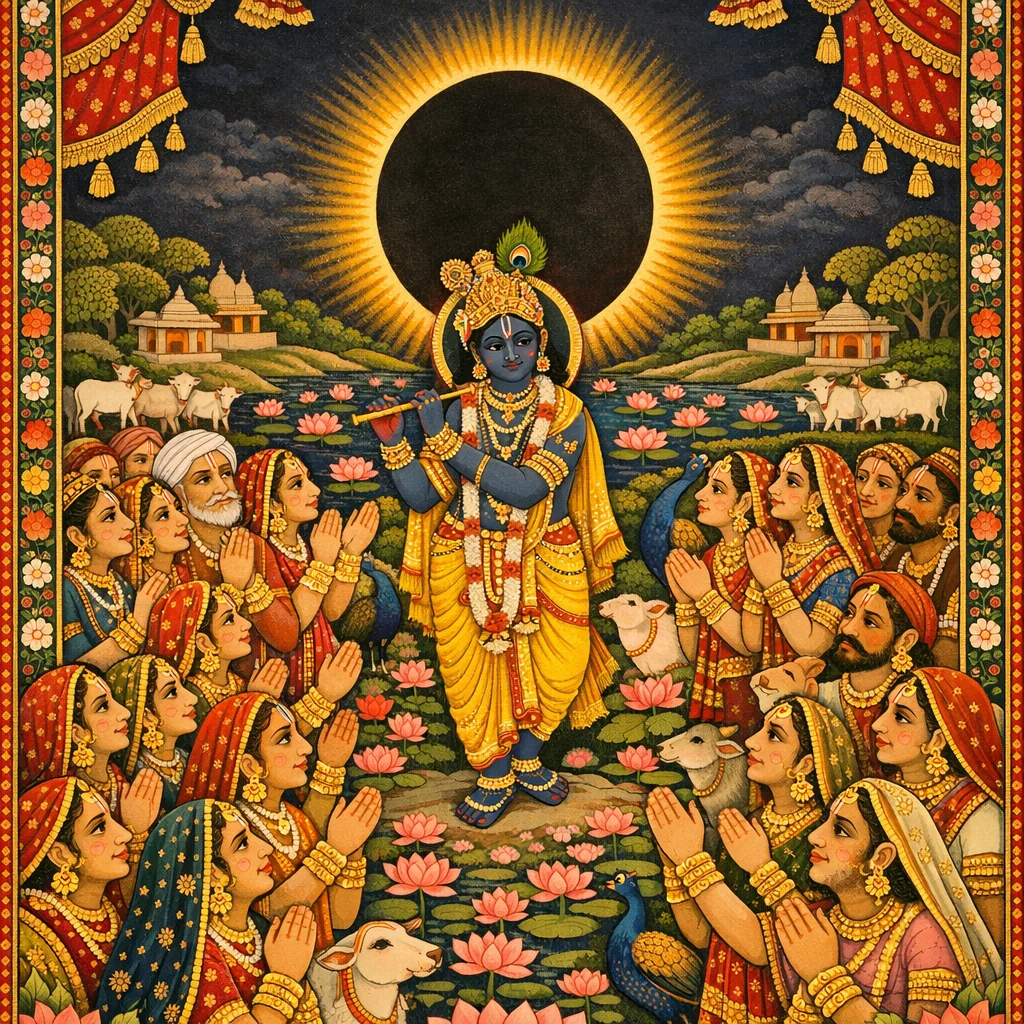
Adhyaya 82
The Solar Eclipse at Samanta-pañcaka and the Great Reunion of Yādavas, Pāṇḍavas, and Vraja
While Kṛṣṇa and Balarāma reside in Dvārakā, a great solar eclipse draws multitudes to the tīrtha Samanta-pañcaka, famed for Paraśurāma’s sacrificial lakes. The Vṛṣṇis travel in royal splendor, perform purificatory bathing, fasting, and dāna to brāhmaṇas, and explicitly pray for Kṛṣṇa-bhakti—framing pilgrimage as devotion-centered rather than merely merit-centered. At the holy site they encounter a vast assembly of allied and rival kings and, most poignantly, Nanda, Yaśodā, and the Vraja community long distressed by separation. Mutual embraces, tears, and inquiries culminate in Kuntī’s candid reproach and Vasudeva’s reply that all are instruments under the Supreme Lord’s control. The assembled royalty marvel at Kṛṣṇa’s transcendental form and fortune of the Yādus who live with Him intimately. Nanda and the Vṛṣṇis reunite; Devakī and Rohiṇī honor Yaśodā’s unmatched guardianship. Finally Kṛṣṇa meets the gopīs privately, explains separation under divine providence and the fruit of devotion, and instructs them on His immanence and transcendence—preparing the narrative momentum for further intimate dialogues and relational resolutions in the subsequent chapters.
Shlokas
Verse 1
श्रीशुक उवाच अथैकदा द्वारवत्यां वसतो रामकृष्णयो: । सूर्योपराग: सुमहानासीत् कल्पक्षये यथा ॥ १ ॥
Śukadeva Gosvāmī said: Once, while Balarāma and Kṛṣṇa were living in Dvārakā, there occurred a great eclipse of the sun, just as if the end of Lord Brahmā’s day had come.
Verse 2
तं ज्ञात्वा मनुजा राजन् पुरस्तादेव सर्वत: । समन्तपञ्चकं क्षेत्रं ययु: श्रेयोविधित्सया ॥ २ ॥
Knowing of this eclipse in advance, O King, many people went to the holy place known as Samanta-pañcaka in order to earn pious credit.
Verse 3
नि:क्षत्रियां महीं कुर्वन् राम: शस्त्रभृतां वर: । नृपाणां रुधिरौघेण यत्र चक्रे महाह्रदान् ॥ ३ ॥ ईजे च भगवान् रामो यत्रास्पृष्टोऽपि कर्मणा । लोकं सङ्ग्राहयन्नीशो यथान्योऽघापनुत्तये ॥ ४ ॥ महत्यां तीर्थयात्रायां तत्रागन् भारती: प्रजा: । वृष्णयश्च तथाक्रूरवसुदेवाहुकादय: ॥ ५ ॥ ययुर्भारत तत् क्षेत्रं स्वमघं क्षपयिष्णव: । गदप्रद्युम्नसाम्बाद्या: सुचन्द्रशुकसारणै: । आस्तेऽनिरुद्धो रक्षायां कृतवर्मा च यूथप: ॥ ६ ॥
After ridding the earth of kings, Lord Paraśurāma, the foremost of warriors, created huge lakes from the kings’ blood at Samantaka-pañcaka. Although he is never tainted by karmic reactions, Lord Paraśurāma performed sacrifices there to instruct people in general; thus he acted like an ordinary person trying to free himself of sins. From all parts of Bhārata-varṣa a great number of people now came to that Samanta-pañcaka on pilgrimage. O descendant of Bharata, among those arriving at the holy place were many Vṛṣṇis, such as Gada, Pradyumna and Sāmba, hoping to be relieved of their sins; Akrūra, Vasudeva, Āhuka and other kings also went there. Aniruddha remained in Dvārakā with Sucandra, Śuka and Sāraṇa to guard the city, together with Kṛtavarmā, the commander of their armed forces.
Verse 4
नि:क्षत्रियां महीं कुर्वन् राम: शस्त्रभृतां वर: । नृपाणां रुधिरौघेण यत्र चक्रे महाह्रदान् ॥ ३ ॥ ईजे च भगवान् रामो यत्रास्पृष्टोऽपि कर्मणा । लोकं सङ्ग्राहयन्नीशो यथान्योऽघापनुत्तये ॥ ४ ॥ महत्यां तीर्थयात्रायां तत्रागन् भारती: प्रजा: । वृष्णयश्च तथाक्रूरवसुदेवाहुकादय: ॥ ५ ॥ ययुर्भारत तत् क्षेत्रं स्वमघं क्षपयिष्णव: । गदप्रद्युम्नसाम्बाद्या: सुचन्द्रशुकसारणै: । आस्तेऽनिरुद्धो रक्षायां कृतवर्मा च यूथप: ॥ ६ ॥
After ridding the earth of kings, Lord Paraśurāma, the foremost of warriors, created huge lakes from the kings’ blood at Samantaka-pañcaka. Although he is never tainted by karmic reactions, Lord Paraśurāma performed sacrifices there to instruct people in general; thus he acted like an ordinary person trying to free himself of sins. From all parts of Bhārata-varṣa a great number of people now came to that Samanta-pañcaka on pilgrimage. O descendant of Bharata, among those arriving at the holy place were many Vṛṣṇis, such as Gada, Pradyumna and Sāmba, hoping to be relieved of their sins; Akrūra, Vasudeva, Āhuka and other kings also went there. Aniruddha remained in Dvārakā with Sucandra, Śuka and Sāraṇa to guard the city, together with Kṛtavarmā, the commander of their armed forces.
Verse 5
नि:क्षत्रियां महीं कुर्वन् राम: शस्त्रभृतां वर: । नृपाणां रुधिरौघेण यत्र चक्रे महाह्रदान् ॥ ३ ॥ ईजे च भगवान् रामो यत्रास्पृष्टोऽपि कर्मणा । लोकं सङ्ग्राहयन्नीशो यथान्योऽघापनुत्तये ॥ ४ ॥ महत्यां तीर्थयात्रायां तत्रागन् भारती: प्रजा: । वृष्णयश्च तथाक्रूरवसुदेवाहुकादय: ॥ ५ ॥ ययुर्भारत तत् क्षेत्रं स्वमघं क्षपयिष्णव: । गदप्रद्युम्नसाम्बाद्या: सुचन्द्रशुकसारणै: । आस्तेऽनिरुद्धो रक्षायां कृतवर्मा च यूथप: ॥ ६ ॥
After ridding the earth of kings, Lord Paraśurāma, the foremost of warriors, created huge lakes from the kings’ blood at Samantaka-pañcaka. Although he is never tainted by karmic reactions, Lord Paraśurāma performed sacrifices there to instruct people in general; thus he acted like an ordinary person trying to free himself of sins. From all parts of Bhārata-varṣa a great number of people now came to that Samanta-pañcaka on pilgrimage. O descendant of Bharata, among those arriving at the holy place were many Vṛṣṇis, such as Gada, Pradyumna and Sāmba, hoping to be relieved of their sins; Akrūra, Vasudeva, Āhuka and other kings also went there. Aniruddha remained in Dvārakā with Sucandra, Śuka and Sāraṇa to guard the city, together with Kṛtavarmā, the commander of their armed forces.
Verse 6
नि:क्षत्रियां महीं कुर्वन् राम: शस्त्रभृतां वर: । नृपाणां रुधिरौघेण यत्र चक्रे महाह्रदान् ॥ ३ ॥ ईजे च भगवान् रामो यत्रास्पृष्टोऽपि कर्मणा । लोकं सङ्ग्राहयन्नीशो यथान्योऽघापनुत्तये ॥ ४ ॥ महत्यां तीर्थयात्रायां तत्रागन् भारती: प्रजा: । वृष्णयश्च तथाक्रूरवसुदेवाहुकादय: ॥ ५ ॥ ययुर्भारत तत् क्षेत्रं स्वमघं क्षपयिष्णव: । गदप्रद्युम्नसाम्बाद्या: सुचन्द्रशुकसारणै: । आस्तेऽनिरुद्धो रक्षायां कृतवर्मा च यूथप: ॥ ६ ॥
After ridding the earth of kings, Lord Paraśurāma, the foremost of warriors, created huge lakes from the kings’ blood at Samantaka-pañcaka. Although he is never tainted by karmic reactions, Lord Paraśurāma performed sacrifices there to instruct people in general; thus he acted like an ordinary person trying to free himself of sins. From all parts of Bhārata-varṣa a great number of people now came to that Samanta-pañcaka on pilgrimage. O descendant of Bharata, among those arriving at the holy place were many Vṛṣṇis, such as Gada, Pradyumna and Sāmba, hoping to be relieved of their sins; Akrūra, Vasudeva, Āhuka and other kings also went there. Aniruddha remained in Dvārakā with Sucandra, Śuka and Sāraṇa to guard the city, together with Kṛtavarmā, the commander of their armed forces.
Verse 7
ते रथैर्देवधिष्ण्याभैर्हयैश्च तरलप्लवै: । गजैर्नदद्भिरभ्राभैर्नृभिर्विद्याधरद्युभि: ॥ ७ ॥ व्यरोचन्त महातेजा: पथि काञ्चनमालिन: । दिव्यस्रग्वस्त्रसन्नाहा: कलत्रै: खेचरा इव ॥ ८ ॥
The mighty Yādavas passed with great majesty along the road. They were attended by their soldiers, who rode on chariots rivaling the airplanes of heaven, on horses moving with a rhythmic gait, and on bellowing elephants as huge as clouds. Also with them were many infantrymen as effulgent as celestial Vidyādharas. The Yādavas were so divinely dressed — being adorned with gold necklaces and flower garlands and wearing fine armor — that as they proceeded along the road with their wives they seemed to be demigods flying through the sky.
Verse 8
ते रथैर्देवधिष्ण्याभैर्हयैश्च तरलप्लवै: । गजैर्नदद्भिरभ्राभैर्नृभिर्विद्याधरद्युभि: ॥ ७ ॥ व्यरोचन्त महातेजा: पथि काञ्चनमालिन: । दिव्यस्रग्वस्त्रसन्नाहा: कलत्रै: खेचरा इव ॥ ८ ॥
The mighty Yādavas passed with great majesty along the road. They were attended by their soldiers, who rode on chariots rivaling the airplanes of heaven, on horses moving with a rhythmic gait, and on bellowing elephants as huge as clouds. Also with them were many infantrymen as effulgent as celestial Vidyādharas. The Yādavas were so divinely dressed — being adorned with gold necklaces and flower garlands and wearing fine armor — that as they proceeded along the road with their wives they seemed to be demigods flying through the sky.
Verse 9
तत्र स्नात्वा महाभागा उपोष्य सुसमाहिता: । ब्राह्मणेभ्यो ददुर्धेनूर्वास:स्रग्रुक्ममालिनी: ॥ ९ ॥
At Samanta-pañcaka, the saintly Yādavas bathed and then observed a fast with careful attention. Afterward they presented brāhmaṇas with cows bedecked with garments, flower garlands and gold necklaces.
Verse 10
रामह्रदेषु विधिवत् पुनराप्लुत्य वृष्णय: । ददु: स्वन्नं द्विजाग्र्येभ्य: कृष्णे नो भक्तिरस्त्विति ॥ १० ॥
In accordance with scriptural injunctions, the descendants of Vṛṣṇi then bathed once more in Lord Paraśurāma’s lakes and fed first-class brāhmaṇas with sumptuous food. All the while they prayed, “May we be granted devotion to Lord Kṛṣṇa.”
Verse 11
स्वयं च तदनुज्ञाता वृष्णय: कृष्णदेवता: । भुक्त्वोपविविशु: कामं स्निग्धच्छायाङ्घ्रिपाङ्घ्रिषु ॥ ११ ॥
Then, with the permission of Lord Kṛṣṇa, their sole object of worship, the Vṛṣṇis ate breakfast and sat down at their leisure beneath trees that gave cooling shade.
Verse 12
तत्रागतांस्ते ददृशु: सुहृत्सम्बन्धिनो नृपान् । मत्स्योशीनरकौशल्यविदर्भकुरुसृञ्जयान् । काम्बोजकैकयान् मद्रान् कुन्तीनानर्तकेरलान् ॥ १२ ॥ अन्यांश्चैवात्मपक्षीयान् परांश्च शतशो नृप । नन्दादीन्सुहृदो गोपान्गोपीश्चोत्कण्ठिताश्चिरम् ॥ १३ ॥
The Yādavas saw that many of the kings who had arrived were old friends and relatives — the Matsyas, Uśīnaras, Kauśalyas, Vidarbhas, Kurus, Sṛñjayas, Kāmbojas, Kaikayas, Madras, Kuntīs and the kings of Ānarta and Kerala. They also saw many hundreds of other kings, both allies and adversaries. In addition, my dear King Parīkṣit, they saw their dear friends Nanda Mahārāja and the cowherd men and women, who had been suffering in anxiety for so long.
Verse 13
तत्रागतांस्ते ददृशु: सुहृत्सम्बन्धिनो नृपान् । मत्स्योशीनरकौशल्यविदर्भकुरुसृञ्जयान् । काम्बोजकैकयान् मद्रान् कुन्तीनानर्तकेरलान् ॥ १२ ॥ अन्यांश्चैवात्मपक्षीयान् परांश्च शतशो नृप । नन्दादीन्सुहृदो गोपान्गोपीश्चोत्कण्ठिताश्चिरम् ॥ १३ ॥
The Yādavas saw that many of the kings who had arrived were old friends and relatives — the Matsyas, Uśīnaras, Kauśalyas, Vidarbhas, Kurus, Sṛñjayas, Kāmbojas, Kaikayas, Madras, Kuntīs and the kings of Ānarta and Kerala. They also saw many hundreds of other kings, both allies and adversaries. In addition, my dear King Parīkṣit, they saw their dear friends Nanda Mahārāja and the cowherd men and women, who had been suffering in anxiety for so long.
Verse 14
अन्योन्यसन्दर्शनहर्षरंहसा प्रोत्फुल्लहृद्वक्त्रसरोरुहश्रिय: । आश्लिष्य गाढं नयनै: स्रवज्जला हृष्यत्त्वचो रुद्धगिरो ययुर्मुदम् ॥ १४ ॥
As the great joy of seeing one another made the lotuses of their hearts and faces bloom with fresh beauty, the men embraced one another enthusiastically. With tears pouring from their eyes, the hair on their bodies standing on end and their voices choked up, they all felt intense bliss.
Verse 15
स्त्रियश्च संवीक्ष्य मिथोऽतिसौहृद- स्मितामलापाङ्गदृशोऽभिरेभिरे । स्तनै: स्तनान् कुङ्कुमपङ्करूषितान् निहत्य दोर्भि: प्रणयाश्रुलोचना: ॥ १५ ॥
The women glanced at one another with pure smiles of loving friendship. And when they embraced, their breasts, smeared with saffron paste, pressed against one another as their eyes filled with tears of affection.
Verse 16
ततोऽभिवाद्य ते वृद्धान् यविष्ठैरभिवादिता: । स्वागतं कुशलं पृष्ट्वा चक्रु: कृष्णकथा मिथ: ॥ १६ ॥
They all then offered obeisances to their elders and received respect in turn from their younger relatives. After inquiring from one another about the comfort of their trip and their well-being, they proceeded to talk about Kṛṣṇa.
Verse 17
पृथा भ्रातॄन् स्वसृर्वीक्ष्य तत्पुत्रान् पितरावपि । भ्रातॄपत्नीर्मुकुन्दं च जहौ सङ्कथया शुच: ॥ १७ ॥
Queen Kuntī met with her brothers and sisters and their children, and also with her parents, her brothers’ wives and Lord Mukunda. While talking with them she forgot her sorrow.
Verse 18
कुन्त्युवाच आर्य भ्रातरहं मन्ये आत्मानमकृताशिषम् । यद् वा आपत्सु मद्वार्तां नानुस्मरथ सत्तमा: ॥ १८ ॥
Queen Kuntī said: My dear, respectable brother, I feel that my desires have been frustrated, because although all of you are most saintly, you forgot me during my calamities.
Verse 19
सुहृदो ज्ञातय: पुत्रा भ्रातर: पितरावपि । नानुस्मरन्ति स्वजनं यस्य दैवमदक्षिणम् ॥ १९ ॥
Friends and family members — even children, brothers and parents — forget a dear one whom Providence no longer favors.
Verse 20
श्रीवसुदेव उवाच अम्ब मास्मानसूयेथा दैवक्रीडनकान् नरान् । ईशस्य हि वशे लोक: कुरुते कार्यतेऽथ वा ॥ २० ॥
Śrī Vasudeva said: Dear sister, please do not be angry with us. We are only ordinary men, playthings of fate. Indeed, whether a person acts on his own or is forced by others, he is always under the Supreme Lord’s control.
Verse 21
कंसप्रतापिता: सर्वे वयं याता दिशं दिशम् । एतर्ह्येव पुन: स्थानं दैवेनासादिता: स्वस: ॥ २१ ॥
Harassed by Kaṁsa, we all fled in various directions, but by the grace of Providence we have now finally been able to return to our homes, my dear sister.
Verse 22
श्रीशुक उवाच वसुदेवोग्रसेनाद्यैर्यदुभिस्तेऽर्चिता नृपा: । आसन्नच्युतसन्दर्शपरमानन्दनिर्वृता: ॥ २२ ॥
Śukadeva Gosvāmī said: Vasudeva, Ugrasena and the other Yadus honored the various kings, who became supremely blissful and content upon seeing Lord Acyuta.
Verse 23
भीष्मो द्रोणोऽम्बिकापुत्रो गान्धारी ससुता तथा । सदारा: पाण्डवा: कुन्ती सञ्जयो विदुर: कृप: ॥ २३ ॥ कुन्तीभोजो विराटश्च भीष्मको नग्नजिन्महान् । पुरुजिद्द्रुपद: शल्यो धृष्टकेतु: सकाशिराट् ॥ २४ ॥ दमघोषो विशालाक्षो मैथिलो मद्रकेकयौ । युधामन्यु: सुशर्मा च ससुता बाह्लिकादय: ॥ २५ ॥ राजानो ये च राजेन्द्र युधिष्ठिरमनुव्रता: । श्रीनिकेतं वपु: शौरे: सस्त्रीकं वीक्ष्य विस्मिता: ॥ २६ ॥
All the royalty present, including Bhīṣma, Droṇa, Dhṛtarāṣṭra, Gāndhārī and her sons, the Pāṇḍavas and their wives, Kuntī, Sañjaya, Vidura, Kṛpācārya, Kuntībhoja, Virāṭa, Bhīṣmaka, the great Nagnajit, Purujit, Drupada, Śalya, Dhṛṣṭaketu, Kāśirāja, Damaghoṣa, Viśālākṣa, Maithila, Madra, Kekaya, Yudhāmanyu, Suśarmā, Bāhlika with his associates and their sons, and the many other kings subservient to Mahārāja Yudhiṣṭhira — all of them, O best of kings, were simply amazed to see the transcendental form of Lord Kṛṣṇa, the abode of all opulence and beauty, standing before them with His consorts.
Verse 24
भीष्मो द्रोणोऽम्बिकापुत्रो गान्धारी ससुता तथा । सदारा: पाण्डवा: कुन्ती सञ्जयो विदुर: कृप: ॥ २३ ॥ कुन्तीभोजो विराटश्च भीष्मको नग्नजिन्महान् । पुरुजिद्द्रुपद: शल्यो धृष्टकेतु: सकाशिराट् ॥ २४ ॥ दमघोषो विशालाक्षो मैथिलो मद्रकेकयौ । युधामन्यु: सुशर्मा च ससुता बाह्लिकादय: ॥ २५ ॥ राजानो ये च राजेन्द्र युधिष्ठिरमनुव्रता: । श्रीनिकेतं वपु: शौरे: सस्त्रीकं वीक्ष्य विस्मिता: ॥ २६ ॥
All the royalty present, including Bhīṣma, Droṇa, Dhṛtarāṣṭra, Gāndhārī and her sons, the Pāṇḍavas and their wives, Kuntī, Sañjaya, Vidura, Kṛpācārya, Kuntībhoja, Virāṭa, Bhīṣmaka, the great Nagnajit, Purujit, Drupada, Śalya, Dhṛṣṭaketu, Kāśirāja, Damaghoṣa, Viśālākṣa, Maithila, Madra, Kekaya, Yudhāmanyu, Suśarmā, Bāhlika with his associates and their sons, and the many other kings subservient to Mahārāja Yudhiṣṭhira — all of them, O best of kings, were simply amazed to see the transcendental form of Lord Kṛṣṇa, the abode of all opulence and beauty, standing before them with His consorts.
Verse 25
भीष्मो द्रोणोऽम्बिकापुत्रो गान्धारी ससुता तथा । सदारा: पाण्डवा: कुन्ती सञ्जयो विदुर: कृप: ॥ २३ ॥ कुन्तीभोजो विराटश्च भीष्मको नग्नजिन्महान् । पुरुजिद्द्रुपद: शल्यो धृष्टकेतु: सकाशिराट् ॥ २४ ॥ दमघोषो विशालाक्षो मैथिलो मद्रकेकयौ । युधामन्यु: सुशर्मा च ससुता बाह्लिकादय: ॥ २५ ॥ राजानो ये च राजेन्द्र युधिष्ठिरमनुव्रता: । श्रीनिकेतं वपु: शौरे: सस्त्रीकं वीक्ष्य विस्मिता: ॥ २६ ॥
All the royalty present, including Bhīṣma, Droṇa, Dhṛtarāṣṭra, Gāndhārī and her sons, the Pāṇḍavas and their wives, Kuntī, Sañjaya, Vidura, Kṛpācārya, Kuntībhoja, Virāṭa, Bhīṣmaka, the great Nagnajit, Purujit, Drupada, Śalya, Dhṛṣṭaketu, Kāśirāja, Damaghoṣa, Viśālākṣa, Maithila, Madra, Kekaya, Yudhāmanyu, Suśarmā, Bāhlika with his associates and their sons, and the many other kings subservient to Mahārāja Yudhiṣṭhira — all of them, O best of kings, were simply amazed to see the transcendental form of Lord Kṛṣṇa, the abode of all opulence and beauty, standing before them with His consorts.
Verse 26
भीष्मो द्रोणोऽम्बिकापुत्रो गान्धारी ससुता तथा । सदारा: पाण्डवा: कुन्ती सञ्जयो विदुर: कृप: ॥ २३ ॥ कुन्तीभोजो विराटश्च भीष्मको नग्नजिन्महान् । पुरुजिद्द्रुपद: शल्यो धृष्टकेतु: सकाशिराट् ॥ २४ ॥ दमघोषो विशालाक्षो मैथिलो मद्रकेकयौ । युधामन्यु: सुशर्मा च ससुता बाह्लिकादय: ॥ २५ ॥ राजानो ये च राजेन्द्र युधिष्ठिरमनुव्रता: । श्रीनिकेतं वपु: शौरे: सस्त्रीकं वीक्ष्य विस्मिता: ॥ २६ ॥
All the royalty present, including Bhīṣma, Droṇa, Dhṛtarāṣṭra, Gāndhārī and her sons, the Pāṇḍavas and their wives, Kuntī, Sañjaya, Vidura, Kṛpācārya, Kuntībhoja, Virāṭa, Bhīṣmaka, the great Nagnajit, Purujit, Drupada, Śalya, Dhṛṣṭaketu, Kāśirāja, Damaghoṣa, Viśālākṣa, Maithila, Madra, Kekaya, Yudhāmanyu, Suśarmā, Bāhlika with his associates and their sons, and the many other kings subservient to Mahārāja Yudhiṣṭhira — all of them, O best of kings, were simply amazed to see the transcendental form of Lord Kṛṣṇa, the abode of all opulence and beauty, standing before them with His consorts.
Verse 27
अथ ते रामकृष्णाभ्यां सम्यक् प्राप्तसमर्हणा: । प्रशशंसुर्मुदा युक्ता वृष्णीन् कृष्णपरिग्रहान् ॥ २७ ॥
After Lord Balarāma and Lord Kṛṣṇa had liberally honored them, with great joy and enthusiasm these kings began to praise the members of the Vṛṣṇi clan, Śrī Kṛṣṇa’s personal associates.
Verse 28
अहो भोजपते यूयं जन्मभाजो नृणामिह । यत् पश्यथासकृत् कृष्णं दुर्दर्शमपि योगिनाम् ॥ २८ ॥
[The kings said:] O King of the Bhojas, you alone among men have achieved a truly exalted birth, for you continually behold Lord Kṛṣṇa, who is rarely visible even to great yogīs.
Verse 29
यद्विश्रुति: श्रुतिनुतेदमलं पुनाति पादावनेजनपयश्च वचश्च शास्त्रम् । भू: कालभर्जितभगापि यदङ्घ्रिपद्म- स्पर्शोत्थशक्तिरभिवर्षति नोऽखिलार्थान् ॥ २९ ॥ तद्दर्शनस्पर्शनानुपथप्रजल्प- शय्यासनाशनसयौनसपिण्डबन्ध: । येषां गृहे निरयवर्त्मनि वर्ततां व: स्वर्गापवर्गविरम: स्वयमास विष्णु: ॥ ३० ॥
His fame, as broadcast by the Vedas, the water that has washed His feet, and the words He speaks in the form of the revealed scriptures — these thoroughly purify this universe. Although the earth’s good fortune was ravaged by time, the touch of His lotus feet has revitalized her, and thus she is raining down on us the fulfillment of all our desires. The same Lord Viṣṇu who makes one forget the goals of heaven and liberation has now entered into marital and blood relationships with you, who otherwise travel on the hellish path of family life. Indeed, in these relationships you see and touch Him directly, walk beside Him, converse with Him, and together with Him lie down to rest, sit at ease and take your meals.
Verse 30
यद्विश्रुति: श्रुतिनुतेदमलं पुनाति पादावनेजनपयश्च वचश्च शास्त्रम् । भू: कालभर्जितभगापि यदङ्घ्रिपद्म- स्पर्शोत्थशक्तिरभिवर्षति नोऽखिलार्थान् ॥ २९ ॥ तद्दर्शनस्पर्शनानुपथप्रजल्प- शय्यासनाशनसयौनसपिण्डबन्ध: । येषां गृहे निरयवर्त्मनि वर्ततां व: स्वर्गापवर्गविरम: स्वयमास विष्णु: ॥ ३० ॥
His fame, as broadcast by the Vedas, the water that has washed His feet, and the words He speaks in the form of the revealed scriptures — these thoroughly purify this universe. Although the earth’s good fortune was ravaged by time, the touch of His lotus feet has revitalized her, and thus she is raining down on us the fulfillment of all our desires. The same Lord Viṣṇu who makes one forget the goals of heaven and liberation has now entered into marital and blood relationships with you, who otherwise travel on the hellish path of family life. Indeed, in these relationships you see and touch Him directly, walk beside Him, converse with Him, and together with Him lie down to rest, sit at ease and take your meals.
Verse 31
श्रीशुक उवाच नन्दस्तत्र यदून् प्राप्तान् ज्ञात्वा कृष्णपुरोगमान् । तत्रागमद् वृतो गोपैरन:स्थार्थैर्दिदृक्षया ॥ ३१ ॥
Śukadeva Gosvāmī said: When Nanda Mahārāja learned that the Yadus had arrived, led by Kṛṣṇa, he immediately went to see them. The cowherds accompanied him, their various possessions loaded on their wagons.
Verse 32
तं दृष्ट्वा वृष्णयो हृष्टास्तन्व: प्राणमिवोत्थिता: । परिषस्वजिरे गाढं चिरदर्शनकातरा: ॥ ३२ ॥
Seeing Nanda, the Vṛṣṇis were delighted and stood up like dead bodies coming back to life. Having felt much distress at not seeing him for so long, they held him in a tight embrace.
Verse 33
वसुदेव: परिष्वज्य सम्प्रीत: प्रेमविह्वल: । स्मरन् कंसकृतान् क्लेशान् पुत्रन्यासं च गोकुले ॥ ३३ ॥
Vasudeva embraced Nanda Mahārāja with great joy. Beside himself with ecstatic love, Vasudeva remembered the troubles Kaṁsa had caused him, forcing him to leave his sons in Gokula for Their safety.
Verse 34
कृष्णरामौ परिष्वज्य पितरावभिवाद्य च । न किञ्चनोचतु: प्रेम्णा साश्रुकण्ठौ कुरूद्वह ॥ ३४ ॥
O hero of the Kurus, Kṛṣṇa and Balarāma embraced Their foster parents and bowed down to them, but Their throats were so choked up with tears of love that the two Lords could say nothing.
Verse 35
तावात्मासनमारोप्य बाहुभ्यां परिरभ्य च । यशोदा च महाभागा सुतौ विजहतु: शुच: ॥ ३५ ॥
Raising their two sons onto their laps and holding Them in their arms, Nanda and saintly mother Yaśodā forgot their sorrow.
Verse 36
रोहिणी देवकी चाथ परिष्वज्य व्रजेश्वरीम् । स्मरन्त्यौ तत्कृतां मैत्रीं बाष्पकण्ठ्यौ समूचतु: ॥ ३६ ॥
Then Rohiṇī and Devakī both embraced the Queen of Vraja, remembering the faithful friendship she had shown them. Their throats choking with tears, they addressed her as follows.
Verse 37
का विस्मरेत वां मैत्रीमनिवृत्तां व्रजेश्वरि । अवाप्याप्यैन्द्रमैश्वर्यं यस्या नेह प्रतिक्रिया ॥ ३७ ॥
[Rohiṇī and Devakī said:] What woman could forget the unceasing friendship you and Nanda have shown us, dear Queen of Vraja? There is no way to repay you in this world, even with the wealth of Indra.
Verse 38
एतावदृष्टपितरौ युवयो: स्म पित्रो: सम्प्रीणनाभ्युदयपोषणपालनानि । प्राप्योषतुर्भवति पक्ष्म ह यद्वदक्ष्णो- र्न्यस्तावकुत्रचभयौ न सतां पर: स्व: ॥ ३८ ॥
Before these two boys had ever seen Their real parents, you acted as Their parents and gave Them all affectionate care, training, nourishment and protection. They were never afraid, good lady, because you protected Them just as eyelids protect the eyes. Indeed, saintly persons like you never discriminate between outsiders and their own kin.
Verse 39
श्रीशुक उवाच गोप्यश्च कृष्णमुपलभ्य चिरादभीष्टं यत्प्रेक्षणे दृशिषु पक्ष्मकृतं शपन्ति । दृग्भिर्हृदीकृतमलं परिरभ्य सर्वा- स्तद्भावमापुरपि नित्ययुजां दुरापम् ॥ ३९ ॥
Śukadeva Gosvāmī said: While gazing at their beloved Kṛṣṇa, the young gopīs used to condemn the creator of their eyelids, [which would momentarily block their vision of Him]. Now, seeing Kṛṣṇa again after such a long separation, with their eyes they took Him into their hearts, and there they embraced Him to their full satisfaction. In this way they became totally absorbed in ecstatic meditation on Him, although those who constantly practice mystic yoga find such absorption difficult to achieve.
Verse 40
भगवांस्तास्तथाभूता विविक्त उपसङ्गत: । आश्लिष्यानामयं पृष्ट्वा प्रहसन्निदमब्रवीत् ॥ ४० ॥
The Supreme Lord approached the gopīs in a secluded place as they stood in their ecstatic trance. After embracing each of them and inquiring about their well-being, He laughed and spoke as follows.
Verse 41
अपि स्मरथ न: सख्य: स्वानामर्थचिकीर्षया । गतांश्चिरायिताञ्छत्रुपक्षक्षपणचेतस: ॥ ४१ ॥
[Lord Kṛṣṇa said:] My dear girlfriends, do you still remember Me? It was for My relatives’ sake that I stayed away so long, intent on destroying My enemies.
Verse 42
अप्यवध्यायथास्मान् स्विदकृतज्ञाविशङ्कया । नूनं भूतानि भगवान् युनक्ति वियुनक्ति च ॥ ४२ ॥
Do you perhaps think I’m ungrateful and thus hold Me in contempt? After all, it is the Supreme Lord who brings living beings together and then separates them.
Verse 43
वायुर्यथा घनानीकं तृणं तूलं रजांसि च । संयोज्याक्षिपते भूयस्तथा भूतानि भूतकृत् ॥ ४३ ॥
Just as the wind brings together masses of clouds, blades of grass, wisps of cotton and particles of dust, only to scatter them all again, so the creator deals with His created beings in the same way.
Verse 44
मयि भक्तिर्हि भूतानाममृतत्वाय कल्पते । दिष्ट्या यदासीन्मत्स्नेहो भवतीनां मदापन: ॥ ४४ ॥
Rendering devotional service to Me qualifies any living being for eternal life. But by your good fortune you have developed a special loving attitude toward Me, by which you have obtained Me.
Verse 45
अहं हि सर्वभूतानामादिरन्तोऽन्तरं बहि: । भौतिकानां यथा खं वार्भूर्वायुर्ज्योतिरङ्गना: ॥ ४५ ॥
Dear ladies, I am the beginning and end of all created beings and exist both within and without them, just as the elements ether, water, earth, air and fire are the beginning and end of all material objects and exist both within and without them.
Verse 46
एवं ह्येतानि भूतानि भूतेष्वात्मात्मना तत: । उभयं मय्यथ परे पश्यताभातमक्षरे ॥ ४६ ॥
In this way all created things reside within the basic elements of creation, while the spirit souls pervade the creation, remaining in their own true identity. You should see both of these — the material creation and the self — as manifest within Me, the imperishable Supreme Truth.
Verse 47
श्रीशुक उवाच अध्यात्मशिक्षया गोप्य एवं कृष्णेन शिक्षिता: । तदनुस्मरणध्वस्तजीवकोशास्तमध्यगन् ॥ ४७ ॥
Śukadeva Gosvāmī said: Having thus been instructed by Kṛṣṇa in spiritual matters, the gopīs were freed of all tinges of false ego because of their incessant meditation upon Him. And with their deepening absorption in Him, they came to understand Him fully.
Verse 48
आहुश्च ते नलिननाभ पदारविन्दं योगेश्वरैर्हृदि विचिन्त्यमगाधबोधै: । संसारकूपपतितोत्तरणावलम्बं गेहं जुषामपि मनस्युदियात् सदा न: ॥ ४८ ॥
The gopīs spoke thus: Dear Lord, whose navel is just like a lotus flower, Your lotus feet are the only shelter for those who have fallen into the deep well of material existence. Your feet are worshiped and meditated upon by great mystic yogīs and highly learned philosophers. We wish that these lotus feet may also be awakened within our hearts, although we are only ordinary persons engaged in household affairs.
Frequently Asked Questions
Eclipses are traditionally treated as potent times for tīrtha-snāna, vrata, and dāna. The chapter emphasizes that the Vṛṣṇis’ pilgrimage is explicitly oriented to bhakti—after ritual acts they pray, “May we be granted devotion to Lord Kṛṣṇa,” teaching that purification and merit culminate in devotion to the Āśraya.
Paraśurāma, an avatāra renowned for subduing oppressive kṣatriyas, is said here to have formed lakes from the kings’ blood and performed sacrifices at Samanta-pañcaka as loka-saṅgraha—public instruction—though he is personally untouched by karma. The site thus becomes a remembered locus of atonement, sacrifice, and pilgrimage.
Kuntī voices a human truth of social vulnerability: when providence turns adverse, even close relations may withdraw. Her speech sharpens the chapter’s theological point—worldly support is unstable—setting up Vasudeva’s reply that all beings act under the Supreme Lord’s governance, and thus one should seek ultimate shelter in Kṛṣṇa.
Vasudeva asks Kuntī not to be angry, describing people as “playthings of fate,” yet concluding that whether one acts independently or under compulsion, all remain under the Supreme Lord’s control. The teaching does not deny agency but frames it within īśvara-adhīnatā, encouraging forgiveness and God-centered understanding of events.
They behold a paradox: the Supreme Lord—abode of all opulence and beauty, rarely seen even by yogīs—is present in a seemingly ordinary social setting, surrounded by family and queens. Their amazement underscores bhakti’s special access: the Vṛṣṇis relate to Viṣṇu not as distant Absolute but as intimate companion.
Kṛṣṇa explains that the Supreme Lord brings beings together and separates them, like wind assembling and dispersing objects, redirecting the gopīs’ pain into metaphysical clarity. He then affirms bhakti as the path to eternal life and declares His immanence—within and without all beings—so their love matures into ego-free absorption and realized understanding.