Adhyaya 76
Śālva Attacks Dvārakā; Pradyumna Leads the Defense (Saubha-vimāna and Māyā-yuddha)
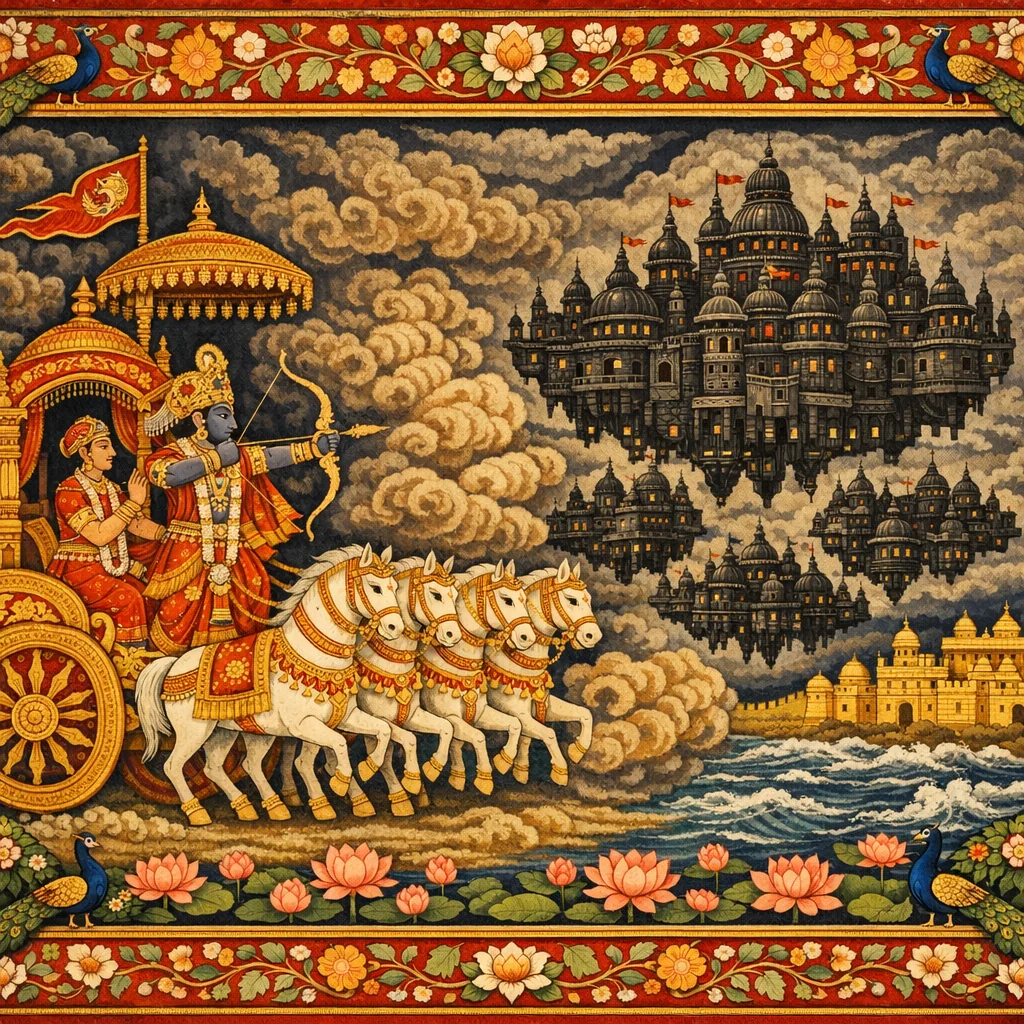
Śukadeva introduces another astonishing exploit of Śrī Kṛṣṇa: the slaying of Śālva, lord of the aerial city Saubha. The chapter backstories Śālva as a confederate of Śiśupāla, humiliated at Rukmiṇī’s wedding when the Yadus defeated him and allied kings. Vowing vengeance, Śālva performs severe worship of Paśupati (Śiva) and receives a boon: an indestructible, fearsome vehicle. By Śiva’s order, Maya Dānava constructs the iron flying city Saubha. Śālva then assaults Dvārakā, devastating its defenses and hurling uncanny weapons amid dust-storm chaos, recalling the demon triple cities’ attack on earth. With Kṛṣṇa absent from the city at this moment, Pradyumna reassures the citizens and leads the Yadu commanders into battle. He counters Saubha’s bewildering māyā—its multiplying, vanishing, and shifting locations—and strikes down key leaders, earning praise from both armies. When Dyumān clubs Pradyumna unconscious, his charioteer withdraws him per kṣatriya protocol of protection; Pradyumna revives and rebukes the retreat as dishonor, setting the moral tension that will propel the battle onward into the next episode where Kṛṣṇa’s direct intervention becomes decisive.
Shlokas
Verse 1
श्रीशुक उवाच अथान्यदपि कृष्णस्य शृणु कर्माद्भुतं नृप । क्रीडानरशरीरस्य यथा सौभपतिर्हत: ॥ १ ॥
Śukadeva Gosvāmī said: Now please hear, O King, another wondrous deed performed by Lord Kṛṣṇa, who appeared in His humanlike body to enjoy transcendental pastimes. Hear how He killed the master of Saubha.
Verse 2
शिशुपालसख: शाल्वो रुक्मिण्युद्वाह आगत: । यदुभिर्निर्जित: सङ्ख्ये जरासन्धादयस्तथा ॥ २ ॥
Śālva was a friend of Śiśupāla’s. When he attended the wedding of Rukmiṇī, the Yadu warriors defeated him in battle, along with Jarāsandha and the other kings.
Verse 3
शाल्व: प्रतिज्ञामकरोच्छृण्वतां सर्वभूभुजाम् । अयादवां क्ष्मां करिष्ये पौरुषं मम पश्यत ॥ ३ ॥
Śālva swore in the presence of all the kings: “I will rid the earth of Yādavas. Just see my prowess!”
Verse 4
इति मूढ: प्रतिज्ञाय देवं पशुपतिं प्रभुम् । आराधयामास नृप: पांशुमुष्टिं सकृद्ग्रसन् ॥ ४ ॥
Having thus made his vow, the foolish King proceeded to worship Lord Paśupati [Śiva] as his deity by eating a handful of dust each day, and nothing more.
Verse 5
संवत्सरान्ते भगवानाशुतोष उमापति: । वरेणच्छन्दयामास शाल्वं शरणमागतम् ॥ ५ ॥
The great Lord Umāpati is known as “he who is quickly pleased,” yet only at the end of a year did he gratify Śālva, who had approached him for shelter, by offering him a choice of benedictions.
Verse 6
देवासुरमनुष्याणां गन्धर्वोरगरक्षसाम् । अभेद्यं कामगं वव्रे स यानं वृष्णिभीषणम् ॥ ६ ॥
Śālva chose a vehicle that could be destroyed by neither demigods, demons, humans, Gandharvas, Uragas nor Rākṣasas, that could travel anywhere he wished to go, and that would terrify the Vṛṣṇis.
Verse 7
तथेति गिरिशादिष्टो मय: परपुरंजय: । पुरं निर्माय शाल्वाय प्रादात्सौभमयस्मयम् ॥ ७ ॥
Lord Śiva said, “So be it.” On his order, Maya Dānava, who conquers his enemies’ cities, constructed a flying iron city named Saubha and presented it to Śālva.
Verse 8
स लब्ध्वा कामगं यानं तमोधाम दुरासदम् । ययौ द्वारवतीं शाल्वो वैरं वृष्णिकृतं स्मरन् ॥ ८ ॥
This unassailable vehicle was filled with darkness and could go anywhere. Upon obtaining it, Śālva went to Dvārakā, remembering the Vṛṣṇis’ enmity toward him.
Verse 9
निरुध्य सेनया शाल्वो महत्या भरतर्षभ । पुरीं बभञ्जोपवनानुद्यानानि च सर्वश: ॥ ९ ॥ सगोपुराणि द्वाराणि प्रासादाट्टालतोलिका: । विहारान् स विमानाग्र्यान्निपेतु: शस्त्रवृष्टय: ॥ १० ॥ शिला द्रुमाश्चाशनय: सर्पा आसारशर्करा: । प्रचण्डश्चक्रवातोऽभूद् रजसाच्छादिता दिश: ॥ ११ ॥
Śālva besieged the city with a large army, O best of the Bharatas, decimating the outlying parks and gardens, the mansions along with their observatories, towering gateways and surrounding walls, and also the public recreational areas. From his excellent airship he threw down a torrent of weapons, including stones, tree trunks, thunderbolts, snakes and hailstones. A fierce whirlwind arose and blanketed all directions with dust.
Verse 10
निरुध्य सेनया शाल्वो महत्या भरतर्षभ । पुरीं बभञ्जोपवनानुद्यानानि च सर्वश: ॥ ९ ॥ सगोपुराणि द्वाराणि प्रासादाट्टालतोलिका: । विहारान् स विमानाग्र्यान्निपेतु: शस्त्रवृष्टय: ॥ १० ॥ शिला द्रुमाश्चाशनय: सर्पा आसारशर्करा: । प्रचण्डश्चक्रवातोऽभूद् रजसाच्छादिता दिश: ॥ ११ ॥
Śālva besieged the city with a large army, O best of the Bharatas, decimating the outlying parks and gardens, the mansions along with their observatories, towering gateways and surrounding walls, and also the public recreational areas. From his excellent airship he threw down a torrent of weapons, including stones, tree trunks, thunderbolts, snakes and hailstones. A fierce whirlwind arose and blanketed all directions with dust.
Verse 11
निरुध्य सेनया शाल्वो महत्या भरतर्षभ । पुरीं बभञ्जोपवनानुद्यानानि च सर्वश: ॥ ९ ॥ सगोपुराणि द्वाराणि प्रासादाट्टालतोलिका: । विहारान् स विमानाग्र्यान्निपेतु: शस्त्रवृष्टय: ॥ १० ॥ शिला द्रुमाश्चाशनय: सर्पा आसारशर्करा: । प्रचण्डश्चक्रवातोऽभूद् रजसाच्छादिता दिश: ॥ ११ ॥
Śālva besieged the city with a large army, O best of the Bharatas, decimating the outlying parks and gardens, the mansions along with their observatories, towering gateways and surrounding walls, and also the public recreational areas. From his excellent airship he threw down a torrent of weapons, including stones, tree trunks, thunderbolts, snakes and hailstones. A fierce whirlwind arose and blanketed all directions with dust.
Verse 12
इत्यर्द्यमाना सौभेन कृष्णस्य नगरी भृशम् । नाभ्यपद्यत शं राजंस्त्रिपुरेण यथा मही ॥ १२ ॥
Thus terribly tormented by the airship Saubha, Lord Kṛṣṇa’s city had no peace, O King, just like the earth when it was attacked by the three aerial cities of the demons.
Verse 13
प्रद्युम्नो भगवान् वीक्ष्य बाध्यमाना निजा: प्रजा: । मा भैष्टेत्यभ्यधाद् वीरो रथारूढो महायशा: ॥ १३ ॥
Seeing His subjects so harassed, the glorious and heroic Lord Pradyumna told them, “Do not fear,” and mounted His chariot.
Verse 14
सात्यकिश्चारुदेष्णश्च साम्बोऽक्रूर: सहानुज: । हार्दिक्यो भानुविन्दश्च गदश्च शुकसारणौ ॥ १४ ॥ अपरे च महेष्वासा रथयूथपयूथपा: । निर्ययुर्दंशिता गुप्ता रथेभाश्वपदातिभि: ॥ १५ ॥
The chief commanders of the chariot warriors — Sātyaki, Cārudeṣṇa, Sāmba, Akrūra and his younger brothers, along with Hārdikya, Bhānuvinda, Gada, Śuka and Sāraṇa — went out of the city with many other eminent bowmen, all girded in armor and protected by contingents of soldiers riding on chariots, elephants and horses, and also by companies of infantry.
Verse 15
सात्यकिश्चारुदेष्णश्च साम्बोऽक्रूर: सहानुज: । हार्दिक्यो भानुविन्दश्च गदश्च शुकसारणौ ॥ १४ ॥ अपरे च महेष्वासा रथयूथपयूथपा: । निर्ययुर्दंशिता गुप्ता रथेभाश्वपदातिभि: ॥ १५ ॥
The chief commanders of the chariot warriors — Sātyaki, Cārudeṣṇa, Sāmba, Akrūra and his younger brothers, along with Hārdikya, Bhānuvinda, Gada, Śuka and Sāraṇa — went out of the city with many other eminent bowmen, all girded in armor and protected by contingents of soldiers riding on chariots, elephants and horses, and also by companies of infantry.
Verse 16
तत: प्रववृते युद्धं शाल्वानां यदुभि: सह । यथासुराणां विबुधैस्तुमुलं लोमहर्षणम् ॥ १६ ॥
A tumultuous, hair-raising battle then commenced between Śālva’s forces and the Yadus. It equaled the great battles between the demons and demigods.
Verse 17
ताश्च सौभपतेर्माया दिव्यास्त्रै रुक्मिणीसुत: । क्षणेन नाशयामास नैशं तम इवोष्णगु: ॥ १७ ॥
With His divine weapons Pradyumna instantly destroyed all of Śālva’s magic illusions, in the same way that the warm rays of the sun dissipate the darkness of night.
Verse 18
विव्याध पञ्चविंशत्या स्वर्णपुङ्खैरयोमुखै: । शाल्वस्य ध्वजिनीपालं शरै: सन्नतपर्वभि: ॥ १८ ॥ शतेनाताडयच्छाल्वमेकैकेनास्य सैनिकान् । दशभिर्दशभिर्नेतृन् वाहनानि त्रिभिस्त्रिभि: ॥ १९ ॥
Lord Pradyumna’s arrows all had gold shafts, iron heads and perfectly smooth joints. With twenty-five of them He struck down Śālva’s commander-in-chief [Dyumān], and with one hundred He struck Śālva himself. Then He pierced Śālva’s officers with one arrow each, his chariot drivers with ten arrows each, and his horses and other carriers with three arrows each.
Verse 19
विव्याध पञ्चविंशत्या स्वर्णपुङ्खैरयोमुखै: । शाल्वस्य ध्वजिनीपालं शरै: सन्नतपर्वभि: ॥ १८ ॥ शतेनाताडयच्छाल्वमेकैकेनास्य सैनिकान् । दशभिर्दशभिर्नेतृन् वाहनानि त्रिभिस्त्रिभि: ॥ १९ ॥
Lord Pradyumna’s arrows all had gold shafts, iron heads and perfectly smooth joints. With twenty-five of them He struck down Śālva’s commander-in-chief [Dyumān], and with one hundred He struck Śālva himself. Then He pierced Śālva’s officers with one arrow each, his chariot drivers with ten arrows each, and his horses and other carriers with three arrows each.
Verse 20
तदद्भुचतं महत् कर्म प्रद्युम्नस्य महात्मन: । दृष्ट्वा तं पूजयामासु: सर्वे स्वपरसैनिका: ॥ २० ॥
When they saw the glorious Pradyumna perform that amazing and mighty feat, all the soldiers on both sides praised Him.
Verse 21
बहुरूपैकरूपं तद् दृश्यते न च दृश्यते । मायामयं मयकृतं दुर्विभाव्यं परैरभूत् ॥ २१ ॥
At one moment the magic airship built by Maya Dānava appeared in many identical forms, and the next moment it was again only one. Sometimes it was visible, and sometimes not. Thus Śālva’s opponents could never be sure where it was.
Verse 22
क्वचिद्भूमौ क्वचिद् व्योम्नि गिरिमूर्ध्नि जले क्वचित् । अलातचक्रवद् भ्राम्यत् सौभं तद् दुरवस्थितम् ॥ २२ ॥
From one moment to the next the Saubha airship appeared on the earth, in the sky, on a mountain peak or in the water. Like a whirling, flaming baton, it never remained in any one place.
Verse 23
यत्र यत्रोपलक्ष्येत ससौभ: सहसैनिक: । शाल्वस्ततस्ततोऽमुञ्चञ् छरान् सात्वतयूथपा: ॥ २३ ॥
Wherever Śālva would appear with his Saubha ship and his army, there the Yadu commanders would shoot their arrows.
Verse 24
शरैरग्न्यर्कसंस्पर्शैराशीविषदुरासदै: । पीड्यमानपुरानीक: शाल्वोऽमुह्यत्परेरितै: ॥ २४ ॥
Śālva became bewildered upon seeing his army and aerial city thus harassed by his enemy’s arrows, which struck like fire and the sun and were as intolerable as snake venom.
Verse 25
शाल्वानीकपशस्त्रौघैर्वृष्णिवीरा भृशार्दिता: । न तत्यजू रणं स्वं स्वं लोकद्वयजिगीषव: ॥ २५ ॥
Because the heroes of the Vṛṣṇi clan were eager for victory in this world and the next, they did not abandon their assigned posts on the battlefield, even though the downpour of weapons hurled by Śālva’s commanders tormented them.
Verse 26
शाल्वामात्यो द्युमान्नाम प्रद्युम्नं प्राक्प्रपीडित: । आसाद्य गदया मौर्व्या व्याहत्य व्यनदद् बली ॥ २६ ॥
Śālva’s minister Dyumān, previously wounded by Śrī Pradyumna, now ran up to Him and, roaring loudly, struck Him with his club of black steel.
Verse 27
प्रद्युम्नं गदया शीर्णवक्ष:स्थलमरिंदमम् । अपोवाह रणात्सूतो धर्मविद् दारुकात्मज: ॥ २७ ॥
Pradyumna’s driver, the son of Dāruka, thought that his valiant master’s chest had been shattered by the club. Knowing well his religious duty, he removed Pradyumna from the battlefield.
Verse 28
लब्धसंज्ञो मुहूर्तेन कार्ष्णि: सारथिमब्रवीत् । अहो असाध्विदं सूत यद् रणान्मेऽपसर्पणम् ॥ २८ ॥
Quickly regaining consciousness, Lord Kṛṣṇa’s son Pradyumna said to His charioteer, “O driver, this is abominable — for Me to have been removed from the battlefield!
Verse 29
न यदूनां कुले जात: श्रूयते रणविच्युत: । विना मत्क्लीबचित्तेन सूतेन प्राप्तकिल्बिषात् ॥ २९ ॥
“Except for Me, no one born in the Yadu dynasty has ever been known to abandon the battlefield. My reputation has now been stained by a driver who thinks like a eunuch.
Verse 30
किं नु वक्ष्येऽभिसङ्गम्य पितरौ रामकेशवौ । युद्धात्सम्यगपक्रान्त: पृष्टस्तत्रात्मन: क्षमम् ॥ ३० ॥
“What will I say to My fathers, Rāma and Keśava, when I return to Them after having simply fled the battle? What can I tell Them that will befit My honor?
Verse 31
व्यक्तं मे कथयिष्यन्ति हसन्त्यो भ्रातृजामय: । क्लैब्यं कथं कथं वीर तवान्यै: कथ्यतां मृधे ॥ ३१ ॥
“Certainly My sisters-in-law will laugh at Me and say, ‘O hero, tell us how in the world Your enemies turned You into such a coward in battle.’”
Verse 32
सारथिरुवाच धर्मं विजानतायुष्मन् कृतमेतन्मया विभो । सूत: कृच्छ्रगतं रक्षेद् रथिनं सारथिं रथी ॥ ३२ ॥
The driver replied: O long-lived one, I have done this knowing full well my prescribed duty. O my Lord, the chariot driver must protect the master of the chariot when he is in danger, and the master must also protect his driver.
Verse 33
एतद्विदित्वा तु भवान्मयापोवाहितो रणात् । उपसृष्ट: परेणेति मूर्च्छितो गदया हत: ॥ ३३ ॥
With this rule in mind, I removed You from the battlefield, since You had been struck unconscious by Your enemy’s club and I thought You were seriously injured.
Frequently Asked Questions
Śālva is portrayed as an ally of Śiśupāla and an enemy of the Yadus, previously defeated at Rukmiṇī’s wedding alongside Jarāsandha’s coalition. Shamed, he publicly vows to destroy the Yādavas and later attacks Dvārakā to fulfill that oath, using a boon-granted aerial fortress to compensate for his earlier battlefield defeat.
Śālva seeks strategic invincibility rather than purification; he performs severe austerity to please Śiva (Umāpati), who is famed as quickly pleased but grants the boon after a year. Śālva chooses an extraordinary vehicle said to be beyond destruction by various classes of beings and capable of terrifying the Vṛṣṇis—an example of how devotion aimed at power can yield temporary advantages without granting ultimate safety from Bhagavān’s will.
Saubha is an iron flying city (aerial fortress) constructed by Maya Dānava on Śiva’s instruction. In the narrative it functions as a mobile, illusion-generating weapon-platform—appearing as many or one, visible or invisible, shifting between sky, earth, mountain, and water—illustrating māyā’s tactical power in war yet its ultimate defeat by divinely empowered heroes.
Pradyumna uses divine weapons to immediately dispel the illusions, compared to sunlight removing night’s darkness. He then executes precise archery—striking Śālva, killing or disabling leaders and drivers, and systematically neutralizing the enemy’s operational capacity—showing that dharmic leadership and divine empowerment can overcome psychological and occult warfare.
After being struck unconscious, Pradyumna’s charioteer withdraws him according to the charioteer’s duty to protect the warrior when in danger. Upon regaining consciousness, Pradyumna frames the withdrawal as a stain on kṣatriya-kīrti, arguing that Yadus are not known to abandon the battlefield. The episode highlights a dharma tension: protective duty versus the warrior’s obligation to maintain courage and reputation—setting up the continuation of the conflict.