Adhyaya 66
Pauṇḍraka’s False Vāsudeva Claim, His Death, and the Burning of Vārāṇasī by Sudarśana
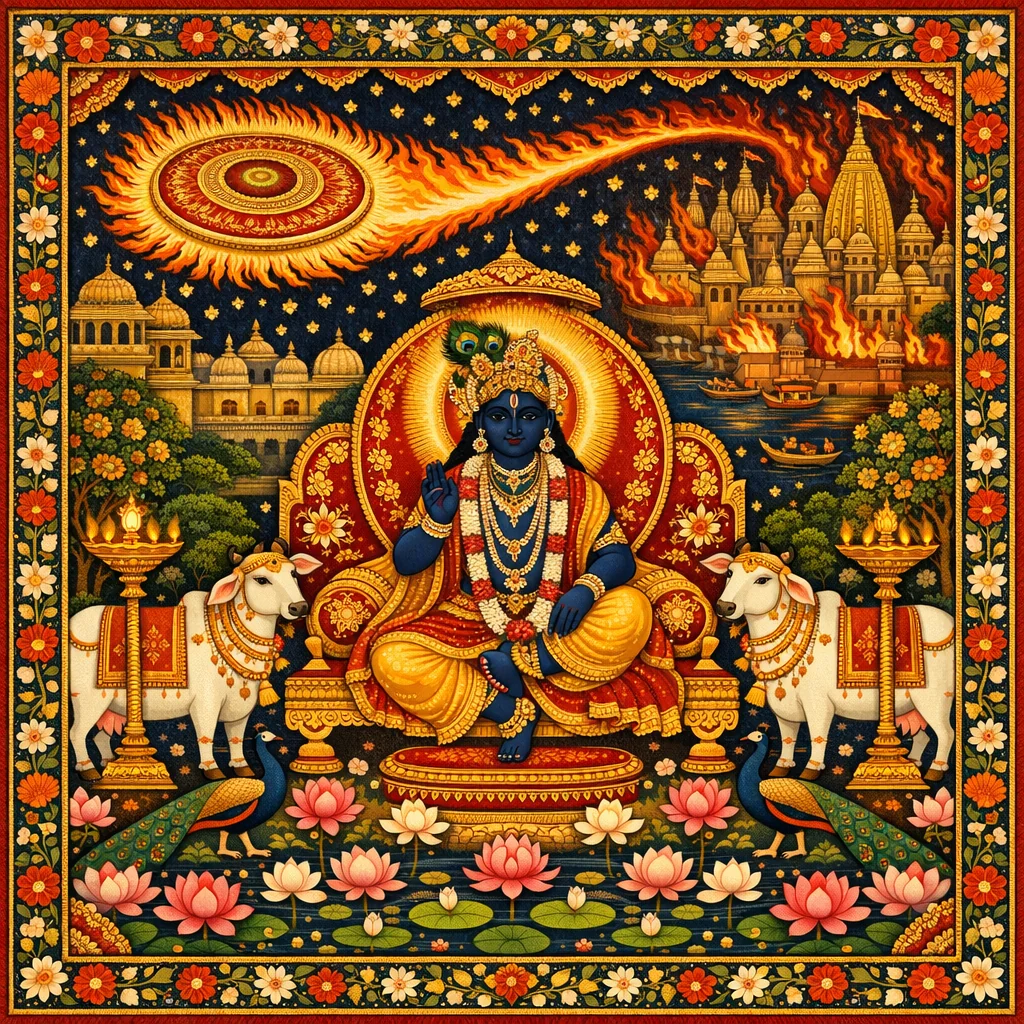
With Lord Balarāma temporarily away in Vraja, King Pauṇḍraka of Karūṣa—deluded by flatterers—declares himself the sole Vāsudeva and sends a messenger to Dvārakā demanding that Śrī Kṛṣṇa abandon the divine name and insignia. Kṛṣṇa and the Yādava assembly respond with laughter, and Kṛṣṇa promises to ‘release’ the very weapons Pauṇḍraka boasts of. Pauṇḍraka and his ally Kāśirāja march out with large forces; Pauṇḍraka theatrically imitates Kṛṣṇa’s emblems (conch, disc, club, Śārṅga bow, Śrīvatsa, Kaustubha, Garuḍa banner). Kṛṣṇa devastates the armies and beheads both kings—Pauṇḍraka with Sudarśana, Kāśirāja with arrows—returning to Dvārakā as Siddhas glorify Him. In Kāśī, Sudakṣiṇa (Kāśirāja’s son) performs funerary rites and seeks revenge by worshiping Śiva and executing an abhicāra rite, producing a terrifying fire-demon aimed at Dvārakā. Kṛṣṇa calmly sends Sudarśana, which repels the demon; the magic backfires, burning Sudakṣiṇa and priests, and Sudarśana then incinerates Vārāṇasī before returning to Kṛṣṇa. The chapter closes with the fruit of hearing: liberation from sin. This episode bridges earlier displays of Kṛṣṇa’s supremacy over rival kings and leads into the consequences of Kāśī’s destruction and the wider political-theological aftermath in subsequent narratives.
Shlokas
Verse 1
श्रीशुक उवाच नन्दव्रजं गते रामे करूषाधिपतिर्नृप । वासुदेवोऽहमित्यज्ञो दूतं कृष्णाय प्राहिणोत् ॥ १ ॥
Śukadeva Gosvāmī said: O King, while Lord Balarāma was away visiting Nanda’s village of Vraja, the ruler of Karūṣa, foolishly thinking “I am the Supreme Lord, Vāsudeva,” sent a messenger to Lord Kṛṣṇa.
Verse 2
त्वं वासुदेवो भगवानवतीर्णो जगत्पति: । इति प्रस्तोभितो बालैर्मेन आत्मानमच्युतम् ॥ २ ॥
Pauṇḍraka was emboldened by the flattery of childish men, who told him, “You are Vāsudeva, the Supreme Lord and master of the universe, who have now descended to the earth.” Thus he imagined himself to be the infallible Personality of Godhead.
Verse 3
दूतं च प्राहिणोन्मन्द: कृष्णायाव्यक्तवर्त्मने । द्वारकायां यथा बालो नृपो बालकृतोऽबुध: ॥ ३ ॥
Thus slow-witted King Pauṇḍraka sent a messenger to the inscrutable Lord Kṛṣṇa at Dvārakā. Pauṇḍraka was acting just like an unintelligent child whom other children are pretending is a king.
Verse 4
दूतस्तु द्वारकामेत्य सभायामास्थितं प्रभुम् । कृष्णं कमलपत्राक्षं राजसन्देशमब्रवीत् ॥ ४ ॥
Arriving in Dvārakā, the messenger found lotus-eyed Kṛṣṇa in His royal assembly and relayed the King’s message to that almighty Lord.
Verse 5
वासुदेवोऽवतीर्णोऽहमेक एव न चापर: । भूतानामनुकम्पार्थं त्वं तु मिथ्याभिधां त्यज ॥ ५ ॥
[On Pauṇḍraka’s behalf, the messenger said:] I am the one and only Lord Vāsudeva, and there is no other. It is I who have descended to this world to show mercy to the living beings. Therefore give up Your false name.
Verse 6
यानि त्वमस्मच्चिह्नानि मौढ्याद् बिभर्षि सात्वत । त्यक्त्वैहि मां त्वं शरणं नो चेद् देहि ममाहवम् ॥ ६ ॥
O Sātvata, give up my personal symbols, which out of foolishness You now carry, and come to me for shelter. If You do not, then You must give me battle.
Verse 7
श्रीशुक उवाच कत्थनं तदुपाकर्ण्य पौण्ड्रकस्याल्पमेधस: । उग्रसेनादय: सभ्या उच्चकैर्जहसुस्तदा ॥ ७ ॥
Śukadeva Gosvāmī said: King Ugrasena and the other members of the assembly laughed loudly when they heard this vain boasting of unintelligent Pauṇḍraka.
Verse 8
उवाच दूतं भगवान् परिहासकथामनु । उत्स्रक्ष्ये मूढ चिह्नानि यैस्त्वमेवं विकत्थसे ॥ ८ ॥
The Personality of Godhead, after enjoying the jokes of the assembly, told the messenger [to relay a message to his master:] “You fool, I will indeed let loose the weapons you boast of in this way.
Verse 9
मुखं तदपिधायाज्ञ कङ्कगृध्रवटैर्वृत: । शयिष्यसे हतस्तत्र भविता शरणं शुनाम् ॥ ९ ॥
“When you lie dead, O fool, your face covered by vultures, herons and vaṭa birds, you will become the shelter of dogs.”
Verse 10
इति दूतस्तमाक्षेपं स्वामिने सर्वमाहरत् । कृष्णोऽपि रथमास्थाय काशीमुपजगाम ह ॥ १० ॥
When the Lord had thus spoken, the messenger conveyed His insulting reply to his master in its entirety. Lord Kṛṣṇa then mounted His chariot and went to the vicinity of Kāśī.
Verse 11
पौण्ड्रकोऽपि तदुद्योगमुपलभ्य महारथ: । अक्षौहिणीभ्यां संयुक्तो निश्चक्राम पुराद् द्रुतम् ॥ ११ ॥
Upon observing Lord Kṛṣṇa’s preparations for battle, the mighty warrior Pauṇḍraka quickly went out of the city with two full military divisions.
Verse 12
तस्य काशीपतिर्मित्रं पार्ष्णिग्राहोऽन्वयान्नृप । अक्षौहिणीभिस्तिसृभिरपश्यत् पौण्ड्रकं हरि: ॥ १२ ॥ शङ्खार्यसिगदाशार्ङ्गश्रीवत्साद्युपलक्षितम् । बिभ्राणं कौस्तुभमणिं वनमालाविभूषितम् ॥ १३ ॥ कौशेयवाससी पीते वसानं गरुडध्वजम् । अमूल्यमौल्याभरणं स्फुरन्मकरकुण्डलम् ॥ १४ ॥
Pauṇḍraka’s friend, the King of Kāśī, followed behind, O King, leading the rear guard with three akṣauhiṇī divisions. Lord Kṛṣṇa saw that Pauṇḍraka was carrying the Lord’s own insignia, such as the conchshell, disc, sword and club, and also an imitation Śārṅga bow and Śrīvatsa mark. He wore a mock Kaustubha gem, was decorated with a garland of forest flowers and was dressed in upper and lower garments of fine yellow silk. His banner bore the image of Garuḍa, and he wore a valuable crown and gleaming, shark-shaped earrings.
Verse 13
तस्य काशीपतिर्मित्रं पार्ष्णिग्राहोऽन्वयान्नृप । अक्षौहिणीभिस्तिसृभिरपश्यत् पौण्ड्रकं हरि: ॥ १२ ॥ शङ्खार्यसिगदाशार्ङ्गश्रीवत्साद्युपलक्षितम् । बिभ्राणं कौस्तुभमणिं वनमालाविभूषितम् ॥ १३ ॥ कौशेयवाससी पीते वसानं गरुडध्वजम् । अमूल्यमौल्याभरणं स्फुरन्मकरकुण्डलम् ॥ १४ ॥
Pauṇḍraka’s friend, the King of Kāśī, followed behind, O King, leading the rear guard with three akṣauhiṇī divisions. Lord Kṛṣṇa saw that Pauṇḍraka was carrying the Lord’s own insignia, such as the conchshell, disc, sword and club, and also an imitation Śārṅga bow and Śrīvatsa mark. He wore a mock Kaustubha gem, was decorated with a garland of forest flowers and was dressed in upper and lower garments of fine yellow silk. His banner bore the image of Garuḍa, and he wore a valuable crown and gleaming, shark-shaped earrings.
Verse 14
तस्य काशीपतिर्मित्रं पार्ष्णिग्राहोऽन्वयान्नृप । अक्षौहिणीभिस्तिसृभिरपश्यत् पौण्ड्रकं हरि: ॥ १२ ॥ शङ्खार्यसिगदाशार्ङ्गश्रीवत्साद्युपलक्षितम् । बिभ्राणं कौस्तुभमणिं वनमालाविभूषितम् ॥ १३ ॥ कौशेयवाससी पीते वसानं गरुडध्वजम् । अमूल्यमौल्याभरणं स्फुरन्मकरकुण्डलम् ॥ १४ ॥
Pauṇḍraka’s friend, the King of Kāśī, followed behind, O King, leading the rear guard with three akṣauhiṇī divisions. Lord Kṛṣṇa saw that Pauṇḍraka was carrying the Lord’s own insignia, such as the conchshell, disc, sword and club, and also an imitation Śārṅga bow and Śrīvatsa mark. He wore a mock Kaustubha gem, was decorated with a garland of forest flowers and was dressed in upper and lower garments of fine yellow silk. His banner bore the image of Garuḍa, and he wore a valuable crown and gleaming, shark-shaped earrings.
Verse 15
दृष्ट्वा तमात्मनस्तुल्यं वेषं कृत्रिममास्थितम् । यथा नटं रङ्गगतं विजहास भृशं हरि: ॥ १५ ॥
Lord Hari laughed heartily when He saw how the King had dressed up in exact imitation of His own appearance, just like an actor onstage.
Verse 16
शूलैर्गदाभि: परिघै: शक्त्यृष्टिप्रासतोमरै: । असिभि: पट्टिशैर्बाणै: प्राहरन्नरयो हरिम् ॥ १६ ॥
The enemies of Lord Hari attacked Him with tridents, clubs, bludgeons, pikes, ṛṣtis, barbed darts, lances, swords, axes and arrows.
Verse 17
कृष्णस्तु तत्पौण्ड्रककाशिराजयो- र्बलं गजस्यन्दनवाजिपत्तिमत् । गदासिचक्रेषुभिरार्दयद् भृशं यथा युगान्ते हढतभुक् पृथक् प्रजा: ॥ १७ ॥
But Lord Kṛṣṇa fiercely struck back at the army of Pauṇḍraka and Kāśirāja, which consisted of elephants, chariots, cavalry and infantry. The Lord tormented His enemies with His club, sword, Sudarśana disc and arrows, just as the fire of annihilation torments the various kinds of creatures at the end of a cosmic age.
Verse 18
आयोधनं तद्रथवाजिकुञ्जर- द्विपत्खरोष्ट्रैररिणावखण्डितै: । बभौ चितं मोदवहं मनस्विना- माक्रीडनं भूतपतेरिवोल्बणम् ॥ १८ ॥
The battlefield, strewn with the dismembered chariots, horses, elephants, humans, mules and camels that had been cut to pieces by the Lord’s disc weapon, shone like the gruesome playground of Lord Bhūtapati, giving pleasure to the wise.
Verse 19
अथाह पौण्ड्रकं शौरिर्भो भो पौण्ड्रक यद् भवान् । दूतवाक्येन मामाह तान्यस्त्रण्युत्सृजामि ते ॥ १९ ॥
Lord Kṛṣṇa then addressed Pauṇḍraka: My dear Pauṇḍraka, the very weapons you spoke of through your messenger, I now release unto you.
Verse 20
त्याजयिष्येऽभिधानं मे यत्त्वयाज्ञ मृषा धृतम् । व्रजामि शरनं तेऽद्य यदि नेच्छामि संयुगम् ॥ २० ॥
O fool, now I shall make you renounce My name, which you have falsely assumed. And I will certainly take shelter of you if I do not wish to fight you.
Verse 21
इति क्षिप्त्वा शितैर्बाणैर्विरथीकृत्य पौण्ड्रकम् । शिरोऽवृश्चद् रथाङ्गेन वज्रेणेन्द्रो यथा गिरे: ॥ २१ ॥
Having thus derided Pauṇḍraka, Lord Kṛṣṇa destroyed his chariot with His sharp arrows. The Lord then cut off his head with the Sudarśana disc, just as Lord Indra lops off a mountain peak with his thunderbolt weapon.
Verse 22
तथा काशिपते: कायाच्छिर उत्कृत्य पत्रिभि: । न्यपातयत् काशिपुर्यां पद्मकोशमिवानिल: ॥ २२ ॥
With His arrows, Lord Kṛṣṇa similarly severed Kāśirāja’s head from his body, sending it flying into Kāśī city like a lotus flower thrown by the wind.
Verse 23
एवं मत्सरिणं हत्वा पौण्ड्रकं ससखं हरि: । द्वारकामाविशत् सिद्धैर्गीयमानकथामृत: ॥ २३ ॥
Having thus killed envious Pauṇḍraka and his ally, Lord Kṛṣṇa returned to Dvārakā. As He entered the city, the Siddhas of heaven chanted His immortal, nectarean glories.
Verse 24
स नित्यं भगवद्ध्यानप्रध्वस्ताखिलबन्धन: । बिभ्राणश्च हरे राजन् स्वरूपं तन्मयोऽभवत् ॥ २४ ॥
By constantly meditating upon the Supreme Lord, Pauṇḍraka shattered all his material bonds. Indeed, by imitating Lord Kṛṣṇa’s appearance, O King, he ultimately became Kṛṣṇa conscious.
Verse 25
शिर: पतितमालोक्य राजद्वारे सकुण्डलम् । किमिदं कस्य वा वक्त्रमिति संशिशिरे जना: ॥ २५ ॥
Seeing a head decorated with earrings lying at the gate of the royal palace, the people present were puzzled. Some of them asked, “What is this?” and others said, “It is a head, but whose is it?”
Verse 26
राज्ञ: काशीपतेर्ज्ञात्वा महिष्य: पुत्रबान्धवा: । पौराश्च हा हता राजन् नाथ नाथेति प्रारुदन् ॥ २६ ॥
My dear King, when they recognized it as the head of their King — the lord of Kāśi — his queens, sons and other relatives, along with all the citizens of the city, began to cry pitifully: “Alas, we are killed! O my lord, my lord!”
Verse 27
सुदक्षिणस्तस्य सुत: कृत्वा संस्थाविधिं पते: । निहत्य पितृहन्तारं यास्याम्यपचितिं पितु: ॥ २७ ॥ इत्यात्मनाभिसन्धाय सोपाध्यायो महेश्वरम् । सुदक्षिणोऽर्चयामास परमेण समाधिना ॥ २८ ॥
After the King’s son Sudakṣiṇa had performed the obligatory funeral rituals for his father, he resolved within his mind: “Only by killing my father’s murderer can I avenge his death.” Thus the charitable Sudakṣiṇa, together with his priests, began worshiping Lord Maheśvara with great attention.
Verse 28
सुदक्षिणस्तस्य सुत: कृत्वा संस्थाविधिं पते: । निहत्य पितृहन्तारं यास्याम्यपचितिं पितु: ॥ २७ ॥ इत्यात्मनाभिसन्धाय सोपाध्यायो महेश्वरम् । सुदक्षिणोऽर्चयामास परमेण समाधिना ॥ २८ ॥
After the King’s son Sudakṣiṇa had performed the obligatory funeral rituals for his father, he resolved within his mind: “Only by killing my father’s murderer can I avenge his death.” Thus the charitable Sudakṣiṇa, together with his priests, began worshiping Lord Maheśvara with great attention.
Verse 29
प्रीतोऽविमुक्ते भगवांस्तस्मै वरमदाद् विभु: । पितृहन्तृवधोपायं स वव्रे वरमीप्सितम् ॥ २९ ॥
Satisfied by the worship, the powerful Lord Śiva appeared in the sacred precinct of Avimukta and offered Sudakṣiṇa his choice of benedictions. The prince chose as his benediction a means to slay his father’s killer.
Verse 30
दक्षिणाग्निं परिचर ब्राह्मणै: सममृत्विजम् । अभिचारविधानेन स चाग्नि: प्रमथैर्वृत: ॥ ३० ॥ साधयिष्यति सङ्कल्पमब्रह्मण्ये प्रयोजित: । इत्यादिष्टस्तथा चक्रे कृष्णायाभिचरन् व्रती ॥ ३१ ॥
Lord Śiva told him, “Accompanied by brāhmaṇas, serve the Dakṣiṇāgni fire — the original priest — following the injunctions of the abhicāra ritual. Then the Dakṣiṇāgni fire, together with many Pramathas, will fulfill your desire if you direct it against someone inimical to the brāhmaṇas.” So instructed, Sudakṣiṇa strictly observed the ritualistic vows and invoked the abhicāra against Lord Kṛṣṇa.
Verse 31
दक्षिणाग्निं परिचर ब्राह्मणै: सममृत्विजम् । अभिचारविधानेन स चाग्नि: प्रमथैर्वृत: ॥ ३० ॥ साधयिष्यति सङ्कल्पमब्रह्मण्ये प्रयोजित: । इत्यादिष्टस्तथा चक्रे कृष्णायाभिचरन् व्रती ॥ ३१ ॥
Lord Śiva told him, “Accompanied by brāhmaṇas, serve the Dakṣiṇāgni fire — the original priest — following the injunctions of the abhicāra ritual. Then the Dakṣiṇāgni fire, together with many Pramathas, will fulfill your desire if you direct it against someone inimical to the brāhmaṇas.” So instructed, Sudakṣiṇa strictly observed the ritualistic vows and invoked the abhicāra against Lord Kṛṣṇa.
Verse 32
ततोऽग्निरुत्थित: कुण्डान्मूर्तिमानतिभीषण: । तप्तताम्रशिखाश्मश्रुरङ्गारोद्गारिलोचन: ॥ ३२ ॥ दंष्ट्रोग्रभ्रुकुटीदण्डकठोरास्य: स्वजिह्वया । आलिहन् सृक्वणी नग्नो विधुन्वंस्त्रिशिखं ज्वलत् ॥ ३३ ॥
Thereupon the fire rose up out of the altar pit, assuming the form of an extremely fearsome, naked person. The fiery creature’s beard and tuft of hair were like molten copper, and his eyes emitted blazing hot cinders. His face looked most frightful with its fangs and terrible arched and furrowed brows. As he licked the corners of his mouth with his tongue, the demon shook his flaming trident.
Verse 33
ततोऽग्निरुत्थित: कुण्डान्मूर्तिमानतिभीषण: । तप्तताम्रशिखाश्मश्रुरङ्गारोद्गारिलोचन: ॥ ३२ ॥ दंष्ट्रोग्रभ्रुकुटीदण्डकठोरास्य: स्वजिह्वया । आलिहन् सृक्वणी नग्नो विधुन्वंस्त्रिशिखं ज्वलत् ॥ ३३ ॥
Thereupon the fire rose up out of the altar pit, assuming the form of an extremely fearsome, naked person. The fiery creature’s beard and tuft of hair were like molten copper, and his eyes emitted blazing hot cinders. His face looked most frightful with its fangs and terrible arched and furrowed brows. As he licked the corners of his mouth with his tongue, the demon shook his flaming trident.
Verse 34
पद्भ्यां तालप्रमाणाभ्यां कम्पयन्नवनीतलम् । सोऽभ्यधावद् वृतो भूतैर्द्वारकां प्रदहन् दिश: ॥ ३४ ॥
On legs as tall as palm trees, the monster raced toward Dvārakā in the company of ghostly spirits, shaking the ground and burning the world in all directions.
Verse 35
तमाभिचारदहनमायान्तं द्वारकौकस: । विलोक्य तत्रसु: सर्वे वनदाहे मृगा यथा ॥ ३५ ॥
Seeing the approacḥ of the fiery demon created by the abhicāra ritual, the residents of Dvārakā were all struck with fear, like animals terrified by a forest fire.
Verse 36
अक्षै: सभायां क्रीडन्तं भगवन्तं भयातुरा: । त्राहि त्राहि त्रिलोकेश वह्ने: प्रदहत: पुरम् ॥ ३६ ॥
Distraught with fear, the people cried out to the Supreme Personality of Godhead, who was then playing at dice in the royal court: “Save us! Save us, O Lord of the three worlds, from this fire burning up the city!”
Verse 37
श्रुत्वा तज्जनवैक्लव्यं दृष्ट्वा स्वानां च साध्वसम् । शरण्य: सम्प्रहस्याह मा भैष्टेत्यवितास्म्यहम् ॥ ३७ ॥
When Lord Kṛṣṇa heard the people’s agitation and saw that even His own men were disturbed, that most worthy giver of shelter simply laughed and told them, “Do not fear; I shall protect you.”
Verse 38
सर्वस्यान्तर्बहि:साक्षी कृत्यां माहेश्वरीं विभु: । विज्ञाय तद्विघातार्थं पार्श्वस्थं चक्रमादिशत् ॥ ३८ ॥
The almighty Lord, the internal and external witness of all, understood that the monster had been produced by Lord Śiva from the sacrificial fire. To defeat the demon, Kṛṣṇa dispatched His disc weapon, who was waiting at His side.
Verse 39
तत् सूर्यकोटिप्रतिमं सुदर्शनं जाज्वल्यमानं प्रलयानलप्रभम् । स्वतेजसा खं ककुभोऽथ रोदसी चक्रं मुकुन्दास्त्रमथाग्निमार्दयत् ॥ ३९ ॥
That Sudarśana, the disc weapon of Lord Mukunda, blazed forth like millions of suns. His effulgence blazed like the fire of universal annihilation, and with his heat he pained the sky, all the directions, heaven and earth, and also the fiery demon.
Verse 40
कृत्यानल: प्रतिहत: स रथाङ्गपाणे- रस्त्रौजसा स नृप भग्नमुखो निवृत्त: । वाराणसीं परिसमेत्य सुदक्षिणं तं सर्त्विग्जनं समदहत् स्वकृतोऽभिचार: ॥ ४० ॥
Frustrated by the power of Lord Kṛṣṇa’s weapon, O King, the fiery creature produced by black magic turned his face away and retreated. Created for violence, the demon then returned to Vārāṇasī, where he surrounded the city and then burned Sudakṣiṇa and his priests to death, even though Sudakṣiṇa was his creator.
Verse 41
चक्रं च विष्णोस्तदनुप्रविष्टं वाराणसीं साट्टसभालयापणाम् । सगोपुराट्टालककोष्ठसङ्कुलां सकोशहस्त्यश्वरथान्नशालिनीम् ॥ ४१ ॥
Lord Viṣṇu’s disc also entered Vārāṇasī, in pursuit of the fiery demon, and proceeded to burn the city to the ground, including all its assembly halls and residential palaces with raised porches, its numerous marketplaces, gateways, watchtowers, warehouses and treasuries, and all the buildings housing elephants, horses, chariots and grains.
Verse 42
दग्ध्वा वाराणसीं सर्वां विष्णोश्चक्रं सुदर्शनम् । भूय: पार्श्वमुपातिष्ठत् कृष्णस्याक्लिष्टकर्मण: ॥ ४२ ॥
After burning down the entire city of Vārāṇasī, Lord Viṣṇu’s Sudarśana cakra returned to the side of Śrī Kṛṣṇa, whose actions are effortless.
Verse 43
य एनं श्रावयेन्मर्त्य उत्तम:श्लोकविक्रमम् । समाहितो वा शृणुयात् सर्वपापै: प्रमुच्यते ॥ ४३ ॥
Any mortal who recounts this heroic pastime of Lord Uttamaḥ-śloka’s, or who simply hears it attentively, will become freed from all sins.
Frequently Asked Questions
Pauṇḍraka was the king of Karūṣa who became intoxicated by praise from immature flatterers. Accepting their claims, he appropriated the name “Vāsudeva” and imitated the Lord’s insignia, mistaking external symbols and social validation for divine identity. The Bhāgavata frames this as a cautionary illustration of ahaṅkāra (false ego) and delusion (moha) when disconnected from śāstra and authentic realization.
Kṛṣṇa’s laughter highlights the ontological gap between mere costume and true divinity. The conch, disc, Śārṅga, Śrīvatsa, Kaustubha, and Garuḍa banner are not decorative accessories; they signify the Lord’s intrinsic potency and sovereignty. Pauṇḍraka’s mimicry resembles theatrical acting—externally similar but devoid of the Lord’s svarūpa-śakti—thereby exposing the absurdity of self-made divinity.
The text states that by constant meditation on the Supreme Lord, Pauṇḍraka shattered material bondage and became ‘Kṛṣṇa conscious’ in the sense that absorption in Kṛṣṇa (even through antagonism or imitation) can purify by fixing the mind on the Absolute. Traditional Vaiṣṇava commentators distinguish this from pure bhakti: the benefit arises from intense viṣaya-smṛti (fixation on the Lord), though it lacks the loving intent of devotion.
Abhicāra is a destructive rite intended to harm an enemy through ritualized invocation of fiery forces. Sudakṣiṇa, seeking revenge, invoked a fire-demon through Dakṣiṇāgni under Śiva’s sanction. Yet the Bhāgavata demonstrates that such violence cannot override Bhagavān’s protection (poṣaṇa). When Sudarśana repelled the demon, the destructive force—being inherently violent and misdirected against the Supreme—recoiled onto its creators, burning Sudakṣiṇa and the officiating priests.
Sudarśana acts as the Lord’s instrument of dharma and protection. After neutralizing the abhicāra demon, Sudarśana pursued the threat to its source, destroying the infrastructure of a polity that had aligned itself with aggressive adharma against Kṛṣṇa and His devotees. The narrative emphasizes Kṛṣṇa’s effortless sovereignty: the Lord remains composed in Dvārakā while His divine energy restores order and removes danger.