Adhyaya 62
Ūṣā-Haraṇa, Bāṇāsura’s Pride, and Aniruddha’s Capture (Prelude to Hari–Śaṅkara Conflict)
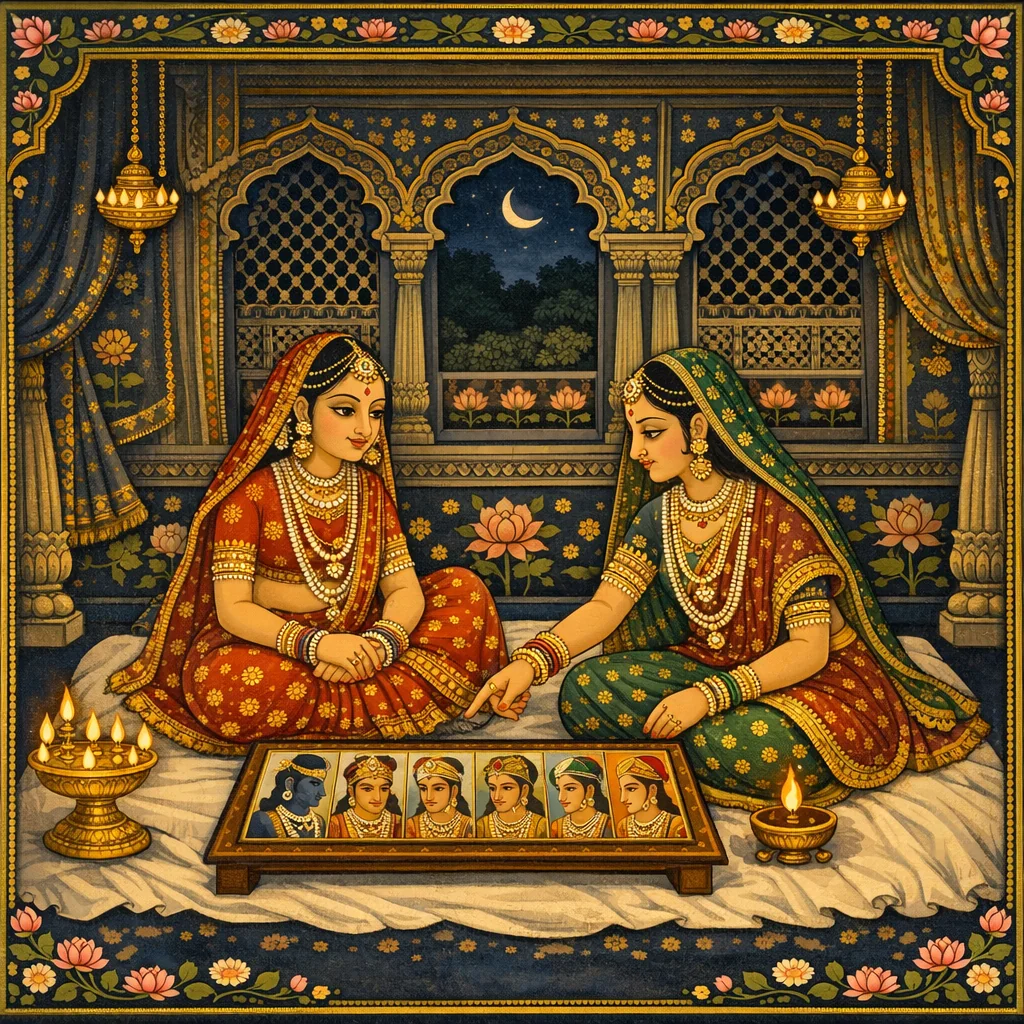
Prompted by Parīkṣit’s inquiry, Śukadeva begins the Ūṣā–Aniruddha episode that will culminate in a major confrontation involving Kṛṣṇa (Hari) and Śiva (Śaṅkara). The chapter first situates Bāṇāsura within vaṁśānucarita: he is Bali’s son, empowered and socially eminent, and a fervent Śiva-bhakta whose thousand arms and royal splendor intensify his pride. Having pleased Śiva’s tāṇḍava with musical accompaniment, Bāṇa receives protection of Śoṇitapura and later provokes a prophecy: his flag will be broken when he fights Śiva’s equal—foreshadowing Kṛṣṇa. The narrative shifts to Ūṣā’s dream-encounter with a dark-blue, lotus-eyed youth. Her friend Citralekhā, gifted with yogic siddhi, identifies the beloved by sketching the Vṛṣṇis and recognizes Aniruddha, Kṛṣṇa’s grandson. She transports him from Dvārakā to Ūṣā’s quarters, where a secret romance unfolds. When guards report the breach of maiden decorum, Bāṇa storms in; Aniruddha defeats the guards but is ultimately bound by Bāṇa’s nāga-pāśa. This capture sets the immediate cause for the next chapter’s escalation—Kṛṣṇa’s response and the impending Hari–Śiva battle.
Shlokas
Verse 1
श्रीराजोवाच बाणस्य तनयामूषामुपयेमे यदूत्तम: । तत्र युद्धमभूद् घोरं हरिशङ्करयोर्महत् । एतत् सर्वं महायोगिन् समाख्यातुं त्वमर्हसि ॥ १ ॥
King Parīkṣit said: The best of the Yadus married Bāṇāsura’s daughter, Ūṣā, and as a result a great, fearsome battle occurred between Lord Hari and Lord Śaṅkara. Please explain everything about this incident, O most powerful of mystics.
Verse 2
श्रीशुक उवाच बाण: पुत्रशतज्येष्ठो बलेरासीन्महात्मन: । येन वामनरूपाय हरयेऽदायि मेदिनी ॥ तस्यौरस: सुतो बाण: शिवभक्तिरत: सदा । मान्यो वदान्यो धीमांश्च सत्यसन्धो दृढव्रत: । शोणिताख्ये पुरे रम्ये स राज्यमकरोत् पुरा ॥ तस्य शम्भो: प्रासादेन किङ्करा इव तेऽमरा: । सहस्रबाहुर्वाद्येन ताण्डवेऽतोषयन्मृडम् ॥ २ ॥
Śukadeva Gosvāmī said: Bāṇa was the oldest of the hundred sons fathered by the great saint Bali Mahārāja, who gave the whole earth in charity to Lord Hari when He appeared as Vāmanadeva. Bāṇāsura, born from Bali’s semen, became a great devotee of Lord Śiva. His behavior was always respectable, and he was generous, intelligent, truthful and firm in his vows. The beautiful city of Śoṇitapura was under his dominion. Because Lord Śiva had favored him, the very demigods waited on Bāṇāsura like menial servants. Once, when Śiva was dancing his tāṇḍava-nṛtya, Bāṇa especially satisfied the lord by playing a musical accompaniment with his one thousand arms.
Verse 3
भगवान् सर्वभूतेश: शरण्यो भक्तवत्सल: । वरेण छन्दयामास स तं वव्रे पुराधिपम् ॥ ३ ॥
The lord and master of all created beings, the compassionate refuge of his devotees, gladdened Bāṇāsura by offering him the benediction of his choice. Bāṇa chose to have him, Lord Śiva, as the guardian of his city.
Verse 4
स एकदाह गिरिशं पार्श्वस्थं वीर्यदुर्मद: । किरीटेनार्कवर्णेन संस्पृशंस्तत्पदाम्बुजम् ॥ ४ ॥
Bāṇāsura was intoxicated with his strength. One day, when Lord Śiva was standing beside him, Bāṇāsura touched the lord’s lotus feet with his helmet, which shone like the sun, and spoke to him as follows.
Verse 5
नमस्ये त्वां महादेव लोकानां गुरुमीश्वरम् । पुंसामपूर्णकामानां कामपूरामराङ्घ्रिपम् ॥ ५ ॥
[Bāṇāsura said:] O Lord Mahādeva, I bow down to you, the spiritual master and controller of the worlds. You are like the heavenly tree that fulfills the desires of those whose desires are unfulfilled.
Verse 6
दो:सहस्रं त्वया दत्तं परं भाराय मेऽभवत् । त्रिलोक्यां प्रतियोद्धारं न लभे त्वदृते समम् ॥ ६ ॥
These one thousand arms you bestowed upon me have become merely a heavy burden. Besides you, I find no one in the three worlds worthy to fight.
Verse 7
कण्डूत्या निभृतैर्दोर्भिर्युयुत्सुर्दिग्गजानहम् । आद्यायां चूर्णयन्नद्रीन् भीतास्तेऽपि प्रदुद्रुवु: ॥ ७ ॥
Eager to fight with the elephants who rule the directions, O primeval lord, I went forth, pulverizing mountains with my arms, which were itching for battle. But even those great elephants fled in fear.
Verse 8
तच्छ्रुत्वा भगवान् क्रुद्ध: केतुस्ते भज्यते यदा । त्वद्दर्पघ्नं भवेन्मूढ संयुगं मत्समेन ते ॥ ८ ॥
Hearing this, Lord Śiva became angry and replied, “Your flag will be broken, fool, when you have done battle with one who is my equal. That fight will vanquish your conceit.”
Verse 9
इत्युक्त: कुमतिर्हृष्ट: स्वगृहं प्राविशन्नृप । प्रतीक्षन् गिरिशादेशं स्ववीर्यनशनं कुधी: ॥ ९ ॥
Thus advised, unintelligent Bāṇāsura was delighted. The fool then went home, O King, to wait for that which Lord Giriśa had predicted: the destruction of his prowess.
Verse 10
तस्योषा नाम दुहिता स्वप्ने प्राद्युम्निना रतिम् । कन्यालभत कान्तेन प्रागदृष्टश्रुतेन सा ॥ १० ॥
In a dream Bāṇa’s daughter, the maiden Ūṣā, had an amorous encounter with the son of Pradyumna, though she had never before seen or heard of her lover.
Verse 11
सा तत्र तमपश्यन्ती क्वासि कान्तेति वादिनी । सखीनां मध्य उत्तस्थौ विह्वला व्रीडिता भृशम् ॥ ११ ॥
Losing sight of Him in her dream, Ūṣā suddenly sat up in the midst of her girlfriends, crying out “Where are You, my lover?” She was greatly disturbed and embarrassed.
Verse 12
बाणस्य मन्त्री कुम्भाण्डश्चित्रलेखा च तत्सुता । सख्यपृच्छत् सखीमूषां कौतूहलसमन्विता ॥ १२ ॥
Bāṇāsura had a minister named Kumbhāṇḍa, whose daughter was Citralekhā. A companion of Ūṣā’s, she was filled with curiosity, and thus she inquired from her friend.
Verse 13
कं त्वं मृगयसे सुभ्रु कीदृशस्ते मनोरथ: । हस्तग्राहं न तेऽद्यापि राजपुत्र्युपलक्षये ॥ १३ ॥
[Citralekhā said:] Who are you searching for, O fine-browed one? What is this hankering you’re feeling? Until now, O princess, I haven’t seen any man take your hand in marriage.
Verse 14
दृष्ट: कश्चिन्नर: स्वप्ने श्याम: कमललोचन: । पीतवासा बृहद्बाहुर्योषितां हृदयंगम: ॥ १४ ॥
[Ūṣā said:] In my dream I saw a certain man who had a darkblue complexion, lotus eyes, yellow garments and mighty arms. He was the kind who touches women’s hearts.
Verse 15
तमहं मृगये कान्तं पाययित्वाधरं मधु । क्वापि यात: स्पृहयतीं क्षिप्त्वा मां वृजिनार्णवे ॥ १५ ॥
It is that lover I search for. After making me drink the honey of His lips, He has gone elsewhere, and thus He has thrown me, hankering fervently for Him, into the ocean of distress.
Verse 16
चित्रलेखोवाच व्यसनं तेऽपकर्षामि त्रिलोक्यां यदि भाव्यते । तमानेष्ये नरं यस्ते मनोहर्ता तमादिश ॥ १६ ॥
Citralekhā said: I will remove your distress. If He is to be found anywhere in the three worlds, I will bring this future husband of yours who has stolen your heart. Please show me who He is.
Verse 17
इत्युक्त्वा देवगन्धर्वसिद्धचारणपन्नगान् । दैत्यविद्याधरान् यक्षान् मनुजांश्च यथालिखत् ॥ १७ ॥
Saying this, Citralekhā proceeded to draw accurate pictures of various demigods, Gandharvas, Siddhas, Cāraṇas, Pannagas, Daityas, Vidyādharas, Yakṣas and humans.
Verse 18
मनुजेषु च सा वृष्णीन् शूरमानकदुन्दुभिम् । व्यलिखद् रामकृष्णौ च प्रद्युम्नं वीक्ष्य लज्जिता ॥ १८ ॥ अनिरुद्धं विलिखितं वीक्ष्योषावाङ्मुखी ह्रिया । सोऽसावसाविति प्राह स्मयमाना महीपते ॥ १९ ॥
O King, among the humans, Citralekhā drew pictures of the Vṛṣṇis, including Śūrasena, Ānakadundubhi, Balarāma and Kṛṣṇa. When Ūṣā saw the picture of Pradyumna she became bashful, and when she saw Aniruddha’s picture she bent her head down in embarrassment. Smiling, she exclaimed, “He’s the one! It’s Him!”
Verse 19
मनुजेषु च सा वृष्णीन् शूरमानकदुन्दुभिम् । व्यलिखद् रामकृष्णौ च प्रद्युम्नं वीक्ष्य लज्जिता ॥ १८ ॥ अनिरुद्धं विलिखितं वीक्ष्योषावाङ्मुखी ह्रिया । सोऽसावसाविति प्राह स्मयमाना महीपते ॥ १९ ॥
O King, among the humans, Citralekhā drew pictures of the Vṛṣṇis, including Śūrasena, Ānakadundubhi, Balarāma and Kṛṣṇa. When Ūṣā saw the picture of Pradyumna she became bashful, and when she saw Aniruddha’s picture she bent her head down in embarrassment. Smiling, she exclaimed, “He’s the one! It’s Him!”
Verse 20
चित्रलेखा तमाज्ञाय पौत्रं कृष्णस्य योगिनी । ययौ विहायसा राजन् द्वारकां कृष्णपालिताम् ॥ २० ॥
Citralekhā, endowed with mystic powers, recognized Him as Kṛṣṇa’s grandson [Aniruddha]. My dear King, she then traveled by the mystic skyway to Dvārakā, the city under Lord Kṛṣṇa’s protection.
Verse 21
तत्र सुप्तं सुपर्यङ्के प्राद्युम्निं योगमास्थिता । गृहीत्वा शोणितपुरं सख्यै प्रियमदर्शयत् ॥ २१ ॥
There she found Pradyumna’s son Aniruddha sleeping upon a fine bed. With her yogic power she took Him away to Śoṇitapura, where she presented her girlfriend Ūṣā with her beloved.
Verse 22
सा च तं सुन्दरवरं विलोक्य मुदितानना । दुष्प्रेक्ष्ये स्वगृहे पुम्भी रेमे प्राद्युम्निना समम् ॥ २२ ॥
When Ūṣā beheld Him, the most beautiful of men, her face lit up with joy. She took the son of Pradyumna to her private quarters, which men were forbidden even to see, and there enjoyed with Him.
Verse 23
परार्ध्यवास:स्रग्गन्धधूपदीपासनादिभि: । पानभोजनभक्ष्यैश्च वाक्यै: शुश्रूषणार्चित: ॥ २३ ॥ गूढ: कन्यापुरे शश्वत्प्रवृद्धस्नेहया तया । नाहर्गणान् स बुबुधे ऊषयापहृतेन्द्रिय: ॥ २४ ॥
Ūṣā worshiped Aniruddha with faithful service, offering Him priceless garments, along with garlands, fragrances, incense, lamps, sitting places and so on. She also offered Him beverages, all types of food, and sweet words. As He thus remained hidden in the young ladies’ quarters, Aniruddha did not notice the passing of the days, for His senses were captivated by Ūṣā, whose affection for Him ever increased.
Verse 24
परार्ध्यवास:स्रग्गन्धधूपदीपासनादिभि: । पानभोजनभक्ष्यैश्च वाक्यै: शुश्रूषणार्चित: ॥ २३ ॥ गूढ: कन्यापुरे शश्वत्प्रवृद्धस्नेहया तया । नाहर्गणान् स बुबुधे ऊषयापहृतेन्द्रिय: ॥ २४ ॥
Ūṣā worshiped Aniruddha with faithful service, offering Him priceless garments, along with garlands, fragrances, incense, lamps, sitting places and so on. She also offered Him beverages, all types of food, and sweet words. As He thus remained hidden in the young ladies’ quarters, Aniruddha did not notice the passing of the days, for His senses were captivated by Ūṣā, whose affection for Him ever increased.
Verse 25
तां तथा यदुवीरेण भुज्यमानां हतव्रताम् । हेतुभिर्लक्षयां चक्रुरापृईतां दुरवच्छदै: ॥ २५ ॥ भटा आवेदयां चक्रू राजंस्ते दुहितुर्वयम् । विचेष्टितं लक्षयाम कन्याया: कुलदूषणम् ॥ २६ ॥
The female guards eventually noticed unmistakable symptoms of romantic involvement in Ūṣā, who, having broken her maiden vow, was being enjoyed by the Yadu hero and showing signs of conjugal happiness. The guards went to Bāṇāsura and told him, “O King, we have detected in your daughter the kind of improper behavior that spoils the reputation of a young girl’s family.
Verse 26
तां तथा यदुवीरेण भुज्यमानां हतव्रताम् । हेतुभिर्लक्षयां चक्रुरापृईतां दुरवच्छदै: ॥ २५ ॥ भटा आवेदयां चक्रू राजंस्ते दुहितुर्वयम् । विचेष्टितं लक्षयाम कन्याया: कुलदूषणम् ॥ २६ ॥
The female guards eventually noticed unmistakable symptoms of romantic involvement in Ūṣā, who, having broken her maiden vow, was being enjoyed by the Yadu hero and showing signs of conjugal happiness. The guards went to Bāṇāsura and told him, “O King, we have detected in your daughter the kind of improper behavior that spoils the reputation of a young girl’s family.
Verse 27
अनपायिभिरस्माभिर्गुप्तायाश्च गृहे प्रभो । कन्याया दूषणं पुम्भिर्दुष्प्रेक्ष्याया न विद्महे ॥ २७ ॥
“We have been carefully watching over her, never leaving our posts, O master, so we cannot understand how this maiden, whom no man can even see, has been corrupted within the palace.”
Verse 28
तत: प्रव्यथितो बाणो दुहितु: श्रुतदूषण: । त्वरित: कन्यकागारं प्राप्तोऽद्राक्षीद् यदूद्वहम् ॥ २८ ॥
Very agitated to hear of his daughter’s corruption, Bāṇāsura rushed at once to the maidens’ quarters. There he saw the pride of the Yadus, Aniruddha.
Verse 29
कामात्मजं तं भुवनैकसुन्दरं श्यामं पिशङ्गाम्बरमम्बुजेक्षणम् । बृहद्भुजं कुण्डलकुन्तलत्विषा स्मितावलोकेन च मण्डिताननम् ॥ २९ ॥ दीव्यन्तमक्षै: प्रिययाभिनृम्णया तदङ्गसङ्गस्तनकुङ्कुमस्रजम् । बाह्वोर्दधानं मधुमल्लिकाश्रितां तस्याग्र आसीनमवेक्ष्य विस्मित: ॥ ३० ॥
Bāṇāsura saw before him Cupid’s own son, possessed of unrivaled beauty, with dark-blue complexion, yellow garments, lotus eyes and formidable arms. His face was adorned with effulgent earrings and hair, and also with smiling glances. As He sat opposite His most auspicious lover, playing with her at dice, there hung between His arms a garland of spring jasmines that had been smeared with kuṅkuma powder from her breasts when He had embraced her. Bāṇāsura was astonished to see all this.
Verse 30
कामात्मजं तं भुवनैकसुन्दरं श्यामं पिशङ्गाम्बरमम्बुजेक्षणम् । बृहद्भुजं कुण्डलकुन्तलत्विषा स्मितावलोकेन च मण्डिताननम् ॥ २९ ॥ दीव्यन्तमक्षै: प्रिययाभिनृम्णया तदङ्गसङ्गस्तनकुङ्कुमस्रजम् । बाह्वोर्दधानं मधुमल्लिकाश्रितां तस्याग्र आसीनमवेक्ष्य विस्मित: ॥ ३० ॥
Bāṇāsura saw before him Cupid’s own son, possessed of unrivaled beauty, with dark-blue complexion, yellow garments, lotus eyes and formidable arms. His face was adorned with effulgent earrings and hair, and also with smiling glances. As He sat opposite His most auspicious lover, playing with her at dice, there hung between His arms a garland of spring jasmines that had been smeared with kuṅkuma powder from her breasts when He had embraced her. Bāṇāsura was astonished to see all this.
Verse 31
स तं प्रविष्टं वृतमाततायिभि- र्भटैरनीकैरवलोक्य माधव: । उद्यम्य मौर्वं परिघं व्यवस्थितो यथान्तको दण्डधरो जिघांसया ॥ ३१ ॥
Seeing Bāṇāsura enter with many armed guards, Aniruddha raised His iron club and stood resolute, ready to strike anyone who attacked Him. He resembled death personified holding his rod of punishment.
Verse 32
जिघृक्षया तान् परित: प्रसर्पत: शुनो यथा शूकरयूथपोऽहनत् । ते हन्यमाना भवनाद् विनिर्गता निर्भिन्नमूर्धोरुभुजा: प्रदुद्रुवु: ॥ ३२ ॥
As the guards converged on Him from all sides, trying to capture Him, Aniruddha struck them just as the leader of a pack of boars strikes back at dogs. Hit by His blows, the guards fled the palace, running for their lives with shattered heads, thighs and arms.
Verse 33
तं नागपाशैर्बलिनन्दनो बली घ्नन्तं स्वसैन्यं कुपितो बबन्ध ह । ऊषा भृशं शोकविषादविह्वला बद्धं निशम्याश्रुकलाक्ष्यरौत्सीत् ॥ ३३ ॥
But even as Aniruddha was striking down the army of Bāṇa, that powerful son of Bali angrily caught Him with the mystic nāga-pāśa ropes. When Ūṣā heard of Aniruddha’s capture, she was overwhelmed with grief and depression; her eyes filled with tears, and she wept.
Frequently Asked Questions
Bāṇāsura is the powerful son of Bali Mahārāja, ruling Śoṇitapura and favored by Lord Śiva due to his devoted service. His importance lies in how his Śiva-bhakti, when mixed with intoxication of strength (mada), becomes the narrative catalyst for conflict with the Yadus. His pride invites Śiva’s prophetic warning that his flag will be broken by Śiva’s equal—setting the stage for Kṛṣṇa’s decisive intervention and the theological demonstration of the Lord’s supremacy and compassion.
Citralekhā uses both practical discernment and yogic siddhi. After hearing Ūṣā describe her dream-lover’s divine features (dark-blue complexion, lotus eyes, yellow garments, mighty arms), she draws accurate portraits of celestial beings and then the Vṛṣṇis of Dvārakā. Ūṣā identifies Aniruddha by emotional recognition. Citralekhā then travels via mystic skyway to Dvārakā and transports the sleeping Aniruddha to Śoṇitapura, illustrating how siddhi can function as an instrument within providential narrative—though not necessarily as a mark of spiritual maturity.
Aniruddha’s heroism easily disperses ordinary soldiers, but Bāṇāsura employs a specialized mystic weapon—nāga-pāśa (serpentine binding ropes)—to restrain him. In Bhāgavata narrative logic, such temporary reversals highlight the Lord’s larger orchestration: Aniruddha’s capture becomes the immediate cause for Kṛṣṇa and the Yadus to arrive, thereby fulfilling Śiva’s earlier prediction and moving the story toward the impending confrontation that will subdue Bāṇa’s pride while preserving the Lord’s devotees.
Ūṣā’s dream functions as a līlā-device that initiates mādhurya-rasa while also signaling divine arrangement beyond ordinary social planning. The dream establishes an irresistible attraction prior to physical meeting, emphasizing that relationships in Kṛṣṇa’s dynastic sphere often unfold under providential impetus. At the same time, the resulting secrecy and breach of royal decorum create the ethical and political tension that drives the plot toward Kṛṣṇa’s public intervention and the restoration of dharma through rightful resolution.