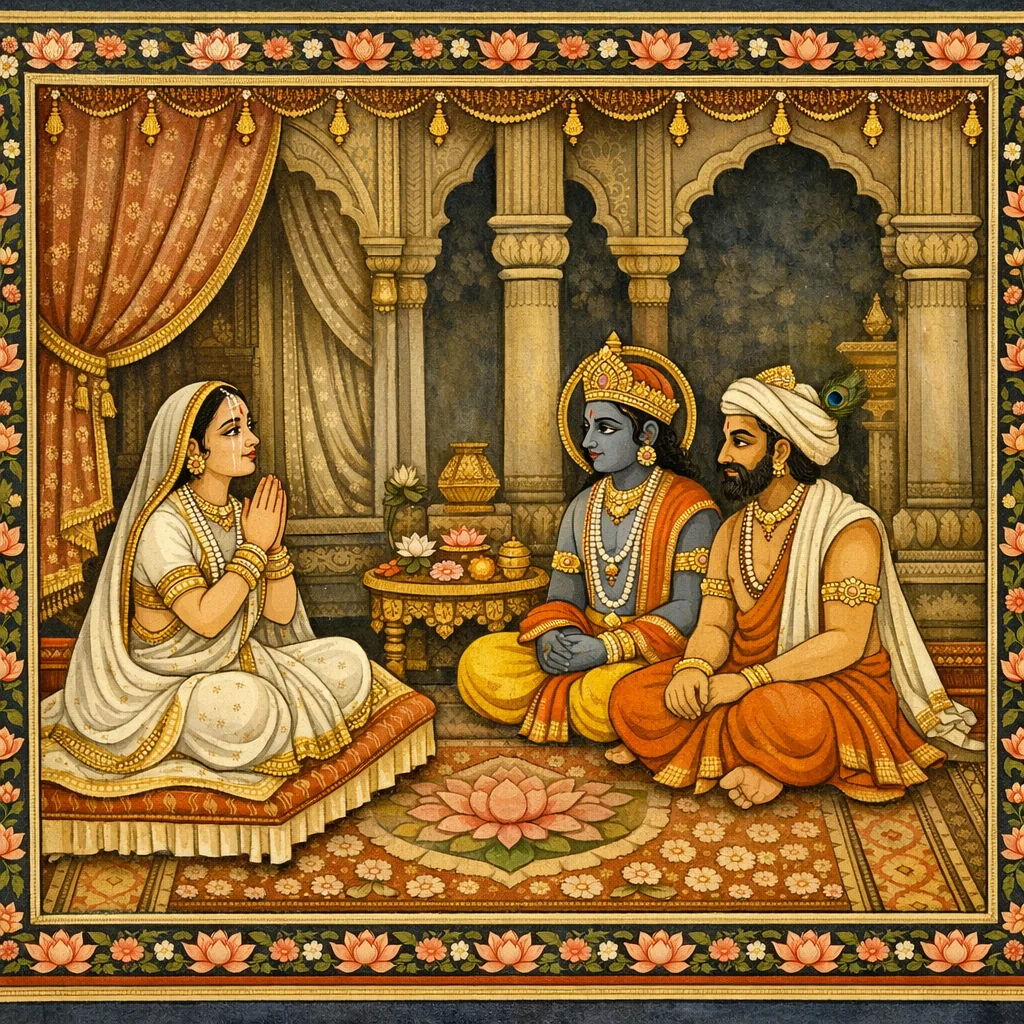
Adhyaya 49
Akrūra in Hastināpura: Kuntī’s Lament and Dhṛtarāṣṭra’s Moral Instruction
Following Kṛṣṇa and Balarāma’s strategic outreach to the Kuru court, Akrūra travels to Hastināpura and meets the principal figures of the Paurava assembly—Dhṛtarāṣṭra, Bhīṣma, Vidura, Kuntī, Droṇa, Kṛpa, Karṇa, Duryodhana, Aśvatthāmā, and the Pāṇḍavas. He stays for months to observe the king’s compromised governance under the sway of partiality and harmful counsel. Privately, Kuntī and Vidura disclose the escalating malice of Dhṛtarāṣṭra’s sons, including attempts to poison the Pāṇḍavas and their intolerance of the brothers’ virtues and popular support. Kuntī then pours out a confidential prayerful lament—remembering her natal family and urgently calling upon Kṛṣṇa as the sole shelter amid enemies. Akrūra and Vidura console her by recalling the extraordinary, divinely ordained births of her sons. Before departing, Akrūra delivers Kṛṣṇa-Balarāma’s friendly yet firm message to Dhṛtarāṣṭra: rule impartially, recognize the impermanence of bodily relations, and avoid hellish consequences of adharma. Dhṛtarāṣṭra admits the truth but confesses his inability to internalize it due to attachment to his sons, acknowledging Kṛṣṇa’s descent to relieve the earth’s burden. Akrūra returns to the Yādava capital and reports the king’s disposition, setting the narrative momentum toward the inevitable Kuru conflict and Kṛṣṇa’s continued protection of His devotees.
Shlokas
Verse 1
श्रीशुक उवाच स गत्वा हास्तिनपुरं पौरवेन्द्रयशोऽङ्कितम् । ददर्श तत्राम्बिकेयं सभीष्मं विदुरं पृथाम् ॥ १ ॥ सहपुत्रं च बाह्लीकं भारद्वाजं सगौतमम् । कर्णं सुयोधनं द्रौणिं पाण्डवान् सुहृदोऽपरान् ॥ २ ॥
Śukadeva Gosvāmī said: Akrūra went to Hastināpura, the city distinguished by the glory of the Paurava rulers. There he saw Dhṛtarāṣṭra, Bhīṣma, Vidura and Kuntī, along with Bāhlika and his son Somadatta. He also saw Droṇācārya, Kṛpācārya, Karṇa, Duryodhana, Aśvatthāmā, the Pāṇḍavas and other close friends.
Verse 2
श्रीशुक उवाच स गत्वा हास्तिनपुरं पौरवेन्द्रयशोऽङ्कितम् । ददर्श तत्राम्बिकेयं सभीष्मं विदुरं पृथाम् ॥ १ ॥ सहपुत्रं च बाह्लीकं भारद्वाजं सगौतमम् । कर्णं सुयोधनं द्रौणिं पाण्डवान् सुहृदोऽपरान् ॥ २ ॥
Śukadeva Gosvāmī said: Akrūra went to Hastināpura, the city distinguished by the glory of the Paurava rulers. There he saw Dhṛtarāṣṭra, Bhīṣma, Vidura and Kuntī, along with Bāhlika and his son Somadatta. He also saw Droṇācārya, Kṛpācārya, Karṇa, Duryodhana, Aśvatthāmā, the Pāṇḍavas and other close friends.
Verse 3
यथावदुपसङ्गम्य बन्धुभिर्गान्दिनीसुत: । सम्पृष्टस्तै: सुहृद्वार्तां स्वयं चापृच्छदव्ययम् ॥ ३ ॥
After Akrūra, the son of Gāndinī, had appropriately greeted all his relatives and friends, they asked him for news of their family members, and he in turn asked about their welfare.
Verse 4
उवास कतिचिन्मासान् राज्ञो वृत्तविवित्सया । दुष्प्रजस्याल्पसारस्य खलच्छन्दानुवर्तिन: ॥ ४ ॥
He remained in Hastināpura for several months to scrutinize the conduct of the weak-willed King, who had bad sons and who was inclined to give in to the whims of mischievous advisers.
Verse 5
तेज ओजो बलं वीर्यं प्रश्रयादींश्च सद्गुणान् । प्रजानुरागं पार्थेषु न सहद्भिश्चिकीर्षितम् ॥ ५ ॥ कृतं च धार्तराष्ट्रैर्यद् गरदानाद्यपेशलम् । आचख्यौ सर्वमेवास्मै पृथा विदुर एव च ॥ ६ ॥
Kuntī and Vidura described to Akrūra in detail the evil intentions of Dhṛtarāṣṭra’s sons, who could not tolerate the great qualities of Kuntī’s sons — such as their powerful influence, military skill, physical strength, bravery and humility — or the intense affection the citizens had for them. Kuntī and Vidura also told Akrūra about how the sons of Dhṛtarāṣṭra had tried to poison the Pāṇḍavas and carry out other such plots.
Verse 6
तेज ओजो बलं वीर्यं प्रश्रयादींश्च सद्गुणान् । प्रजानुरागं पार्थेषु न सहद्भिश्चिकीर्षितम् ॥ ५ ॥ कृतं च धार्तराष्ट्रैर्यद् गरदानाद्यपेशलम् । आचख्यौ सर्वमेवास्मै पृथा विदुर एव च ॥ ६ ॥
Kuntī and Vidura described to Akrūra in detail the evil intentions of Dhṛtarāṣṭra’s sons, who could not tolerate the great qualities of Kuntī’s sons — such as their powerful influence, military skill, physical strength, bravery and humility — or the intense affection the citizens had for them. Kuntī and Vidura also told Akrūra about how the sons of Dhṛtarāṣṭra had tried to poison the Pāṇḍavas and carry out other such plots.
Verse 7
पृथा तु भ्रातरं प्राप्तमक्रूरमुपसृत्य तम् । उवाच जन्मनिलयं स्मरन्त्यश्रुकलेक्षणा ॥ ७ ॥
Kuntīdevī, taking advantage of her brother Akrūra’s visit, approached him confidentially. While remembering her birthplace, she spoke with tears in her eyes.
Verse 8
अपि स्मरन्ति न: सौम्य पितरौ भ्रातरश्च मे । भगिन्यौ भ्रातृपुत्राश्च जामय: सख्य एव च ॥ ८ ॥
[Queen Kuntī said:] O gentle one, do my parents, brothers, sisters, nephews, family women and girlhood friends still remember us?
Verse 9
भ्रात्रेयो भगवान् कृष्ण: शरण्यो भक्तवत्सल: । पैतृष्वस्रेयान् स्मरति रामश्चाम्बुरुहेक्षण: ॥ ९ ॥
Does my nephew Kṛṣṇa, the Supreme Personality and the compassionate shelter of His devotees, still remember His aunt’s sons? And does lotus-eyed Rāma remember them also?
Verse 10
सपत्नमध्ये शोचन्तीं वृकानां हरिणीमिव । सान्त्वयिष्यति मां वाक्यै: पितृहीनांश्च बालकान् ॥ १० ॥
Now that I am suffering in the midst of my enemies like a doe in the midst of wolves, will Kṛṣṇa come to console me and my fatherless sons with His words?
Verse 11
कृष्ण कृष्ण महायोगिन् विश्वात्मन् विश्वभावन । प्रपन्नां पाहि गोविन्द शिशुभिश्चावसीदतीम् ॥ ११ ॥
Kṛṣṇa, Kṛṣṇa! O great yogi! O Supreme Soul and protector of the universe! O Govinda! Please protect me, who have surrendered to You. I and my sons are being overwhelmed by trouble.
Verse 12
नान्यत्तव पदाम्भोजात् पश्यामि शरणं नृणाम् । बिभ्यतां मृत्युसंसारादीश्वरस्यापवर्गिकात् ॥ १२ ॥
For persons fearful of death and rebirth, I see no shelter other than Your liberating lotus feet, for You are the Supreme Lord.
Verse 13
नम: कृष्णाय शुद्धाय ब्रह्मणे परमात्मने । योगेश्वराय योगाय त्वामहं शरणं गता ॥ १३ ॥
I offer my obeisances unto You, Kṛṣṇa, the supreme pure, the Absolute Truth and the Supersoul, the Lord of pure devotional service and the source of all knowledge. I have come to You for shelter.
Verse 14
श्रीशुक उवाच इत्यनुस्मृत्य स्वजनं कृष्णं च जगदीश्वरम् । प्रारुदद् दु:खिता राजन् भवतां प्रपितामही ॥ १४ ॥
Śukadeva Gosvāmī said: Thus meditating on her family members and also on Kṛṣṇa, the Lord of the universe, your great-grandmother Kuntīdevī began to cry out in grief, O King.
Verse 15
समदु:खसुखोऽक्रूरो विदुरश्च महायशा: । सान्त्वयामासतु: कुन्तीं तत्पुत्रोत्पत्तिहेतुभि: ॥ १५ ॥
Both Akrūra, who shared Queen Kuntī’s distress and happiness, and the illustrious Vidura consoled the Queen by reminding her of the extraordinary way her sons had taken birth.
Verse 16
यास्यन् राजानमभ्येत्य विषमं पुत्रलालसम् । अवदत् सुहृदां मध्ये बन्धुभि: सौहृदोदितम् ॥ १६ ॥
The ardent affection King Dhṛtarāṣṭra felt for his sons had made him act unjustly toward the Pāṇḍavas. Just before leaving, Akrūra approached the King, who was seated among his friends and supporters, and related to him the message that his relatives — Lord Kṛṣṇa and Lord Balarāma — had sent out of friendship.
Verse 17
अक्रूर उवाच भो भो वैचित्रवीर्य त्वं कुरूणां कीर्तिवर्धन । भ्रातर्युपरते पाण्डावधुनासनमास्थित: ॥ १७ ॥
Akrūra said: O my dear son of Vicitravīrya, O enhancer of the Kurus’ glory, your brother Pāṇḍu having passed away, you have now assumed the royal throne.
Verse 18
धर्मेण पालयन्नुर्वीं प्रजा: शीलेन रञ्जयन् । वर्तमान: सम: स्वेषु श्रेय: कीर्तिमवाप्स्यसि ॥ १८ ॥
By religiously protecting the earth, delighting your subjects with your noble character, and treating all your relatives equally, you will surely achieve success and glory.
Verse 19
अन्यथा त्वाचरँल्लोके गर्हितो यास्यसे तम: । तस्मात् समत्वे वर्तस्व पाण्डवेष्वात्मजेषु च ॥ १९ ॥
If you act otherwise, however, people will condemn you in this world, and in the next life you will enter the darkness of hell. Remain equally disposed, therefore, toward Pāṇḍu’s sons and your own.
Verse 20
नेह चात्यन्तसंवास: कस्यचित् केनचित् सह । राजन् स्वेनापि देहेन किमु जायात्मजादिभि: ॥ २० ॥
In this world no one has any permanent relationship with anyone else, O King. We cannot stay forever even with our own body, what to speak of our wife, children and the rest.
Verse 21
एक: प्रसूयते जन्तुरेक एव प्रलीयते । एकोऽनुभुङ्क्ते सुकृतमेक एव च दुष्कृतम् ॥ २१ ॥
Every creature is born alone and dies alone, and alone one experiences the just rewards of his good and evil deeds.
Verse 22
अधर्मोपचितं वित्तं हरन्त्यन्येऽल्पमेधस: । सम्भोजनीयापदेशैर्जलानीव जलौकस: ॥ २२ ॥
In the guise of dear dependents, strangers steal the sinfully acquired wealth of a foolish man, just as the offspring of a fish drink up the water that sustains the fish.
Verse 23
पुष्णाति यानधर्मेण स्वबुद्ध्या तमपण्डितम् । तेऽकृतार्थं प्रहिण्वन्ति प्राणा राय: सुतादय: ॥ २३ ॥
A fool indulges in sin to maintain his life, wealth and children and other relatives, for he thinks, “These things are mine.” In the end, however, these very things all abandon him, leaving him frustrated.
Verse 24
स्वयं किल्बिषमादाय तैस्त्यक्तो नार्थकोविद: । असिद्धार्थो विशत्यन्धं स्वधर्मविमुखस्तम: ॥ २४ ॥
Abandoned by his so-called dependents, ignorant of the actual goal of life, indifferent to his real duty, and having failed to fulfill his purposes, the foolish soul enters the blindness of hell, taking his sinful reactions with him.
Verse 25
तस्माल्लोकमिमं राजन् स्वप्नमायामनोरथम् । वीक्ष्यायम्यात्मनात्मानं सम: शान्तो भव प्रभो ॥ २५ ॥
Therefore, O King, looking upon this world as a dream, a magician’s illusion or a flight of fancy, please control your mind with intelligence and become equipoised and peaceful, my lord.
Verse 26
धृतराष्ट्र उवाच यथा वदति कल्याणीं वाचं दानपते भवान् । तथानया न तृप्यामि मर्त्य: प्राप्य यथामृतम् ॥ २६ ॥
Dhṛtarāṣṭra said: O master of charity, I can never be satiated while hearing your auspicious words. Indeed, I am like a mortal who has obtained the nectar of the gods.
Verse 27
तथापि सूनृता सौम्य हृदि न स्थीयते चले । पुत्रानुरागविषमे विद्युत् सौदामनी यथा ॥ २७ ॥
Even so, gentle Akrūra, because my unsteady heart is prejudiced by affection for my sons, these pleasing words of yours cannot remain fixed there, just as lightning cannot remain fixed in a cloud.
Verse 28
ईश्वरस्य विधिं को नु विधुनोत्यन्यथा पुमान् । भूमेर्भारावताराय योऽवतीर्णो यदो: कुले ॥ २८ ॥
Who can defy the injunctions of the Supreme Lord, who has now descended in the Yadu dynasty to diminish the earth’s burden?
Verse 29
यो दुर्विमर्शपथया निजमाययेदं सृष्ट्वा गुणान् विभजते तदनुप्रविष्ट: । तस्मै नमो दुरवबोधविहारतन्त्र- संसारचक्रगतये परमेश्वराय ॥ २९ ॥
I offer my obeisances to Him, the Supreme Personality of Godhead, who creates this universe by the inconceivable activity of His material energy and then distributes the various modes of nature by entering within the creation. From Him, the meaning of whose pastimes is unfathomable, come both the entangling cycle of birth and death and the process of deliverance from it.
Verse 30
श्रीशुक उवाच इत्यभिप्रेत्य नृपतेरभिप्रायं स यादव: । सुहृद्भि: समनुज्ञात: पुनर्यदुपुरीमगात् ॥ ३० ॥
Śukadeva Gosvāmī said: Having thus apprised himself of the King’s attitude, Akrūra, the descendant of Yadu, took permission from his well-wishing relatives and friends and returned to the capital of the Yādavas.
Verse 31
शशंस रामकृष्णाभ्यां धृतराष्ट्रविचेष्टितम् । पाण्डवान् प्रति कौरव्य यदर्थं प्रेषित: स्वयम् ॥ ३१ ॥
Akrūra reported to Lord Balarāma and Lord Kṛṣṇa how Dhṛtarāṣṭra was behaving toward the Pāṇḍavas. Thus, O descendant of the Kurus, he fulfilled the purpose for which he had been sent.
Frequently Asked Questions
He remained to scrutinize Dhṛtarāṣṭra’s actual conduct—how a weak-willed ruler, influenced by mischievous advisers and blinded by affection for his sons, was treating the Pāṇḍavas. This investigative stay turns Akrūra into a dharmic envoy: he gathers reliable intelligence and then reports back to Kṛṣṇa and Balarāma, aligning political strategy with the Lord’s protective mission toward His devotees.
Kuntī’s sorrow becomes bhakti-yoga through direct śaraṇāgati: she frames her danger as a spiritual impetus to seek Kṛṣṇa alone as protector (rakṣaka) and liberator (mokṣa-prada). Her repeated invocation of Kṛṣṇa’s names and her confession that no shelter exists beyond His lotus feet transform personal suffering into theological clarity—worldly relations are unstable, but Bhagavān’s protection is certain.
Akrūra and Vidura console her. Their consolation rests on remembering the extraordinary births of the Pāṇḍavas—implying divine oversight and destiny (daiva) supporting dharma. This is not fatalism; it is a reminder that the Lord’s plan and the devotees’ protection operate even when immediate circumstances appear hostile.
Akrūra urges impartiality toward Pāṇḍu’s sons and Dhṛtarāṣṭra’s own, warning of social condemnation and hellish consequences if he acts otherwise. He grounds the counsel in anityatā: no one permanently belongs to anyone; each soul is born and dies alone and inherits only its karma. Therefore a king should govern with equanimity, self-control, and intelligence, treating worldly life like a dream or illusion rather than a basis for injustice.
He confesses putra-sneha—his unstable heart is prejudiced by affection for his sons—so Akrūra’s auspicious words cannot remain fixed within him. The chapter uses this as a diagnostic of moha: even correct knowledge fails to transform behavior when attachment dominates the will, foreshadowing the Kuru catastrophe despite repeated moral warnings.