Adhyaya 42
Trivakrā’s Transformation and the Breaking of Kaṁsa’s Bow (Mathurā-līlā Prelude)
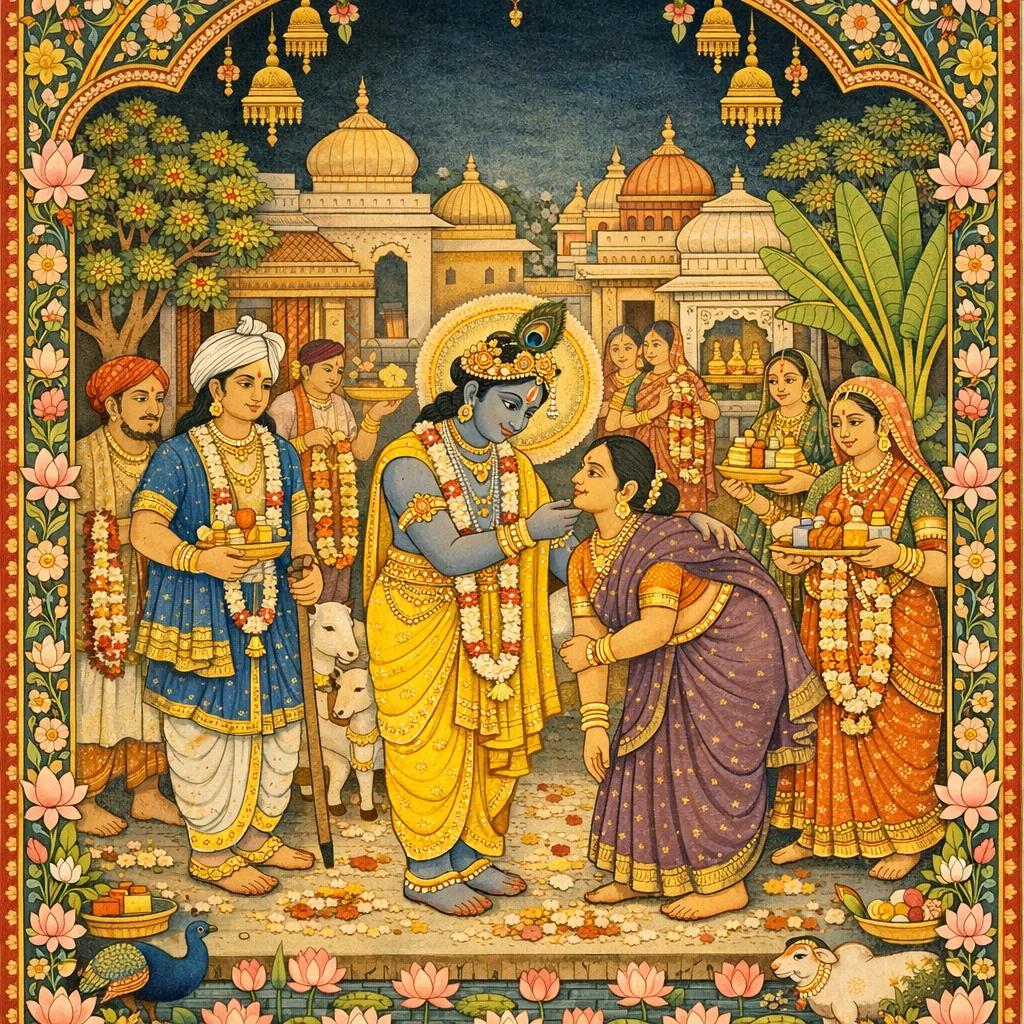
Continuing Kṛṣṇa and Balarāma’s entry into Mathurā, the chapter shows how the Lord’s presence immediately distributes grace and destabilizes Kaṁsa’s tyranny. On the royal road, Kṛṣṇa meets Trivakrā, Kaṁsa’s ointment-maker, and requests fragrant unguents. Captivated, she serves Them, and Kṛṣṇa reciprocates by straightening her hunchback—an embodied sign of poṣaṇa (divine favor) and the transformative power of darśana and sparśa (contact with Bhagavān). Trivakrā’s awakened desire prompts an invitation, which Kṛṣṇa gently defers, indicating purposeful movement toward confronting adharma. As They proceed, merchants honor Them and city women become love-struck, foreshadowing Mathurā’s collective “benediction” foretold by the gopīs. Kṛṣṇa then goes to the bow-sacrifice arena, lifts and strings the royal bow, and snaps it, defeating the guards who attack. The thunderous crack terrifies Kaṁsa, who is haunted by ominous visions through the night. With dawn, Kaṁsa hastily prepares the wrestling festival, and the wrestlers and dignitaries assemble—setting the immediate stage for the climactic arena confrontation in the next chapter(s).
Shlokas
Verse 1
श्रीशुक उवाच अथ व्रजन् राजपथेन माधव: स्त्रियं गृहीताङ्गविलेपभाजनाम् । विलोक्य कुब्जां युवतीं वराननां पप्रच्छ यान्तीं प्रहसन् रसप्रद: ॥ १ ॥
Śukadeva Gosvāmī said: As He walked down the King’s road, Lord Mādhava then saw a young hunchback woman with an attractive face, who carried a tray of fragrant ointments as she walked along. The bestower of the ecstasy of love smiled and inquired from her as follows.
Verse 2
का त्वं वरोर्वेतदु हानुलेपनंकस्याङ्गने वा कथयस्व साधु न: । देह्यावयोरङ्गविलेपमुत्तमंश्रेयस्ततस्ते न चिराद् भविष्यति ॥ २ ॥
[Lord Kṛṣṇa said:] Who are you, O beautiful-thighed one? Ah, ointment! Who is it for, my dear lady? Please tell Us truthfully. Give Us both some of your finest ointment and you will soon gain a great boon.
Verse 3
सैरन्ध्र्युवाच दास्यस्म्यहं सुन्दर कंससम्मतात्रिवक्रनामा ह्यनुलेपकर्मणि । मद्भावितं भोजपतेरतिप्रियंविना युवां कोऽन्यतमस्तदर्हति ॥ ३ ॥
The maidservant replied: O handsome one, I am a servant of King Kaṁsa, who highly regards me for the ointments I make. My name is Trivakrā. Who else but You two deserve my ointments, which the lord of the Bhojas likes so much?
Verse 4
रूपपेशलमाधुर्यहसितालापवीक्षितै: । धर्षितात्मा ददौ सान्द्रमुभयोरनुलेपनम् ॥ ४ ॥
Her mind overwhelmed by Kṛṣṇa’s beauty, charm, sweetness, smiles, words and glances, Trivakrā gave both Kṛṣṇa and Balarāma generous amounts of ointment.
Verse 5
ततस्तावङ्गरागेण स्ववर्णेतरशोभिना । सम्प्राप्तपरभागेन शुशुभातेऽनुरञ्जितौ ॥ ५ ॥
Anointed with these most excellent cosmetics, which adorned Them with hues that contrasted with Their complexions, the two Lords appeared extremely beautiful.
Verse 6
प्रसन्नो भगवान्कुब्जां त्रिवक्रां रुचिराननाम् । ऋज्वीं कर्तुं मनश्चक्रे दर्शयन् दर्शने फलम् ॥ ६ ॥
Lord Kṛṣṇa was pleased with Trivakrā, so He decided to straighten that hunchbacked girl with the lovely face just to demonstrate the result of seeing Him.
Verse 7
पद्भ्यामाक्रम्य प्रपदे द्व्यङ्गुल्युत्तानपाणिना । प्रगृह्य चिबुकेऽध्यात्ममुदनीनमदच्युत: ॥ ७ ॥
Pressing down on her toes with both His feet, Lord Acyuta placed one upward-pointing finger of each hand under her chin and straightened up her body.
Verse 8
सा तदर्जुसमानाङ्गी बृहच्छ्रोणिपयोधरा । मुकुन्दस्पर्शनात् सद्यो बभूव प्रमदोत्तमा ॥ ८ ॥
Simply by Lord Mukunda’s touch, Trivakrā was suddenly transformed into an exquisitely beautiful woman with straight, evenly proportioned limbs and large hips and breasts.
Verse 9
ततो रूपगुणौदार्यसम्पन्ना प्राह केशवम् । उत्तरीयान्तमाकृष्य स्मयन्ती जातहृच्छया ॥ ९ ॥
Now endowed with beauty, character and generosity, Trivakrā began to feel lusty desires for Lord Keśava. Taking hold of the end of His upper cloth, she smiled and addressed Him as follows.
Verse 10
एहि वीर गृहं यामो न त्वां त्यक्तुमिहोत्सहे । त्वयोन्मथितचित्ताया: प्रसीद पुरुषर्षभ ॥ १० ॥
[Trivakrā said:] Come, O hero, let us go to my house. I cannot bear to leave You here. O best of males, please take pity on me, since You have agitated my mind.
Verse 11
एवं स्त्रिया याच्यमान: कृष्णो रामस्य पश्यत: । मुखं वीक्ष्यानु गोपानां प्रहसंस्तामुवाच ह ॥ ११ ॥
Thus entreated by the woman, Lord Kṛṣṇa first glanced at the face of Balarāma, who was watching the incident, and then at the faces of the cowherd boys. Then with a laugh Kṛṣṇa replied to her as follows.
Verse 12
एष्यामि ते गृहं सुभ्रु पुंसामाधिविकर्शनम् । साधितार्थोऽगृहाणां न: पान्थानां त्वं परायणम् ॥ १२ ॥
[Lord Kṛṣṇa said:] O lady with beautiful eyebrows, as soon as I fulfill My purpose I will certainly visit your house, where men can relieve their anxiety. Indeed, you are the best refuge for Us homeless travelers.
Verse 13
विसृज्य माध्व्या वाण्या ताम्व्रजन् मार्गे वणिक्पथै: । नानोपायनताम्बूलस्रग्गन्धै: साग्रजोऽर्चित: ॥ १३ ॥
Leaving her with these sweet words, Lord Kṛṣṇa walked further down the road. The merchants along the way worshiped Him and His elder brother by presenting Them with various respectful offerings, including pān, garlands and fragrant substances.
Verse 14
तद्दर्शनस्मरक्षोभादात्मानं नाविदन् स्त्रिय: । विस्रस्तवास:कवरवलया लेख्यमूर्तय: ॥ १४ ॥
The sight of Kṛṣṇa aroused Cupid in the hearts of the city women. Thus agitated, they forgot themselves. Their clothes, braids and bangles became disheveled, and they stood as still as figures in a painting.
Verse 15
तत: पौरान् पृच्छमानो धनुष: स्थानमच्युत: । तस्मिन् प्रविष्टो ददृशे धनुरैन्द्रमिवाद्भुतम् ॥ १५ ॥
Lord Kṛṣṇa then asked the local people where the arena was in which the bow sacrifice would take place. When He went there He saw the amazing bow, which resembled Lord Indra’s.
Verse 16
पुरुषैर्बहुभिर्गुप्तमर्चितं परमर्द्धिमत् । वार्यमाणो नृभि: कृष्ण: प्रसह्य धनुराददे ॥ १६ ॥
That most opulent bow was guarded by a large company of men, who were respectfully worshiping it. Kṛṣṇa pushed His way forward and, despite the guards’ attempts to stop Him, picked it up.
Verse 17
करेण वामेन सलीलमुद्धृतंसज्यं च कृत्वा निमिषेण पश्यताम् । नृणां विकृष्य प्रबभञ्ज मध्यतोयथेक्षुदण्डं मदकर्युरुक्रम: ॥ १७ ॥
Easily lifting the bow with His left hand, Lord Urukrama strung it in a fraction of a second as the King’s guards looked on. He then powerfully pulled the string and snapped the bow in half, just as an excited elephant might break a stalk of sugar cane.
Verse 18
धनुषो भज्यमानस्य शब्द: खं रोदसी दिश: । पूरयामास यं श्रुत्वा कंसस्त्रासमुपागमत् ॥ १८ ॥
The sound of the bow’s breaking filled the earth and sky in all directions. Upon hearing it, Kaṁsa was struck with terror.
Verse 19
तद् रक्षिण: सानुचरं कुपिता आततायिन: । गृहीतुकामा आवव्रुर्गृह्यतां वध्यतामिति ॥ १९ ॥
The enraged guards then took up their weapons and, wanting to seize Kṛṣṇa and His companions, surrounded them and shouted, “Grab Him! Kill Him!”
Verse 20
अथ तान्दुरभिप्रायान् विलोक्य बलकेशवौ । क्रुद्धौ धन्वन आदाय शकले तांश्च जघ्नतु: ॥ २० ॥
Seeing the guards coming upon Them with evil intent, Balarāma and Keśava took up the two halves of the bow and began striking them down.
Verse 21
बलं च कंसप्रहितं हत्वा शालामुखात्तत: । निष्क्रम्य चेरतुर्हृष्टौ निरीक्ष्य पुरसम्पद: ॥ २१ ॥
After also killing a contingent of soldiers sent by Kaṁsa, Kṛṣṇa and Balarāma left the sacrificial arena by its main gate and continued Their walk about the city, happily looking at the opulent sights.
Verse 22
तयोस्तद् अद्भुतं वीर्यं निर्शाम्य पुरवासिनः । तेजः प्रागल्भ्यं रूपं च मनीरे विभुद्दोत्थौ ॥ २२ ॥
Having witnessed the amazing deed Kṛṣṇa and Balarāma had performed, and seeing Their strength, boldness and beauty, the people of the city thought They must be two prominent demigods.
Verse 23
तयोर्विचरतो: स्वैरमादित्योऽस्तमुपेयिवान् । कृष्णरामौ वृतौ गोपै: पुराच्छकटमीयतु: ॥ २३ ॥
As They strolled about at will, the sun began to set, so They left the city with the cowherd boys and returned to the cowherds’ wagon encampment.
Verse 24
गोप्यो मुकुन्दविगमे विरहातुरा याआशासताशिष ऋता मधुपुर्यभूवन् । सम्पश्यतां पुरुषभूषणगात्रलक्ष्मींहित्वेतरान् नु भजतश्चकमेऽयनं श्री: ॥ २४ ॥
At the time of Mukunda’s [Kṛṣṇa’s] departure from Vṛndāvana, the gopīs had foretold that the residents of Mathurā would enjoy many benedictions, and now the gopīs’ predictions were coming true, for those residents were gazing upon the beauty of Kṛṣṇa, the jewel among men. Indeed, the goddess of fortune desired the shelter of that beauty so much that she abandoned many other men, although they worshiped her.
Verse 25
अवनिक्ताङ्घ्रियुगलौ भुक्त्वा क्षीरोपसेचनम् । ऊषतुस्तां सुखं रात्रिं ज्ञात्वा कंसचिकीर्षितम् ॥ २५ ॥
After Kṛṣṇa’s and Balarāma’s feet were bathed, the two Lords ate rice with milk. Then, although knowing what Kaṁsa intended to do, They spent the night there comfortably.
Verse 26
कंसस्तु धनुषो भङ्गं रक्षिणां स्वबलस्य च । वधं निशम्य गोविन्दरामविक्रीडितं परम् ॥ २६ ॥ दीर्घप्रजागरो भीतो दुर्निमित्तानि दुर्मति: । बहून्यचष्टोभयथा मृत्योर्दौत्यकराणि च ॥ २७ ॥
Wicked King Kaṁsa, on the other hand, was terrified, having heard how Kṛṣṇa and Balarāma had broken the bow and killed his guards and soldiers, all simply as a game. He remained awake for a long time, and both while awake and while dreaming he saw many bad omens, messengers of death.
Verse 27
कंसस्तु धनुषो भङ्गं रक्षिणां स्वबलस्य च । वधं निशम्य गोविन्दरामविक्रीडितं परम् ॥ २६ ॥ दीर्घप्रजागरो भीतो दुर्निमित्तानि दुर्मति: । बहून्यचष्टोभयथा मृत्योर्दौत्यकराणि च ॥ २७ ॥
Wicked King Kaṁsa, on the other hand, was terrified, having heard how Kṛṣṇa and Balarāma had broken the bow and killed his guards and soldiers, all simply as a game. He remained awake for a long time, and both while awake and while dreaming he saw many bad omens, messengers of death.
Verse 28
अदर्शनं स्वशिरस: प्रतिरूपे च सत्यपि । असत्यपि द्वितीये च द्वैरूप्यं ज्योतिषां तथा ॥ २८ ॥ छिद्रप्रतीतिश्छायायां प्राणघोषानुपश्रुति: । स्वर्णप्रतीतिर्वृक्षेषु स्वपदानामदर्शनम् ॥ २९ ॥ स्वप्ने प्रेतपरिष्वङ्ग: खरयानं विषादनम् । यायान्नलदमाल्येकस्तैलाभ्यक्तो दिगम्बर: ॥ ३० ॥ अन्यानि चेत्थं भूतानि स्वप्नजागरितानि च । पश्यन् मरणसन्त्रस्तो निद्रां लेभे न चिन्तया ॥ ३१ ॥
When he looked at his reflection he could not see his head; for no reason the moon and stars appeared double; he saw a hole in his shadow; he could not hear the sound of his life air; trees seemed covered with a golden hue; and he could not see his footprints. He dreamt that he was being embraced by ghosts, riding a donkey and drinking poison, and also that a naked man smeared with oil was passing by wearing a garland of nalada flowers. Seeing these and other such omens both while dreaming and while awake, Kaṁsa was terrified by the prospect of death, and out of anxiety he could not sleep.
Verse 29
अदर्शनं स्वशिरस: प्रतिरूपे च सत्यपि । असत्यपि द्वितीये च द्वैरूप्यं ज्योतिषां तथा ॥ २८ ॥ छिद्रप्रतीतिश्छायायां प्राणघोषानुपश्रुति: । स्वर्णप्रतीतिर्वृक्षेषु स्वपदानामदर्शनम् ॥ २९ ॥ स्वप्ने प्रेतपरिष्वङ्ग: खरयानं विषादनम् । यायान्नलदमाल्येकस्तैलाभ्यक्तो दिगम्बर: ॥ ३० ॥ अन्यानि चेत्थं भूतानि स्वप्नजागरितानि च । पश्यन् मरणसन्त्रस्तो निद्रां लेभे न चिन्तया ॥ ३१ ॥
When he looked at his reflection he could not see his head; for no reason the moon and stars appeared double; he saw a hole in his shadow; he could not hear the sound of his life air; trees seemed covered with a golden hue; and he could not see his footprints. He dreamt that he was being embraced by ghosts, riding a donkey and drinking poison, and also that a naked man smeared with oil was passing by wearing a garland of nalada flowers. Seeing these and other such omens both while dreaming and while awake, Kaṁsa was terrified by the prospect of death, and out of anxiety he could not sleep.
Verse 30
अदर्शनं स्वशिरस: प्रतिरूपे च सत्यपि । असत्यपि द्वितीये च द्वैरूप्यं ज्योतिषां तथा ॥ २८ ॥ छिद्रप्रतीतिश्छायायां प्राणघोषानुपश्रुति: । स्वर्णप्रतीतिर्वृक्षेषु स्वपदानामदर्शनम् ॥ २९ ॥ स्वप्ने प्रेतपरिष्वङ्ग: खरयानं विषादनम् । यायान्नलदमाल्येकस्तैलाभ्यक्तो दिगम्बर: ॥ ३० ॥ अन्यानि चेत्थं भूतानि स्वप्नजागरितानि च । पश्यन् मरणसन्त्रस्तो निद्रां लेभे न चिन्तया ॥ ३१ ॥
When he looked at his reflection he could not see his head; for no reason the moon and stars appeared double; he saw a hole in his shadow; he could not hear the sound of his life air; trees seemed covered with a golden hue; and he could not see his footprints. He dreamt that he was being embraced by ghosts, riding a donkey and drinking poison, and also that a naked man smeared with oil was passing by wearing a garland of nalada flowers. Seeing these and other such omens both while dreaming and while awake, Kaṁsa was terrified by the prospect of death, and out of anxiety he could not sleep.
Verse 31
अदर्शनं स्वशिरस: प्रतिरूपे च सत्यपि । असत्यपि द्वितीये च द्वैरूप्यं ज्योतिषां तथा ॥ २८ ॥ छिद्रप्रतीतिश्छायायां प्राणघोषानुपश्रुति: । स्वर्णप्रतीतिर्वृक्षेषु स्वपदानामदर्शनम् ॥ २९ ॥ स्वप्ने प्रेतपरिष्वङ्ग: खरयानं विषादनम् । यायान्नलदमाल्येकस्तैलाभ्यक्तो दिगम्बर: ॥ ३० ॥ अन्यानि चेत्थं भूतानि स्वप्नजागरितानि च । पश्यन् मरणसन्त्रस्तो निद्रां लेभे न चिन्तया ॥ ३१ ॥
When he looked at his reflection he could not see his head; for no reason the moon and stars appeared double; he saw a hole in his shadow; he could not hear the sound of his life air; trees seemed covered with a golden hue; and he could not see his footprints. He dreamt that he was being embraced by ghosts, riding a donkey and drinking poison, and also that a naked man smeared with oil was passing by wearing a garland of nalada flowers. Seeing these and other such omens both while dreaming and while awake, Kaṁsa was terrified by the prospect of death, and out of anxiety he could not sleep.
Verse 32
व्युष्टायां निशि कौरव्य सूर्ये चाद्भ्य: समुत्थिते । कारयामास वै कंसो मल्लक्रीडामहोत्सवम् ॥ ३२ ॥
When the night had finally passed and the sun rose up again from the water, Kaṁsa set about arranging for the grand wrestling festival.
Verse 33
आनर्चु: पुरुषा रङ्गं तूर्यभेर्यश्च जघ्निरे । मञ्चाश्चालङ्कृता: स्रग्भि: पताकाचैलतोरणै: ॥ ३३ ॥
The King’s men performed the ritual worship of the wrestling arena, sounded their drums and other instruments and decorated the viewing galleries with garlands, flags, ribbons and arches.
Verse 34
तेषु पौरा जानपदा ब्रह्मक्षत्रपुरोगमा: । यथोपजोषं विविशू राजानश्च कृतासना: ॥ ३४ ॥
The city-dwellers and residents of the outlying districts, led by brāhmaṇas and kṣatriyas, came and sat down comfortably in the galleries. The royal guests received special seats.
Verse 35
कंस: परिवृतोऽमात्यै राजमञ्च उपाविशत् । मण्डलेश्वरमध्यस्थो हृदयेन विदूयता ॥ ३५ ॥
Surrounded by his ministers, Kaṁsa took his seat on the imperial dais. But even as he sat amidst his various provincial rulers, his heart trembled.
Verse 36
वाद्यमानेषु तूर्येषु मल्लतालोत्तरेषु च । मल्ला: स्वलङ्कृता: दृप्ता: सोपाध्याया: समासत ॥ ३६ ॥
While the musical instruments loudly played in the rhythmic meters appropriate for wrestling matches, the lavishly ornamented wrestlers proudly entered the arena with their coaches and sat down.
Verse 37
चाणूरो मुष्टिक: कूट: शलस्तोशल एव च । त आसेदुरुपस्थानं वल्गुवाद्यप्रहर्षिता: ॥ ३७ ॥
Enthused by the pleasing music, Canura, Muṣṭika, Kūṭa, Śala and Tośala sat down on the wrestling mat.
Verse 38
नन्दगोपादयो गोपा भोजराजसमाहुता: । निवेदितोपायनास्त एकस्मिन्मञ्च आविशन् ॥ ३८ ॥
Nanda Mahārāja and the other cowherds, summoned by the King of the Bhojas, presented him with their offerings and then took their seats in one of the galleries.
Frequently Asked Questions
Trivakrā is Kaṁsa’s maidservant and ointment-maker. Kṛṣṇa straightens her hunchback to demonstrate the tangible fruit of contact with Bhagavān—darśana and sparśa purify and transform. On a theological level, the act signifies poṣaṇa (the Lord’s gracious upliftment of a socially marginal figure) and shows that divine beauty and mercy can reorder both the external body and the internal disposition.
The text presents her desire as kāma arising from Kṛṣṇa’s beauty, yet within the Bhāgavata framework even materially tinged attraction can become a doorway to grace when directed toward the Lord. Commentarial traditions often distinguish between ordinary lust and desire that becomes purified by its object (Bhagavān), emphasizing that Kṛṣṇa remains self-controlled and purposeful, offering kindness without becoming bound by the interaction.
Narratively, breaking the bow is a deliberate provocation and a public declaration that Kaṁsa’s regime is nearing its end; it also demonstrates Kṛṣṇa’s effortless supremacy (aiśvarya). Symbolically, it represents the shattering of adharma upheld by state power and ritual prestige. The bow—guarded and worshiped—becomes an emblem of tyrannical authority, which Kṛṣṇa dismantles as a prelude to restoring righteous order.
The omens function as Purāṇic narrative markers of imminent daiva (destiny) and niyati (inevitability) when adharma reaches its limit. Kaṁsa’s disturbed perception—missing head in reflection, doubled luminaries, holes in shadow—signals the collapse of his worldly security and the approach of death as a moral consequence. The Bhāgavata uses such nimittas to show that the cosmos itself reacts when the Lord’s corrective līlā is about to manifest.
It transitions from Kṛṣṇa’s arrival and public reception to the formal arena setting engineered by Kaṁsa. The bow-breaking triggers Kaṁsa’s fear and accelerates preparations for the wrestling festival, while the assembly of wrestlers (Cāṇūra, Muṣṭika, etc.) and the seating of Nanda and the Vraja cowherds positions all key participants for the impending confrontation and Kaṁsa’s downfall.