Adhyaya 18
Kṛṣṇa and Balarāma’s Forest Games and the Slaying of Pralamba
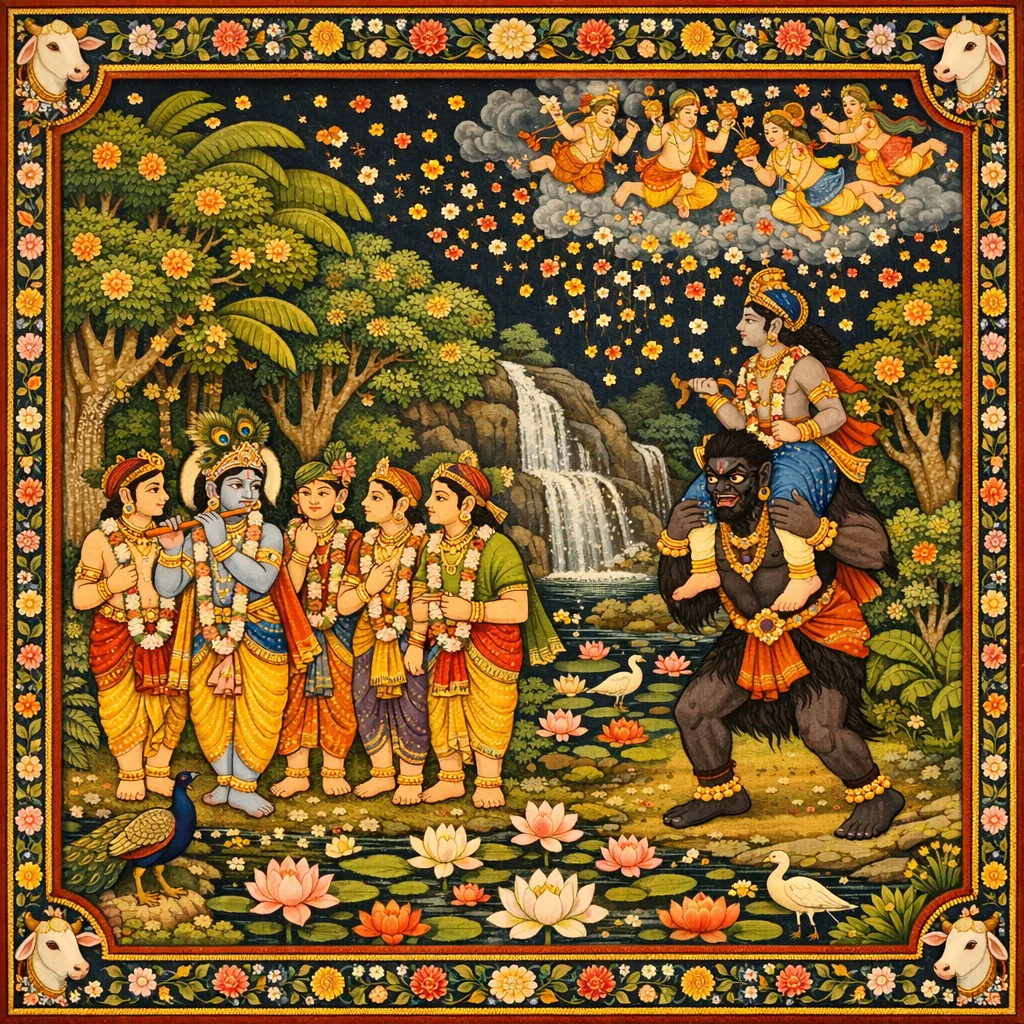
Following the ongoing cowherd life of Vraja, Śukadeva describes Kṛṣṇa’s return amid glorifying companions and then shifts to the onset of summer. Yet, because Bhagavān resides in Vṛndāvana with Balarāma, the season transforms—heat is tempered by waterfalls, lotus-scented breezes, and ever-fresh greenery—establishing dhāma-viśeṣa (the land’s transcendental character). Kṛṣṇa, Balarāma, and the sakhās enter the forest playing the flute, adorning themselves with leaves, feathers, flowers, and minerals, and engaging in games, music, mimicry, and friendly wrestling; even devas join incognito to witness and praise. Into this pastoral play enters the asura Pralamba disguised as a cowherd boy, intent on abducting the Lords. Kṛṣṇa knowingly allows him to join, then orchestrates a carrying game near Bhāṇḍīraka. Pralamba seizes the chance to kidnap Balarāma, reveals his terrifying form, and is slain by Balarāma’s fist. The boys rejoice, embrace Balarāma, and the devas shower flowers—closing the episode with poṣaṇa and the reaffirmation that Vraja’s play defeats disguised evil, setting the stage for further forest-līlās and escalating asuric challenges.
Shlokas
Verse 1
श्रीशुक उवाच अथ कृष्ण: परिवृतो ज्ञातिभिर्मुदितात्मभि: । अनुगीयमानो न्यविशद्व्रजं गोकुलमण्डितम् ॥ १ ॥
Śukadeva Gosvāmī said: Surrounded by His blissful companions, who constantly chanted His glories, Śrī Kṛṣṇa then entered the village of Vraja, which was decorated with herds of cows.
Verse 2
व्रजे विक्रीडतोरेवं गोपालच्छद्ममायया । ग्रीष्मो नामर्तुरभवन्नातिप्रेयाञ्छरीरिणाम् ॥ २ ॥
While Kṛṣṇa and Balarāma were thus enjoying life in Vṛndāvana in the guise of ordinary cowherd boys, the summer season gradually appeared. This season is not very pleasing to embodied souls.
Verse 3
स च वृन्दावनगुणैर्वसन्त इव लक्षित: । यत्रास्ते भगवान् साक्षाद् रामेण सह केशव: ॥ ३ ॥
Nevertheless, because the Supreme Personality of Godhead was personally staying in Vṛndāvana along with Balarāma, summer manifested the qualities of spring. Such are the features of the land of Vṛndāvana.
Verse 4
यत्र निर्झरनिर्ह्रादनिवृत्तस्वनझिल्लिकम् । शश्वत्तच्छीकरर्जीषद्रुममण्डलमण्डितम् ॥ ४ ॥
In Vṛndāvana, the loud sound of waterfalls covered the crickets’ noise, and clusters of trees constantly moistened by spray from those waterfalls beautified the entire area.
Verse 5
सरित्सर:प्रस्रवणोर्मिवायुना कह्लारकुञ्जोत्पलरेणुहारिणा । न विद्यते यत्र वनौकसां दवो निदाघवह्न्यर्कभवोऽतिशाद्वले ॥ ५ ॥
The wind wafting over the waves of the lakes and flowing rivers carried away the pollen of many varieties of lotuses and water lilies and then cooled the entire Vṛndāvana area. Thus the residents there did not suffer from the heat generated by the blazing summer sun and seasonal forest fires. Indeed, Vṛndāvana was abundant with fresh green grass.
Verse 6
अगाधतोयह्रदिनीतटोर्मिभि- र्द्रवत्पुरीष्या: पुलिनै: समन्तत: । न यत्र चण्डांशुकरा विषोल्बणा भुवो रसं शाद्वलितं च गृह्णते ॥ ६ ॥
With their flowing waves the deep rivers drenched their banks, making them damp and muddy. Thus the rays of the sun, which were as fierce as poison, could not evaporate the earth’s sap or parch its green grass.
Verse 7
वनं कुसुमितं श्रीमन्नदच्चित्रमृगद्विजम् । गायन्मयूरभ्रमरं कूजत्कोकिलसारसम् ॥ ७ ॥
Flowers beautifully decorated the forest of Vṛndāvana, and many varieties of animals and birds filled it with sound. The peacocks and bees sang, and the cuckoos and cranes cooed.
Verse 8
क्रीडिष्यमाणस्तन् कृष्णो भगवान् बलसंयुत: । वेणुं विरणयन् गोपैर्गोधनै: संवृतोऽविशत् ॥ ८ ॥
Intending to engage in pastimes, Lord Kṛṣṇa, the Supreme Personality of Godhead, accompanied by Lord Balarāma and surrounded by the cowherd boys and the cows, entered the forest of Vṛndāvana as He played His flute.
Verse 9
प्रवालबर्हस्तबकस्रग्धातुकृतभूषणा: । रामकृष्णादयो गोपा ननृतुर्युयुधुर्जगु: ॥ ९ ॥
Decorating themselves with newly grown leaves, along with peacock feathers, garlands, clusters of flower buds, and colored minerals, Balarāma, Kṛṣṇa and Their cowherd friends danced, wrestled and sang.
Verse 10
कृष्णस्य नृत्यत: केचिज्जगु: केचिदवादयन् । वेणुपाणितलै: शृङ्गै: प्रशशंसुरथापरे ॥ १० ॥
As Kṛṣṇa danced, some of the boys accompanied Him by singing, and others by playing flutes, hand cymbals and buffalo horns, while still others praised His dancing.
Verse 11
गोपजातिप्रतिच्छन्ना देवा गोपालरूपिणौ । ईडिरे कृष्णरामौ च नटा इव नटं नृप ॥ ११ ॥
O King, demigods disguised themselves as members of the cowherd community and, just as dramatic dancers praise another dancer, worshiped Kṛṣṇa and Balarāma, who were also appearing as cowherd boys.
Verse 12
भ्रमणैर्लङ्घनै: क्षेपैरास्फोटनविकर्षणै: । चिक्रीडतुर्नियुद्धेन काकपक्षधरौ क्वचित् ॥ १२ ॥
Kṛṣṇa and Balarāma played with their cowherd boyfriends by whirling about, leaping, hurling, slapping and fighting. Sometimes Kṛṣṇa and Balarāma would pull the hair on the boys’ heads.
Verse 13
क्वचिन्नृत्यत्सु चान्येषु गायकौ वादकौ स्वयम् । शशंसतुर्महाराज साधु साध्विति वादिनौ ॥ १३ ॥
While the other boys were dancing, O King, Kṛṣṇa and Balarāma would sometimes accompany them with song and instrumental music, and sometimes the two Lords would praise the boys, saying, “Very good! Very good!”
Verse 14
क्वचिद्बिल्वै: क्वचित्कुम्भै: क्वचामलकमुष्टिभि: । अस्पृश्यनेत्रबन्धाद्यै: क्वचिन्मृगखगेहया ॥ १४ ॥
Sometimes the cowherd boys would play with bilva or kumbha fruits, and sometimes with handfuls of āmalaka fruits. At other times they would play the games of trying to touch one another or of trying to identify somebody while one is blindfolded, and sometimes they would imitate animals and birds.
Verse 15
क्वचिच्च दर्दुरप्लावैर्विविधैरुपहासकै: । कदाचित् स्यन्दोलिकया कर्हिचिन्नृपचेष्टया ॥ १५ ॥
They would sometimes jump around like frogs, sometimes play various jokes, sometimes ride in swings and sometimes imitate monarchs.
Verse 16
एवं तौ लोकसिद्धाभि: क्रीडाभिश्चेरतुर्वने । नद्यद्रिद्रोणिकुञ्जेषु काननेषु सर:सु च ॥ १६ ॥
In this way Kṛṣṇa and Balarāma played all sorts of well-known games as They wandered among the rivers, hills, valleys, bushes, trees and lakes of Vṛndāvana.
Verse 17
पशूंश्चारयतोर्गोपैस्तद्वने रामकृष्णयो: । गोपरूपी प्रलम्बोऽगादसुरस्तज्जिहीर्षया ॥ १७ ॥
While Rāma, Kṛṣṇa and Their cowherd friends were thus tending the cows in that Vṛndāvana forest, the demon Pralamba entered their midst. He had assumed the form of a cowherd boy with the intention of kidnapping Kṛṣṇa and Balarāma.
Verse 18
तं विद्वानपि दाशार्हो भगवान् सर्वदर्शन: । अन्वमोदत तत्सख्यं वधं तस्य विचिन्तयन् ॥ १८ ॥
Since the Supreme Lord Kṛṣṇa, who had appeared in the Daśārha dynasty, sees everything, He understood who the demon was. Still, the Lord pretended to accept the demon as a friend, while at the same time seriously considering how to kill him.
Verse 19
तत्रोपाहूय गोपालान् कृष्ण: प्राह विहारवित् । हे गोपा विहरिष्यामो द्वन्द्वीभूय यथायथम् ॥ १९ ॥
Kṛṣṇa, who knows all sports and games, then called together the cowherd boys and spoke as follows: “Hey cowherd boys! Let’s play now! We’ll divide ourselves into two even teams.”
Verse 20
तत्र चक्रु: परिवृढौ गोपा रामजनार्दनौ । कृष्णसङ्घट्टिन: केचिदासन् रामस्य चापरे ॥ २० ॥
The cowherd boys chose Kṛṣṇa and Balarāma as the leaders of the two parties. Some of the boys were on Kṛṣṇa’s side, and others joined Balarāma.
Verse 21
आचेरुर्विविधा: क्रीडा वाह्यवाहकलक्षणा: । यत्रारोहन्ति जेतारो वहन्ति च पराजिता: ॥ २१ ॥
The boys played various games involving carriers and passengers. In these games the winners would climb up on the backs of the losers, who would have to carry them.
Verse 22
वहन्तो वाह्यमानाश्च चारयन्तश्च गोधनम् । भाण्डीरकं नाम वटं जग्मु: कृष्णपुरोगमा: ॥ २२ ॥
Thus carrying and being carried by one another, and at the same time tending the cows, the boys followed Kṛṣṇa to a banyan tree known as Bhāṇḍīraka.
Verse 23
रामसङ्घट्टिनो यर्हि श्रीदामवृषभादय: । क्रीडायां जयिनस्तांस्तानूहु: कृष्णादयो नृप ॥ २३ ॥
My dear King Parīkṣit, when Śrīdāmā, Vṛṣabha and the other members of Lord Balarāma’s party were victorious in these games, Kṛṣṇa and His followers had to carry them.
Verse 24
उवाह कृष्णो भगवान् श्रीदामानं पराजित: । वृषभं भद्रसेनस्तु प्रलम्बो रोहिणीसुतम् ॥ २४ ॥
Defeated, the Supreme Lord Kṛṣṇa carried Śrīdāmā. Bhadrasena carried Vṛṣabha, and Pralamba carried Balarāma, the son of Rohiṇī.
Verse 25
अविषह्यं मन्यमान: कृष्णं दानवपुङ्गव: । वहन् द्रुततरं प्रागादवरोहणत: परम् ॥ २५ ॥
Considering Lord Kṛṣṇa invincible, that foremost demon [Pralamba] quickly carried Balarāma far beyond the spot where he was supposed to put his passenger down.
Verse 26
तमुद्वहन् धरणिधरेन्द्रगौरवं महासुरो विगतरयो निजं वपु: । स आस्थित: पुरटपरिच्छदो बभौ तडिद्द्युमानुडुपतिवाडिवाम्बुद: ॥ २६ ॥
As the great demon carried Balarāma, the Lord became as heavy as massive Mount Sumeru, and Pralamba had to slow down. He then resumed his actual form — an effulgent body that was covered with golden ornaments and that resembled a cloud flashing with lightning and carrying the moon.
Verse 27
निरीक्ष्य तद्वपुरलमम्बरे चरत् प्रदीप्तदृग् भ्रुकुटितटोग्रदंष्ट्रकम् । ज्वलच्छिखं कटककिरीटकुण्डल- त्विषाद्भुतं हलधर ईषदत्रसत् ॥ २७ ॥
When Lord Balarāma, who carries the plow weapon, saw the gigantic body of the demon as he moved swiftly in the sky — with his blazing eyes, fiery hair, terrible teeth reaching toward his scowling brows, and an amazing effulgence generated by his armlets, crown and earrings — the Lord seemed to become a little frightened.
Verse 28
अथागतस्मृतिरभयो रिपुं बलो विहायसार्थमिव हरन्तमात्मन: । रुषाहनच्छिरसि दृढेन मुष्टिना सुराधिपो गिरिमिव वज्ररंहसा ॥ २८ ॥
Remembering the actual situation, the fearless Balarāma understood that the demon was tṛying to kidnap Him and take Him away from His companions. The Lord then became furious and struck the demon’s head with His hard fist, just as Indra, the king of the demigods, strikes a mountain with his thunderbolt weapon.
Verse 29
स आहत: सपदि विशीर्णमस्तको मुखाद् वमन् रुधिरमपस्मृतोऽसुर: । महारवं व्यसुरपतत् समीरयन् गिरिर्यथा मघवत आयुधाहत: ॥ २९ ॥
Thus smashed by Balarāma’s fist, Pralamba’s head immediately cracked open. The demon vomited blood from his mouth and lost all consciousness, and then with a great noise he fell lifeless on the ground, like a mountain devastated by Indra.
Verse 30
दृष्ट्वा प्रलम्बं निहतं बलेन बलशालिना । गोपा: सुविस्मिता आसन्साधु साध्विति वादिन: ॥ ३० ॥
The cowherd boys were most astonished to see how the powerful Balarāma had killed the demon Pralamba, and they exclaimed, “Excellent! Excellent!”
Verse 31
आशिषोऽभिगृणन्तस्तं प्रशशंसुस्तदर्हणम् । प्रेत्यागतमिवालिङ्ग्य प्रेमविह्वलचेतस: ॥ ३१ ॥
They offered Balarāma profuse benedictions and then glorified Him, who deserves all glorification. Their minds overwhelmed with ecstatic love, they embraced Him as if He had come back from the dead.
Verse 32
पापे प्रलम्बे निहते देवा: परमनिर्वृता: । अभ्यवर्षन् बलं माल्यै: शशंसु: साधु साध्विति ॥ ३२ ॥
The sinful Pralamba having been killed, the demigods felt extremely happy, and they showered flower garlands upon Lord Balarāma and praised the excellence of His deed.
Frequently Asked Questions
The chapter presents Vṛndāvana as dhāma, where nature responds to Bhagavān’s presence. The cooling breezes, abundant water, and unfailing greenery symbolize that material conditions are subordinated to the Lord’s līlā and to the well-being of His devotees. Theologically, it illustrates poṣaṇa: the Lord’s protective grace extends not only through miracles but through the harmonization of the environment for bhakti.
Pralamba is an asura who infiltrates the cowherd community by disguise, aiming to abduct Kṛṣṇa and Balarāma and thereby disrupt Vraja’s divine play. His strategy reflects a recurring Purāṇic motif: adharma enters through imitation and deception rather than open confrontation, but it is ultimately exposed by the Lord’s omniscience and neutralized for the protection of the devotees.
When Pralamba carries Him away and reveals his monstrous form, Balarāma becomes furious and strikes the demon’s head with His fist, likened to Indra’s thunderbolt. The significance is twofold: (1) it confirms Balarāma’s divine potency even while He plays as a cowherd boy, and (2) it demonstrates poṣaṇa—Vraja is safeguarded so that intimate sakhya-līlā can continue without obstruction.