Adhyaya 3
Satī Desires to Attend Dakṣa’s Sacrifice; Śiva Warns Against the Pain of Relatives’ Insults
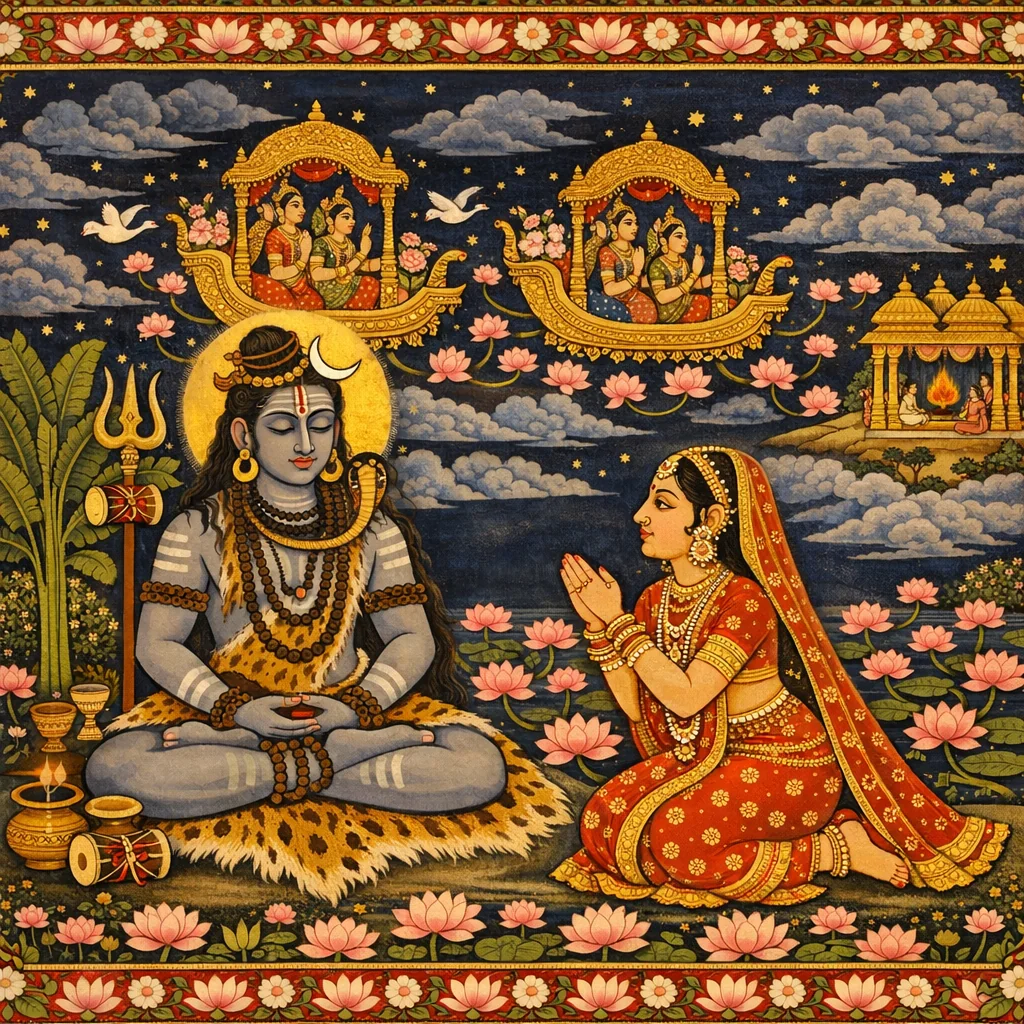
Continuing the long-standing tension between Dakṣa and his son-in-law Śiva, the chapter opens with Dakṣa being empowered as chief of the Prajāpatis, which inflames his pride. He conducts grand sacrifices (vājapeya and bṛhaspati-sava), drawing ṛṣis, pitṛs, devas, and their ornamented wives from across the universe. Satī hears celestial talk and sees the procession of divine ladies traveling to her father’s yajña; stirred by familial affection and social expectation, she requests that Śiva accompany her to Dakṣa’s assembly, arguing that one may visit a father’s house even without invitation. Śiva replies with a sober ethic of association: visiting the envious invites harm, and wounds from relatives’ harsh words cut deeper than enemies’ arrows. He diagnoses Dakṣa’s blindness—pride in education, austerity, wealth, beauty, youth, and lineage—and contrasts bodily etiquette with transcendental respect offered to the Supersoul within all. Declaring his constant obeisance to Vāsudeva in pure consciousness, Śiva warns Satī that Dakṣa’s envy will translate into her humiliation, and that such insult from kin can become “equal to death,” setting the stage for the coming catastrophe at the sacrifice.
Shlokas
Verse 1
मैत्रेय उवाच सदा विद्विषतोरेवं कालो वै ध्रियमाणयो: । जामातु: श्वशुरस्यापि सुमहानतिचक्रमे ॥ १ ॥
Maitreya continued: In this manner the tension between the father-in-law and son-in-law, Dakṣa and Lord Śiva, continued for a considerably long period.
Verse 2
यदाभिषिक्तो दक्षस्तु ब्रह्मणा परमेष्ठिना । प्रजापतीनां सर्वेषामाधिपत्ये स्मयोऽभवत् ॥ २ ॥
When Lord Brahmā appointed Dakṣa the chief of all the Prajāpatis, the progenitors of population, Dakṣa became very much puffed up.
Verse 3
इष्ट्वा स वाजपेयेन ब्रह्मिष्ठानभिभूय च । बृहस्पतिसवं नाम समारेभे क्रतूत्तमम् ॥ ३ ॥
Dakṣa began a sacrifice named vājapeya, and he became excessively confident of his support by Lord Brahmā. He then performed another great sacrifice, named bṛhaspati-sava.
Verse 4
तस्मिन्ब्रह्मर्षय: सर्वे देवर्षिपितृदेवता: । आसन् कृतस्वस्त्ययनास्तत्पत्न्यश्च सभर्तृका: ॥ ४ ॥
While the sacrifice was being performed, many brahmarṣis, great sages, ancestral demigods and other demigods, their wives all very nicely decorated with ornaments, attended from different parts of the universe.
Verse 5
तदुपश्रुत्य नभसि खेचराणां प्रजल्पताम् । सती दाक्षायणी देवी पितृयज्ञमहोत्सवम् ॥ ५ ॥ व्रजन्ती: सर्वतो दिग्भ्य उपदेववरस्त्रिय: । विमानयाना: सप्रेष्ठा निष्ककण्ठी: सुवासस: ॥ ६ ॥ दृष्ट्वा स्वनिलयाभ्याशे लोलाक्षीर्मृष्टकुण्डला: । पतिं भूतपतिं देवमौत्सुक्यादभ्यभाषत ॥ ७ ॥
The chaste lady Satī, the daughter of Dakṣa, heard the heavenly denizens flying in the sky conversing about the great sacrifice being performed by her father. When she saw that from all directions the beautiful wives of the heavenly denizens, their eyes very beautifully glittering, were near her residence and were going to the sacrifice dressed in fine clothing and ornamented with earrings and necklaces with lockets, she approached her husband, the master of the bhūtas, in great anxiety, and spoke as follows.
Verse 6
तदुपश्रुत्य नभसि खेचराणां प्रजल्पताम् । सती दाक्षायणी देवी पितृयज्ञमहोत्सवम् ॥ ५ ॥ व्रजन्ती: सर्वतो दिग्भ्य उपदेववरस्त्रिय: । विमानयाना: सप्रेष्ठा निष्ककण्ठी: सुवासस: ॥ ६ ॥ दृष्ट्वा स्वनिलयाभ्याशे लोलाक्षीर्मृष्टकुण्डला: । पतिं भूतपतिं देवमौत्सुक्यादभ्यभाषत ॥ ७ ॥
The chaste lady Satī, the daughter of Dakṣa, heard the heavenly denizens flying in the sky conversing about the great sacrifice being performed by her father. When she saw that from all directions the beautiful wives of the heavenly denizens, their eyes very beautifully glittering, were near her residence and were going to the sacrifice dressed in fine clothing and ornamented with earrings and necklaces with lockets, she approached her husband, the master of the bhūtas, in great anxiety, and spoke as follows.
Verse 7
तदुपश्रुत्य नभसि खेचराणां प्रजल्पताम् । सती दाक्षायणी देवी पितृयज्ञमहोत्सवम् ॥ ५ ॥ व्रजन्ती: सर्वतो दिग्भ्य उपदेववरस्त्रिय: । विमानयाना: सप्रेष्ठा निष्ककण्ठी: सुवासस: ॥ ६ ॥ दृष्ट्वा स्वनिलयाभ्याशे लोलाक्षीर्मृष्टकुण्डला: । पतिं भूतपतिं देवमौत्सुक्यादभ्यभाषत ॥ ७ ॥
The chaste lady Satī, the daughter of Dakṣa, heard the heavenly denizens flying in the sky conversing about the great sacrifice being performed by her father. When she saw that from all directions the beautiful wives of the heavenly denizens, their eyes very beautifully glittering, were near her residence and were going to the sacrifice dressed in fine clothing and ornamented with earrings and necklaces with lockets, she approached her husband, the master of the bhūtas, in great anxiety, and spoke as follows.
Verse 8
सत्युवाच प्रजापतेस्ते श्वशुरस्य साम्प्रतं निर्यापितो यज्ञमहोत्सव: किल । वयं च तत्राभिसराम वाम ते यद्यर्थितामी विबुधा व्रजन्ति हि ॥ ८ ॥
Satī said: My dear Lord Śiva, your father-in-law is now executing great sacrifices, and all the demigods, having been invited by him, are going there. If you desire, we may also go.
Verse 9
तस्मिन्भगिन्यो मम भर्तृभि: स्वकै- र्ध्रुवं गमिष्यन्ति सुहृद्दिदृक्षव: । अहं च तस्मिन्भवताभिकामये सहोपनीतं परिबर्हमर्हितुम् ॥ ९ ॥
I think that all my sisters must have gone to this great sacrificial ceremony with their husbands just to see their relatives. I also desire to decorate myself with the ornaments given to me by my father and go there with you to participate in that assembly.
Verse 10
तत्र स्वसृर्मे ननु भर्तृसम्मिता मातृष्वसृ: क्लिन्नधियं च मातरम् । द्रक्ष्ये चिरोत्कण्ठमना महर्षिभि- रुन्नीयमानं च मृडाध्वरध्वजम् ॥ १० ॥
My sisters, my mother’s sisters and their husbands, and other affectionate relatives must be assembled there, so if I go I shall be able to see them, and I shall be able to see the flapping flags and the performance of the sacrifice by the great sages. For these reasons, my dear husband, I am very much anxious to go.
Verse 11
त्वय्येतदाश्चर्यमजात्ममायया विनिर्मितं भाति गुणत्रयात्मकम् । तथाप्यहं योषिदतत्त्वविच्च ते दीना दिदृक्षे भव मे भवक्षितिम् ॥ ११ ॥
This manifested cosmos is a wonderful creation of the interaction of the three material modes, or the external energy of the Supreme Lord. This truth is fully known to you. Yet I am but a poor woman, and, as you know, I am not conversant with the truth. Therefore I wish to see my birthplace once more.
Verse 12
पश्य प्रयान्तीरभवान्ययोषितो ऽप्यलड़्क़ृता: कान्तसखा वरूथश: । यासां व्रजद्भि: शितिकण्ठ मण्डितं नभो विमानै: कलहंसपाण्डुभि: ॥ १२ ॥
O never-born, O blue-throated one, not only my relatives but also other women, dressed in nice clothes and decorated with ornaments, are going there with their husbands and friends. Just see how their flocks of white airplanes have made the entire sky very beautiful.
Verse 13
कथं सुताया: पितृगेहकौतुकं निशम्य देह: सुरवर्य नेङ्गते । अनाहुता अप्यभियन्ति सौहृदं भर्तुर्गुरोर्देहकृतश्च केतनम् ॥ १३ ॥
O best of the demigods, how can the body of a daughter remain undisturbed when she hears that some festive event is taking place in her father’s house? Even though you may be considering that I have not been invited, there is no harm if one goes to the house of one’s friend, husband, spiritual master or father without invitation.
Verse 14
तन्मे प्रसीदेदममर्त्य वाञ्छितं कर्तुं भवान्कारुणिको बतार्हति । त्वयात्मनोऽर्धेऽहमदभ्रचक्षुषा निरूपिता मानुगृहाण याचित: ॥ १४ ॥
O immortal Śiva, please be kind towards me and fulfill my desire. You have accepted me as half of your body; therefore please show kindness towards me and accept my request.
Verse 15
ऋषिरुवाच एवं गिरित्र: प्रिययाभिभाषित: प्रत्यभ्यधत्त प्रहसन् सुहृत्प्रिय: । संस्मारितो मर्मभिद: कुवागिषून् यानाह को विश्वसृजां समक्षत: ॥ १५ ॥
The great sage Maitreya said: Lord Śiva, the deliverer of the hill Kailāsa, having thus been addressed by his dear wife, replied smilingly, although at the same time he remembered the malicious, heart-piercing speeches delivered by Dakṣa before the guardians of the universal affairs.
Verse 16
श्रीभगवानुवाच त्वयोदितं शोभनमेव शोभने अनाहुता अप्यभियन्ति बन्धुषु । ते यद्यनुत्पादितदोषदृष्टयो बलीयसानात्म्यमदेन मन्युना ॥ १६ ॥
The great lord replied: My dear beautiful wife, you have said that one may go to a friend’s house without being invited, and this is true, provided such a friend does not find fault with the guest because of bodily identification and thereby become angry towards him.
Verse 17
विद्यातपोवित्तवपुर्वय:कुलै: सतां गुणै: षड्भिरसत्तमेतरै: । स्मृतौ हतायां भृतमानदुर्दृश: स्तब्धा न पश्यन्ति हि धाम भूयसाम् ॥ १७ ॥
Although the six qualities education, austerity, wealth, beauty, youth and heritage are for the highly elevated, one who is proud of possessing them becomes blind, and thus he loses his good sense and cannot appreciate the glories of great personalities.
Verse 18
नैतादृशानां स्वजनव्यपेक्षया गृहान्प्रतीयादनवस्थितात्मनाम् । येऽभ्यागतान् वक्रधियाभिचक्षते आरोपितभ्रूभिरमर्षणाक्षिभि: ॥ १८ ॥
One should not go to anyone’s house, even on the consideration of his being a relative or a friend, when the man is disturbed in his mind and looks upon the guest with raised eyebrows and angry eyes.
Verse 19
तथारिभिर्न व्यथते शिलीमुखै: शेतेऽर्दिताङ्गो हृदयेन दूयता । स्वानां यथा वक्रधियां दुरुक्तिभि- र्दिवानिशं तप्यति मर्मताडित: ॥ १९ ॥
Lord Śiva continued: If one is hurt by the arrows of an enemy, one is not as aggrieved as when cut by the unkind words of a relative, for such grief continues to rend one’s heart day and night.
Verse 20
व्यक्तं त्वमुत्कृष्टगते: प्रजापते: प्रियात्मजानामसि सुभ्रु मे मता । तथापि मानं न पितु: प्रपत्स्यसे मदाश्रयात्क: परितप्यते यत: ॥ २० ॥
My dear white-complexioned wife, it is clear that of the many daughters of Dakṣa you are the pet, yet you will not be honored at his house because of your being my wife. Rather, you will be sorry that you are connected with me.
Verse 21
पापच्यमानेन हृदातुरेन्द्रिय: समृद्धिभि: पूरुषबुद्धिसाक्षिणाम् । अकल्प एषामधिरोढुमञ्जसा परं पदं द्वेष्टि यथासुरा हरिम् ॥ २१ ॥
One who is conducted by false ego and thus always distressed, both mentally and sensually, cannot tolerate the opulence of self-realized persons. Being unable to rise to the standard of self-realization, he envies such persons as much as demons envy the Supreme Personality of Godhead.
Verse 22
प्रत्युद्गमप्रश्रयणाभिवादनं विधीयते साधु मिथ: सुमध्यमे । प्राज्ञै: परस्मै पुरुषाय चेतसा गुहाशयायैव न देहमानिने ॥ २२ ॥
My dear young wife, certainly friends and relatives offer mutual greetings by standing up, welcoming one another and offering obeisances. But those who are elevated to the transcendental platform, being intelligent, offer such respects to the Supersoul, who is sitting within the body, not to the person who identifies with the body.
Verse 23
सत्त्वं विशुद्धं वसुदेवशब्दितं यदीयते तत्र पुमानपावृत: । सत्त्वे च तस्मिन्भगवान्वासुदेवो ह्यधोक्षजो मे नमसा विधीयते ॥ २३ ॥
I am always engaged in offering obeisances to Lord Vāsudeva in pure Kṛṣṇa consciousness. Kṛṣṇa consciousness is always pure consciousness, in which the Supreme Personality of Godhead, known as Vāsudeva, is revealed without any covering.
Verse 24
तत्ते निरीक्ष्यो न पितापि देहकृद् दक्षो मम द्विट्तदनुव्रताश्च ये । यो विश्वसृग्यज्ञगतं वरोरु मा- मनागसं दुर्वचसाकरोत्तिर: ॥ २४ ॥
Therefore you should not see your father, although he is the giver of your body, because he and his followers are envious of me. Because of his envy, O most worshipful one, he has insulted me with cruel words although I am innocent.
Verse 25
यदि व्रजिष्यस्यतिहाय मद्वचो भद्रं भवत्या न ततो भविष्यति । सम्भावितस्य स्वजनात्पराभवो यदा स सद्यो मरणाय कल्पते ॥ २५ ॥
If in spite of this instruction you decide to go, neglecting my words, the future will not be good for you. You are most respectable, and when you are insulted by your relative, this insult will immediately be equal to death.
Frequently Asked Questions
Satī is moved by natural filial emotion and social dharma: hearing of festivity at her father’s home and seeing other devas’ wives traveling, she longs to meet sisters, maternal relatives, and witness the sacrificial grandeur. She also reasons that a father, like a friend, husband, or guru, may be approached without formal invitation—an appeal grounded in customary etiquette and familial intimacy.
Śiva reads the underlying consciousness: Dakṣa’s pride and envy make him likely to dishonor Satī because she is Śiva’s wife. Śiva teaches that association with the envious is spiritually and emotionally dangerous; insults from relatives pierce more deeply than attacks from enemies. His warning is also theological: when ritual is driven by bodily identification and ego, it becomes a venue for aparādha, not purification.
Śiva distinguishes social courtesies from spiritual vision: the truly intelligent offer respect to the Supersoul (Paramātmā) seated within all bodies, not merely to the external person identified with the body. He frames his own practice as constant obeisance to Vāsudeva in pure Kṛṣṇa consciousness, where the Lord is revealed without covering.
The six—education, austerity, wealth, beauty, youth, and heritage—are ordinarily signs of elevation, but when possessed with pride they produce blindness and loss of discernment. In Dakṣa’s case, these become fuel for superiority and contempt toward a self-realized personality (Śiva), demonstrating the Bhāgavata’s critique of prestige divorced from humility and devotion.