Adhyaya 9
Mohinī-mūrti Distributes Amṛta; Rāhu is Severed; Results Differ by Shelter
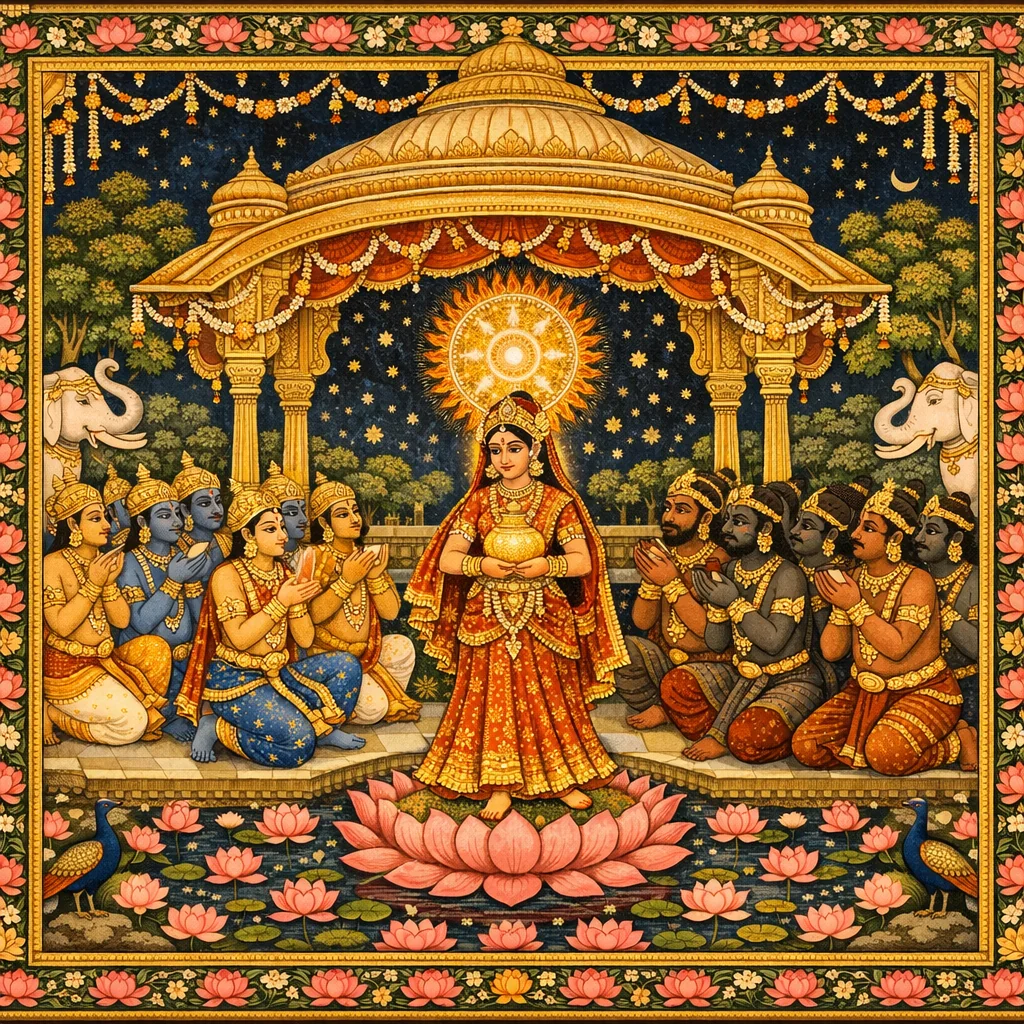
Following the churning, the asuras seize the amṛta-kalaśa and immediately fall into internal rivalry, revealing the instability of alliance built on enjoyment and power. At that moment the Lord appears as Mohinī-mūrti—an extraordinarily beautiful woman—whose charm agitates the asuras’ minds. They request Her to arbitrate and divide the nectar equally, appealing to shared lineage from Kaśyapa. Mohinī openly warns them that trusting an independent woman is unwise, yet they—overconfident and bewitched—hand over the vessel and agree to accept whatever She does, fair or unfair. After ritual preparations and formal seating, Mohinī arranges separate lines and, by sweet speech, cheats the asuras while serving amṛta to the devas, granting freedom from old age and death. The asuras remain silent to preserve their pledged “equilibrium” and their infatuated rapport. Rāhu infiltrates the deva line, but Sūrya and Candra expose him; Hari beheads him with the Sudarśana-cakra, leaving his immortal head as a ग्रह that causes eclipses. When the devas finish, the Lord reveals His true form. The chapter concludes with a decisive principle: same endeavor, different result—devas succeed because they are sheltered at the Lord’s feet; asuras fail due to being separate from bhakti, and all worldly acts become fruitful only when offered for the Lord’s satisfaction.
Shlokas
Verse 1
श्रीशुक उवाच तेऽन्योन्यतोऽसुरा: पात्रं हरन्तस्त्यक्तसौहृदा: । क्षिपन्तो दस्युधर्माण आयान्तीं ददृशु: स्त्रियम् ॥ १ ॥
Śukadeva Gosvāmī said: Thereafter, the demons became inimical toward one another. Throwing and snatching the container of nectar, they gave up their friendly relationship. Meanwhile, they saw a very beautiful young woman coming forward toward them.
Verse 2
अहो रूपमहो धाम अहो अस्या नवं वय: । इति ते तामभिद्रुत्य पप्रच्छुर्जातहृच्छया: ॥ २ ॥
Upon seeing the beautiful woman, the demons said, “Alas, how wonderful is Her beauty, how wonderful the luster of Her body, and how wonderful the beauty of Her youthful age!” Speaking in this way, they quickly approached Her, full of lusty desires to enjoy Her, and began to inquire from Her in many ways.
Verse 3
का त्वं कञ्जपलाशाक्षि कुतो वा किं चिकीर्षसि । कस्यासि वद वामोरु मथ्नतीव मनांसि न: ॥ ३ ॥
O wonderfully beautiful girl, You have such nice eyes, resembling the petals of a lotus flower. Who are You? Where do You come from? What is Your purpose in coming here, and to whom do You belong? O You whose thighs are extraordinarily beautiful, our minds are becoming agitated simply because of seeing You.
Verse 4
न वयं त्वामरैर्दैत्यै: सिद्धगन्धर्वचारणै: । नास्पृष्टपूर्वां जानीमो लोकेशैश्च कुतो नृभि: ॥ ४ ॥
What to speak of human beings, even the demigods, demons, Siddhas, Gandharvas, Cāraṇas and the various directors of the universe, the Prajāpatis, have never touched You before. It is not that we are unable to understand Your identity.
Verse 5
नूनं त्वं विधिना सुभ्रू: प्रेषितासि शरीरिणाम् । सर्वेन्द्रियमन:प्रीतिं विधातुं सघृणेन किम् ॥ ५ ॥
O beautiful girl with beautiful eyebrows, certainly Providence, by His causeless mercy, has sent You to please the senses and minds of all of us. Is this not a fact?
Verse 6
सा त्वं न: स्पर्धमानानामेकवस्तुनि मानिनि । ज्ञातीनां बद्धवैराणां शं विधत्स्व सुमध्यमे ॥ ६ ॥
We are now all engaged in enmity among ourselves because of this one subject matter — the container of nectar. Although we have been born in the same family, we are becoming increasingly inimical. O thin-waisted woman, who are so beautiful in Your prestigious position, we therefore request You to favor us by settling our dispute.
Verse 7
वयं कश्यपदायादा भ्रातर: कृतपौरुषा: । विभजस्व यथान्यायं नैव भेदो यथा भवेत् ॥ ७ ॥
All of us, both demons and demigods, have been born of the same father, Kaśyapa, and thus we are related as brothers. But now we are exhibiting our personal prowess in dissension. Therefore we request You to settle our dispute and divide the nectar equally among us.
Verse 8
इत्युपामन्त्रितो दैत्यैर्मायायोषिद्वपुर्हरि: । प्रहस्य रुचिरापाङ्गैर्निरीक्षन्निदमब्रवीत् ॥ ८ ॥
Having thus been requested by the demons, the Supreme Personality of Godhead, who had assumed the form of a beautiful woman, began to smile. Looking at them with attractive feminine gestures, She spoke as follows.
Verse 9
श्रीभगवानुवाच कथं कश्यपदायादा: पुंश्चल्यां मयि सङ्गता: । विश्वासं पण्डितो जातु कामिनीषु न याति हि ॥ ९ ॥
The Supreme Personality of Godhead, in the form of Mohinī, told the demons: O sons of Kaśyapa Muni, I am only a prostitute. How is it that you have so much faith in Me? A learned person never puts his faith in a woman.
Verse 10
सालावृकाणां स्त्रीणां च स्वैरिणीनां सुरद्विष: । सख्यान्याहुरनित्यानि नूत्नं नूत्नं विचिन्वताम् ॥ १० ॥
O demons, as monkeys, jackals and dogs are unsteady in their sexual relationships and want newer and newer friends every day, women who live independently seek new friends daily. Friendship with such a woman is never permanent. This is the opinion of learned scholars.
Verse 11
श्रीशुक उवाच इति ते क्ष्वेलितैस्तस्या आश्वस्तमनसोऽसुरा: । जहसुर्भावगम्भीरं ददुश्चामृतभाजनम् ॥ ११ ॥
Śrī Śukadeva Gosvāmī continued: After the demons heard the words of Mohinī-mūrti, who had spoken as if jokingly, they were all very confident. They laughed with gravity, and ultimately they delivered the container of nectar into Her hands.
Verse 12
ततो गृहीत्वामृतभाजनं हरि- र्बभाष ईषत्स्मितशोभया गिरा । यद्यभ्युपेतं क्व च साध्वसाधु वा कृतं मया वो विभजे सुधामिमाम् ॥ १२ ॥
Thereafter, the Supreme Personality of Godhead, having taken possession of the container of nectar, smiled slightly and spoke in attractive words. She said: My dear demons, if you accept whatever I may do, whether honest or dishonest, then I can take responsibility for dividing the nectar among you.
Verse 13
इत्यभिव्याहृतं तस्या आकर्ण्यासुरपुङ्गवा: । अप्रमाणविदस्तस्यास्तत् तथेत्यन्वमंसत ॥ १३ ॥
The chiefs of the demons were not very expert in deciding things. Upon hearing the sweet words of Mohinī-mūrti, they immediately assented. “Yes,” they answered. “What You have said is all right.” Thus the demons agreed to accept Her decision.
Verse 14
अथोपोष्य कृतस्नाना हुत्वा च हविषानलम् । दत्त्वा गोविप्रभूतेभ्य: कृतस्वस्त्ययना द्विजै: ॥ १४ ॥ यथोपजोषं वासांसि परिधायाहतानि ते । कुशेषु प्राविशन्सर्वे प्रागग्रेष्वभिभूषिता: ॥ १५ ॥
The demigods and demons then observed a fast. After bathing, they offered clarified butter and oblations into the fire and gave charity to the cows and to the brāhmaṇas and members of the other orders of society, namely the kṣatriyas, vaiśyas and śūdras, who were all rewarded as they deserved. Thereafter, the demigods and demons performed ritualistic ceremonies under the directions of the brāhmaṇas. Then they dressed themselves with new garments according to their own choice, decorated their bodies with ornaments, and sat facing east on seats made of kuśa grass.
Verse 15
अथोपोष्य कृतस्नाना हुत्वा च हविषानलम् । दत्त्वा गोविप्रभूतेभ्य: कृतस्वस्त्ययना द्विजै: ॥ १४ ॥ यथोपजोषं वासांसि परिधायाहतानि ते । कुशेषु प्राविशन्सर्वे प्रागग्रेष्वभिभूषिता: ॥ १५ ॥
The demigods and demons then observed a fast. After bathing, they offered clarified butter and oblations into the fire and gave charity to the cows and to the brāhmaṇas and members of the other orders of society, namely the kṣatriyas, vaiśyas and śūdras, who were all rewarded as they deserved. Thereafter, the demigods and demons performed ritualistic ceremonies under the directions of the brāhmaṇas. Then they dressed themselves with new garments according to their own choice, decorated their bodies with ornaments, and sat facing east on seats made of kuśa grass.
Verse 16
प्राङ्मुखेषूपविष्टेषु सुरेषु दितिजेषु च । धूपामोदितशालायां जुष्टायां माल्यदीपकै: ॥ १६ ॥ तस्यां नरेन्द्र करभोरुरुशद्दुकूल- श्रोणीतटालसगतिर्मदविह्वलाक्षी । सा कूजती कनकनूपुरशिञ्जितेन कुम्भस्तनी कलसपाणिरथाविवेश ॥ १७ ॥
O King, as the demigods and demons sat facing east in an arena fully decorated with flower garlands and lamps and fragrant with the smoke of incense, that woman, dressed in a most beautiful sari, Her ankle bells tinkling, entered the arena, walking very slowly because of Her big, low hips. Her eyes were restless due to youthful pride, Her breasts were like water jugs, Her thighs resembled the trunks of elephants, and She carried a waterpot in Her hand.
Verse 17
प्राङ्मुखेषूपविष्टेषु सुरेषु दितिजेषु च । धूपामोदितशालायां जुष्टायां माल्यदीपकै: ॥ १६ ॥ तस्यां नरेन्द्र करभोरुरुशद्दुकूल- श्रोणीतटालसगतिर्मदविह्वलाक्षी । सा कूजती कनकनूपुरशिञ्जितेन कुम्भस्तनी कलसपाणिरथाविवेश ॥ १७ ॥
O King, as the demigods and demons sat facing east in an arena fully decorated with flower garlands and lamps and fragrant with the smoke of incense, that woman, dressed in a most beautiful sari, Her ankle bells tinkling, entered the arena, walking very slowly because of Her big, low hips. Her eyes were restless due to youthful pride, Her breasts were like water jugs, Her thighs resembled the trunks of elephants, and She carried a waterpot in Her hand.
Verse 18
तां श्रीसखीं कनककुण्डलचारुकर्ण- नासाकपोलवदनां परदेवताख्याम् । संवीक्ष्य सम्मुमुहुरुत्स्मितवीक्षणेन देवासुरा विगलितस्तनपट्टिकान्ताम् ॥ १८ ॥
Her attractive nose and cheeks and Her ears, adorned with golden earrings, made Her face very beautiful. As She moved, Her sari’s border on Her breasts moved slightly aside. When the demigods and demons saw these beautiful features of Mohinī-mūrti, who was glancing at them and slightly smiling, they were all completely enchanted.
Verse 19
असुराणां सुधादानं सर्पाणामिव दुर्नयम् । मत्वा जातिनृशंसानां न तां व्यभजदच्युत: ॥ १९ ॥
Demons are by nature crooked like snakes. Therefore, to distribute a share of the nectar to them was not at all feasible, since this would be as dangerous as supplying milk to a snake. Considering this, the Supreme Personality of Godhead, who never falls down, did not deliver a share of nectar to the demons.
Verse 20
कल्पयित्वा पृथक् पङ्क्तीरुभयेषां जगत्पति: । तांश्चोपवेशयामास स्वेषु स्वेषु च पङ्क्तिषु ॥ २० ॥
The Supreme Personality of Godhead as Mohinī-mūrti, the master of the universe, arranged separate lines of sitting places and seated the demigods and demons according to their positions.
Verse 21
दैत्यान्गृहीतकलसो वञ्चयन्नुपसञ्चरै: । दूरस्थान् पाययामास जरामृत्युहरां सुधाम् ॥ २१ ॥
Taking the container of nectar in Her hands, She first approached the demons, satisfied them with sweet words and thus cheated them of their share of the nectar. Then She administered the nectar to the demigods, who were sitting at a distant place, to make them free from invalidity, old age and death.
Verse 22
ते पालयन्त: समयमसुरा: स्वकृतं नृप । तूष्णीमासन्कृतस्नेहा: स्त्रीविवादजुगुप्सया ॥ २२ ॥
O King, since the demons had promised to accept whatever the woman did, whether just or unjust, now, to keep this promise, to show their equilibrium and to save themselves from fighting with a woman, they remained silent.
Verse 23
तस्यां कृतातिप्रणया: प्रणयापायकातरा: । बहुमानेन चाबद्धा नोचु: किञ्चन विप्रियम् ॥ २३ ॥
The demons had developed affection for Mohinī-mūrti and a kind of faith in Her, and they were afraid of disturbing their relationship. Therefore they showed respect and honor to Her words and did not say anything that might disturb their friendship with Her.
Verse 24
देवलिङ्गप्रतिच्छन्न: स्वर्भानुर्देवसंसदि । प्रविष्ट: सोममपिबच्चन्द्रार्काभ्यां च सूचित: ॥ २४ ॥
Rāhu, the demon who causes eclipses of the sun and moon, covered himself with the dress of a demigod and thus entered the assembly of the demigods and drank nectar without being detected by anyone, even by the Supreme Personality of Godhead. The moon and the sun, however, because of permanent animosity toward Rāhu, understood the situation. Thus Rāhu was detected.
Verse 25
चक्रेण क्षुरधारेण जहार पिबत: शिर: । हरिस्तस्य कबन्धस्तु सुधयाप्लावितोऽपतत् ॥ २५ ॥
The Supreme Personality of Godhead, Hari, using His disc, which was sharp like a razor, at once cut off Rāhu’s head. When Rāhu’s head was severed from his body, the body, being untouched by the nectar, could not survive.
Verse 26
शिरस्त्वमरतां नीतमजो ग्रहमचीक्लृपत् । यस्तु पर्वणि चन्द्रार्कावभिधावति वैरधी: ॥ २६ ॥
Rāhu’s head, however, having been touched by the nectar, became immortal. Thus Lord Brahmā accepted Rāhu’s head as one of the planets. Since Rāhu is an eternal enemy of the moon and the sun, he always tries to attack them on the nights of the full moon and the dark moon.
Verse 27
पीतप्रायेऽमृते देवैर्भगवान् लोकभावन: । पश्यतामसुरेन्द्राणां स्वं रूपं जगृहे हरि: ॥ २७ ॥
The Supreme Personality of Godhead is the best friend and well-wisher of the three worlds. Thus when the demigods had almost finished drinking the nectar, the Lord, in the presence of all the demons, disclosed His original form.
Verse 28
एवं सुरासुरगणा: समदेशकाल- हेत्वर्थकर्ममतयोऽपि फले विकल्पा: । तत्रामृतं सुरगणा: फलमञ्जसापु- र्यत्पादपङ्कजरज:श्रयणान्न दैत्या: ॥ २८ ॥
The place, the time, the cause, the purpose, the activity and the ambition were all the same for both the demigods and the demons, but the demigods achieved one result and the demons another. Because the demigods are always under the shelter of the dust of the Lord’s lotus feet, they could very easily drink the nectar and get its result. The demons, however, not having sought shelter at the lotus feet of the Lord, were unable to achieve the result they desired.
Verse 29
यद् युज्यतेऽसुवसुकर्ममनोवचोभि- र्देहात्मजादिषु नृभिस्तदसत् पृथक्त्वात् । तैरेव सद् भवति यत् क्रियतेऽपृथक्त्वात् सर्वस्य तद् भवति मूलनिषेचनं यत् ॥ २९ ॥
In human society there are various activities performed for the protection of one’s wealth and life by one’s words, one’s mind and one’s actions, but they are all performed for one’s personal or extended sense gratification with reference to the body. All these activities are baffled because of being separate from devotional service. But when the same activities are performed for the satisfaction of the Lord, the beneficial results are distributed to everyone, just as water poured on the root of a tree is distributed throughout the entire tree.
Frequently Asked Questions
The chapter frames the asuras as “crooked like snakes,” meaning their intent is exploitative and dangerous; giving them amṛta would empower adharma, like “milk to a snake.” More fundamentally, the concluding teaching states that the devas attained the fruit because they were under the shelter of the Lord’s lotus feet, whereas the asuras—separate from bhakti—could not receive the intended result even though they participated in the same enterprise.
Rāhu disguises himself in deva dress and briefly succeeds due to the complexity of the Lord’s līlā, where the Lord’s arrangement also allows the eclipse-causation narrative to manifest. The Sun and Moon detect him due to their enduring enmity, and the Lord immediately acts as protector (poṣaṇa) by severing him with Sudarśana, preventing the full empowerment of his body.
Rāhu is an asura whose head became immortal by contact with amṛta, while his body perished because it was not touched by nectar. Accepted as a graha, he remains an eternal enemy of Sūrya and Candra and attacks them on full-moon and new-moon nights—an etiological (Purāṇic) explanation for eclipses integrated into the cosmos-and-dharma narrative of the Bhāgavatam.
The text explicitly states that place, time, cause, purpose, activity, and ambition were the same for devas and asuras, yet the result differed. The deciding factor is shelter (āśraya): acts disconnected from devotional service are baffled, but when the same acts are offered for the Lord’s satisfaction, the benefit spreads to all—like watering the root nourishing the entire tree.