
Bhagavad Gita — Vishwarupa Darshana Yoga, Shloka 32
Vishwarupa Darshana Yoga
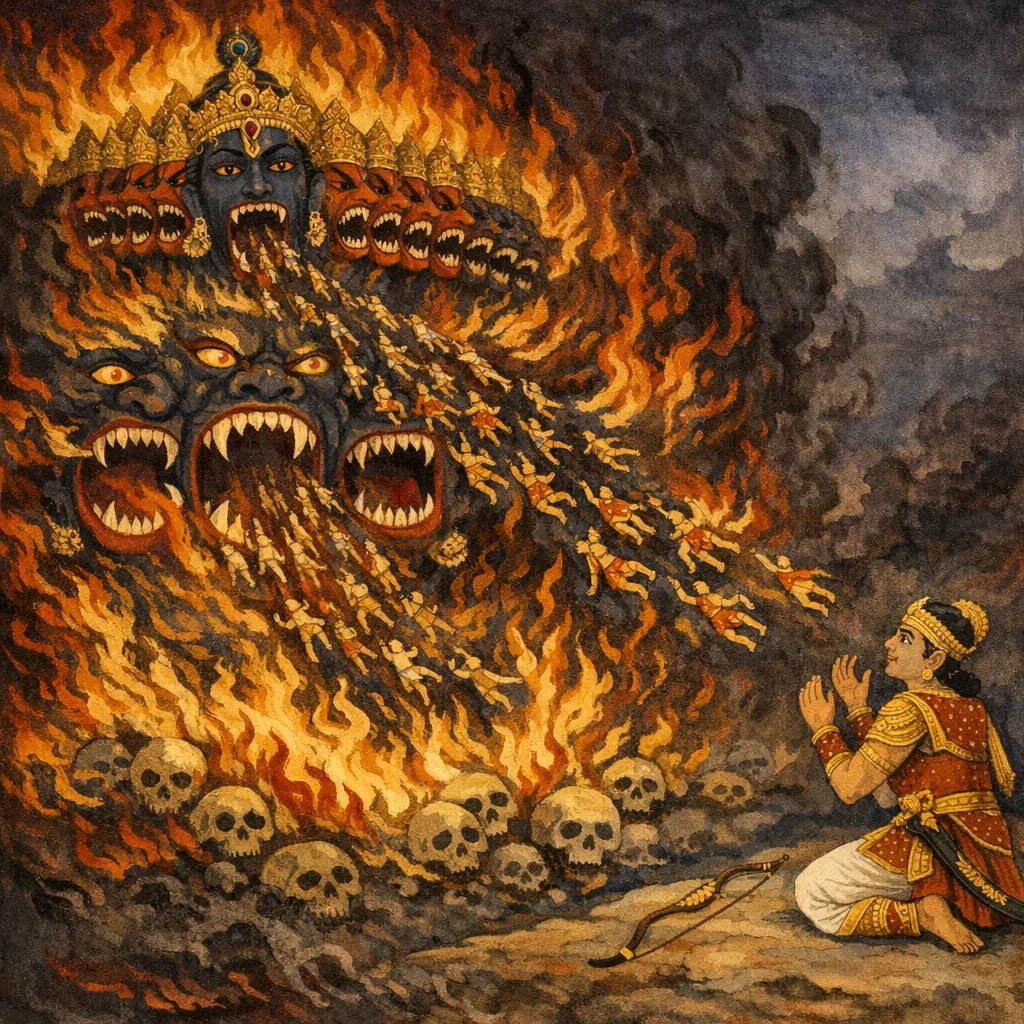
श्रीभगवानुवाच । कालोऽस्मि लोकक्षयकृत्प्रवृद्धो लोकान्समाहर्तुमिह प्रवृत्तः । ऋतेऽपि त्वां न भविष्यन्ति सर्वे येऽवस्थिताः प्रत्यनीकेषु योधाः ॥
śrībhagavān uvāca | kālo ’smi lokakṣayakṛt pravṛddho lokān samāhartum iha pravṛttaḥ | ṛte ’pi tvāṁ na bhaviṣyanti sarve ye ’vasthitāḥ pratyanīkeṣu yodhāḥ ||

The Blessed Lord said: I am Time, grown mighty, the destroyer of worlds, set forth here to annihilate the peoples. Even without you, none of these warriors arrayed in the opposing armies shall remain.
भगवान बोले: मैं लोकों का क्षय करने वाला, अत्यन्त बढ़ा हुआ काल हूँ; यहाँ लोकों का संहार करने को प्रवृत्त हूँ। तुम्हारे बिना भी ये सब योद्धा जो विरोधी सेना में स्थित हैं, नहीं रहेंगे।
The Blessed Lord said: I am Time, grown mighty, bringing about the dissolution of worlds; I have set forth here to gather up (draw in) the worlds. Even without you, all these warriors arrayed in the opposing ranks will not continue (to be).
Some traditions gloss kāla as 'death' or 'fate'; academically, 'Time' preserves the cosmological sense: an impersonal principle that encompasses both historical events and metaphysical impermanence.
FAQs
The statement can be unsettling because it confronts the mind with inevitability; it also reduces personal burden by reframing outcomes as part of a larger process.
Time is presented as a cosmic function of the divine—an ordering power through which forms arise and pass—linking the battlefield narrative to universal impermanence.
Krishna answers Arjuna’s question about the formidable form by identifying it with kāla, aligning the imminent historical outcome with the cosmic vision.
It can encourage focusing on ethical intention and disciplined action while acknowledging that many results are shaped by factors beyond individual control.