
Bhagavad Gita — Sankhya Yoga, Shloka 4
Sankhya Yoga
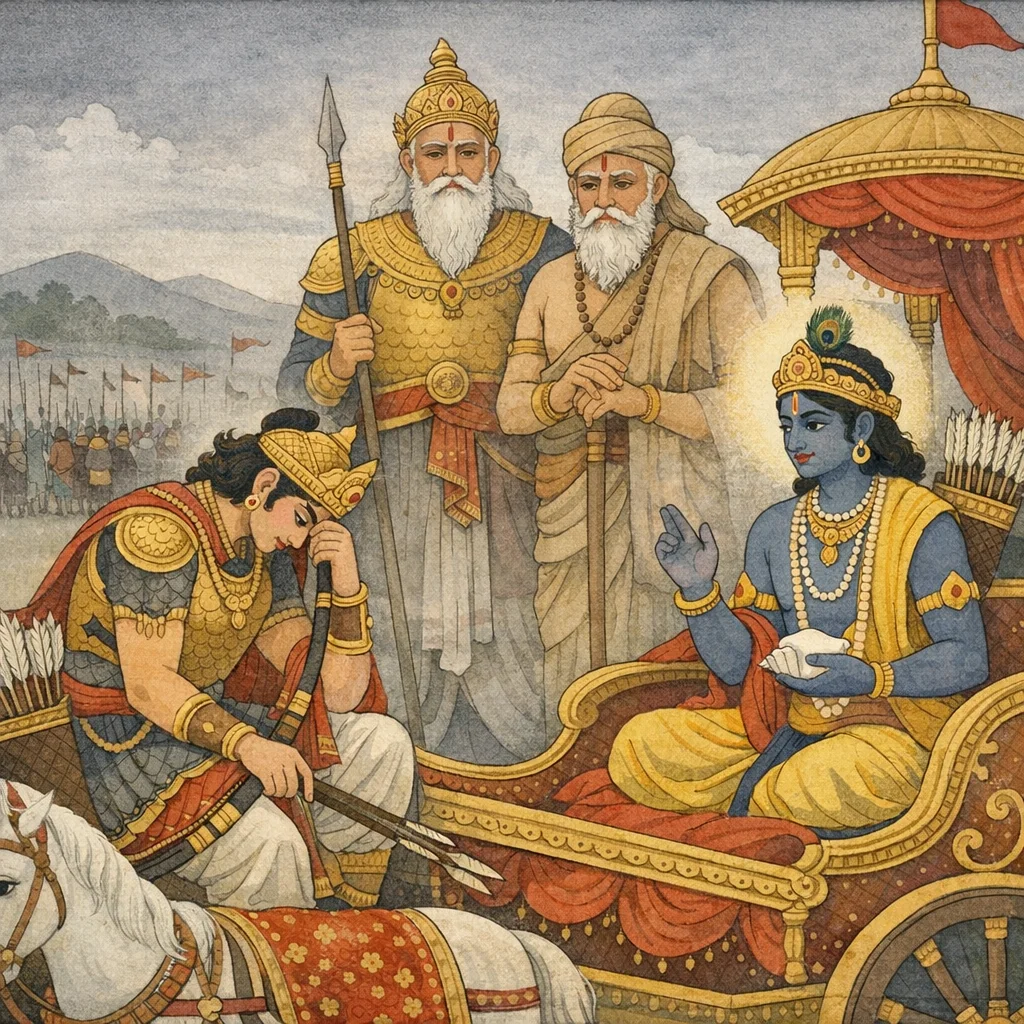
अर्जुन उवाच । कथं भीष्ममहं संख्ये द्रोणं च मधुसूदन इषुभिः प्रतियोत्स्यामि पूजार्हावरिसूदन ॥ २.४ ॥
arjuna uvāca | kathaṃ bhīṣmam ahaṃ saṅkhye droṇaṃ ca madhusūdana | iṣubhiḥ pratiyotsyāmi pūjārhāv arisūdana || 2.4 ||

Arjuna said: O Madhusudana, O slayer of foes, how shall I, in battle, fight with arrows against Bhishma and Drona, who are worthy of reverence?
अर्जुन बोले—हे मधुसूदन! हे अरिसूदन! मैं रण में भीष्म और द्रोण जैसे पूज्य जनों से बाणों द्वारा कैसे युद्ध करूँ?
Arjuna said: How shall I contend in battle with arrows against Bhīṣma and Droṇa, O Madhusūdana—those worthy of reverence, O slayer of foes?
The verse foregrounds a dharma tension: role-duty as a warrior versus obligations of reverence to elders/teachers. Translations are largely uniform; interpretive differences concern whether Arjuna’s objection is ethical insight or symptomatic hesitation.
FAQs
Arjuna’s focus narrows to specific revered figures, showing how personal bonds intensify moral conflict and inhibit decisive action.
The verse itself is ethical-relational rather than metaphysical; it sets up the need for Krishna’s later teaching on the self, duty, and detachment.
It is Arjuna’s first reply after Krishna’s rebuke, clarifying that his hesitation centers on reverence toward elders and teachers.
It resonates with dilemmas where professional or civic responsibilities conflict with loyalty, gratitude, or respect for mentors and senior figures.