
Bhagavad Gita — Sankhya Yoga, Shloka 35
Sankhya Yoga
भयाद्रणादुपरतं मंस्यन्ते त्वां महारथाः । येषां च त्वं बहुमतो भूत्वा यास्यसि लाघवम् ॥ २.३५ ॥
bhayād raṇād uparataṁ maṁsyante tvāṁ mahārathāḥ | yeṣāṁ ca tvaṁ bahumato bhūtvā yāsyasi lāghavam || 2.35 ||

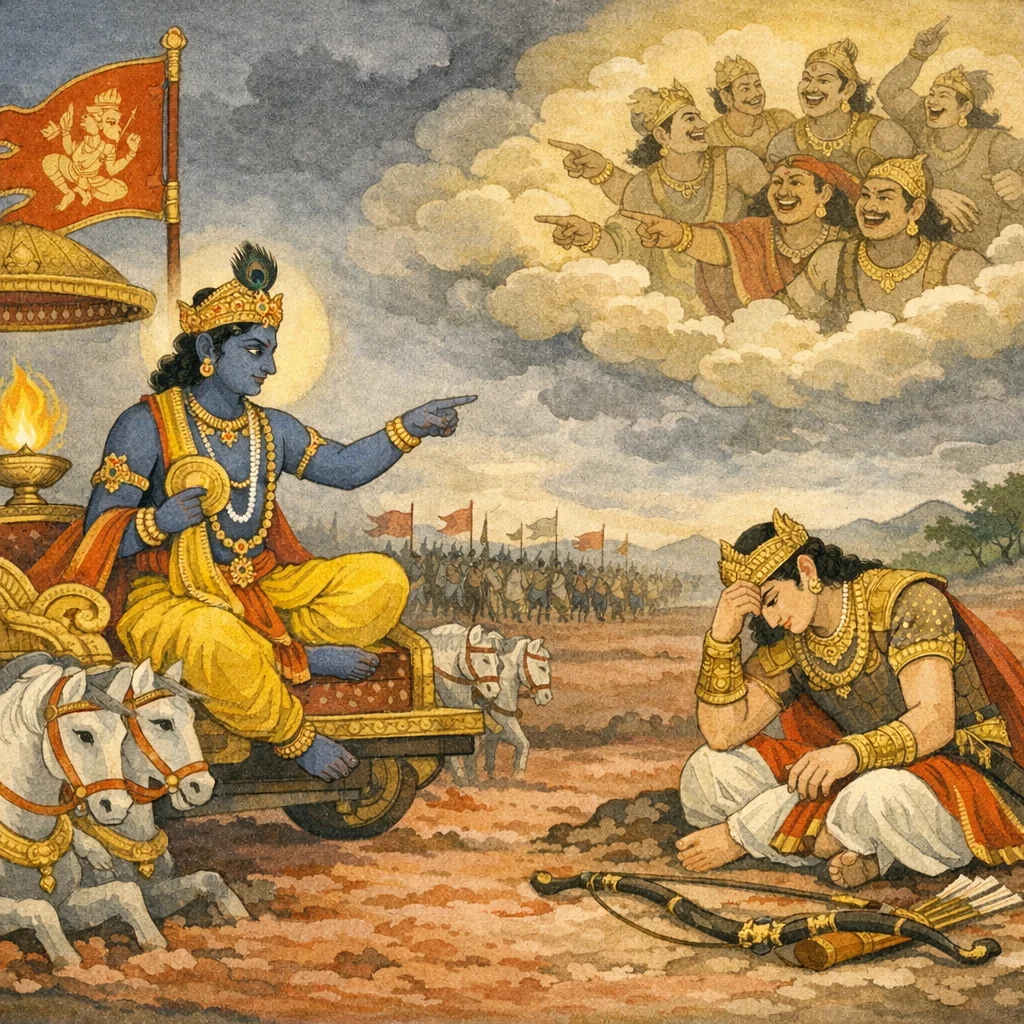
The great chariot-warriors will think that you have withdrawn from the battle out of fear; and you—once held in high esteem by them—will fall into dishonour.
The great chariot-warriors will think that you have withdrawn from the battle out of fear; and you, who were highly esteemed by them, will fall into disgrace.
The great chariot-fighters will suppose you have desisted from the contest due to fear; among those by whom you were much esteemed, you will come to lightness (loss of standing).
Key term: lāghavam can mean “lightness” in the sense of diminished weight/importance (social standing). Translations often render it as “disgrace” or “contempt.” No major doctrinal variant is implied here; the emphasis is rhetorical persuasion through honor/shame norms of the epic milieu.
FAQs
The verse frames hesitation as likely to be interpreted by others as fear, highlighting how social perception can intensify inner conflict and pressure decision-making.
Metaphysically it is not central; it functions more as an ethical-psychological argument reinforcing duty (dharma) through concern for social standing.
Krishna addresses Arjuna’s reluctance by invoking the warrior code and the reputational consequences of stepping back from one’s assigned role.
It can be read as a caution about allowing fear-driven avoidance to shape one’s identity and credibility, while also inviting reflection on when social judgment should or should not guide choices.