
Bhagavad Gita — Moksha Sannyasa Yoga, Shloka 52
Moksha Sannyasa Yoga
विविक्तसेवी लघ्वाशी यतवाक्कायमानसः । ध्यानयोगपरो नित्यं वैराग्यं समुपाश्रितः ॥ १८.५२ ॥
vivikta-sevī laghv-āśī yata-vāk-kāya-mānasaḥ | dhyāna-yoga-paro nityaṁ vairāgyaṁ samupāśritaḥ || 18.52 ||

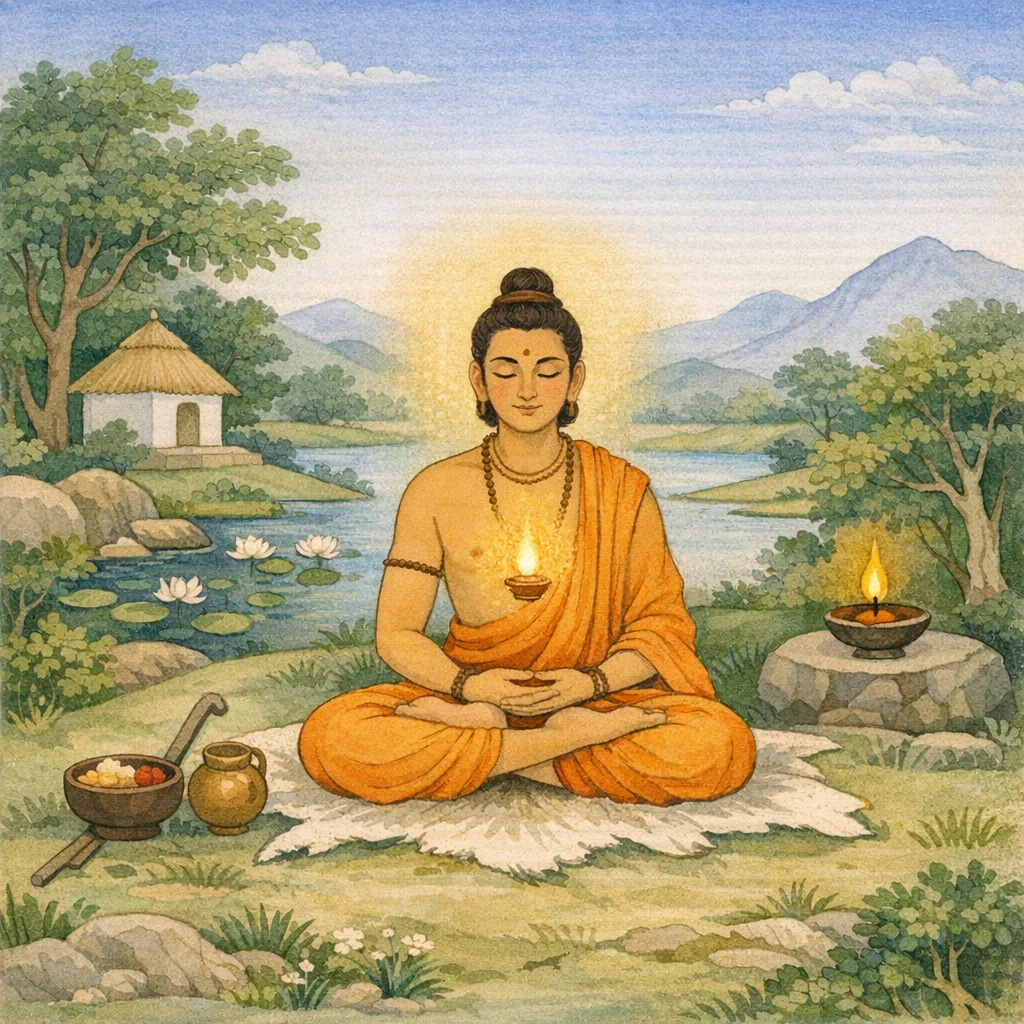
Dwelling in solitude, eating lightly, controlling speech, body, and mind; ever devoted to the yoga of meditation, taking refuge in dispassion—
एकान्तसेवी, अल्पाहारी, वाणी-शरीर-मन को वश में रखने वाला, नित्य ध्यानयोग में तत्पर और वैराग्य को भलीभाँति आश्रय करने वाला—
Living in seclusion, eating lightly, controlling speech, body, and mind, constantly devoted to the yoga of meditation, and firmly resorting to dispassion—
‘Seclusion’ (vivikta) is read both literally (solitude for practice) and functionally (mental non-entanglement). ‘Laghu-āśī’ suggests moderation rather than austerity for its own sake. The verse aligns closely with yogic sādhanā descriptions in other Indian traditions.
FAQs
The verse recommends conditions that reduce distraction—quiet environment, moderate consumption, and behavioral self-regulation—supporting attention and emotional balance.
Dispassion and meditation are presented as proximate causes for stabilizing knowledge, allowing consciousness to disengage from transient objects and orient toward ultimate reality.
It continues the practical regimen introduced in 18.51, specifying lifestyle and meditative commitments associated with the ‘supreme culmination of knowledge’ (18.50).
Create regular quiet time, adopt mindful eating, and set boundaries for speech and screen time to support consistent contemplation.