
Bhagavad Gita — Moksha Sannyasa Yoga, Shloka 32
Moksha Sannyasa Yoga
अधर्मं धर्ममिति या मन्यते तमसावृता । सर्वार्थान्विपरीतांश्च बुद्धिः सा पार्थ तामसी ॥ १८.३२ ॥
adharmaṃ dharmam iti yā manyate tamasāvṛtā | sarvārthān viparītāṃś ca buddhiḥ sā pārtha tāmasī || 18.32 ||

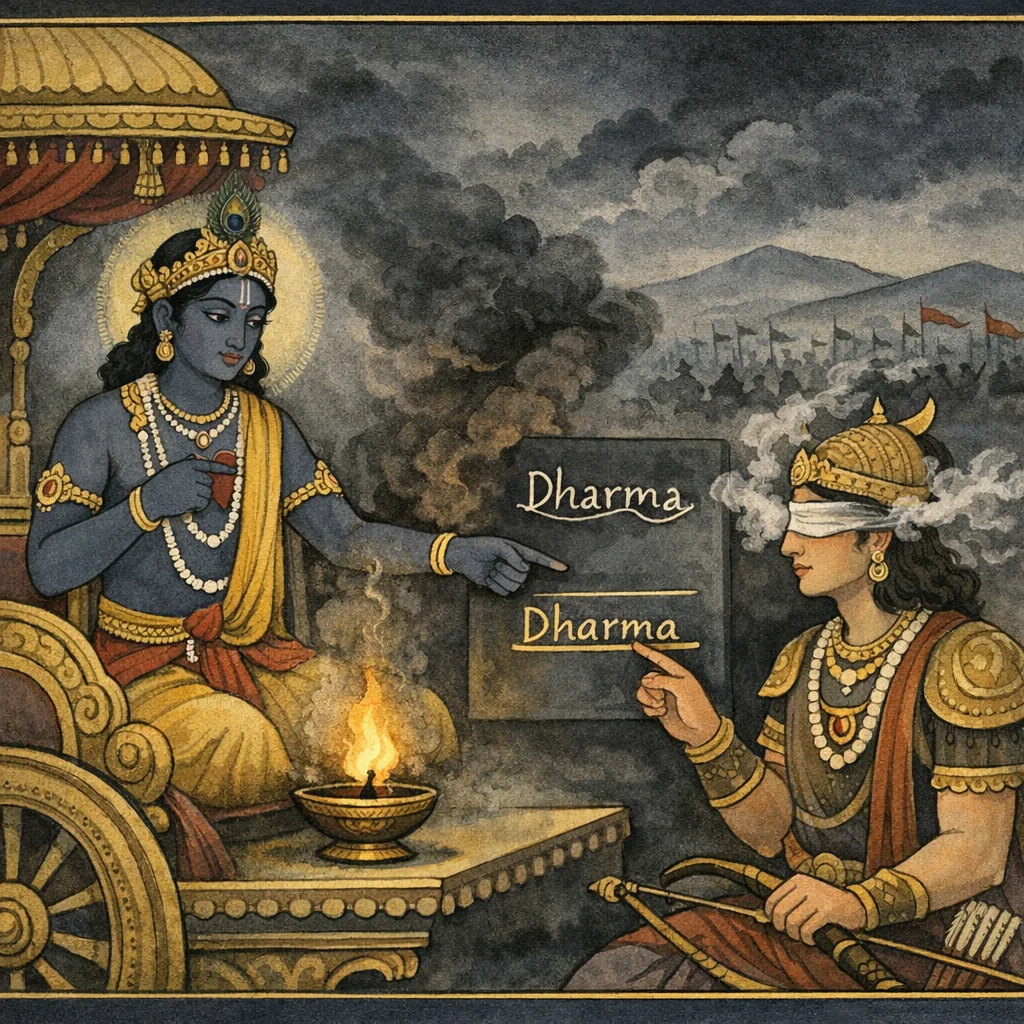
That intellect is tamasic, O Pārtha, which, veiled by darkness, takes adharma to be dharma and sees all things in a perverted way.
That intellect is tamasic, O Pārtha, which, enveloped in darkness, considers adharma to be dharma, and sees all things in a perverted way.
Tamasic is that intellect, O Pārtha, which—covered by tamas—takes non-dharma as dharma and apprehends all aims/meanings in inverted form.
sarvārthān can mean “all purposes/values” or “all meanings.” The emphasis is on inversion (viparīta), a stronger claim than rajasic distortion: basic moral categories are reversed.
FAQs
The verse depicts a condition where judgment is not merely biased but inverted: harmful or unwholesome choices are experienced as right, and values are systematically misread.
Tamas functions as a veil over discernment, resembling a state of ignorance where the intellect cannot track dharma-oriented order and thus misconstrues the path to well-being and liberation.
It completes the triad of buddhi: sattva (clear discrimination), rajas (distorted discrimination), tamas (inverted discrimination).
It can inform discussions of entrenched misinformation or self-sabotaging belief systems: when core categories flip, external feedback and deliberate education become necessary for recalibration.