
Bhagavad Gita — Moksha Sannyasa Yoga, Shloka 1
Moksha Sannyasa Yoga
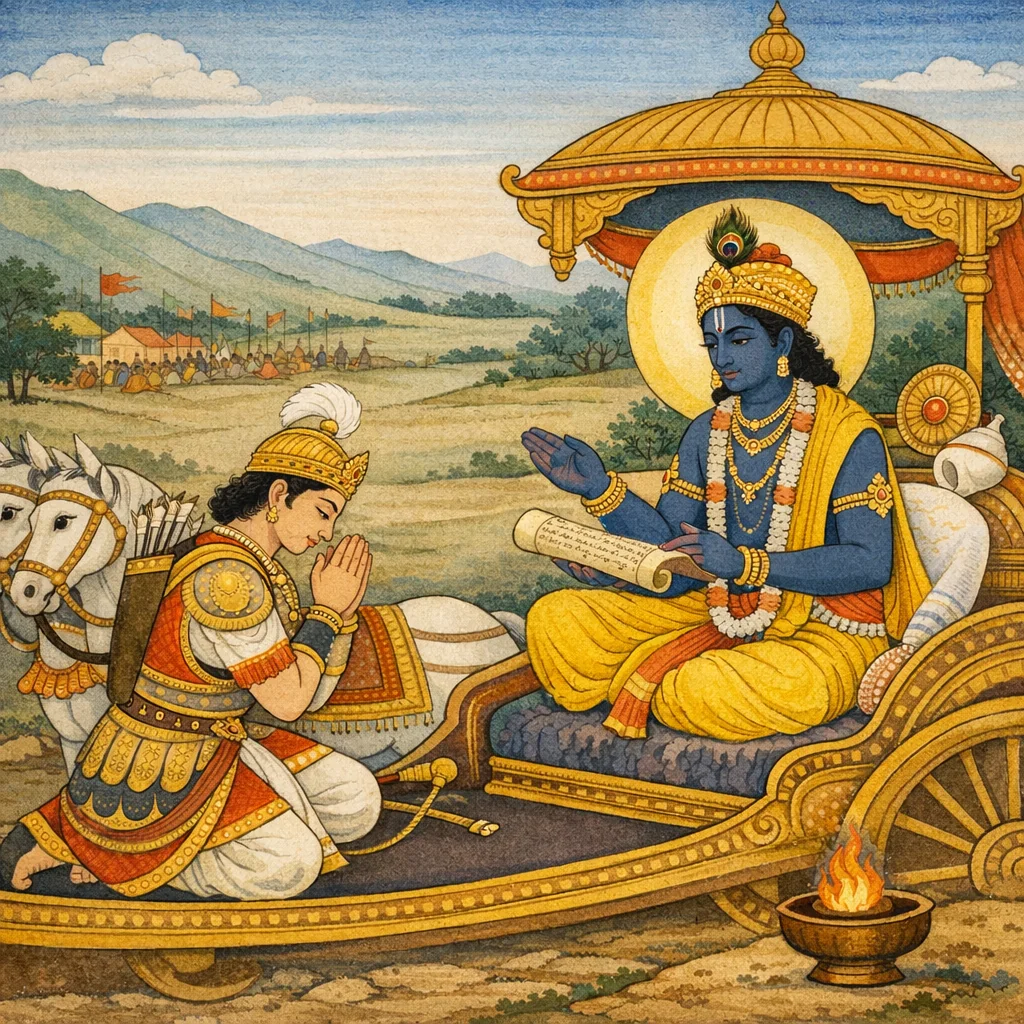
अर्जुन उवाच । संन्यासस्य महाबाहो तत्त्वमिच्छामि वेदितुम् त्यागस्य च हृषीकेश पृथक्केशिनिषूदन ॥ १८.१ ॥
arjuna uvāca | saṃnyāsasya mahābāho tattvam icchāmi veditum | tyāgasya ca hṛṣīkeśa pṛthak keśiniṣūdana || 18.1 ||

Arjuna said: O mighty-armed one, I wish to know the true nature of sannyāsa, and also of tyāga, O Hṛṣīkeśa—O slayer of Keśin—distinctly.
अर्जुन ने कहा— हे महाबाहो! मैं संन्यास का तत्त्व जानना चाहता हूँ और हे हृषीकेश! त्याग का भी (तत्त्व) अलग-अलग जानना चाहता हूँ, हे केशिनिषूदन!
Arjuna said: I wish to know the true nature of renunciation (saṃnyāsa), O strong-armed one, and also of relinquishment (tyāga), separately, O Hṛṣīkeśa, slayer of Keśin.
The verse distinguishes two near-synonyms—saṃnyāsa and tyāga—prompting a technical clarification. Epithets like ‘slayer of Keśin’ are conventional heroic titles and need not be read as foregrounding violence in this philosophical query.
FAQs
Arjuna’s request reflects a need to resolve inner conflict about commitment and withdrawal: whether freedom is achieved by stopping action or by changing one’s relationship to action.
The question sets up a distinction between external renunciation (a social-ritual status) and internal relinquishment (non-appropriation of results), which later connects to selfhood and agency.
As the opening of the final chapter, it frames the concluding teachings by asking for precise definitions of two pivotal terms used throughout the Gītā.
It maps onto contemporary dilemmas about work and meaning: whether well-being comes from quitting responsibilities or from acting without obsessive attachment to outcomes.